The ultimate benefit for the country that embraces global trade will be the gainful and fruitful employment of its youth.
FM
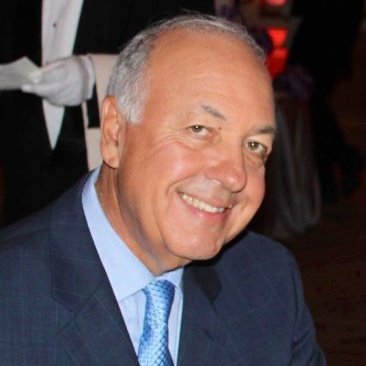
This guest article was written by William Laraque who is the Managing Director of US-International Trade Services.
"We're in an energy market depression, an industrial and manufacturing recession, but somehow the consumer is doing okay." Thus, a senior railroad executive described the uncertainty in the world economy.
Strategy
BlackRock's Larry Fink exhorted: "Over the past several years, I have written to the CEOs of leading companies urging resistance to the powerful forces of short-termism afflicting corporate behavior. Reducing these pressures and working instead to invest in long-term growth remains an issue of paramount importance for BlackRock’s clients, most of whom are saving for retirement and other long-term goals, as well as for the entire global economy."
William Laraque
While we’ve heard strong support from corporate leaders for taking such long-term views, many companies continue to engage in practices that may undermine their ability to invest for the future.
Dividends paid out by S&P 500 companies in 2015 amounted to the highest proportion of their earnings since 2009. As of the end of the third quarter of 2015, buybacks were up 27% over 12 months. We certainly support returning excess cash to shareholders, but not at the expense of value-creating investment. We continue to urge companies to adopt balanced capital plans, appropriate for their respective industries, that support strategies for long-term growth.
The flaw in these supposedly wise counsels about the uncertainty in the global economy, short-termism and the need for long-term investment in the global future is obvious. They themselves reflect short-termism in upholding the view that corporate and national strategies are somehow separate concerns. They are not. Arguably, never in history have corporate and national strategies for dealing with global growth been more intertwined.
It has been clearly demonstrated how global trade will be conducted in the future; how millions will be gainfully employed; how technology will serve genuine human aspirations as well as intellectual diversions and flirtations. It has been demonstrated how countries can successfully diversify and engage their most dynamic SME sectors in global trade. In a masterstroke of 'reverse innovation', this has all been demonstrated by China with e-commerce.
never in history have corporate and national strategies for dealing with global growth been more intertwined
Neither American corporate or government executives were prepared to be taught strategic lessons in free-market strategy by Chinese entrepreneurs.
While the U.S. business mentality is fixated on the fact that Google may now have a larger market cap than Apple, the velocity of Alibaba's movement has been largely ignored by corporate "strategists." As Klaus Schwab of the World Economic Forum said at Davos: "In the new world, it is not the big fish which eats the small fish, it's the fast fish which eats the slow fish."
Getting it
Amazon, Microsoft, Google and such retailers as Macy's, Costco, P&G, Estée Lauder, Mondavi in the U.S., and Unilever in Europe 'get it'. They get that the world has changed and is changing quickly, and just as great generals adjust quickly on the battlefield, great business leaders continually improve, improvise, adapt, overcome as well. The game, the battle has changed in global trade and with a few corporate exceptions, the U.S. is caught at a disadvantage.
Global trade is a huge job creation opportunity if utilized effectively.
I have sounded this call to no avail. "If the trumpet gives an uncertain sound, who will prepare himself to the battle?" If the seed is cast on unprepared ground, is it not like casting pearls before swine?
The ever corrosive, erosive enemy prevailed: ignorance outflanked us time and time again. I have wondered long and hard why banks and platform companies have not joined forces to provide all of the primary and support global trade services and expertise detailed graphically in our Excelsior schematic.
Global trade is a huge job creation opportunity if utilized effectively.
It suddenly dawned on me that the compliance, KYC, FCPA, AML, export controls expertise we rely on banks for, may no longer exist. The classically trained trade finance officers of my generation are mostly retired. They quite literally have other fish to catch and to fry now.
Yahoo
Yahoo saw Alibaba deploying under its nose but did not have the intellectual chops to capitalize on the oh-so obvious global trade opportunity. Global trade has become a foreign language as a result of local ignorance. Technology is wielded like knives in a war for a better life, a better future, for gainful employment, opportunity and wealth for everyone. Western technologists have brought a knife to a global gunfight for human dignity and aspiration.
Cheer the beloved country
That country which embraces global trade, develops and supports global trade platforms with secure portals and the full array of primary and support services to marshal its SMEs into vibrant engagement in global trade, takes the global hill. The ultimate benefit of its success will be the gainful and fruitful employment of its youth. Just as startups do not do well without coaching and nurturing, one or more visionary countries will set the pace for growth, employment and prosperity by nurturing their budding entrepreneurs, their micromultinationals into full blown world-beaters.
The process has begun:
More than 630 small and medium-sized enterprises (SMEs) took advantage of Export Development Canada's (EDC) export guarantee programme last year - a 15% rise from 2014. The growth was partly due to EDC guaranteeing up to 100% of a bank's loan to SMEs.
This guest article was written by William Laraque who is the Managing Director of US-International Trade Services.
"We're in an energy market depression, an industrial and manufacturing recession, but somehow the consumer is doing okay." Thus, a senior railroad executive described the uncertainty in the world economy.
Strategy
BlackRock's Larry Fink exhorted: "Over the past several years, I have written to the CEOs of leading companies urging resistance to the powerful forces of short-termism afflicting corporate behavior. Reducing these pressures and working instead to invest in long-term growth remains an issue of paramount importance for BlackRock’s clients, most of whom are saving for retirement and other long-term goals, as well as for the entire global economy."
William Laraque
While we’ve heard strong support from corporate leaders for taking such long-term views, many companies continue to engage in practices that may undermine their ability to invest for the future.
Dividends paid out by S&P 500 companies in 2015 amounted to the highest proportion of their earnings since 2009. As of the end of the third quarter of 2015, buybacks were up 27% over 12 months. We certainly support returning excess cash to shareholders, but not at the expense of value-creating investment. We continue to urge companies to adopt balanced capital plans, appropriate for their respective industries, that support strategies for long-term growth.
The flaw in these supposedly wise counsels about the uncertainty in the global economy, short-termism and the need for long-term investment in the global future is obvious. They themselves reflect short-termism in upholding the view that corporate and national strategies are somehow separate concerns. They are not. Arguably, never in history have corporate and national strategies for dealing with global growth been more intertwined.
It has been clearly demonstrated how global trade will be conducted in the future; how millions will be gainfully employed; how technology will serve genuine human aspirations as well as intellectual diversions and flirtations. It has been demonstrated how countries can successfully diversify and engage their most dynamic SME sectors in global trade. In a masterstroke of 'reverse innovation', this has all been demonstrated by China with e-commerce.
never in history have corporate and national strategies for dealing with global growth been more intertwined
Neither American corporate or government executives were prepared to be taught strategic lessons in free-market strategy by Chinese entrepreneurs.
While the U.S. business mentality is fixated on the fact that Google may now have a larger market cap than Apple, the velocity of Alibaba's movement has been largely ignored by corporate "strategists." As Klaus Schwab of the World Economic Forum said at Davos: "In the new world, it is not the big fish which eats the small fish, it's the fast fish which eats the slow fish."
Getting it
Amazon, Microsoft, Google and such retailers as Macy's, Costco, P&G, Estée Lauder, Mondavi in the U.S., and Unilever in Europe 'get it'. They get that the world has changed and is changing quickly, and just as great generals adjust quickly on the battlefield, great business leaders continually improve, improvise, adapt, overcome as well. The game, the battle has changed in global trade and with a few corporate exceptions, the U.S. is caught at a disadvantage.
Global trade is a huge job creation opportunity if utilized effectively.
I have sounded this call to no avail. "If the trumpet gives an uncertain sound, who will prepare himself to the battle?" If the seed is cast on unprepared ground, is it not like casting pearls before swine?
The ever corrosive, erosive enemy prevailed: ignorance outflanked us time and time again. I have wondered long and hard why banks and platform companies have not joined forces to provide all of the primary and support global trade services and expertise detailed graphically in our Excelsior schematic.
Global trade is a huge job creation opportunity if utilized effectively.
It suddenly dawned on me that the compliance, KYC, FCPA, AML, export controls expertise we rely on banks for, may no longer exist. The classically trained trade finance officers of my generation are mostly retired. They quite literally have other fish to catch and to fry now.
Yahoo
Yahoo saw Alibaba deploying under its nose but did not have the intellectual chops to capitalize on the oh-so obvious global trade opportunity. Global trade has become a foreign language as a result of local ignorance. Technology is wielded like knives in a war for a better life, a better future, for gainful employment, opportunity and wealth for everyone. Western technologists have brought a knife to a global gunfight for human dignity and aspiration.
Cheer the beloved country
That country which embraces global trade, develops and supports global trade platforms with secure portals and the full array of primary and support services to marshal its SMEs into vibrant engagement in global trade, takes the global hill. The ultimate benefit of its success will be the gainful and fruitful employment of its youth. Just as startups do not do well without coaching and nurturing, one or more visionary countries will set the pace for growth, employment and prosperity by nurturing their budding entrepreneurs, their micromultinationals into full blown world-beaters.
The process has begun:
More than 630 small and medium-sized enterprises (SMEs) took advantage of Export Development Canada's (EDC) export guarantee programme last year - a 15% rise from 2014. The growth was partly due to EDC guaranteeing up to 100% of a bank's loan to SMEs.
FCA Points to Account Closures and Affiliate Cuts as Consumer Duty Good Practice
Featured Videos
FM Daily Brief – 27 July 2026
FM Daily Brief – 27 July 2026
FM Daily Brief – 27 July 2026
FM Daily Brief – 27 July 2026
Today's Monday, the 27th of July 2026, and these are our main stories: iFOREX reports stronger client growth despite currency headwinds, BlackBull's New Zealand business expands, and the FCA highlights Consumer Duty good practice.
Today's Monday, the 27th of July 2026, and these are our main stories: iFOREX reports stronger client growth despite currency headwinds, BlackBull's New Zealand business expands, and the FCA highlights Consumer Duty good practice.
Today's Monday, the 27th of July 2026, and these are our main stories: iFOREX reports stronger client growth despite currency headwinds, BlackBull's New Zealand business expands, and the FCA highlights Consumer Duty good practice.
Today's Monday, the 27th of July 2026, and these are our main stories: iFOREX reports stronger client growth despite currency headwinds, BlackBull's New Zealand business expands, and the FCA highlights Consumer Duty good practice.
Today's Friday, the 24th of July 2026, and these are our main stories: the FCA finds major gaps in anti-money laundering controls at alternative asset managers, Wise shares tumble after a US banking licence setback, and Google's EU fines could benefit fintech apps.
Today's Friday, the 24th of July 2026, and these are our main stories: the FCA finds major gaps in anti-money laundering controls at alternative asset managers, Wise shares tumble after a US banking licence setback, and Google's EU fines could benefit fintech apps.
Today's Friday, the 24th of July 2026, and these are our main stories: the FCA finds major gaps in anti-money laundering controls at alternative asset managers, Wise shares tumble after a US banking licence setback, and Google's EU fines could benefit fintech apps.
Today's Friday, the 24th of July 2026, and these are our main stories: the FCA finds major gaps in anti-money laundering controls at alternative asset managers, Wise shares tumble after a US banking licence setback, and Google's EU fines could benefit fintech apps.
Today's Friday, the 24th of July 2026, and these are our main stories: the FCA finds major gaps in anti-money laundering controls at alternative asset managers, Wise shares tumble after a US banking licence setback, and Google's EU fines could benefit fintech apps.
Today's Friday, the 24th of July 2026, and these are our main stories: the FCA finds major gaps in anti-money laundering controls at alternative asset managers, Wise shares tumble after a US banking licence setback, and Google's EU fines could benefit fintech apps.
FM Daily Brief – 23 July 2026
FM Daily Brief – 23 July 2026
FM Daily Brief – 23 July 2026
FM Daily Brief – 23 July 2026
FM Daily Brief – 23 July 2026
FM Daily Brief – 23 July 2026
Today's Thursday, the 23rd of July 2026, and these are our main stories: BitMEX announces it will shut down its crypto trading platform, the Financial Commission launches a certification programme for prop firms, and the SEC settles a records lawsuit with Coinbase.
Today's Thursday, the 23rd of July 2026, and these are our main stories: BitMEX announces it will shut down its crypto trading platform, the Financial Commission launches a certification programme for prop firms, and the SEC settles a records lawsuit with Coinbase.
Today's Thursday, the 23rd of July 2026, and these are our main stories: BitMEX announces it will shut down its crypto trading platform, the Financial Commission launches a certification programme for prop firms, and the SEC settles a records lawsuit with Coinbase.
Today's Thursday, the 23rd of July 2026, and these are our main stories: BitMEX announces it will shut down its crypto trading platform, the Financial Commission launches a certification programme for prop firms, and the SEC settles a records lawsuit with Coinbase.
Today's Thursday, the 23rd of July 2026, and these are our main stories: BitMEX announces it will shut down its crypto trading platform, the Financial Commission launches a certification programme for prop firms, and the SEC settles a records lawsuit with Coinbase.
Today's Thursday, the 23rd of July 2026, and these are our main stories: BitMEX announces it will shut down its crypto trading platform, the Financial Commission launches a certification programme for prop firms, and the SEC settles a records lawsuit with Coinbase.
FM Daily Brief – 22 July 2026
FM Daily Brief – 22 July 2026
FM Daily Brief – 22 July 2026
FM Daily Brief – 22 July 2026
FM Daily Brief – 22 July 2026
FM Daily Brief – 22 July 2026
Today's Wednesday, the 22nd of July 2026, and these are our main stories: retail CFD broker trading volumes ease in the second quarter, Interactive Brokers posts strong quarterly results, and tastytrade faces a Finra fine.
Today's Wednesday, the 22nd of July 2026, and these are our main stories: retail CFD broker trading volumes ease in the second quarter, Interactive Brokers posts strong quarterly results, and tastytrade faces a Finra fine.
Today's Wednesday, the 22nd of July 2026, and these are our main stories: retail CFD broker trading volumes ease in the second quarter, Interactive Brokers posts strong quarterly results, and tastytrade faces a Finra fine.
Today's Wednesday, the 22nd of July 2026, and these are our main stories: retail CFD broker trading volumes ease in the second quarter, Interactive Brokers posts strong quarterly results, and tastytrade faces a Finra fine.
Today's Wednesday, the 22nd of July 2026, and these are our main stories: retail CFD broker trading volumes ease in the second quarter, Interactive Brokers posts strong quarterly results, and tastytrade faces a Finra fine.
Today's Wednesday, the 22nd of July 2026, and these are our main stories: retail CFD broker trading volumes ease in the second quarter, Interactive Brokers posts strong quarterly results, and tastytrade faces a Finra fine.
FM Daily Brief – 21 July 2026
FM Daily Brief – 21 July 2026
FM Daily Brief – 21 July 2026
FM Daily Brief – 21 July 2026
FM Daily Brief – 21 July 2026
FM Daily Brief – 21 July 2026
Today's Tuesday, the 21st of July 2026, and these are our main stories: has BDSwiss’s offshore been shuttered? Esma reports strong growth in cross border retail investing across Europe, and the London Stock Exchange plans overnight trading.
Today's Tuesday, the 21st of July 2026, and these are our main stories: has BDSwiss’s offshore been shuttered? Esma reports strong growth in cross border retail investing across Europe, and the London Stock Exchange plans overnight trading.
Today's Tuesday, the 21st of July 2026, and these are our main stories: has BDSwiss’s offshore been shuttered? Esma reports strong growth in cross border retail investing across Europe, and the London Stock Exchange plans overnight trading.
Today's Tuesday, the 21st of July 2026, and these are our main stories: has BDSwiss’s offshore been shuttered? Esma reports strong growth in cross border retail investing across Europe, and the London Stock Exchange plans overnight trading.
Today's Tuesday, the 21st of July 2026, and these are our main stories: has BDSwiss’s offshore been shuttered? Esma reports strong growth in cross border retail investing across Europe, and the London Stock Exchange plans overnight trading.
Today's Tuesday, the 21st of July 2026, and these are our main stories: has BDSwiss’s offshore been shuttered? Esma reports strong growth in cross border retail investing across Europe, and the London Stock Exchange plans overnight trading.