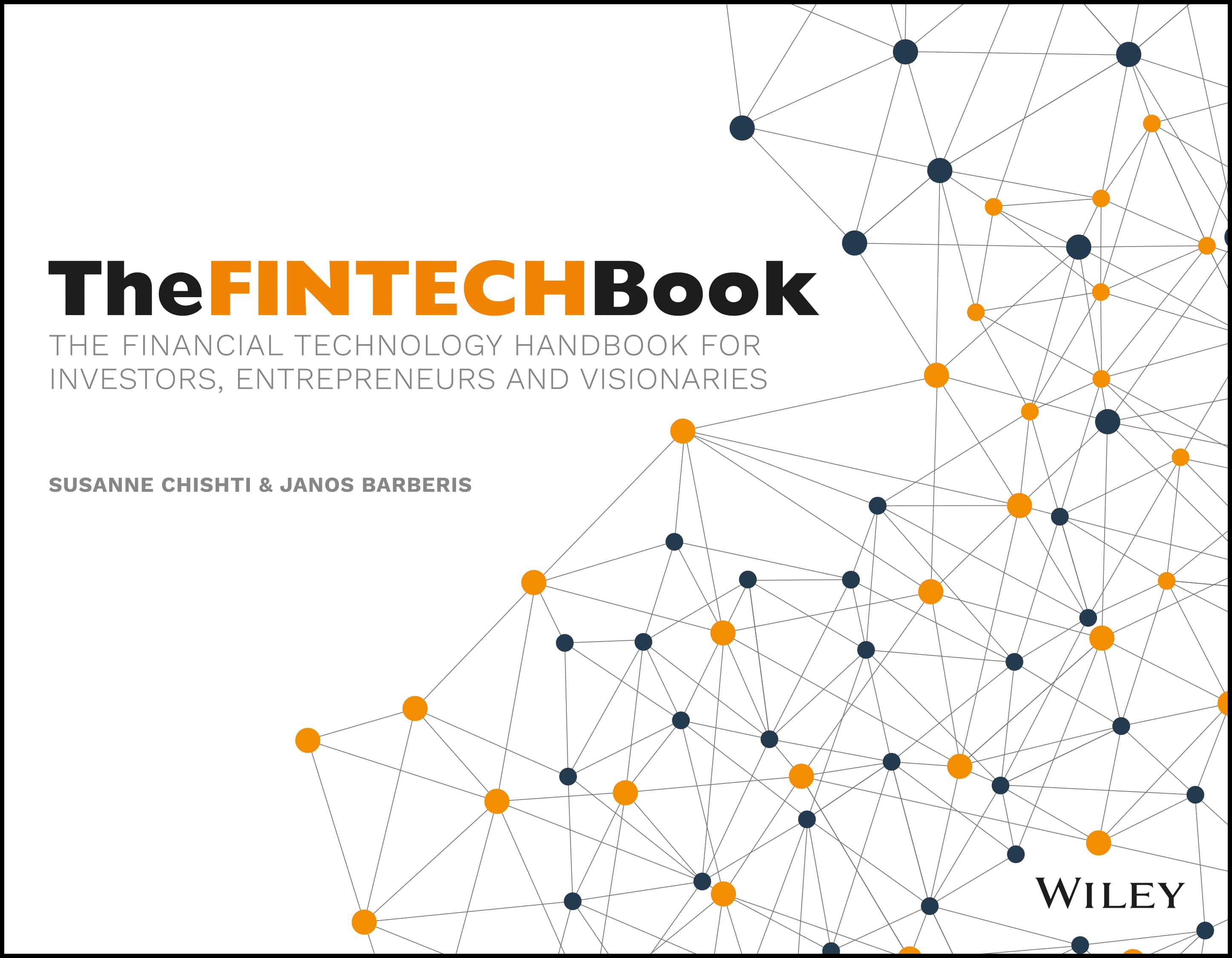
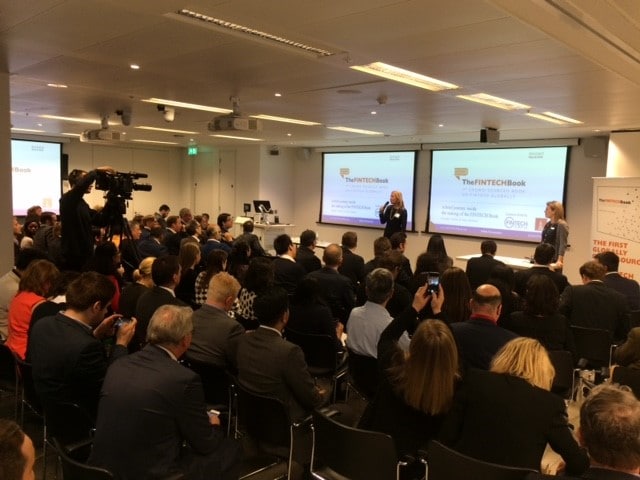
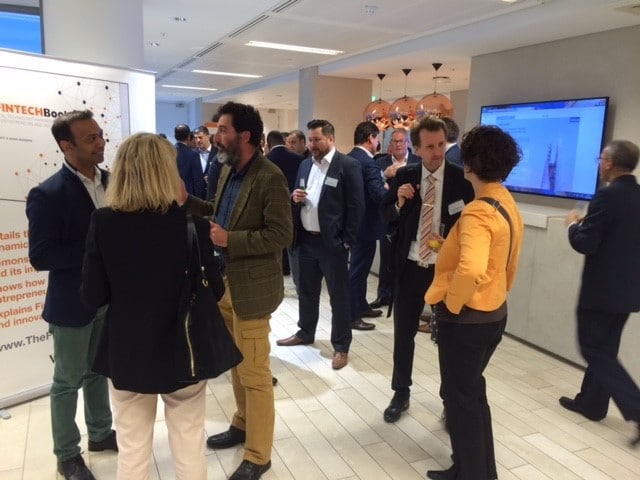
Over 2500 copies of The FINTECH Book were pre-ordered before the release date!
The story of one particular book - The FINTECH Book, published by Wiley on the 1st of April 2016 - is outstandingly important to me on multiple levels. The deepest level is that the story of this book is a nice allegory of my personal story. Why and how?
In the world of finance we hear the bon mot 'from bricks to clicks' quite often. But now there is something new - the exact opposite - emerging: 'from clicks to bricks'. And the story of this book is a great example of this.
It all started out as a humble online project in 2015 to compile some short essays from FinTech experts and to self-publish the book on the internet.
But instead of a couple of essays, 180 very exciting abstracts flowed in to the email boxes of Susanne Chishti and Janos Barberis – the future editors – very shortly after posting this initiative on LinkedIn and Twitter. Susanne and Janos decided to organize a contest and post all 180 works on Medium and ask readers to vote for the best ones to go into the online 'book'.
Huge numbers of votes were cast and the best abstracts were thereby selected. I was very happy and proud to be voted in! Authors had to expand their abstracts into essays. As we submitted our essays it turned out that Wiley & Sons – the famous publisher – was interested in this project… and couple of months later Susanne and Janos were already distributing the contract to be signed by DocuSign.
This is how we (80 FinTech experts from all around the world) became the co-authors of a hard-copy, globally published book without even ever meeting each other physically.
At the launch event we listened to exciting speeches. My two favorite speeches were by:
- eToro, the Israeli social trading company – I learned that successful social-traders earn significant fees based on the total assets of their followers.
- Warwick Business School - I learned how seriously FinTech as a discipline is taken in this business school and how innovation-paradigms are being taught.
I also want to share my interpretation of two direct quotes from the book to point out specific trends that we should – I think - keep our eyes on:
Rachel Nienaber, VP Engineering, Currency Cloud
“Historically, banks have been responsible for most innovations in the financial industry.”
Rachel’s point above is very important. Ever since banking began in 2000 BC in Assyria and Babylonia – by grain-loans to farmers – internal innovation was the dominant form of the banking-system’s adjustment to the challenges and opportunities posed externally. In 2008 the dominant pattern of internal innovation has been overtaken by external innovation: this is what we essentially call the FinTech Revolution.
Eric van der Kleij, Managing Director, ENTIQ
“The full extent of Facebook’s ambitions in financial services is only just starting to become apparent…”
Eric’s point is far-reaching, because when we speculate about the future of banking in relation to the thousands of creative and nimble FinTech startups we often forget about something equally important: the chance of major global tech-companies all of a sudden entering the world of financial services. Facebook is certainly one of the possible disruptors – yet, all the steps taken by Zuckerberg and his colleagues have been minor in the financial services arena so far. But what if they started to take it seriously and allocate major resources?
I have discussed the way I see this project. But the question still looms: why is the 'from clicks to bricks' nature of the book so much of an analogy of my personal story?
I am Hungarian and I have been successfully serving banks in Hungary through consulting and market research for almost 10 years. In 2010 the market started to radically change: the state decided to take ever more ownership in the system.
For me only the market-dominated mechanisms were familiar and I had ideological and practical difficulties adjusting to this. By December 2013 I made a hard and painful decision: I had to leave my beloved and respected Hungarian market and create value in other markets.
But there was one big problem: I knew basically no-one in banking outside Hungary. So I started to build relationships online. Twitter, LinkedIn and blog-writing were my predominant tools. The usual 'hierarchy' of communication went this way:
Step 1 - Spotting relevant people and companies on Twitter.
Step 2 - Connecting with them via LinkedIn.
Step 3 - Channeling the communication from LinkedIn to email.
Step 4 - Setting up a skype call.
And here – at Step 4 – the relationships started to perform. But these were all online 'clicks' type of relationships. And here comes the analogy with the book-story: just as with the case of the book, these relationships started to – by almost some sort of miracle – naturally evolve into in-person meetings (at conferences, at training programs, at events like the book-launch discussed above, etc.).
This how I am currently invited to 5 different countries for different projects and have many more pending. The lesson for me is sweet and simple: 'from clicks to bricks'!
‘The FINTECH Book’ was published on the 1st of April, 2016. The book consists of 71 essays structured into the following 10 chapters:
Introduction: this chapter explains the relevance of FinTech
FinTech Themes: this chapter provides an overview of key areas within FinTech
FinTech Hubs: the success stories of London, Luxembourg, Singapore and more
Emerging Markets and Social Impact: explains how FinTech can enhance financial inclusion
FinTech Solutions: introduction of FinTech’s sub-areas, including FX-related aspects
Capital and Investment: P2P lending, crowdfunding and robo advisors discussed
Enterprise Innovation: explanation of how banks and insurers can face transition
More Success Stories: the stories of eToro, Avoka, Bankable and more
The Future of FinTech: this chapter explains how FinTech will change traditional banking
‘The FINTECH Book’ is available in an e-book as well as in a hard copy format through major online shopping sites and in bricks-and-mortar bookstores.
The story of one particular book - The FINTECH Book, published by Wiley on the 1st of April 2016 - is outstandingly important to me on multiple levels. The deepest level is that the story of this book is a nice allegory of my personal story. Why and how?
In the world of finance we hear the bon mot 'from bricks to clicks' quite often. But now there is something new - the exact opposite - emerging: 'from clicks to bricks'. And the story of this book is a great example of this.
It all started out as a humble online project in 2015 to compile some short essays from FinTech experts and to self-publish the book on the internet.
But instead of a couple of essays, 180 very exciting abstracts flowed in to the email boxes of Susanne Chishti and Janos Barberis – the future editors – very shortly after posting this initiative on LinkedIn and Twitter. Susanne and Janos decided to organize a contest and post all 180 works on Medium and ask readers to vote for the best ones to go into the online 'book'.
Huge numbers of votes were cast and the best abstracts were thereby selected. I was very happy and proud to be voted in! Authors had to expand their abstracts into essays. As we submitted our essays it turned out that Wiley & Sons – the famous publisher – was interested in this project… and couple of months later Susanne and Janos were already distributing the contract to be signed by DocuSign.
This is how we (80 FinTech experts from all around the world) became the co-authors of a hard-copy, globally published book without even ever meeting each other physically.
At the launch event we listened to exciting speeches. My two favorite speeches were by:
- eToro, the Israeli social trading company – I learned that successful social-traders earn significant fees based on the total assets of their followers.
- Warwick Business School - I learned how seriously FinTech as a discipline is taken in this business school and how innovation-paradigms are being taught.
I also want to share my interpretation of two direct quotes from the book to point out specific trends that we should – I think - keep our eyes on:
Rachel Nienaber, VP Engineering, Currency Cloud
“Historically, banks have been responsible for most innovations in the financial industry.”
Rachel’s point above is very important. Ever since banking began in 2000 BC in Assyria and Babylonia – by grain-loans to farmers – internal innovation was the dominant form of the banking-system’s adjustment to the challenges and opportunities posed externally. In 2008 the dominant pattern of internal innovation has been overtaken by external innovation: this is what we essentially call the FinTech Revolution.
Eric van der Kleij, Managing Director, ENTIQ
“The full extent of Facebook’s ambitions in financial services is only just starting to become apparent…”
Eric’s point is far-reaching, because when we speculate about the future of banking in relation to the thousands of creative and nimble FinTech startups we often forget about something equally important: the chance of major global tech-companies all of a sudden entering the world of financial services. Facebook is certainly one of the possible disruptors – yet, all the steps taken by Zuckerberg and his colleagues have been minor in the financial services arena so far. But what if they started to take it seriously and allocate major resources?
I have discussed the way I see this project. But the question still looms: why is the 'from clicks to bricks' nature of the book so much of an analogy of my personal story?
I am Hungarian and I have been successfully serving banks in Hungary through consulting and market research for almost 10 years. In 2010 the market started to radically change: the state decided to take ever more ownership in the system.
For me only the market-dominated mechanisms were familiar and I had ideological and practical difficulties adjusting to this. By December 2013 I made a hard and painful decision: I had to leave my beloved and respected Hungarian market and create value in other markets.
But there was one big problem: I knew basically no-one in banking outside Hungary. So I started to build relationships online. Twitter, LinkedIn and blog-writing were my predominant tools. The usual 'hierarchy' of communication went this way:
Step 1 - Spotting relevant people and companies on Twitter.
Step 2 - Connecting with them via LinkedIn.
Step 3 - Channeling the communication from LinkedIn to email.
Step 4 - Setting up a skype call.
And here – at Step 4 – the relationships started to perform. But these were all online 'clicks' type of relationships. And here comes the analogy with the book-story: just as with the case of the book, these relationships started to – by almost some sort of miracle – naturally evolve into in-person meetings (at conferences, at training programs, at events like the book-launch discussed above, etc.).
This how I am currently invited to 5 different countries for different projects and have many more pending. The lesson for me is sweet and simple: 'from clicks to bricks'!
‘The FINTECH Book’ was published on the 1st of April, 2016. The book consists of 71 essays structured into the following 10 chapters:
Introduction: this chapter explains the relevance of FinTech
FinTech Themes: this chapter provides an overview of key areas within FinTech
FinTech Hubs: the success stories of London, Luxembourg, Singapore and more
Emerging Markets and Social Impact: explains how FinTech can enhance financial inclusion
FinTech Solutions: introduction of FinTech’s sub-areas, including FX-related aspects
Capital and Investment: P2P lending, crowdfunding and robo advisors discussed
Enterprise Innovation: explanation of how banks and insurers can face transition
More Success Stories: the stories of eToro, Avoka, Bankable and more
David Gyori is a FinTech writer, speaker, researcher, consultant and trainer.
He is the founder and CEO of Banking Reports, and the co-author of ‘The FinTech Book’ (to be published by Wiley & Sons in February 2016).
He is also a member of the Panel of Judges of the European FinTech Awards. David Gyori is a FinTech writer, speaker, researcher, consultant and trainer. He is the founder and CEO of Banking Reports, and the co-author of ‘The FinTech Book’ (to be published by Wiley & Sons in February 2016). He is also a member of the Panel of Judges of the European FinTech Awards.
From Chatbots to Custom Portfolios: How AI Guides Smart Spending and Investing
Featured Videos
Paytiko CEO Razi Salih on Why Payment Orchestration is a MUST-HAVE for Brokers in 2026
Paytiko CEO Razi Salih on Why Payment Orchestration is a MUST-HAVE for Brokers in 2026
Paytiko CEO Razi Salih on Why Payment Orchestration is a MUST-HAVE for Brokers in 2026
Paytiko CEO Razi Salih on Why Payment Orchestration is a MUST-HAVE for Brokers in 2026
At iFX Expo Dubai, Finance Magnates spoke with Razi Salih, CEO at Paytiko, about the evolution of the payments ecosystem and why payment orchestration has shifted from an option to a necessity for brokers, prop firms, and exchanges.
Mr. Salih explains how global expansion, the need for deep localisation, and the sheer number of new payment methods, from instant banking to stablecoins, are driving this critical infrastructure shift.
#PaymentOrchestration #Fintech #Brokerage #TradingPayments #RaziSalih #Paytiko #iFXExpoDubai #Stablecoins #AIinFintech
At iFX Expo Dubai, Finance Magnates spoke with Razi Salih, CEO at Paytiko, about the evolution of the payments ecosystem and why payment orchestration has shifted from an option to a necessity for brokers, prop firms, and exchanges.
Mr. Salih explains how global expansion, the need for deep localisation, and the sheer number of new payment methods, from instant banking to stablecoins, are driving this critical infrastructure shift.
#PaymentOrchestration #Fintech #Brokerage #TradingPayments #RaziSalih #Paytiko #iFXExpoDubai #Stablecoins #AIinFintech
At iFX Expo Dubai, Finance Magnates spoke with Razi Salih, CEO at Paytiko, about the evolution of the payments ecosystem and why payment orchestration has shifted from an option to a necessity for brokers, prop firms, and exchanges.
Mr. Salih explains how global expansion, the need for deep localisation, and the sheer number of new payment methods, from instant banking to stablecoins, are driving this critical infrastructure shift.
#PaymentOrchestration #Fintech #Brokerage #TradingPayments #RaziSalih #Paytiko #iFXExpoDubai #Stablecoins #AIinFintech
At iFX Expo Dubai, Finance Magnates spoke with Razi Salih, CEO at Paytiko, about the evolution of the payments ecosystem and why payment orchestration has shifted from an option to a necessity for brokers, prop firms, and exchanges.
Mr. Salih explains how global expansion, the need for deep localisation, and the sheer number of new payment methods, from instant banking to stablecoins, are driving this critical infrastructure shift.
#PaymentOrchestration #Fintech #Brokerage #TradingPayments #RaziSalih #Paytiko #iFXExpoDubai #Stablecoins #AIinFintech
Altima CTO Sunil Jadhav: Solving Data Fragmentation & Lag for Brokers & Prop Firms
Altima CTO Sunil Jadhav: Solving Data Fragmentation & Lag for Brokers & Prop Firms
Altima CTO Sunil Jadhav: Solving Data Fragmentation & Lag for Brokers & Prop Firms
Altima CTO Sunil Jadhav: Solving Data Fragmentation & Lag for Brokers & Prop Firms
Altima CTO Sunil Jadhav: Solving Data Fragmentation & Lag for Brokers & Prop Firms
Altima CTO Sunil Jadhav: Solving Data Fragmentation & Lag for Brokers & Prop Firms
Altima CTO Sunil Jadhav sits down with Finance Magnates to discuss the core technology challenges facing CFD brokers and proprietary trading firms today.
Jadhav explains how the industry's reliance on batch processing and fragmented systems (where CRMs, risk tools, and trading platforms operate with separate 'sources of truth') leads to delayed data and inconsistent operational decisions. He argues that real-time event processing is essential for managing fast-moving trading activity and risk.
Learn how Altima's unified, event-driven architecture, connecting Altima CRM, Altima Prop, IB systems, and risk management through a single backbone, is designed to provide synchronous data and better operational coordination for modern brokerage and prop firm stacks.
Key Topics:
- Broker and Prop Firm Data Challenges
- The problem of delayed data processing (batch processing vs. real-time events)
- Fragmented systems and conflicting data sources
- Altima's unified, event-driven solution architecture
- The concept of a "risk-aware CRM"
- Built-in risk management in Altima Prop
#Altima #financemagnates #iFXDubai #FinTech #BrokerTech #PropFirm #CFDBroker #TradingTechnology #RealTimeData #RiskManagement #CRM #FinancialMarkets #EventDrivenArchitecture
Altima CTO Sunil Jadhav sits down with Finance Magnates to discuss the core technology challenges facing CFD brokers and proprietary trading firms today.
Jadhav explains how the industry's reliance on batch processing and fragmented systems (where CRMs, risk tools, and trading platforms operate with separate 'sources of truth') leads to delayed data and inconsistent operational decisions. He argues that real-time event processing is essential for managing fast-moving trading activity and risk.
Learn how Altima's unified, event-driven architecture, connecting Altima CRM, Altima Prop, IB systems, and risk management through a single backbone, is designed to provide synchronous data and better operational coordination for modern brokerage and prop firm stacks.
Key Topics:
- Broker and Prop Firm Data Challenges
- The problem of delayed data processing (batch processing vs. real-time events)
- Fragmented systems and conflicting data sources
- Altima's unified, event-driven solution architecture
- The concept of a "risk-aware CRM"
- Built-in risk management in Altima Prop
#Altima #financemagnates #iFXDubai #FinTech #BrokerTech #PropFirm #CFDBroker #TradingTechnology #RealTimeData #RiskManagement #CRM #FinancialMarkets #EventDrivenArchitecture
Altima CTO Sunil Jadhav sits down with Finance Magnates to discuss the core technology challenges facing CFD brokers and proprietary trading firms today.
Jadhav explains how the industry's reliance on batch processing and fragmented systems (where CRMs, risk tools, and trading platforms operate with separate 'sources of truth') leads to delayed data and inconsistent operational decisions. He argues that real-time event processing is essential for managing fast-moving trading activity and risk.
Learn how Altima's unified, event-driven architecture, connecting Altima CRM, Altima Prop, IB systems, and risk management through a single backbone, is designed to provide synchronous data and better operational coordination for modern brokerage and prop firm stacks.
Key Topics:
- Broker and Prop Firm Data Challenges
- The problem of delayed data processing (batch processing vs. real-time events)
- Fragmented systems and conflicting data sources
- Altima's unified, event-driven solution architecture
- The concept of a "risk-aware CRM"
- Built-in risk management in Altima Prop
#Altima #financemagnates #iFXDubai #FinTech #BrokerTech #PropFirm #CFDBroker #TradingTechnology #RealTimeData #RiskManagement #CRM #FinancialMarkets #EventDrivenArchitecture
Altima CTO Sunil Jadhav sits down with Finance Magnates to discuss the core technology challenges facing CFD brokers and proprietary trading firms today.
Jadhav explains how the industry's reliance on batch processing and fragmented systems (where CRMs, risk tools, and trading platforms operate with separate 'sources of truth') leads to delayed data and inconsistent operational decisions. He argues that real-time event processing is essential for managing fast-moving trading activity and risk.
Learn how Altima's unified, event-driven architecture, connecting Altima CRM, Altima Prop, IB systems, and risk management through a single backbone, is designed to provide synchronous data and better operational coordination for modern brokerage and prop firm stacks.
Key Topics:
- Broker and Prop Firm Data Challenges
- The problem of delayed data processing (batch processing vs. real-time events)
- Fragmented systems and conflicting data sources
- Altima's unified, event-driven solution architecture
- The concept of a "risk-aware CRM"
- Built-in risk management in Altima Prop
#Altima #financemagnates #iFXDubai #FinTech #BrokerTech #PropFirm #CFDBroker #TradingTechnology #RealTimeData #RiskManagement #CRM #FinancialMarkets #EventDrivenArchitecture
Altima CTO Sunil Jadhav sits down with Finance Magnates to discuss the core technology challenges facing CFD brokers and proprietary trading firms today.
Jadhav explains how the industry's reliance on batch processing and fragmented systems (where CRMs, risk tools, and trading platforms operate with separate 'sources of truth') leads to delayed data and inconsistent operational decisions. He argues that real-time event processing is essential for managing fast-moving trading activity and risk.
Learn how Altima's unified, event-driven architecture, connecting Altima CRM, Altima Prop, IB systems, and risk management through a single backbone, is designed to provide synchronous data and better operational coordination for modern brokerage and prop firm stacks.
Key Topics:
- Broker and Prop Firm Data Challenges
- The problem of delayed data processing (batch processing vs. real-time events)
- Fragmented systems and conflicting data sources
- Altima's unified, event-driven solution architecture
- The concept of a "risk-aware CRM"
- Built-in risk management in Altima Prop
#Altima #financemagnates #iFXDubai #FinTech #BrokerTech #PropFirm #CFDBroker #TradingTechnology #RealTimeData #RiskManagement #CRM #FinancialMarkets #EventDrivenArchitecture
Altima CTO Sunil Jadhav sits down with Finance Magnates to discuss the core technology challenges facing CFD brokers and proprietary trading firms today.
Jadhav explains how the industry's reliance on batch processing and fragmented systems (where CRMs, risk tools, and trading platforms operate with separate 'sources of truth') leads to delayed data and inconsistent operational decisions. He argues that real-time event processing is essential for managing fast-moving trading activity and risk.
Learn how Altima's unified, event-driven architecture, connecting Altima CRM, Altima Prop, IB systems, and risk management through a single backbone, is designed to provide synchronous data and better operational coordination for modern brokerage and prop firm stacks.
Key Topics:
- Broker and Prop Firm Data Challenges
- The problem of delayed data processing (batch processing vs. real-time events)
- Fragmented systems and conflicting data sources
- Altima's unified, event-driven solution architecture
- The concept of a "risk-aware CRM"
- Built-in risk management in Altima Prop
#Altima #financemagnates #iFXDubai #FinTech #BrokerTech #PropFirm #CFDBroker #TradingTechnology #RealTimeData #RiskManagement #CRM #FinancialMarkets #EventDrivenArchitecture
Why Brokers Choose Modular Platforms: Scale Trade on Fast Launch & 'Control Without Complexity'
Why Brokers Choose Modular Platforms: Scale Trade on Fast Launch & 'Control Without Complexity'
Why Brokers Choose Modular Platforms: Scale Trade on Fast Launch & 'Control Without Complexity'
Why Brokers Choose Modular Platforms: Scale Trade on Fast Launch & 'Control Without Complexity'
Why Brokers Choose Modular Platforms: Scale Trade on Fast Launch & 'Control Without Complexity'
Why Brokers Choose Modular Platforms: Scale Trade on Fast Launch & 'Control Without Complexity'
At iFX Dubai, Scale Trade CEO Arutyun Iskandaryan and Senior Sales Manager Daniel Kovalenko break down why brokerages are ditching the "build-it-yourself" approach for modular, self-hosted trading platforms like ST Trader. @scaletrade2101
Discover what the fastest route to market looks like for new and established brokers seeking control without complexity.
In this executive interview, you'll learn:
- Why the demand for multi-asset trading and tighter regulation is forcing brokers to adopt flexible, scalable platforms.
- How Scale Trade ensures fast launch (1-2 weeks) and seamless migration without operational downtime.
- The key regional differences driving platform requirements (Compliance in Europe, Mobile in Asia, Payments in the Middle East).
- Scale Trade's four major trends shaping broker technology, including the role of AI in risk management.
Scale Trade's ready-made, self-hosted ecosystem delivers everything a broker needs—from price feeds and risk management to flexible liquidity, allowing them to focus on business growth, not becoming a software company.
#financemagnates #ScaleTrade #BrokerTechnology #TradingPlatform #FinTech #ModularPlatform #STTrader #GoToMarket
At iFX Dubai, Scale Trade CEO Arutyun Iskandaryan and Senior Sales Manager Daniel Kovalenko break down why brokerages are ditching the "build-it-yourself" approach for modular, self-hosted trading platforms like ST Trader. @scaletrade2101
Discover what the fastest route to market looks like for new and established brokers seeking control without complexity.
In this executive interview, you'll learn:
- Why the demand for multi-asset trading and tighter regulation is forcing brokers to adopt flexible, scalable platforms.
- How Scale Trade ensures fast launch (1-2 weeks) and seamless migration without operational downtime.
- The key regional differences driving platform requirements (Compliance in Europe, Mobile in Asia, Payments in the Middle East).
- Scale Trade's four major trends shaping broker technology, including the role of AI in risk management.
Scale Trade's ready-made, self-hosted ecosystem delivers everything a broker needs—from price feeds and risk management to flexible liquidity, allowing them to focus on business growth, not becoming a software company.
#financemagnates #ScaleTrade #BrokerTechnology #TradingPlatform #FinTech #ModularPlatform #STTrader #GoToMarket
At iFX Dubai, Scale Trade CEO Arutyun Iskandaryan and Senior Sales Manager Daniel Kovalenko break down why brokerages are ditching the "build-it-yourself" approach for modular, self-hosted trading platforms like ST Trader. @scaletrade2101
Discover what the fastest route to market looks like for new and established brokers seeking control without complexity.
In this executive interview, you'll learn:
- Why the demand for multi-asset trading and tighter regulation is forcing brokers to adopt flexible, scalable platforms.
- How Scale Trade ensures fast launch (1-2 weeks) and seamless migration without operational downtime.
- The key regional differences driving platform requirements (Compliance in Europe, Mobile in Asia, Payments in the Middle East).
- Scale Trade's four major trends shaping broker technology, including the role of AI in risk management.
Scale Trade's ready-made, self-hosted ecosystem delivers everything a broker needs—from price feeds and risk management to flexible liquidity, allowing them to focus on business growth, not becoming a software company.
#financemagnates #ScaleTrade #BrokerTechnology #TradingPlatform #FinTech #ModularPlatform #STTrader #GoToMarket
At iFX Dubai, Scale Trade CEO Arutyun Iskandaryan and Senior Sales Manager Daniel Kovalenko break down why brokerages are ditching the "build-it-yourself" approach for modular, self-hosted trading platforms like ST Trader. @scaletrade2101
Discover what the fastest route to market looks like for new and established brokers seeking control without complexity.
In this executive interview, you'll learn:
- Why the demand for multi-asset trading and tighter regulation is forcing brokers to adopt flexible, scalable platforms.
- How Scale Trade ensures fast launch (1-2 weeks) and seamless migration without operational downtime.
- The key regional differences driving platform requirements (Compliance in Europe, Mobile in Asia, Payments in the Middle East).
- Scale Trade's four major trends shaping broker technology, including the role of AI in risk management.
Scale Trade's ready-made, self-hosted ecosystem delivers everything a broker needs—from price feeds and risk management to flexible liquidity, allowing them to focus on business growth, not becoming a software company.
#financemagnates #ScaleTrade #BrokerTechnology #TradingPlatform #FinTech #ModularPlatform #STTrader #GoToMarket
At iFX Dubai, Scale Trade CEO Arutyun Iskandaryan and Senior Sales Manager Daniel Kovalenko break down why brokerages are ditching the "build-it-yourself" approach for modular, self-hosted trading platforms like ST Trader. @scaletrade2101
Discover what the fastest route to market looks like for new and established brokers seeking control without complexity.
In this executive interview, you'll learn:
- Why the demand for multi-asset trading and tighter regulation is forcing brokers to adopt flexible, scalable platforms.
- How Scale Trade ensures fast launch (1-2 weeks) and seamless migration without operational downtime.
- The key regional differences driving platform requirements (Compliance in Europe, Mobile in Asia, Payments in the Middle East).
- Scale Trade's four major trends shaping broker technology, including the role of AI in risk management.
Scale Trade's ready-made, self-hosted ecosystem delivers everything a broker needs—from price feeds and risk management to flexible liquidity, allowing them to focus on business growth, not becoming a software company.
#financemagnates #ScaleTrade #BrokerTechnology #TradingPlatform #FinTech #ModularPlatform #STTrader #GoToMarket
At iFX Dubai, Scale Trade CEO Arutyun Iskandaryan and Senior Sales Manager Daniel Kovalenko break down why brokerages are ditching the "build-it-yourself" approach for modular, self-hosted trading platforms like ST Trader. @scaletrade2101
Discover what the fastest route to market looks like for new and established brokers seeking control without complexity.
In this executive interview, you'll learn:
- Why the demand for multi-asset trading and tighter regulation is forcing brokers to adopt flexible, scalable platforms.
- How Scale Trade ensures fast launch (1-2 weeks) and seamless migration without operational downtime.
- The key regional differences driving platform requirements (Compliance in Europe, Mobile in Asia, Payments in the Middle East).
- Scale Trade's four major trends shaping broker technology, including the role of AI in risk management.
Scale Trade's ready-made, self-hosted ecosystem delivers everything a broker needs—from price feeds and risk management to flexible liquidity, allowing them to focus on business growth, not becoming a software company.
#financemagnates #ScaleTrade #BrokerTechnology #TradingPlatform #FinTech #ModularPlatform #STTrader #GoToMarket
How Prop Firms Scale Without Breaking Tech Stacks | Axcera Executive Interview
How Prop Firms Scale Without Breaking Tech Stacks | Axcera Executive Interview
How Prop Firms Scale Without Breaking Tech Stacks | Axcera Executive Interview
How Prop Firms Scale Without Breaking Tech Stacks | Axcera Executive Interview
How Prop Firms Scale Without Breaking Tech Stacks | Axcera Executive Interview
How Prop Firms Scale Without Breaking Tech Stacks | Axcera Executive Interview
In this Finance Magnates executive interview, Dora Christofi, Head of Marketing at Finance Magnates, speaks with Herman Shaho, Co-Founder & CPO at Axcera, about what prop firms often get wrong when scaling, and how the right CRM infrastructure can support growth.
Shaho explains why many prop firms break once they grow beyond the early stage, after stacking too many disconnected tools. He also shares how Axcera approaches customisation, with technology that fits the firm’s needs rather than forcing the firm to fit a template.
“The firm doesn’t need to adapt to the software, our software adapts to the firm,” Shaho says.
The interview follows Axcera’s recognition at the Finance Magnates Awards 2025, where the company won Best Prop Trading Technology Provider.
#FinanceMagnates #axcera #PropTrading #ProprietaryTrading #PropFirms #Fintech #TradingTechnology #CRM #Brokerage #WhiteLabel #Automation #AIinFintech #RiskManagement #DubaiFintech #CyprusFintech
In this Finance Magnates executive interview, Dora Christofi, Head of Marketing at Finance Magnates, speaks with Herman Shaho, Co-Founder & CPO at Axcera, about what prop firms often get wrong when scaling, and how the right CRM infrastructure can support growth.
Shaho explains why many prop firms break once they grow beyond the early stage, after stacking too many disconnected tools. He also shares how Axcera approaches customisation, with technology that fits the firm’s needs rather than forcing the firm to fit a template.
“The firm doesn’t need to adapt to the software, our software adapts to the firm,” Shaho says.
The interview follows Axcera’s recognition at the Finance Magnates Awards 2025, where the company won Best Prop Trading Technology Provider.
#FinanceMagnates #axcera #PropTrading #ProprietaryTrading #PropFirms #Fintech #TradingTechnology #CRM #Brokerage #WhiteLabel #Automation #AIinFintech #RiskManagement #DubaiFintech #CyprusFintech
In this Finance Magnates executive interview, Dora Christofi, Head of Marketing at Finance Magnates, speaks with Herman Shaho, Co-Founder & CPO at Axcera, about what prop firms often get wrong when scaling, and how the right CRM infrastructure can support growth.
Shaho explains why many prop firms break once they grow beyond the early stage, after stacking too many disconnected tools. He also shares how Axcera approaches customisation, with technology that fits the firm’s needs rather than forcing the firm to fit a template.
“The firm doesn’t need to adapt to the software, our software adapts to the firm,” Shaho says.
The interview follows Axcera’s recognition at the Finance Magnates Awards 2025, where the company won Best Prop Trading Technology Provider.
#FinanceMagnates #axcera #PropTrading #ProprietaryTrading #PropFirms #Fintech #TradingTechnology #CRM #Brokerage #WhiteLabel #Automation #AIinFintech #RiskManagement #DubaiFintech #CyprusFintech
In this Finance Magnates executive interview, Dora Christofi, Head of Marketing at Finance Magnates, speaks with Herman Shaho, Co-Founder & CPO at Axcera, about what prop firms often get wrong when scaling, and how the right CRM infrastructure can support growth.
Shaho explains why many prop firms break once they grow beyond the early stage, after stacking too many disconnected tools. He also shares how Axcera approaches customisation, with technology that fits the firm’s needs rather than forcing the firm to fit a template.
“The firm doesn’t need to adapt to the software, our software adapts to the firm,” Shaho says.
The interview follows Axcera’s recognition at the Finance Magnates Awards 2025, where the company won Best Prop Trading Technology Provider.
#FinanceMagnates #axcera #PropTrading #ProprietaryTrading #PropFirms #Fintech #TradingTechnology #CRM #Brokerage #WhiteLabel #Automation #AIinFintech #RiskManagement #DubaiFintech #CyprusFintech
In this Finance Magnates executive interview, Dora Christofi, Head of Marketing at Finance Magnates, speaks with Herman Shaho, Co-Founder & CPO at Axcera, about what prop firms often get wrong when scaling, and how the right CRM infrastructure can support growth.
Shaho explains why many prop firms break once they grow beyond the early stage, after stacking too many disconnected tools. He also shares how Axcera approaches customisation, with technology that fits the firm’s needs rather than forcing the firm to fit a template.
“The firm doesn’t need to adapt to the software, our software adapts to the firm,” Shaho says.
The interview follows Axcera’s recognition at the Finance Magnates Awards 2025, where the company won Best Prop Trading Technology Provider.
#FinanceMagnates #axcera #PropTrading #ProprietaryTrading #PropFirms #Fintech #TradingTechnology #CRM #Brokerage #WhiteLabel #Automation #AIinFintech #RiskManagement #DubaiFintech #CyprusFintech
In this Finance Magnates executive interview, Dora Christofi, Head of Marketing at Finance Magnates, speaks with Herman Shaho, Co-Founder & CPO at Axcera, about what prop firms often get wrong when scaling, and how the right CRM infrastructure can support growth.
Shaho explains why many prop firms break once they grow beyond the early stage, after stacking too many disconnected tools. He also shares how Axcera approaches customisation, with technology that fits the firm’s needs rather than forcing the firm to fit a template.
“The firm doesn’t need to adapt to the software, our software adapts to the firm,” Shaho says.
The interview follows Axcera’s recognition at the Finance Magnates Awards 2025, where the company won Best Prop Trading Technology Provider.
#FinanceMagnates #axcera #PropTrading #ProprietaryTrading #PropFirms #Fintech #TradingTechnology #CRM #Brokerage #WhiteLabel #Automation #AIinFintech #RiskManagement #DubaiFintech #CyprusFintech
Sami Saleh from Hola Prime on Fast Payouts and Full Transparency @HolaPrime_Global
Sami Saleh from Hola Prime on Fast Payouts and Full Transparency @HolaPrime_Global
Sami Saleh from Hola Prime on Fast Payouts and Full Transparency @HolaPrime_Global
Sami Saleh from Hola Prime on Fast Payouts and Full Transparency @HolaPrime_Global
Sami Saleh from Hola Prime on Fast Payouts and Full Transparency @HolaPrime_Global
Sami Saleh from Hola Prime on Fast Payouts and Full Transparency @HolaPrime_Global
In this Finance Magnates interview, Sami Saleh, Director of Growth at Hola Prime, shares what sets the firm apart, with a strong focus on one-hour payouts. @HolaPrime_Global
Sami Saleh also explains Hola Prime’s recently introduced Payout Transparency Report, giving traders clear, date-wise visibility into payout processing timings.
Watch the full interview to learn how Hola Prime approaches payout speed, transparency, and trader experience.
#FinanceMagnates #HolaPrime #SamiSaleh #PropTrading #Trading #Traders #Payouts #FastPayouts #Transparency #Forex #CFDTrading #Fintech #OnlineTrading #TradingCommunity #Interview
In this Finance Magnates interview, Sami Saleh, Director of Growth at Hola Prime, shares what sets the firm apart, with a strong focus on one-hour payouts. @HolaPrime_Global
Sami Saleh also explains Hola Prime’s recently introduced Payout Transparency Report, giving traders clear, date-wise visibility into payout processing timings.
Watch the full interview to learn how Hola Prime approaches payout speed, transparency, and trader experience.
#FinanceMagnates #HolaPrime #SamiSaleh #PropTrading #Trading #Traders #Payouts #FastPayouts #Transparency #Forex #CFDTrading #Fintech #OnlineTrading #TradingCommunity #Interview
In this Finance Magnates interview, Sami Saleh, Director of Growth at Hola Prime, shares what sets the firm apart, with a strong focus on one-hour payouts. @HolaPrime_Global
Sami Saleh also explains Hola Prime’s recently introduced Payout Transparency Report, giving traders clear, date-wise visibility into payout processing timings.
Watch the full interview to learn how Hola Prime approaches payout speed, transparency, and trader experience.
#FinanceMagnates #HolaPrime #SamiSaleh #PropTrading #Trading #Traders #Payouts #FastPayouts #Transparency #Forex #CFDTrading #Fintech #OnlineTrading #TradingCommunity #Interview
In this Finance Magnates interview, Sami Saleh, Director of Growth at Hola Prime, shares what sets the firm apart, with a strong focus on one-hour payouts. @HolaPrime_Global
Sami Saleh also explains Hola Prime’s recently introduced Payout Transparency Report, giving traders clear, date-wise visibility into payout processing timings.
Watch the full interview to learn how Hola Prime approaches payout speed, transparency, and trader experience.
#FinanceMagnates #HolaPrime #SamiSaleh #PropTrading #Trading #Traders #Payouts #FastPayouts #Transparency #Forex #CFDTrading #Fintech #OnlineTrading #TradingCommunity #Interview
In this Finance Magnates interview, Sami Saleh, Director of Growth at Hola Prime, shares what sets the firm apart, with a strong focus on one-hour payouts. @HolaPrime_Global
Sami Saleh also explains Hola Prime’s recently introduced Payout Transparency Report, giving traders clear, date-wise visibility into payout processing timings.
Watch the full interview to learn how Hola Prime approaches payout speed, transparency, and trader experience.
#FinanceMagnates #HolaPrime #SamiSaleh #PropTrading #Trading #Traders #Payouts #FastPayouts #Transparency #Forex #CFDTrading #Fintech #OnlineTrading #TradingCommunity #Interview
In this Finance Magnates interview, Sami Saleh, Director of Growth at Hola Prime, shares what sets the firm apart, with a strong focus on one-hour payouts. @HolaPrime_Global
Sami Saleh also explains Hola Prime’s recently introduced Payout Transparency Report, giving traders clear, date-wise visibility into payout processing timings.
Watch the full interview to learn how Hola Prime approaches payout speed, transparency, and trader experience.
#FinanceMagnates #HolaPrime #SamiSaleh #PropTrading #Trading #Traders #Payouts #FastPayouts #Transparency #Forex #CFDTrading #Fintech #OnlineTrading #TradingCommunity #Interview