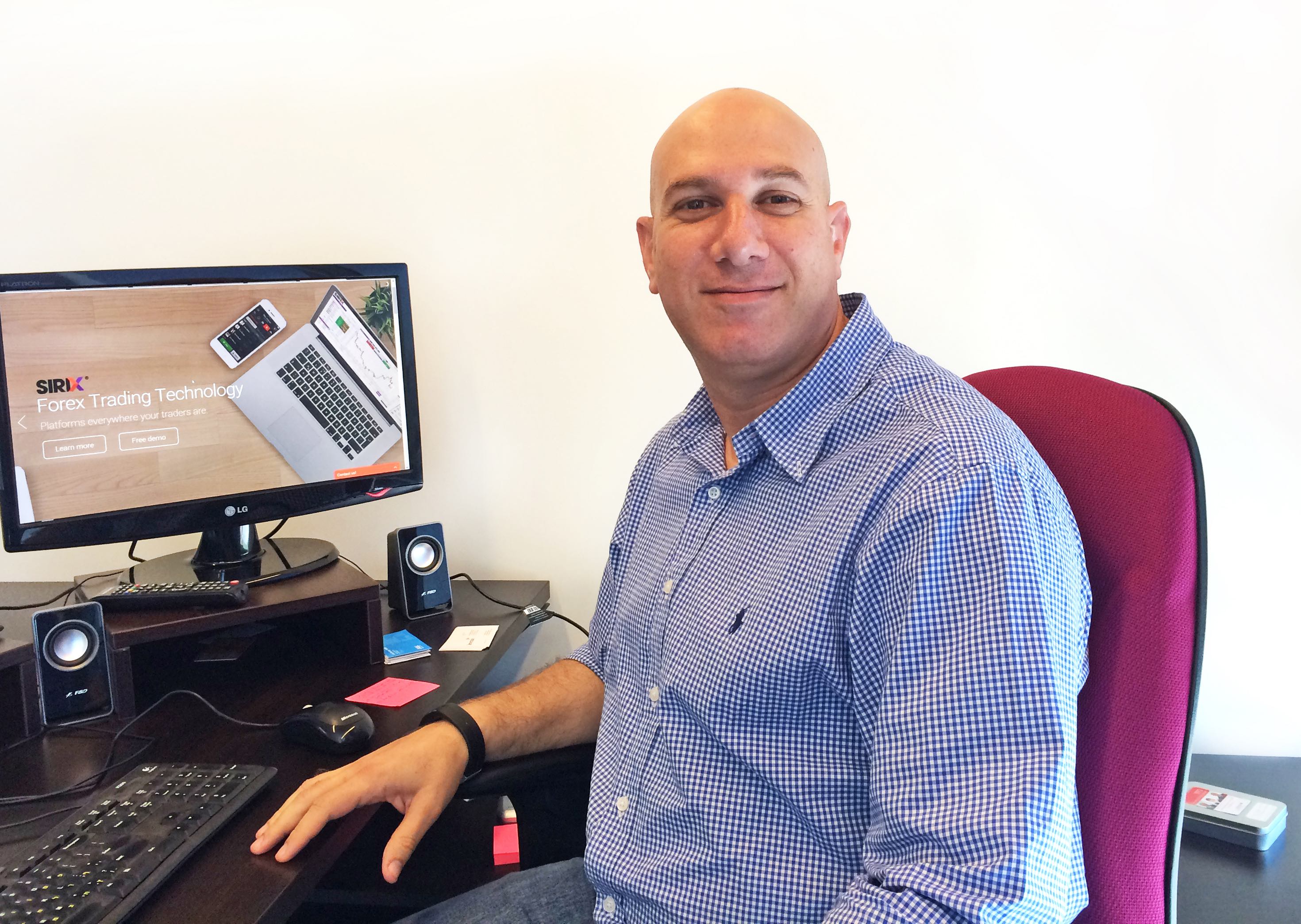
After 4 years at Playtech, Mr. Gur lays out ambitious plans for Leverate and spells out how the company can improve and grow moving forward.
FM
“I am a graduate of two schools,” says Leverate’s new Chief Executive Officer, Kobi Gur. “One is Amdocs, for management, the other is Playtech, for business.”
Our first, half-joking question was if he envisions Leverate becoming the Playtech of retail FX. “I don’t want to be presumptuous,” he says, as “Playtech had a couple of defining moments that made it what it is. I wish they’ll happen to Leverate too.”
As the conversation unfolded, Mr. Gur made it clear that at the moment the prospect of an initial public offering (IPO) is currently “not on the agenda”.
“We don’t talk about it explicitly, as we are a private company,” Mr. Gur clarified. “I can’t say yes and cannot say no. We are busier in developing the firm so it would achieve a dramatic growth in terms of figures.”
One aspect of such growth, as illustrated by Mr. Gur, lies in Leverate’s ability to culture regional development. “We opened the APAC branch a year and a half ago and are recruiting intensively since, mostly in China. Now the APAC includes also Malaysia, Indonesia, Cambodia, and Vietnam – these are countries with huge potential. Every day I ask Itai Damti, our APAC Regional Manager: What can we do in order to open up this space further?”
Additionally, “One of things that I will reinstate much more firmly in Leverate is numbers-backed decisions, and I am sure that Finance Magnates as a research body understands its importance. If we look into new markets, we must start with the country’s GDP, the size of its middle class and so forth.”
Inventing the Industry, Reinventing Leverate
Mr. Gur heralded Leverate’s legacy stature, however was keenly aware that in order to achieve the growth he is aiming for, the technology firm would need to do some work in interacting with brokers.
Leverate enjoyed the booming of the industry, which to a large extent it has invented
“Leverate enjoyed the booming of the industry, which to a large extent it has invented,” he says. “But we need to understand more deeply what the brokers need as we go forward. When offering a product, you can either cater to your clients’ existing needs, or provide them with what they still don’t know that they do. Coming from the gaming industry, which is very similar to ours, I have 5-7 years’ worth of experience which helps me to anticipate the market.”
In What Areas?
“Take Mobile for example. 55% of online sport gambling is done via mobile, and this makes perfect sense for forex as well. A trader won’t install Metatrader on his office’s computer, nor will he use the webtrader. But will check up on his positions from his personal device. Leverate is already there – but the brokers are hardly keeping up.” Mr. Gur estimates that mobile trading does not constitute more than 20% of the trades Leverate is processing, rather the number may be closer to 10%.
According to Mr. Gur, for a technology provider this entailed ramping up its means of inspection of clients, to know who they are and who will stick around. “Regulation leads to consolidation. The bigger brokers will buy the smaller ones, which will disappear. I have seen it both in gaming and the telecom industry.”
Leverate itself, however, is still working with the long tail of unregulated brokers. To that Mr. Gur responded by stating that the firm is about to become “pickier” in choosing clients. “I want clients I can go along for the long run,” he said.
The most vivid example for the perils of reckless partners could be found in CWMFX, the London-based broker whose parent group CWM was raided by the police. One of the group’s brands was offering a “fixed” 5% return, alluring investors into a murky bargain. The case drew great attention because of the group’s string of flashy sport sponsorships, most notably by Chelsea F.C.
I say it on record: We were examined inside out by regulators, by auditors, and we couldn't have turned out any cleaner than we did.
One challenge that B2B providers have to deal with, at least with the mid-higher tier level of the industry, is brokers choosing to develop their own technology. Leverate itself has seen Markets.com, albeit as part of a greater strategy of its parent group, adding a proprietary platform to its services. In June, Saxo Bank launched SaxoTraderGo, relinquishing MT4 business altogether. In Mr. Gur’s view, relying on a tech company like Leverate is plainly a wiser division of labor.
“In today’s aggressively competitive environment, everyone is offering pretty much the same. The same bonuses for the same instruments. Brokers are looking for differentiators.”
How can Leverate offer that for a hundred brands using the same product?
“When your system is robust and configurable enough to put inside it your business logic, it would make the difference. When your focus is on marketing, converting and retaining clients, and not on the technology side, you can refine your expertise. And we will allow that – whatever you need, we watch your back.”
“Leverate is a product company – the fact that a single product is delivered to various clients, and is being built and tweaked with their needs and input, makes it a very robust product. The benefit of being big is palpable in this aspect,” he reiterated.
But how does the joint effort and experience translate into uniqueness?
“Again, the system is very easy to configure. If you open a brokerage and want to go in a certain way, and I want to go another, using other tactics and methods – that’s possible. None of our competitors allow such flexibility. Leverate is a 150 employee strong firm, all of which is tech. This is an immense powerhouse.”
Concluding the conversation, Mr. Gur spoke about joining a relatively cohesive firm, with little senior management experience from outside. “The founders took a bold decision by appointing an outsider, who didn’t grow in the company,” he says. Looking forward, his goal is to “fortify Leverate position and ratchet it up to be a real industry thought leader.”
“I work closely with the board. We started out the process a month ago – minus a week in Cyprus – with lots of pending questions marks. By now we have narrowed most of them as to one month, three months, a year and three years from now. About the latter we are not sure yet.”
“I am a graduate of two schools,” says Leverate’s new Chief Executive Officer, Kobi Gur. “One is Amdocs, for management, the other is Playtech, for business.”
Our first, half-joking question was if he envisions Leverate becoming the Playtech of retail FX. “I don’t want to be presumptuous,” he says, as “Playtech had a couple of defining moments that made it what it is. I wish they’ll happen to Leverate too.”
As the conversation unfolded, Mr. Gur made it clear that at the moment the prospect of an initial public offering (IPO) is currently “not on the agenda”.
“We don’t talk about it explicitly, as we are a private company,” Mr. Gur clarified. “I can’t say yes and cannot say no. We are busier in developing the firm so it would achieve a dramatic growth in terms of figures.”
One aspect of such growth, as illustrated by Mr. Gur, lies in Leverate’s ability to culture regional development. “We opened the APAC branch a year and a half ago and are recruiting intensively since, mostly in China. Now the APAC includes also Malaysia, Indonesia, Cambodia, and Vietnam – these are countries with huge potential. Every day I ask Itai Damti, our APAC Regional Manager: What can we do in order to open up this space further?”
Additionally, “One of things that I will reinstate much more firmly in Leverate is numbers-backed decisions, and I am sure that Finance Magnates as a research body understands its importance. If we look into new markets, we must start with the country’s GDP, the size of its middle class and so forth.”
Inventing the Industry, Reinventing Leverate
Mr. Gur heralded Leverate’s legacy stature, however was keenly aware that in order to achieve the growth he is aiming for, the technology firm would need to do some work in interacting with brokers.
Leverate enjoyed the booming of the industry, which to a large extent it has invented
“Leverate enjoyed the booming of the industry, which to a large extent it has invented,” he says. “But we need to understand more deeply what the brokers need as we go forward. When offering a product, you can either cater to your clients’ existing needs, or provide them with what they still don’t know that they do. Coming from the gaming industry, which is very similar to ours, I have 5-7 years’ worth of experience which helps me to anticipate the market.”
In What Areas?
“Take Mobile for example. 55% of online sport gambling is done via mobile, and this makes perfect sense for forex as well. A trader won’t install Metatrader on his office’s computer, nor will he use the webtrader. But will check up on his positions from his personal device. Leverate is already there – but the brokers are hardly keeping up.” Mr. Gur estimates that mobile trading does not constitute more than 20% of the trades Leverate is processing, rather the number may be closer to 10%.
According to Mr. Gur, for a technology provider this entailed ramping up its means of inspection of clients, to know who they are and who will stick around. “Regulation leads to consolidation. The bigger brokers will buy the smaller ones, which will disappear. I have seen it both in gaming and the telecom industry.”
Leverate itself, however, is still working with the long tail of unregulated brokers. To that Mr. Gur responded by stating that the firm is about to become “pickier” in choosing clients. “I want clients I can go along for the long run,” he said.
The most vivid example for the perils of reckless partners could be found in CWMFX, the London-based broker whose parent group CWM was raided by the police. One of the group’s brands was offering a “fixed” 5% return, alluring investors into a murky bargain. The case drew great attention because of the group’s string of flashy sport sponsorships, most notably by Chelsea F.C.
I say it on record: We were examined inside out by regulators, by auditors, and we couldn't have turned out any cleaner than we did.
One challenge that B2B providers have to deal with, at least with the mid-higher tier level of the industry, is brokers choosing to develop their own technology. Leverate itself has seen Markets.com, albeit as part of a greater strategy of its parent group, adding a proprietary platform to its services. In June, Saxo Bank launched SaxoTraderGo, relinquishing MT4 business altogether. In Mr. Gur’s view, relying on a tech company like Leverate is plainly a wiser division of labor.
“In today’s aggressively competitive environment, everyone is offering pretty much the same. The same bonuses for the same instruments. Brokers are looking for differentiators.”
How can Leverate offer that for a hundred brands using the same product?
“When your system is robust and configurable enough to put inside it your business logic, it would make the difference. When your focus is on marketing, converting and retaining clients, and not on the technology side, you can refine your expertise. And we will allow that – whatever you need, we watch your back.”
“Leverate is a product company – the fact that a single product is delivered to various clients, and is being built and tweaked with their needs and input, makes it a very robust product. The benefit of being big is palpable in this aspect,” he reiterated.
But how does the joint effort and experience translate into uniqueness?
“Again, the system is very easy to configure. If you open a brokerage and want to go in a certain way, and I want to go another, using other tactics and methods – that’s possible. None of our competitors allow such flexibility. Leverate is a 150 employee strong firm, all of which is tech. This is an immense powerhouse.”
Concluding the conversation, Mr. Gur spoke about joining a relatively cohesive firm, with little senior management experience from outside. “The founders took a bold decision by appointing an outsider, who didn’t grow in the company,” he says. Looking forward, his goal is to “fortify Leverate position and ratchet it up to be a real industry thought leader.”
“I work closely with the board. We started out the process a month ago – minus a week in Cyprus – with lots of pending questions marks. By now we have narrowed most of them as to one month, three months, a year and three years from now. About the latter we are not sure yet.”
After Nearly Two Decades, Sam Irwin Follows Former IG CEO to Crypto.com
Featured Videos
Executive Interview | Charlotte Bullock | Chief Product Officer, Bank of London | FMLS:25
In this interview, we sat down with Charlotte Bullock, Head of Product at The Bank of London, previously at SAP and now shaping product at one of the sector’s most ambitious new banking players.
Charlotte reflects on the Summit so far and talks about the culture inside fintech banks today. We look at the pressures that come with scaling, and how firms can hold onto the nimble approach that made them stand out early on.
We also cover the state of payments ahead of her appearance on the payments roundtable: the blockages financial firms face, the areas that still need fixing, and what a realistic solution looks like in 2026.
In this interview, we sat down with Charlotte Bullock, Head of Product at The Bank of London, previously at SAP and now shaping product at one of the sector’s most ambitious new banking players.
Charlotte reflects on the Summit so far and talks about the culture inside fintech banks today. We look at the pressures that come with scaling, and how firms can hold onto the nimble approach that made them stand out early on.
We also cover the state of payments ahead of her appearance on the payments roundtable: the blockages financial firms face, the areas that still need fixing, and what a realistic solution looks like in 2026.
In this interview, we sat down with Charlotte Bullock, Head of Product at The Bank of London, previously at SAP and now shaping product at one of the sector’s most ambitious new banking players.
Charlotte reflects on the Summit so far and talks about the culture inside fintech banks today. We look at the pressures that come with scaling, and how firms can hold onto the nimble approach that made them stand out early on.
We also cover the state of payments ahead of her appearance on the payments roundtable: the blockages financial firms face, the areas that still need fixing, and what a realistic solution looks like in 2026.
In this interview, we sat down with Charlotte Bullock, Head of Product at The Bank of London, previously at SAP and now shaping product at one of the sector’s most ambitious new banking players.
Charlotte reflects on the Summit so far and talks about the culture inside fintech banks today. We look at the pressures that come with scaling, and how firms can hold onto the nimble approach that made them stand out early on.
We also cover the state of payments ahead of her appearance on the payments roundtable: the blockages financial firms face, the areas that still need fixing, and what a realistic solution looks like in 2026.
In this conversation, we sit down with Drew Niv, CSO at ATFX Connect and one of the most influential figures in modern FX.
We speak about market structure, the institutional view on liquidity, and the sharp rise of prop trading, a sector Drew has been commenting on in recent months. Drew explains why he once dismissed prop trading, why his view changed, and what he now thinks the model means for brokers, clients and risk managers.
We explore subscription-fee dependency, the high reneging rate, and the long-term challenge: how brokers can build a more stable and honest version of the model. Drew also talks about the traffic advantage standalone prop firms have built and why brokers may still win in the long run if they take the right approach.
In this conversation, we sit down with Drew Niv, CSO at ATFX Connect and one of the most influential figures in modern FX.
We speak about market structure, the institutional view on liquidity, and the sharp rise of prop trading, a sector Drew has been commenting on in recent months. Drew explains why he once dismissed prop trading, why his view changed, and what he now thinks the model means for brokers, clients and risk managers.
We explore subscription-fee dependency, the high reneging rate, and the long-term challenge: how brokers can build a more stable and honest version of the model. Drew also talks about the traffic advantage standalone prop firms have built and why brokers may still win in the long run if they take the right approach.
In this conversation, we sit down with Drew Niv, CSO at ATFX Connect and one of the most influential figures in modern FX.
We speak about market structure, the institutional view on liquidity, and the sharp rise of prop trading, a sector Drew has been commenting on in recent months. Drew explains why he once dismissed prop trading, why his view changed, and what he now thinks the model means for brokers, clients and risk managers.
We explore subscription-fee dependency, the high reneging rate, and the long-term challenge: how brokers can build a more stable and honest version of the model. Drew also talks about the traffic advantage standalone prop firms have built and why brokers may still win in the long run if they take the right approach.
In this conversation, we sit down with Drew Niv, CSO at ATFX Connect and one of the most influential figures in modern FX.
We speak about market structure, the institutional view on liquidity, and the sharp rise of prop trading, a sector Drew has been commenting on in recent months. Drew explains why he once dismissed prop trading, why his view changed, and what he now thinks the model means for brokers, clients and risk managers.
We explore subscription-fee dependency, the high reneging rate, and the long-term challenge: how brokers can build a more stable and honest version of the model. Drew also talks about the traffic advantage standalone prop firms have built and why brokers may still win in the long run if they take the right approach.
In this conversation, we sit down with Drew Niv, CSO at ATFX Connect and one of the most influential figures in modern FX.
We speak about market structure, the institutional view on liquidity, and the sharp rise of prop trading, a sector Drew has been commenting on in recent months. Drew explains why he once dismissed prop trading, why his view changed, and what he now thinks the model means for brokers, clients and risk managers.
We explore subscription-fee dependency, the high reneging rate, and the long-term challenge: how brokers can build a more stable and honest version of the model. Drew also talks about the traffic advantage standalone prop firms have built and why brokers may still win in the long run if they take the right approach.
In this conversation, we sit down with Drew Niv, CSO at ATFX Connect and one of the most influential figures in modern FX.
We speak about market structure, the institutional view on liquidity, and the sharp rise of prop trading, a sector Drew has been commenting on in recent months. Drew explains why he once dismissed prop trading, why his view changed, and what he now thinks the model means for brokers, clients and risk managers.
We explore subscription-fee dependency, the high reneging rate, and the long-term challenge: how brokers can build a more stable and honest version of the model. Drew also talks about the traffic advantage standalone prop firms have built and why brokers may still win in the long run if they take the right approach.
Executive Interview | Remonda Z. Kirketerp Møller| CEO & Founder Muinmos | FMLS:25
In this interview, Remonda Z. Kirketerp Møller, founder of Muinmos, breaks down the state of AI in regtech and what responsible adoption really looks like for brokers. We talk about rising fragmentation, the pressures around compliance accuracy, and why most firms are still in the early stages of AI maturity.
Ramanda also shares insights on regulator sandboxes, shifting expectations around accountability, and the current reality of MiCA licensing and passporting in Europe.
A concise look at where compliance, onboarding, and AI-driven processes are heading next.
In this interview, Remonda Z. Kirketerp Møller, founder of Muinmos, breaks down the state of AI in regtech and what responsible adoption really looks like for brokers. We talk about rising fragmentation, the pressures around compliance accuracy, and why most firms are still in the early stages of AI maturity.
Ramanda also shares insights on regulator sandboxes, shifting expectations around accountability, and the current reality of MiCA licensing and passporting in Europe.
A concise look at where compliance, onboarding, and AI-driven processes are heading next.
In this interview, Remonda Z. Kirketerp Møller, founder of Muinmos, breaks down the state of AI in regtech and what responsible adoption really looks like for brokers. We talk about rising fragmentation, the pressures around compliance accuracy, and why most firms are still in the early stages of AI maturity.
Ramanda also shares insights on regulator sandboxes, shifting expectations around accountability, and the current reality of MiCA licensing and passporting in Europe.
A concise look at where compliance, onboarding, and AI-driven processes are heading next.
In this interview, Remonda Z. Kirketerp Møller, founder of Muinmos, breaks down the state of AI in regtech and what responsible adoption really looks like for brokers. We talk about rising fragmentation, the pressures around compliance accuracy, and why most firms are still in the early stages of AI maturity.
Ramanda also shares insights on regulator sandboxes, shifting expectations around accountability, and the current reality of MiCA licensing and passporting in Europe.
A concise look at where compliance, onboarding, and AI-driven processes are heading next.
In this interview, Remonda Z. Kirketerp Møller, founder of Muinmos, breaks down the state of AI in regtech and what responsible adoption really looks like for brokers. We talk about rising fragmentation, the pressures around compliance accuracy, and why most firms are still in the early stages of AI maturity.
Ramanda also shares insights on regulator sandboxes, shifting expectations around accountability, and the current reality of MiCA licensing and passporting in Europe.
A concise look at where compliance, onboarding, and AI-driven processes are heading next.
In this interview, Remonda Z. Kirketerp Møller, founder of Muinmos, breaks down the state of AI in regtech and what responsible adoption really looks like for brokers. We talk about rising fragmentation, the pressures around compliance accuracy, and why most firms are still in the early stages of AI maturity.
Ramanda also shares insights on regulator sandboxes, shifting expectations around accountability, and the current reality of MiCA licensing and passporting in Europe.
A concise look at where compliance, onboarding, and AI-driven processes are heading next.
In this conversation, we speak with Aydin Bonabi, CEO and co-founder of Surveill, a firm focused on fraud detection and AI-driven compliance tools for financial institutions.
We start with Aydin’s view of the Summit and the challenges brokers face as fraud tactics grow more complex. He explains how firms can stay ahead through real-time signals, data patterns, and early-stage detection.
We also talk about AI training and why compliance teams often struggle to keep models accurate, fair, and aligned with regulatory expectations. Aydin breaks down what “good” AI training looks like inside a financial environment, including the importance of clean data, domain expertise, and human oversight.
He closes with a clear message: fraud is scaling, and so must the tools that stop it.
In this conversation, we speak with Aydin Bonabi, CEO and co-founder of Surveill, a firm focused on fraud detection and AI-driven compliance tools for financial institutions.
We start with Aydin’s view of the Summit and the challenges brokers face as fraud tactics grow more complex. He explains how firms can stay ahead through real-time signals, data patterns, and early-stage detection.
We also talk about AI training and why compliance teams often struggle to keep models accurate, fair, and aligned with regulatory expectations. Aydin breaks down what “good” AI training looks like inside a financial environment, including the importance of clean data, domain expertise, and human oversight.
He closes with a clear message: fraud is scaling, and so must the tools that stop it.
In this conversation, we speak with Aydin Bonabi, CEO and co-founder of Surveill, a firm focused on fraud detection and AI-driven compliance tools for financial institutions.
We start with Aydin’s view of the Summit and the challenges brokers face as fraud tactics grow more complex. He explains how firms can stay ahead through real-time signals, data patterns, and early-stage detection.
We also talk about AI training and why compliance teams often struggle to keep models accurate, fair, and aligned with regulatory expectations. Aydin breaks down what “good” AI training looks like inside a financial environment, including the importance of clean data, domain expertise, and human oversight.
He closes with a clear message: fraud is scaling, and so must the tools that stop it.
In this conversation, we speak with Aydin Bonabi, CEO and co-founder of Surveill, a firm focused on fraud detection and AI-driven compliance tools for financial institutions.
We start with Aydin’s view of the Summit and the challenges brokers face as fraud tactics grow more complex. He explains how firms can stay ahead through real-time signals, data patterns, and early-stage detection.
We also talk about AI training and why compliance teams often struggle to keep models accurate, fair, and aligned with regulatory expectations. Aydin breaks down what “good” AI training looks like inside a financial environment, including the importance of clean data, domain expertise, and human oversight.
He closes with a clear message: fraud is scaling, and so must the tools that stop it.
In this conversation, we speak with Aydin Bonabi, CEO and co-founder of Surveill, a firm focused on fraud detection and AI-driven compliance tools for financial institutions.
We start with Aydin’s view of the Summit and the challenges brokers face as fraud tactics grow more complex. He explains how firms can stay ahead through real-time signals, data patterns, and early-stage detection.
We also talk about AI training and why compliance teams often struggle to keep models accurate, fair, and aligned with regulatory expectations. Aydin breaks down what “good” AI training looks like inside a financial environment, including the importance of clean data, domain expertise, and human oversight.
He closes with a clear message: fraud is scaling, and so must the tools that stop it.
In this conversation, we speak with Aydin Bonabi, CEO and co-founder of Surveill, a firm focused on fraud detection and AI-driven compliance tools for financial institutions.
We start with Aydin’s view of the Summit and the challenges brokers face as fraud tactics grow more complex. He explains how firms can stay ahead through real-time signals, data patterns, and early-stage detection.
We also talk about AI training and why compliance teams often struggle to keep models accurate, fair, and aligned with regulatory expectations. Aydin breaks down what “good” AI training looks like inside a financial environment, including the importance of clean data, domain expertise, and human oversight.
He closes with a clear message: fraud is scaling, and so must the tools that stop it.
Exness expands its presence in Africa: Inside our interview with Paul Margarites in Cape Town
Finance Magnates met with Paul Margarites, Exness regional commercial director for Sub-Saharan Africa, during a visit to the firm’s office opening in Cape Town. In this talk, led by Andrea Badiola Mateos, Co-CEO at Finance Magnates, Paul shares views on the South African trading space, local user behavior, mobile trends, regulation, team growth, and how Exness plans to grow in more markets across the region. @Exness
Read the article at: https://www.financemagnates.com/thought-leadership/exness-expands-its-presence-in-africa-inside-our-interview-with-paul-margarites/
#exness #financemagnates #exnesstrading #CFDtrading #tradeonline #africanews #capetown
Finance Magnates met with Paul Margarites, Exness regional commercial director for Sub-Saharan Africa, during a visit to the firm’s office opening in Cape Town. In this talk, led by Andrea Badiola Mateos, Co-CEO at Finance Magnates, Paul shares views on the South African trading space, local user behavior, mobile trends, regulation, team growth, and how Exness plans to grow in more markets across the region. @Exness
Read the article at: https://www.financemagnates.com/thought-leadership/exness-expands-its-presence-in-africa-inside-our-interview-with-paul-margarites/
#exness #financemagnates #exnesstrading #CFDtrading #tradeonline #africanews #capetown
Finance Magnates met with Paul Margarites, Exness regional commercial director for Sub-Saharan Africa, during a visit to the firm’s office opening in Cape Town. In this talk, led by Andrea Badiola Mateos, Co-CEO at Finance Magnates, Paul shares views on the South African trading space, local user behavior, mobile trends, regulation, team growth, and how Exness plans to grow in more markets across the region. @Exness
Read the article at: https://www.financemagnates.com/thought-leadership/exness-expands-its-presence-in-africa-inside-our-interview-with-paul-margarites/
#exness #financemagnates #exnesstrading #CFDtrading #tradeonline #africanews #capetown
Finance Magnates met with Paul Margarites, Exness regional commercial director for Sub-Saharan Africa, during a visit to the firm’s office opening in Cape Town. In this talk, led by Andrea Badiola Mateos, Co-CEO at Finance Magnates, Paul shares views on the South African trading space, local user behavior, mobile trends, regulation, team growth, and how Exness plans to grow in more markets across the region. @Exness
Read the article at: https://www.financemagnates.com/thought-leadership/exness-expands-its-presence-in-africa-inside-our-interview-with-paul-margarites/
#exness #financemagnates #exnesstrading #CFDtrading #tradeonline #africanews #capetown
Finance Magnates met with Paul Margarites, Exness regional commercial director for Sub-Saharan Africa, during a visit to the firm’s office opening in Cape Town. In this talk, led by Andrea Badiola Mateos, Co-CEO at Finance Magnates, Paul shares views on the South African trading space, local user behavior, mobile trends, regulation, team growth, and how Exness plans to grow in more markets across the region. @Exness
Read the article at: https://www.financemagnates.com/thought-leadership/exness-expands-its-presence-in-africa-inside-our-interview-with-paul-margarites/
#exness #financemagnates #exnesstrading #CFDtrading #tradeonline #africanews #capetown
Finance Magnates met with Paul Margarites, Exness regional commercial director for Sub-Saharan Africa, during a visit to the firm’s office opening in Cape Town. In this talk, led by Andrea Badiola Mateos, Co-CEO at Finance Magnates, Paul shares views on the South African trading space, local user behavior, mobile trends, regulation, team growth, and how Exness plans to grow in more markets across the region. @Exness
Read the article at: https://www.financemagnates.com/thought-leadership/exness-expands-its-presence-in-africa-inside-our-interview-with-paul-margarites/
#exness #financemagnates #exnesstrading #CFDtrading #tradeonline #africanews #capetown