More people are becoming interested in NDFs, but there is a caveat...
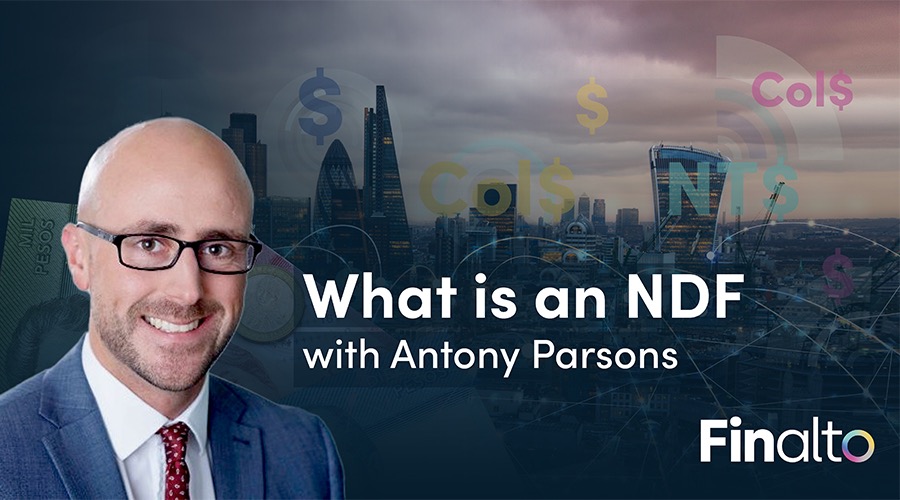
As part of our commitment to bring interesting and innovative opportunities to our clients Finalto offers NDF assets within our trading ecosystems. To understand how this exciting asset class fits into your strategy, Finalto sat down with its Head of Liquidity, Antony Parsons. In this interview we explore what NDFs are and why they and how they solve liquidity issues for less accessible currency pairs.
What is an NDF?
NDF stands for, ‘non-deliverable forward’. They are a type of forward contract used in foreign exchange markets. When trading an NDF, counterparties agree to settle the difference between the contracted NDF rate and the prevailing spot exchange rate on a specified future date. The key characteristic behind an NDF contract is that they are settled in cash rather than physical delivery of the underlying currency.
Why is it significant that NDFs are settled in cash?
Certain assets are more difficult to deliver than others. For example, EUR/USD is a very deliverable asset because it is easy to find liquidity in both the Euro and US Dollars. However, something like USD/BRL isn't as deliverable as it is harder to find liquidity for the Real. By using a cash deliverable contract this makes these otherwise inaccessible forex pairs much more viable additions to a portfolio. This same principle can be applied for lots of places that have currency controls, and NDFs can be used as a way of acting on or hedging any interesting but less liquid opportunities.
Is there an increasing demand for NDFs in the market right now? Where is that coming from?
In a broad sense, yes. More people are becoming interested in NDFs, but there is a caveat as in a lot of cases the demand can be increasingly made up of people hedging rather than looking to speculate on the currency. A big advantage for companies with foreign offices is that NDFs make it possible to hedge the exchange rate risk of an expansion. However, there will still be a good amount of demand for NDFs from those looking to speculate. Especially for NDFs, there can be quite a lot of volatility in these types of pairs so it can be an interesting addition to a well risk managed portfolio.
Is hedging the main use for NDFs? How would someone use NDFs to hedge against risk?
Hedging or speculation, it'd be one of the two. For hedging, we can use the Brazilian Real as an example again. If there's a firm who has a Brazilian office, that firm will have to pay salaries in Brazilian to its local employees. Therefore, they are at least partly tied to the value of Brazilian currency in their operating cycle; to manage their exposure that more volatile currency, they can hedge the difference between another currency and Brazilian. Because an NDF is essentially a forward contract, it makes it much easier to hedge against the less available currency.
The same principle applies to speculation. You can go to Brazil and get Brazilian Real but outside of that economy it is much harder trying to access and trade that currency, because there's limited liquidity. That's where an NDF comes in and allows brokers and traders to speculate on these instruments without the need for a deliverable currency.
As part of our commitment to bring interesting and innovative opportunities to our clients Finalto offers NDF assets within our trading ecosystems. To understand how this exciting asset class fits into your strategy, Finalto sat down with its Head of Liquidity, Antony Parsons. In this interview we explore what NDFs are and why they and how they solve liquidity issues for less accessible currency pairs.
What is an NDF?
NDF stands for, ‘non-deliverable forward’. They are a type of forward contract used in foreign exchange markets. When trading an NDF, counterparties agree to settle the difference between the contracted NDF rate and the prevailing spot exchange rate on a specified future date. The key characteristic behind an NDF contract is that they are settled in cash rather than physical delivery of the underlying currency.
Why is it significant that NDFs are settled in cash?
Certain assets are more difficult to deliver than others. For example, EUR/USD is a very deliverable asset because it is easy to find liquidity in both the Euro and US Dollars. However, something like USD/BRL isn't as deliverable as it is harder to find liquidity for the Real. By using a cash deliverable contract this makes these otherwise inaccessible forex pairs much more viable additions to a portfolio. This same principle can be applied for lots of places that have currency controls, and NDFs can be used as a way of acting on or hedging any interesting but less liquid opportunities.
Is there an increasing demand for NDFs in the market right now? Where is that coming from?
In a broad sense, yes. More people are becoming interested in NDFs, but there is a caveat as in a lot of cases the demand can be increasingly made up of people hedging rather than looking to speculate on the currency. A big advantage for companies with foreign offices is that NDFs make it possible to hedge the exchange rate risk of an expansion. However, there will still be a good amount of demand for NDFs from those looking to speculate. Especially for NDFs, there can be quite a lot of volatility in these types of pairs so it can be an interesting addition to a well risk managed portfolio.
Is hedging the main use for NDFs? How would someone use NDFs to hedge against risk?
Hedging or speculation, it'd be one of the two. For hedging, we can use the Brazilian Real as an example again. If there's a firm who has a Brazilian office, that firm will have to pay salaries in Brazilian to its local employees. Therefore, they are at least partly tied to the value of Brazilian currency in their operating cycle; to manage their exposure that more volatile currency, they can hedge the difference between another currency and Brazilian. Because an NDF is essentially a forward contract, it makes it much easier to hedge against the less available currency.
The same principle applies to speculation. You can go to Brazil and get Brazilian Real but outside of that economy it is much harder trying to access and trade that currency, because there's limited liquidity. That's where an NDF comes in and allows brokers and traders to speculate on these instruments without the need for a deliverable currency.
FP Markets Winner Spotlight 🏆 | Global Broker of the Year 2025 #Trading #Broker #Innovation #Shorts
FP Markets Winner Spotlight 🏆 | Global Broker of the Year 2025 #Trading #Broker #Innovation #Shorts
FP Markets takes the spotlight as Global Broker of the Year 2025 at the Finance Magnates Awards.
Martin Stoilov, Head of Client Experience, shares that trust, innovation, and people played a key role in the company’s success, supported by a strong foundation of integrity and client-centricity.
Following this milestone, FP Markets continues to focus on growth, technology investment, and its core values of transparency and excellence.
👉 Be part of FM Awards 2026: https://awards.financemagnates.com/#nominate
FP Markets takes the spotlight as Global Broker of the Year 2025 at the Finance Magnates Awards.
Martin Stoilov, Head of Client Experience, shares that trust, innovation, and people played a key role in the company’s success, supported by a strong foundation of integrity and client-centricity.
Following this milestone, FP Markets continues to focus on growth, technology investment, and its core values of transparency and excellence.
👉 Be part of FM Awards 2026: https://awards.financemagnates.com/#nominate
In this video, we review @HolaPrimeMarketsOfficial, a multi-asset forex and CFDs broker offering different account types, trading platforms, and flexible trading conditions.
We cover the broker’s overall offering, including account options, trading environment, platforms like MT4 and MT5, and additional services such as managed accounts and fast withdrawals.
Watch the full video to see if Hola Prime Markets fits your trading needs.
📣 Stay up to date with the latest in finance and trading. Follow Finance Magnates for industry news, insights, and global event coverage.
Connect with us:
🔗 LinkedIn: /financemagnates
👍 Facebook: /financemagnates
📸 Instagram: https://www.instagram.com/financemagnates
🐦 X: https://x.com/financemagnates
🎥 TikTok: https://www.tiktok.com/tag/financemagnates
▶️ YouTube: /@financemagnates_official
#HolaPrime #ForexBroker #CFDTrading #FinanceMagnates #Trading #Forex #BrokerReview
In this video, we review @HolaPrimeMarketsOfficial, a multi-asset forex and CFDs broker offering different account types, trading platforms, and flexible trading conditions.
We cover the broker’s overall offering, including account options, trading environment, platforms like MT4 and MT5, and additional services such as managed accounts and fast withdrawals.
Watch the full video to see if Hola Prime Markets fits your trading needs.
📣 Stay up to date with the latest in finance and trading. Follow Finance Magnates for industry news, insights, and global event coverage.
Connect with us:
🔗 LinkedIn: /financemagnates
👍 Facebook: /financemagnates
📸 Instagram: https://www.instagram.com/financemagnates
🐦 X: https://x.com/financemagnates
🎥 TikTok: https://www.tiktok.com/tag/financemagnates
▶️ YouTube: /@financemagnates_official
#HolaPrime #ForexBroker #CFDTrading #FinanceMagnates #Trading #Forex #BrokerReview
Hola Prime Review: What You Need to Know | Full Breakdown by Finance Magnates
Hola Prime Review: What You Need to Know | Full Breakdown by Finance Magnates
In this video, we review @HolaPrime_Global, a proprietary trading firm offering evaluation programs and performance-based payouts in simulated market environments.
We cover how the challenge model works, including account types, profit splits (up to 95%), trading rules, and what it takes to reach a funded account. You’ll also learn about available platforms like MT4, MT5, cTrader, and more, along with insights into payouts, support, and trading conditions.
Watch the full video to see if Hola Prime fits your trading style.
📣 Stay up to date with the latest in finance and trading. Follow Finance Magnates for industry news, insights, and global event coverage.
Connect with us:
🔗 LinkedIn: /financemagnates
👍 Facebook: /financemagnates
📸 Instagram: https://www.instagram.com/financemagnates
🐦 X: https://x.com/financemagnates
🎥 TikTok: https://www.tiktok.com/tag/financemagnates
▶️ YouTube: /@financemagnates_official
#HolaPrime #PropFirm #Trading #FinanceMagnates #Forex #FuturesTrading #TradingReview #PropFirmReview
In this video, we review @HolaPrime_Global, a proprietary trading firm offering evaluation programs and performance-based payouts in simulated market environments.
We cover how the challenge model works, including account types, profit splits (up to 95%), trading rules, and what it takes to reach a funded account. You’ll also learn about available platforms like MT4, MT5, cTrader, and more, along with insights into payouts, support, and trading conditions.
Watch the full video to see if Hola Prime fits your trading style.
📣 Stay up to date with the latest in finance and trading. Follow Finance Magnates for industry news, insights, and global event coverage.
Connect with us:
🔗 LinkedIn: /financemagnates
👍 Facebook: /financemagnates
📸 Instagram: https://www.instagram.com/financemagnates
🐦 X: https://x.com/financemagnates
🎥 TikTok: https://www.tiktok.com/tag/financemagnates
▶️ YouTube: /@financemagnates_official
#HolaPrime #PropFirm #Trading #FinanceMagnates #Forex #FuturesTrading #TradingReview #PropFirmReview
Axi Winner Spotlight 🏆 | Global Most Innovative Broker 2025 #Innovation #Trading #Fintech #Broker
Axi Winner Spotlight 🏆 | Global Most Innovative Broker 2025 #Innovation #Trading #Fintech #Broker
Axi takes the spotlight at the Finance Magnates Awards, winning Global Most Innovative Broker 2025.
Olivia Xenofontos and Ivanna Openko share how the team will feel: proud, motivated, and ready to keep delivering.
They also describe the night as well-organized, focused, and enjoyable for all.
👉 Be part of FM Awards 2026.
Axi takes the spotlight at the Finance Magnates Awards, winning Global Most Innovative Broker 2025.
Olivia Xenofontos and Ivanna Openko share how the team will feel: proud, motivated, and ready to keep delivering.
They also describe the night as well-organized, focused, and enjoyable for all.
👉 Be part of FM Awards 2026.
Recognition that matters.
Built on transparency.
Driven by the industry.
The Finance Magnates Awards 2026.
Nominations are now open.
🔗 https://awards.financemagnates.com/?utm_source=SM&utm_medium=social&utm_campaign=recognition-matters
Recognition that matters.
Built on transparency.
Driven by the industry.
The Finance Magnates Awards 2026.
Nominations are now open.
🔗 https://awards.financemagnates.com/?utm_source=SM&utm_medium=social&utm_campaign=recognition-matters