The Illusion of Access: 94% of Stocks Are Missing from Your App
Monday,10/11/2025|06:01GMTby
Finvasia
Most investing apps show the world—but let you own less than 10% of global stocks.
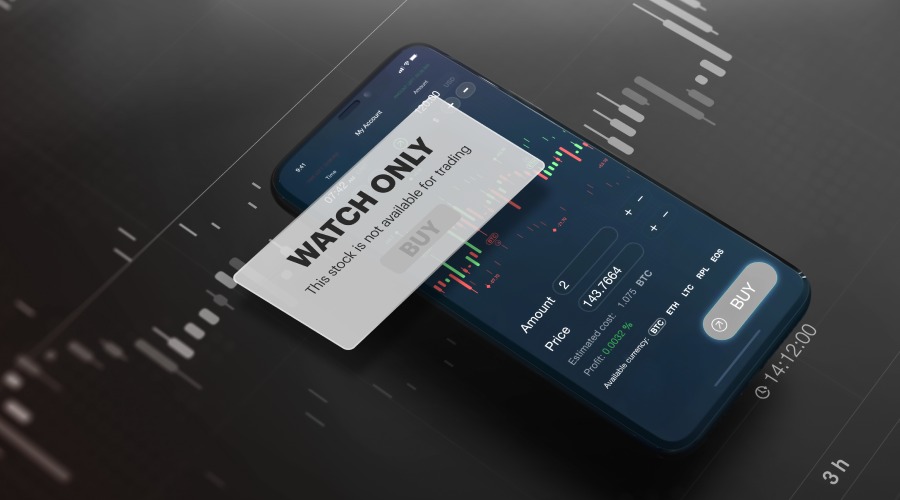
You open your investing app, type in a company name, and expect to own a small piece of it in seconds. Instead, the screen says “Watch only.” No buy button. Just a promise deferred.
It’s a small disappointment, but one that defines the modern investing experience.
For all the talk of “global access” and “borderless portfolios,” most investors are still boxed inside the same narrow slice of the world. There are more than 50,000 listed companies across 78 stock exchanges, according to the World Federation of Exchanges. Yet the average investing platform gives access to fewer than 5,000—less than 10 percent of the global market. The rest are invisible, though their logos may still appear in your app’s discovery feed.
That’s where illusion turns into architecture. Apps are designed to look complete. They highlight popular tickers and trending brands, letting users feel connected to the global economy even when most of it remains off-limits. Many of these tickers are “ghost listings”—symbols that appear under “Discover” or “Research” but can’t be traded. It’s a subtle psychological trick, not always intentional but always effective: users believe the world is open, because they can see it. But visibility isn’t ownership.
The reasons lie deep in the industry’s plumbing. Most platforms are licensed within a handful of jurisdictions and can’t legally let investors buy shares from every market. Each country’s rules on KYC, taxation, and settlement differ, and compliance across them all is slow, expensive, and complex. These processes are essential for accountability, but they make cross-border investing more complex than the “one-click access” experience many apps claim to offer. So the solution has been cosmetic: show the global façade, but let trading happen only where it’s easy—mostly in the U.S., the U.K., and a few developed Asian exchanges. Regions like Africa, Latin America, and Southeast Asia, where growth and innovation are exploding, remain outside the retail investor’s reach.
Even geography quietly edits your options. A user in one country might be barred from owning shares in another without being told why. Entire exchanges are restricted to non-residents, yet few platforms state this up front. The UK Financial Conduct Authority, in its 2023 review of trading apps, warned that this presentation risks misleading investors by making unavailable products look accessible. Transparency, not technology, is what’s missing.
For investors, this lack of clarity matters more than missing markets. It’s about trust. When a stock appears in search results, the user assumes they can buy it. When that assumption breaks, confidence erodes. A simple disclosure; what exchanges are live, what’s restricted, and why, would restore honesty without adding a single feature.
Investing should be about access, not aspiration. As Tajinder Virk, Co-Founder and Group CEO of Finvasia says: “The first time you travel abroad, you realize how much of the world you’d only read about. Investing works the same way until you’ve truly invested across markets, you don’t know what global really looks like. Dealing shouldn’t be theatre; it should be access. Real global investing isn’t about owning what everyone already owns it’s about discovering the companies the world hasn’t priced yet, the ones shaping the future from places most investors never look.”
Until platforms match their promises with what investors can actually own, global investing will remain an illusion—an experience that looks limitless but feels confined. The next generation of platforms won’t just display the world; they’ll finally open it.
You open your investing app, type in a company name, and expect to own a small piece of it in seconds. Instead, the screen says “Watch only.” No buy button. Just a promise deferred.
It’s a small disappointment, but one that defines the modern investing experience.
For all the talk of “global access” and “borderless portfolios,” most investors are still boxed inside the same narrow slice of the world. There are more than 50,000 listed companies across 78 stock exchanges, according to the World Federation of Exchanges. Yet the average investing platform gives access to fewer than 5,000—less than 10 percent of the global market. The rest are invisible, though their logos may still appear in your app’s discovery feed.
That’s where illusion turns into architecture. Apps are designed to look complete. They highlight popular tickers and trending brands, letting users feel connected to the global economy even when most of it remains off-limits. Many of these tickers are “ghost listings”—symbols that appear under “Discover” or “Research” but can’t be traded. It’s a subtle psychological trick, not always intentional but always effective: users believe the world is open, because they can see it. But visibility isn’t ownership.
The reasons lie deep in the industry’s plumbing. Most platforms are licensed within a handful of jurisdictions and can’t legally let investors buy shares from every market. Each country’s rules on KYC, taxation, and settlement differ, and compliance across them all is slow, expensive, and complex. These processes are essential for accountability, but they make cross-border investing more complex than the “one-click access” experience many apps claim to offer. So the solution has been cosmetic: show the global façade, but let trading happen only where it’s easy—mostly in the U.S., the U.K., and a few developed Asian exchanges. Regions like Africa, Latin America, and Southeast Asia, where growth and innovation are exploding, remain outside the retail investor’s reach.
Even geography quietly edits your options. A user in one country might be barred from owning shares in another without being told why. Entire exchanges are restricted to non-residents, yet few platforms state this up front. The UK Financial Conduct Authority, in its 2023 review of trading apps, warned that this presentation risks misleading investors by making unavailable products look accessible. Transparency, not technology, is what’s missing.
For investors, this lack of clarity matters more than missing markets. It’s about trust. When a stock appears in search results, the user assumes they can buy it. When that assumption breaks, confidence erodes. A simple disclosure; what exchanges are live, what’s restricted, and why, would restore honesty without adding a single feature.
Investing should be about access, not aspiration. As Tajinder Virk, Co-Founder and Group CEO of Finvasia says: “The first time you travel abroad, you realize how much of the world you’d only read about. Investing works the same way until you’ve truly invested across markets, you don’t know what global really looks like. Dealing shouldn’t be theatre; it should be access. Real global investing isn’t about owning what everyone already owns it’s about discovering the companies the world hasn’t priced yet, the ones shaping the future from places most investors never look.”
Until platforms match their promises with what investors can actually own, global investing will remain an illusion—an experience that looks limitless but feels confined. The next generation of platforms won’t just display the world; they’ll finally open it.
FP Markets Winner Spotlight 🏆 | Global Broker of the Year 2025 #Trading #Broker #Innovation #Shorts
FP Markets Winner Spotlight 🏆 | Global Broker of the Year 2025 #Trading #Broker #Innovation #Shorts
FP Markets takes the spotlight as Global Broker of the Year 2025 at the Finance Magnates Awards.
Martin Stoilov, Head of Client Experience, shares that trust, innovation, and people played a key role in the company’s success, supported by a strong foundation of integrity and client-centricity.
Following this milestone, FP Markets continues to focus on growth, technology investment, and its core values of transparency and excellence.
👉 Be part of FM Awards 2026: https://awards.financemagnates.com/#nominate
FP Markets takes the spotlight as Global Broker of the Year 2025 at the Finance Magnates Awards.
Martin Stoilov, Head of Client Experience, shares that trust, innovation, and people played a key role in the company’s success, supported by a strong foundation of integrity and client-centricity.
Following this milestone, FP Markets continues to focus on growth, technology investment, and its core values of transparency and excellence.
👉 Be part of FM Awards 2026: https://awards.financemagnates.com/#nominate
In this video, we review @HolaPrimeMarketsOfficial, a multi-asset forex and CFDs broker offering different account types, trading platforms, and flexible trading conditions.
We cover the broker’s overall offering, including account options, trading environment, platforms like MT4 and MT5, and additional services such as managed accounts and fast withdrawals.
Watch the full video to see if Hola Prime Markets fits your trading needs.
📣 Stay up to date with the latest in finance and trading. Follow Finance Magnates for industry news, insights, and global event coverage.
Connect with us:
🔗 LinkedIn: /financemagnates
👍 Facebook: /financemagnates
📸 Instagram: https://www.instagram.com/financemagnates
🐦 X: https://x.com/financemagnates
🎥 TikTok: https://www.tiktok.com/tag/financemagnates
▶️ YouTube: /@financemagnates_official
#HolaPrime #ForexBroker #CFDTrading #FinanceMagnates #Trading #Forex #BrokerReview
In this video, we review @HolaPrimeMarketsOfficial, a multi-asset forex and CFDs broker offering different account types, trading platforms, and flexible trading conditions.
We cover the broker’s overall offering, including account options, trading environment, platforms like MT4 and MT5, and additional services such as managed accounts and fast withdrawals.
Watch the full video to see if Hola Prime Markets fits your trading needs.
📣 Stay up to date with the latest in finance and trading. Follow Finance Magnates for industry news, insights, and global event coverage.
Connect with us:
🔗 LinkedIn: /financemagnates
👍 Facebook: /financemagnates
📸 Instagram: https://www.instagram.com/financemagnates
🐦 X: https://x.com/financemagnates
🎥 TikTok: https://www.tiktok.com/tag/financemagnates
▶️ YouTube: /@financemagnates_official
#HolaPrime #ForexBroker #CFDTrading #FinanceMagnates #Trading #Forex #BrokerReview
Hola Prime Review: What You Need to Know | Full Breakdown by Finance Magnates
Hola Prime Review: What You Need to Know | Full Breakdown by Finance Magnates
In this video, we review @HolaPrime_Global, a proprietary trading firm offering evaluation programs and performance-based payouts in simulated market environments.
We cover how the challenge model works, including account types, profit splits (up to 95%), trading rules, and what it takes to reach a funded account. You’ll also learn about available platforms like MT4, MT5, cTrader, and more, along with insights into payouts, support, and trading conditions.
Watch the full video to see if Hola Prime fits your trading style.
📣 Stay up to date with the latest in finance and trading. Follow Finance Magnates for industry news, insights, and global event coverage.
Connect with us:
🔗 LinkedIn: /financemagnates
👍 Facebook: /financemagnates
📸 Instagram: https://www.instagram.com/financemagnates
🐦 X: https://x.com/financemagnates
🎥 TikTok: https://www.tiktok.com/tag/financemagnates
▶️ YouTube: /@financemagnates_official
#HolaPrime #PropFirm #Trading #FinanceMagnates #Forex #FuturesTrading #TradingReview #PropFirmReview
In this video, we review @HolaPrime_Global, a proprietary trading firm offering evaluation programs and performance-based payouts in simulated market environments.
We cover how the challenge model works, including account types, profit splits (up to 95%), trading rules, and what it takes to reach a funded account. You’ll also learn about available platforms like MT4, MT5, cTrader, and more, along with insights into payouts, support, and trading conditions.
Watch the full video to see if Hola Prime fits your trading style.
📣 Stay up to date with the latest in finance and trading. Follow Finance Magnates for industry news, insights, and global event coverage.
Connect with us:
🔗 LinkedIn: /financemagnates
👍 Facebook: /financemagnates
📸 Instagram: https://www.instagram.com/financemagnates
🐦 X: https://x.com/financemagnates
🎥 TikTok: https://www.tiktok.com/tag/financemagnates
▶️ YouTube: /@financemagnates_official
#HolaPrime #PropFirm #Trading #FinanceMagnates #Forex #FuturesTrading #TradingReview #PropFirmReview
Axi Winner Spotlight 🏆 | Global Most Innovative Broker 2025 #Innovation #Trading #Fintech #Broker
Axi Winner Spotlight 🏆 | Global Most Innovative Broker 2025 #Innovation #Trading #Fintech #Broker
Axi takes the spotlight at the Finance Magnates Awards, winning Global Most Innovative Broker 2025.
Olivia Xenofontos and Ivanna Openko share how the team will feel: proud, motivated, and ready to keep delivering.
They also describe the night as well-organized, focused, and enjoyable for all.
👉 Be part of FM Awards 2026.
Axi takes the spotlight at the Finance Magnates Awards, winning Global Most Innovative Broker 2025.
Olivia Xenofontos and Ivanna Openko share how the team will feel: proud, motivated, and ready to keep delivering.
They also describe the night as well-organized, focused, and enjoyable for all.
👉 Be part of FM Awards 2026.
Recognition that matters.
Built on transparency.
Driven by the industry.
The Finance Magnates Awards 2026.
Nominations are now open.
🔗 https://awards.financemagnates.com/?utm_source=SM&utm_medium=social&utm_campaign=recognition-matters
Recognition that matters.
Built on transparency.
Driven by the industry.
The Finance Magnates Awards 2026.
Nominations are now open.
🔗 https://awards.financemagnates.com/?utm_source=SM&utm_medium=social&utm_campaign=recognition-matters