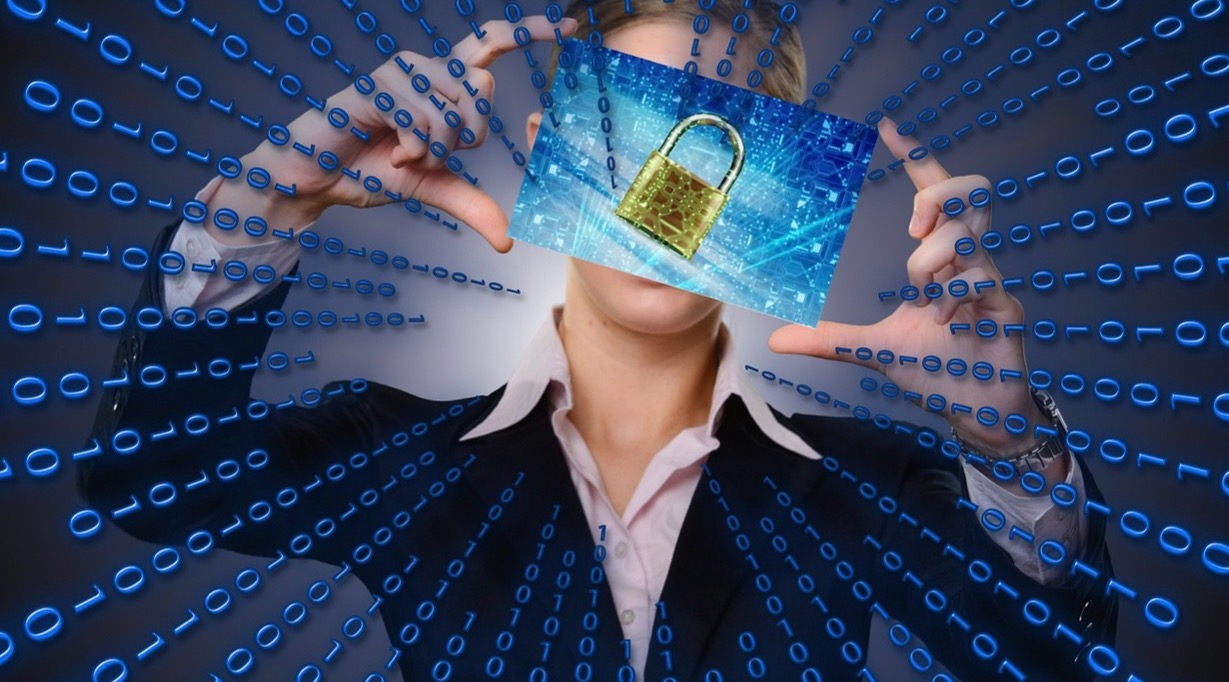
Discover how you can protect yourself online using a VPN.
Image by geralt on Pixabay
As the digital world expands, so does our vulnerability to cyber espionage and attacks. According to a report by Forbes, cybercriminals are already employing AI and machine learning as tools to carry out attacks on networks that they may see as valuable.
This alarming news should keep everyone on their toes. Imagine the amount of private data waiting to be stolen from unsuspecting internet users if cybercriminals successfully utilize these new technologies. But it doesn't have to be this way.
It’s a good thing there are online services that protect all your web traffic. They also hide your real identity from hackers, nosy service providers, and even government agencies. These services are known as virtual private networks or VPNs for short.
Read on and discover how you can protect yourself online using a VPN.
What is a VPN?
Virtual Private Networks, also known as VPNs, are online services that provide users with an encrypted and secure connection to the internet. It does this by routing your web traffic through a private computer network that hides your device's IP address and encrypts all of your data, making it impossible for malicious actors to access or view it.
In addition to its data security benefits, a VPN can allow you to bypass censorship. In some parts of the world where authoritarian and totalitarian governments reign, they restrict certain contents through internet service providers (ISPs). By using VPNs, you can browse content freely without having to worry about getting blocked.
The Prevalence of Digital Surveillance and Cyber Espionage
Digital surveillance and cyber espionage have become increasingly common in recent years because of technological advancements. They allow malicious actors and authoritarian entities to quickly access confidential data and sensitive information.
As a result, the number of cyberattacks has been steadily rising. This has led to a greater risk of data theft and hacking, with confidential data being compromised at alarming rates.
In some cases, governments have even allegedly engaged in digital surveillance and cyber espionage against their citizens. Such intrusions can lead to severe privacy violations, with people's data being collected without their knowledge or consent. Furthermore, this activity can also target activists, creating a hostile environment for free speech.
How a VPN Secures Your Online Activities
We've discussed how VPNs help against censorship and let users access content governments and ISPs block. However, there's more to it than that. Here's how VPNs secure your online activities:
Protect your browsing history from ISPs
A Virtual Private Network can protect your browsing history from ISPs by masking your IP address and encrypting all traffic. ISPs cannot track and log your online activities by obscuring your internet presence. This ensures that your data is kept private and secure from prying eyes.
If you’re subscribed to a UK VPN, for instance, ISPs cannot profile you based on your internet activities for lack of data. This allows you to browse the web without fear of being monitored or tracked in every sense.
Shield your personal information from public WiFi networks
Public WiFi networks are notoriously exposed to malicious actors who can easily intercept the data transmitted. Using a VPN while on public WiFi is recommended, as it will encrypt all of your web traffic and obfuscate your information, making it impossible for hackers to access your data. Furthermore, a VPN will also provide you with an extra layer of security, preventing your device from being accessed without your permission.
Prevent tracking and targeted advertisements
Have you ever noticed ads that show up on your feed? In most cases, these are targeted ads based on your search history. This can sometimes be annoying and even intrusive, as companies can track what websites you visit.
A VPN can obscure your online identity and prevent advertising companies from tracking your activities. This ensures that advertisers won't be able to access your data, leaving you free to browse without fear of being targeted with ads.
Keep Your Privacy Intact with a VPN
In the digital age, we must protect ourselves online and reclaim our basic right to privacy. A VPN can help us do this by encrypting all of our data and masking our IP address from ISPs, hackers, and other malicious actors on the web. They also help us fight censorship and give us access to information that authoritarian and totalitarian regimes deem unsafe.
Privacy should not be taken away from us. Instead, it is an inherent human right that everyone must always respect. A VPN is a perfect way to ensure our data remains private and secure as we progress into this digital age.
As the digital world expands, so does our vulnerability to cyber espionage and attacks. According to a report by Forbes, cybercriminals are already employing AI and machine learning as tools to carry out attacks on networks that they may see as valuable.
This alarming news should keep everyone on their toes. Imagine the amount of private data waiting to be stolen from unsuspecting internet users if cybercriminals successfully utilize these new technologies. But it doesn't have to be this way.
It’s a good thing there are online services that protect all your web traffic. They also hide your real identity from hackers, nosy service providers, and even government agencies. These services are known as virtual private networks or VPNs for short.
Read on and discover how you can protect yourself online using a VPN.
What is a VPN?
Virtual Private Networks, also known as VPNs, are online services that provide users with an encrypted and secure connection to the internet. It does this by routing your web traffic through a private computer network that hides your device's IP address and encrypts all of your data, making it impossible for malicious actors to access or view it.
In addition to its data security benefits, a VPN can allow you to bypass censorship. In some parts of the world where authoritarian and totalitarian governments reign, they restrict certain contents through internet service providers (ISPs). By using VPNs, you can browse content freely without having to worry about getting blocked.
The Prevalence of Digital Surveillance and Cyber Espionage
Digital surveillance and cyber espionage have become increasingly common in recent years because of technological advancements. They allow malicious actors and authoritarian entities to quickly access confidential data and sensitive information.
As a result, the number of cyberattacks has been steadily rising. This has led to a greater risk of data theft and hacking, with confidential data being compromised at alarming rates.
In some cases, governments have even allegedly engaged in digital surveillance and cyber espionage against their citizens. Such intrusions can lead to severe privacy violations, with people's data being collected without their knowledge or consent. Furthermore, this activity can also target activists, creating a hostile environment for free speech.
How a VPN Secures Your Online Activities
We've discussed how VPNs help against censorship and let users access content governments and ISPs block. However, there's more to it than that. Here's how VPNs secure your online activities:
Protect your browsing history from ISPs
A Virtual Private Network can protect your browsing history from ISPs by masking your IP address and encrypting all traffic. ISPs cannot track and log your online activities by obscuring your internet presence. This ensures that your data is kept private and secure from prying eyes.
If you’re subscribed to a UK VPN, for instance, ISPs cannot profile you based on your internet activities for lack of data. This allows you to browse the web without fear of being monitored or tracked in every sense.
Shield your personal information from public WiFi networks
Public WiFi networks are notoriously exposed to malicious actors who can easily intercept the data transmitted. Using a VPN while on public WiFi is recommended, as it will encrypt all of your web traffic and obfuscate your information, making it impossible for hackers to access your data. Furthermore, a VPN will also provide you with an extra layer of security, preventing your device from being accessed without your permission.
Prevent tracking and targeted advertisements
Have you ever noticed ads that show up on your feed? In most cases, these are targeted ads based on your search history. This can sometimes be annoying and even intrusive, as companies can track what websites you visit.
A VPN can obscure your online identity and prevent advertising companies from tracking your activities. This ensures that advertisers won't be able to access your data, leaving you free to browse without fear of being targeted with ads.
Keep Your Privacy Intact with a VPN
In the digital age, we must protect ourselves online and reclaim our basic right to privacy. A VPN can help us do this by encrypting all of our data and masking our IP address from ISPs, hackers, and other malicious actors on the web. They also help us fight censorship and give us access to information that authoritarian and totalitarian regimes deem unsafe.
Privacy should not be taken away from us. Instead, it is an inherent human right that everyone must always respect. A VPN is a perfect way to ensure our data remains private and secure as we progress into this digital age.
Your CEO probably knows the industry better than anyone. But does the market hear them?
CMC Markets’ Artur Delijergijevs on Metals Demand, Volatility, & Stable Execution
CMC Markets’ Artur Delijergijevs on Metals Demand, Volatility, & Stable Execution
In this exclusive Executive Interview, Finance Magnates speaks with Artur Delijergijevs, Head of Systematic Market Making at CMC Markets, about the current state of metals demand and market volatility.
Delijergijevs offers a desk-level view on:
- Metals Demand: Why metals are seeing the strongest demand from both retail and institutional clients right now.
- The Safe-Haven Debate: Questioning whether gold still fits the classic safe-haven definition given large daily price movements.
- Volatile Market Prep: How a market-making desk prepares its systems and pricing for stressed market conditions and high-impact economic events.
- Hybrid Execution: Why the best execution model combines electronic speed with human relationship support, especially during volatility.
- AI in Workflow: Where CMC Markets is integrating machine learning for risk management and pricing, and the limitations of AI during stressed markets.
- Dubai's Role: The strategic importance of Dubai’s location for covering global trading sessions across Asia, Europe, and the US.
Watch to understand how CMC Markets maintains stable pricing and reliable execution quality in high-volatility environments.
#CMCmarkets #forex #metals #gold #trading #volatility #MarketMaking #iFXDubai #FinanceMagnates #Finance #Fintech #Execution #AlgorithmicTrading #RiskManagement
In this exclusive Executive Interview, Finance Magnates speaks with Artur Delijergijevs, Head of Systematic Market Making at CMC Markets, about the current state of metals demand and market volatility.
Delijergijevs offers a desk-level view on:
- Metals Demand: Why metals are seeing the strongest demand from both retail and institutional clients right now.
- The Safe-Haven Debate: Questioning whether gold still fits the classic safe-haven definition given large daily price movements.
- Volatile Market Prep: How a market-making desk prepares its systems and pricing for stressed market conditions and high-impact economic events.
- Hybrid Execution: Why the best execution model combines electronic speed with human relationship support, especially during volatility.
- AI in Workflow: Where CMC Markets is integrating machine learning for risk management and pricing, and the limitations of AI during stressed markets.
- Dubai's Role: The strategic importance of Dubai’s location for covering global trading sessions across Asia, Europe, and the US.
Watch to understand how CMC Markets maintains stable pricing and reliable execution quality in high-volatility environments.
#CMCmarkets #forex #metals #gold #trading #volatility #MarketMaking #iFXDubai #FinanceMagnates #Finance #Fintech #Execution #AlgorithmicTrading #RiskManagement
Finance Magnates Awards 2026 – Nominations Now Open
Finance Magnates Awards 2026 – Nominations Now Open
The Finance Magnates Awards 2026 nominations are now open. 🏆
From fintech innovators to leading brokers, this is where the finance industry celebrates its biggest achievements.
Winners will be announced at the Cyprus Gala Dinner on November 6, 2026.
Nominate your brand now.
https://awards.financemagnates.com/?utm_source=linkedin&utm_medium=video&utm_campaign=nominations-open
#FMAwards #FinanceMagnates #FintechAwards #Fintech #FinanceIndustry
The Finance Magnates Awards 2026 nominations are now open. 🏆
From fintech innovators to leading brokers, this is where the finance industry celebrates its biggest achievements.
Winners will be announced at the Cyprus Gala Dinner on November 6, 2026.
Nominate your brand now.
https://awards.financemagnates.com/?utm_source=linkedin&utm_medium=video&utm_campaign=nominations-open
#FMAwards #FinanceMagnates #FintechAwards #Fintech #FinanceIndustry
Finance Magnates Awards 2026 | Nominations Now Open 🏆#Fintech #FMAwards #TradingIndustry
Finance Magnates Awards 2026 | Nominations Now Open 🏆#Fintech #FMAwards #TradingIndustry
Lights on. Cameras ready. 🎬
Finance Magnates Awards 2026 nominations are now open. 🏆
#FMAwards #FinanceMagnates #FintechAwards #Fintech
Lights on. Cameras ready. 🎬
Finance Magnates Awards 2026 nominations are now open. 🏆
#FMAwards #FinanceMagnates #FintechAwards #Fintech
Exness sees trust as the key theme for growth in MENA Trading Growth for 2026
Exness sees trust as the key theme for growth in MENA Trading Growth for 2026
Mohammad Amer, Regional Commercial Director at Exness, sits down to discuss the booming MENA financial trading market. Find out why Dubai is key to the company's growth strategy, how a mobile-first generation is changing expectations, and why trust will be the defining theme for traders in 2026.
In this interview, you'll learn:
* Why Dubai and the MENA region are critical growth markets for fintech and online trading.
* How Exness is addressing the demands of mobile-first, younger traders through engineering, platform stability, and transparent conditions.
* The essential role local talent plays in providing a culturally relevant and compliant user experience.
* Mohammad Amer's outlook on the future of the online trading industry and why stronger controls and systems are necessary.
* Why "trust" isn't just a brand value, but has commercial value—and why he predicts 2026 will be the "Year of Trust."
Key Takeaways:
➡️ The MENA region is rapidly shaping global financial markets.
➡️ New traders expect stability, precise execution, and transparency.
➡️ Local expertise is key to regulatory compliance and user experience.
➡️ Future success belongs to firms capable of meeting rising standards across regulation and platform consistency.
Read the full article at: https://www.financemagnates.com/thought-leadership/exness-sees-trust-as-the-key-theme-for-growth-in-mena-trading-growth-for-2026/
#Exness #MENA #Trading #FinTech #Dubai #OnlineTrading #FinanceMagnates #MohammadAmer #Trust #MobileTrading
Mohammad Amer, Regional Commercial Director at Exness, sits down to discuss the booming MENA financial trading market. Find out why Dubai is key to the company's growth strategy, how a mobile-first generation is changing expectations, and why trust will be the defining theme for traders in 2026.
In this interview, you'll learn:
* Why Dubai and the MENA region are critical growth markets for fintech and online trading.
* How Exness is addressing the demands of mobile-first, younger traders through engineering, platform stability, and transparent conditions.
* The essential role local talent plays in providing a culturally relevant and compliant user experience.
* Mohammad Amer's outlook on the future of the online trading industry and why stronger controls and systems are necessary.
* Why "trust" isn't just a brand value, but has commercial value—and why he predicts 2026 will be the "Year of Trust."
Key Takeaways:
➡️ The MENA region is rapidly shaping global financial markets.
➡️ New traders expect stability, precise execution, and transparency.
➡️ Local expertise is key to regulatory compliance and user experience.
➡️ Future success belongs to firms capable of meeting rising standards across regulation and platform consistency.
Read the full article at: https://www.financemagnates.com/thought-leadership/exness-sees-trust-as-the-key-theme-for-growth-in-mena-trading-growth-for-2026/
#Exness #MENA #Trading #FinTech #Dubai #OnlineTrading #FinanceMagnates #MohammadAmer #Trust #MobileTrading
Paytiko CEO Razi Salih on Why Payment Orchestration is a MUST-HAVE for Brokers in 2026
Paytiko CEO Razi Salih on Why Payment Orchestration is a MUST-HAVE for Brokers in 2026
At iFX Expo Dubai, Finance Magnates spoke with Razi Salih, CEO at Paytiko, about the evolution of the payments ecosystem and why payment orchestration has shifted from an option to a necessity for brokers, prop firms, and exchanges.
Mr. Salih explains how global expansion, the need for deep localisation, and the sheer number of new payment methods, from instant banking to stablecoins, are driving this critical infrastructure shift.
#PaymentOrchestration #Fintech #Brokerage #TradingPayments #RaziSalih #Paytiko #iFXExpoDubai #Stablecoins #AIinFintech
At iFX Expo Dubai, Finance Magnates spoke with Razi Salih, CEO at Paytiko, about the evolution of the payments ecosystem and why payment orchestration has shifted from an option to a necessity for brokers, prop firms, and exchanges.
Mr. Salih explains how global expansion, the need for deep localisation, and the sheer number of new payment methods, from instant banking to stablecoins, are driving this critical infrastructure shift.
#PaymentOrchestration #Fintech #Brokerage #TradingPayments #RaziSalih #Paytiko #iFXExpoDubai #Stablecoins #AIinFintech