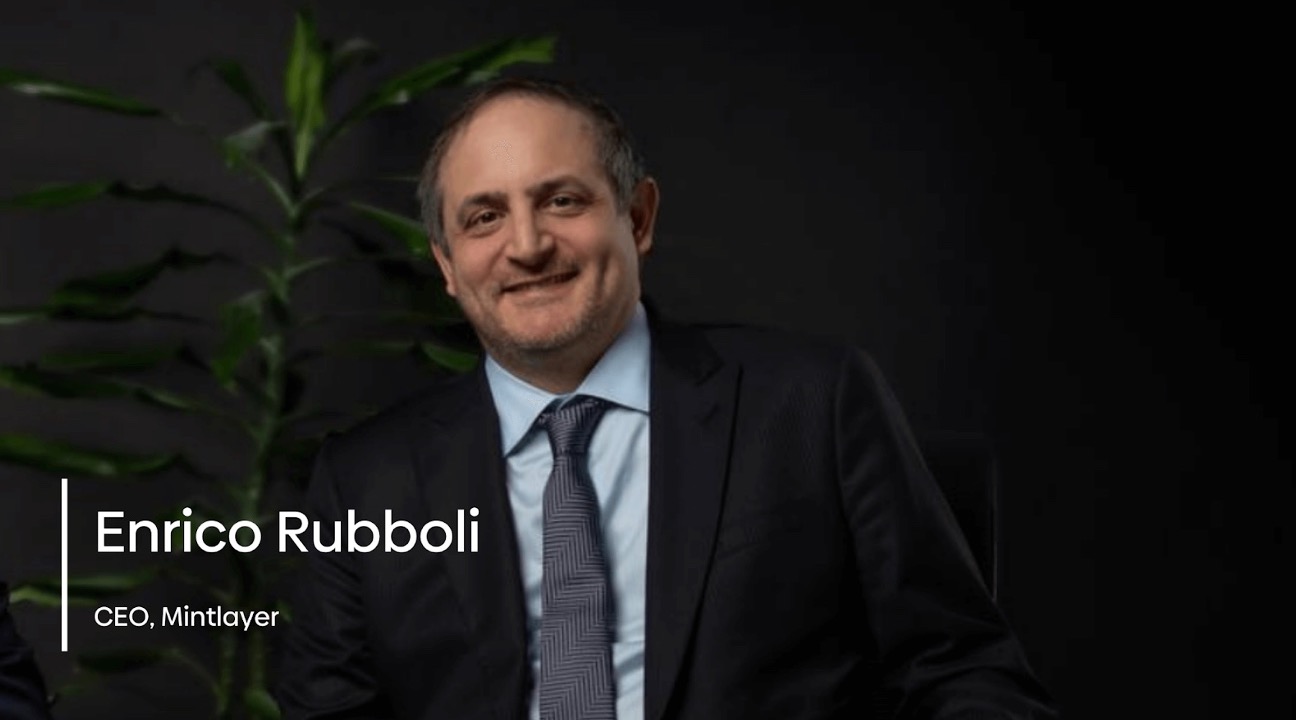
Mintlayer CEO Enrico Rubboli Is Bullish On Bitcoin - Here’s Why
Friday,12/05/2023|10:56GMTby
FM
Finance Magnates spoke to Enrico for his insights on the Bitcoin sector.
Enrico Rubboli is a software developer with 17 years of experience as well as a crypto expert. He is particularly passionate about Bitcoin and is interested in new and innovative technologies, architecture, and designing.
Enrico’s passion for Bitcoin led him to work with companies like Bitfinex and, more importantly, seek and create solutions to the problems and challenges of the Bitcoin sector. Enrico noticed that although Bitcoin has gained massive adoption, it could not still execute smart contracts.
This was why he developed Mintlayer, a layer 2 scaling solution that enables smart contracts and improves interoperability for the Bitcoin sector. Mintlayer is building a DeFi ecosystem that does not interfere with Bitcoin’s security and scalability.
We can testify that Mintlayer has been a success since its launch in 2020. Many projects have been launched while some are still in the process, of which the main aim is to ensure Bitcoin’s interoperability, decentralization, and execution of smart contracts. All thanks to the genius of a person called Enrico Rubboli.
Enrico is also the CEO of RBB Labs, a software company providing FinTechs, finance, and trading solutions. We can now see that Enrico has used his knowledge and experience to develop and be part of projects that advocate for decentralization, transparency, and an all-around improvement in the industry.
We sat down with Enrico to get to know him, his insights on the Bitcoin sector, and how Mintlayer contributes to Bitcoin’s future by creating innovative solutions.
You’ve been in the industry for over 17 years, and served as the CEO of Mintlayer and RBB Lab. You are a software engineer and have worked with companies like Bitfinex. Aside from these badges, could you tell us more about yourself?
Outside of my professional experience I’m very passionate about technology and have been programming since a young age. I am particularly interested in Bitcoin and have been following its developments since 2011. I also have experience with Linux and open-source software, which underscores my dedication to collaboration and transparency in development.
Aside from my work, I am a family man with two children and a loving wife. Overall, I am committed to driving progress in the industry and exploring new possibilities in technology.
With the constant changes in the industry, especially in the Bitcoin sector, how are you keeping up, and how will you describe your experience over the years?
It’s important to stay immersed in the community, and also to cultivate a close circle of friends that are equally invested and in-tune with different aspects of the industry. This is much easier when it’s part of your job. I’ve met a lot of intelligent friends over the years that I would not have been able to without being immersed in Bitcoin. We have been fortunate enough to attract some high profile advisors like Charlie Shrem to the Mintlayer project.
Although Bitcoin is the largest and most popular cryptocurrency, it lacks the ability to execute smart contracts. But then, you created a solution. What is the story behind Mintlayer, and how did you develop this solution-based platform?
The idea of making a Bitcoin-centric smart contract platform is not new. There have been several iterations of the idea in development, some since early on, but none were built the way a Bitcoin-centric platform should be.
That’s where Mintlayer comes in. It doesn’t require a peg in or token bridge, it uses an UTXO accounting system, it’s turing incomplete – it is more interoperable with Bitcoin than any other platform out there. Any platform that requires a wrapped token or bridge to use your Bitcoin is just at odds with the whole idea of Bitcoin and decentralization. And as we witnessed in 2022, those wrapped tokens and bridges were the most significant attack surfaces for DeFi platforms.
Last year in December, it was recorded that for the first time in Italy, RBB Labs used NFT technology to issue court summonses. How were you and your team able to pull that off?
As a technology company we are futurists. Everybody understands that new technologies will change the world in the future, and it’s thrilling to be a company that pushes those boundaries and brings these things to fruition. I personally look for opportunities to apply tech to improve our lives, and unfortunately, in government legal systems, we see many ways to improve.
Court summonses, deeds, birth certificates, these are the types of things we will see NFTs be used for in the future - not just digital monkey pictures. For example, one of the next developments of the lex platform we are building includes AI functionality to generate and interpret legal contracts.
The crypto industry has witnessed tremendous growth since the first cryptocurrency, Bitcoin, was launched in 2009. Billions of crypto users are investing and making fortunes, resulting in tremendous growth for the crypto industry. Do you think this energy will still be maintained and the industry will continue to grow despite the current bear market and some companies’ fallouts?
I think that these are cycles you have to expect, given the potential of the technology. The public speculation really plays into that hype, but experts can see the use cases and the potential revenue by looking at the technologies that a project will replace. We expect some projects to fail, but for example, Mintlayer was carefully planned to meet an existing market need. Those projects like Mintlayer that provide real value for users are in a strong position for hyper growth every time the pendulum swings back to the bulls.
More recently, the industry has been facing regulatory issues, resulting in the price volatility of cryptocurrencies. What is your say on this, and do you think regulators are right based on the various approaches they have been taking?
For cryptocurrency to become mainstream there needs to be regulations and laws in place. They can be relaxed or restricted, but as long as governments control finance there has to be some kind of guidance for creators and users. We understood early on at Mintlayer that meeting regulatory requirements and embracing a partnership with regulators was in the interest of our users. This is why we included access control lists in our product. In some countries regulators have been better than others.
With the current state of things, what are your predictions for the industry? Will 2023 be better? What direction do you think the industry will take?
This industry is cyclical, so while the general public sees a downturn it’s still a very exciting time for us. Our developers are hard at work and their milestones are just as big no matter what the price of Bitcoin is. Extra capital will help incubate new projects on Mintlayer though, and we look forward to possibly seeing the rising price of Bitcoin start to pique interest again later this year.
Enrico Rubboli is a software developer with 17 years of experience as well as a crypto expert. He is particularly passionate about Bitcoin and is interested in new and innovative technologies, architecture, and designing.
Enrico’s passion for Bitcoin led him to work with companies like Bitfinex and, more importantly, seek and create solutions to the problems and challenges of the Bitcoin sector. Enrico noticed that although Bitcoin has gained massive adoption, it could not still execute smart contracts.
This was why he developed Mintlayer, a layer 2 scaling solution that enables smart contracts and improves interoperability for the Bitcoin sector. Mintlayer is building a DeFi ecosystem that does not interfere with Bitcoin’s security and scalability.
We can testify that Mintlayer has been a success since its launch in 2020. Many projects have been launched while some are still in the process, of which the main aim is to ensure Bitcoin’s interoperability, decentralization, and execution of smart contracts. All thanks to the genius of a person called Enrico Rubboli.
Enrico is also the CEO of RBB Labs, a software company providing FinTechs, finance, and trading solutions. We can now see that Enrico has used his knowledge and experience to develop and be part of projects that advocate for decentralization, transparency, and an all-around improvement in the industry.
We sat down with Enrico to get to know him, his insights on the Bitcoin sector, and how Mintlayer contributes to Bitcoin’s future by creating innovative solutions.
You’ve been in the industry for over 17 years, and served as the CEO of Mintlayer and RBB Lab. You are a software engineer and have worked with companies like Bitfinex. Aside from these badges, could you tell us more about yourself?
Outside of my professional experience I’m very passionate about technology and have been programming since a young age. I am particularly interested in Bitcoin and have been following its developments since 2011. I also have experience with Linux and open-source software, which underscores my dedication to collaboration and transparency in development.
Aside from my work, I am a family man with two children and a loving wife. Overall, I am committed to driving progress in the industry and exploring new possibilities in technology.
With the constant changes in the industry, especially in the Bitcoin sector, how are you keeping up, and how will you describe your experience over the years?
It’s important to stay immersed in the community, and also to cultivate a close circle of friends that are equally invested and in-tune with different aspects of the industry. This is much easier when it’s part of your job. I’ve met a lot of intelligent friends over the years that I would not have been able to without being immersed in Bitcoin. We have been fortunate enough to attract some high profile advisors like Charlie Shrem to the Mintlayer project.
Although Bitcoin is the largest and most popular cryptocurrency, it lacks the ability to execute smart contracts. But then, you created a solution. What is the story behind Mintlayer, and how did you develop this solution-based platform?
The idea of making a Bitcoin-centric smart contract platform is not new. There have been several iterations of the idea in development, some since early on, but none were built the way a Bitcoin-centric platform should be.
That’s where Mintlayer comes in. It doesn’t require a peg in or token bridge, it uses an UTXO accounting system, it’s turing incomplete – it is more interoperable with Bitcoin than any other platform out there. Any platform that requires a wrapped token or bridge to use your Bitcoin is just at odds with the whole idea of Bitcoin and decentralization. And as we witnessed in 2022, those wrapped tokens and bridges were the most significant attack surfaces for DeFi platforms.
Last year in December, it was recorded that for the first time in Italy, RBB Labs used NFT technology to issue court summonses. How were you and your team able to pull that off?
As a technology company we are futurists. Everybody understands that new technologies will change the world in the future, and it’s thrilling to be a company that pushes those boundaries and brings these things to fruition. I personally look for opportunities to apply tech to improve our lives, and unfortunately, in government legal systems, we see many ways to improve.
Court summonses, deeds, birth certificates, these are the types of things we will see NFTs be used for in the future - not just digital monkey pictures. For example, one of the next developments of the lex platform we are building includes AI functionality to generate and interpret legal contracts.
The crypto industry has witnessed tremendous growth since the first cryptocurrency, Bitcoin, was launched in 2009. Billions of crypto users are investing and making fortunes, resulting in tremendous growth for the crypto industry. Do you think this energy will still be maintained and the industry will continue to grow despite the current bear market and some companies’ fallouts?
I think that these are cycles you have to expect, given the potential of the technology. The public speculation really plays into that hype, but experts can see the use cases and the potential revenue by looking at the technologies that a project will replace. We expect some projects to fail, but for example, Mintlayer was carefully planned to meet an existing market need. Those projects like Mintlayer that provide real value for users are in a strong position for hyper growth every time the pendulum swings back to the bulls.
More recently, the industry has been facing regulatory issues, resulting in the price volatility of cryptocurrencies. What is your say on this, and do you think regulators are right based on the various approaches they have been taking?
For cryptocurrency to become mainstream there needs to be regulations and laws in place. They can be relaxed or restricted, but as long as governments control finance there has to be some kind of guidance for creators and users. We understood early on at Mintlayer that meeting regulatory requirements and embracing a partnership with regulators was in the interest of our users. This is why we included access control lists in our product. In some countries regulators have been better than others.
With the current state of things, what are your predictions for the industry? Will 2023 be better? What direction do you think the industry will take?
This industry is cyclical, so while the general public sees a downturn it’s still a very exciting time for us. Our developers are hard at work and their milestones are just as big no matter what the price of Bitcoin is. Extra capital will help incubate new projects on Mintlayer though, and we look forward to possibly seeing the rising price of Bitcoin start to pique interest again later this year.
FP Markets Winner Spotlight 🏆 | Global Broker of the Year 2025 #Trading #Broker #Innovation #Shorts
FP Markets Winner Spotlight 🏆 | Global Broker of the Year 2025 #Trading #Broker #Innovation #Shorts
FP Markets takes the spotlight as Global Broker of the Year 2025 at the Finance Magnates Awards.
Martin Stoilov, Head of Client Experience, shares that trust, innovation, and people played a key role in the company’s success, supported by a strong foundation of integrity and client-centricity.
Following this milestone, FP Markets continues to focus on growth, technology investment, and its core values of transparency and excellence.
👉 Be part of FM Awards 2026: https://awards.financemagnates.com/#nominate
FP Markets takes the spotlight as Global Broker of the Year 2025 at the Finance Magnates Awards.
Martin Stoilov, Head of Client Experience, shares that trust, innovation, and people played a key role in the company’s success, supported by a strong foundation of integrity and client-centricity.
Following this milestone, FP Markets continues to focus on growth, technology investment, and its core values of transparency and excellence.
👉 Be part of FM Awards 2026: https://awards.financemagnates.com/#nominate
In this video, we review @HolaPrimeMarketsOfficial, a multi-asset forex and CFDs broker offering different account types, trading platforms, and flexible trading conditions.
We cover the broker’s overall offering, including account options, trading environment, platforms like MT4 and MT5, and additional services such as managed accounts and fast withdrawals.
Watch the full video to see if Hola Prime Markets fits your trading needs.
📣 Stay up to date with the latest in finance and trading. Follow Finance Magnates for industry news, insights, and global event coverage.
Connect with us:
🔗 LinkedIn: /financemagnates
👍 Facebook: /financemagnates
📸 Instagram: https://www.instagram.com/financemagnates
🐦 X: https://x.com/financemagnates
🎥 TikTok: https://www.tiktok.com/tag/financemagnates
▶️ YouTube: /@financemagnates_official
#HolaPrime #ForexBroker #CFDTrading #FinanceMagnates #Trading #Forex #BrokerReview
In this video, we review @HolaPrimeMarketsOfficial, a multi-asset forex and CFDs broker offering different account types, trading platforms, and flexible trading conditions.
We cover the broker’s overall offering, including account options, trading environment, platforms like MT4 and MT5, and additional services such as managed accounts and fast withdrawals.
Watch the full video to see if Hola Prime Markets fits your trading needs.
📣 Stay up to date with the latest in finance and trading. Follow Finance Magnates for industry news, insights, and global event coverage.
Connect with us:
🔗 LinkedIn: /financemagnates
👍 Facebook: /financemagnates
📸 Instagram: https://www.instagram.com/financemagnates
🐦 X: https://x.com/financemagnates
🎥 TikTok: https://www.tiktok.com/tag/financemagnates
▶️ YouTube: /@financemagnates_official
#HolaPrime #ForexBroker #CFDTrading #FinanceMagnates #Trading #Forex #BrokerReview
Hola Prime Review: What You Need to Know | Full Breakdown by Finance Magnates
Hola Prime Review: What You Need to Know | Full Breakdown by Finance Magnates
In this video, we review @HolaPrime_Global, a proprietary trading firm offering evaluation programs and performance-based payouts in simulated market environments.
We cover how the challenge model works, including account types, profit splits (up to 95%), trading rules, and what it takes to reach a funded account. You’ll also learn about available platforms like MT4, MT5, cTrader, and more, along with insights into payouts, support, and trading conditions.
Watch the full video to see if Hola Prime fits your trading style.
📣 Stay up to date with the latest in finance and trading. Follow Finance Magnates for industry news, insights, and global event coverage.
Connect with us:
🔗 LinkedIn: /financemagnates
👍 Facebook: /financemagnates
📸 Instagram: https://www.instagram.com/financemagnates
🐦 X: https://x.com/financemagnates
🎥 TikTok: https://www.tiktok.com/tag/financemagnates
▶️ YouTube: /@financemagnates_official
#HolaPrime #PropFirm #Trading #FinanceMagnates #Forex #FuturesTrading #TradingReview #PropFirmReview
In this video, we review @HolaPrime_Global, a proprietary trading firm offering evaluation programs and performance-based payouts in simulated market environments.
We cover how the challenge model works, including account types, profit splits (up to 95%), trading rules, and what it takes to reach a funded account. You’ll also learn about available platforms like MT4, MT5, cTrader, and more, along with insights into payouts, support, and trading conditions.
Watch the full video to see if Hola Prime fits your trading style.
📣 Stay up to date with the latest in finance and trading. Follow Finance Magnates for industry news, insights, and global event coverage.
Connect with us:
🔗 LinkedIn: /financemagnates
👍 Facebook: /financemagnates
📸 Instagram: https://www.instagram.com/financemagnates
🐦 X: https://x.com/financemagnates
🎥 TikTok: https://www.tiktok.com/tag/financemagnates
▶️ YouTube: /@financemagnates_official
#HolaPrime #PropFirm #Trading #FinanceMagnates #Forex #FuturesTrading #TradingReview #PropFirmReview
Axi Winner Spotlight 🏆 | Global Most Innovative Broker 2025 #Innovation #Trading #Fintech #Broker
Axi Winner Spotlight 🏆 | Global Most Innovative Broker 2025 #Innovation #Trading #Fintech #Broker
Axi takes the spotlight at the Finance Magnates Awards, winning Global Most Innovative Broker 2025.
Olivia Xenofontos and Ivanna Openko share how the team will feel: proud, motivated, and ready to keep delivering.
They also describe the night as well-organized, focused, and enjoyable for all.
👉 Be part of FM Awards 2026.
Axi takes the spotlight at the Finance Magnates Awards, winning Global Most Innovative Broker 2025.
Olivia Xenofontos and Ivanna Openko share how the team will feel: proud, motivated, and ready to keep delivering.
They also describe the night as well-organized, focused, and enjoyable for all.
👉 Be part of FM Awards 2026.
Recognition that matters.
Built on transparency.
Driven by the industry.
The Finance Magnates Awards 2026.
Nominations are now open.
🔗 https://awards.financemagnates.com/?utm_source=SM&utm_medium=social&utm_campaign=recognition-matters
Recognition that matters.
Built on transparency.
Driven by the industry.
The Finance Magnates Awards 2026.
Nominations are now open.
🔗 https://awards.financemagnates.com/?utm_source=SM&utm_medium=social&utm_campaign=recognition-matters