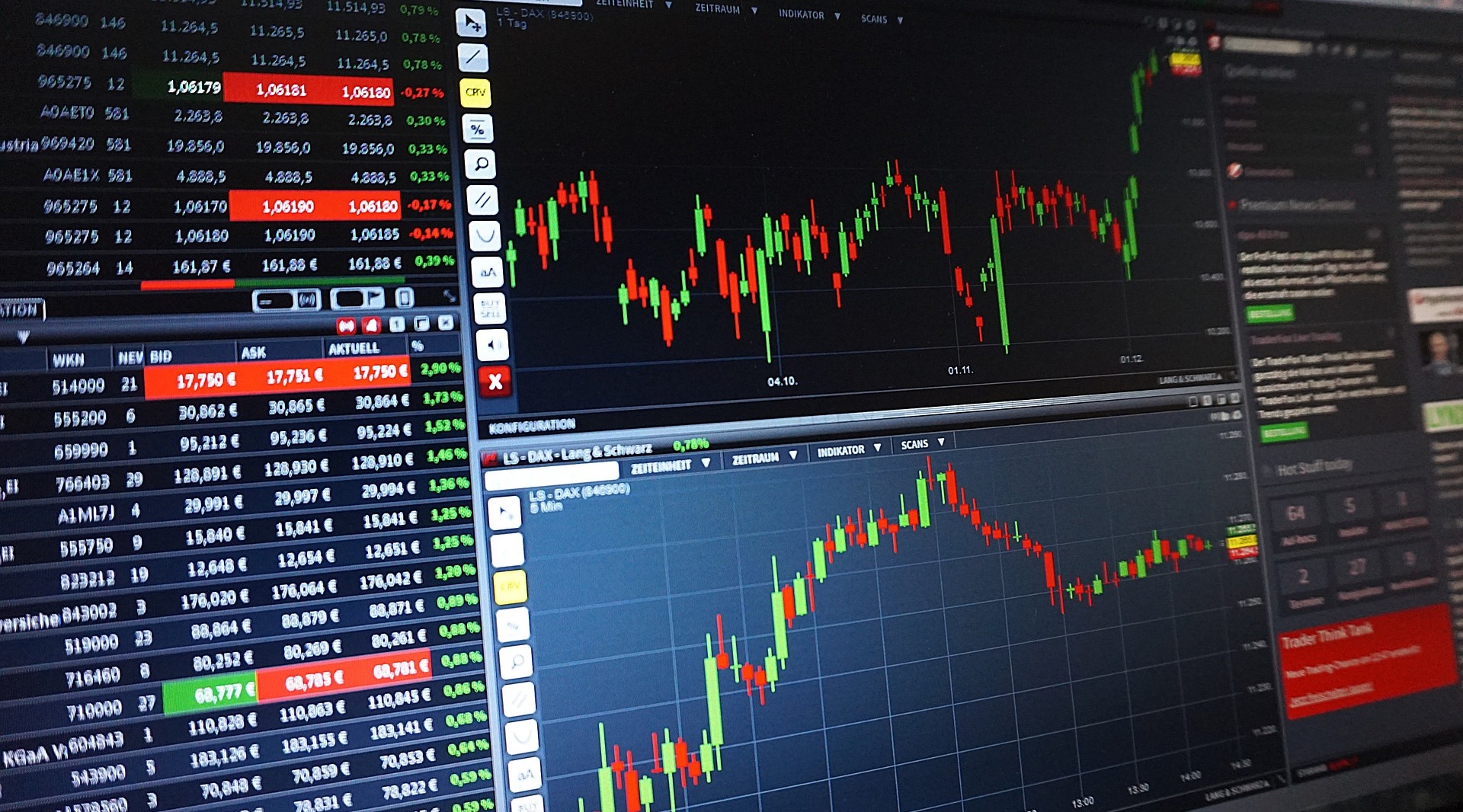
Before you place your first trade, you need to answer the question what is forex trading?
The forex market is one of the most liquid markets in the world, with more than 6.5 trillion in daily volume. It provides traders with a market with plenty of assets to trade. The forex market is also the foreign exchange market where currencies are exchanged. The securities are called currency pairs or currency baskets. There are several ways to engage in the forex markets, including using the over-the-counter OTC market, CFDs, futures contracts, and Exchange Traded Funds (ETF).
Several strategies can help you determine the potential future direction of a currency pair exchange rate. Before you get started, educating yourself to understand the nuances of forex trading can be helpful. It might also be useful to practice using a demonstration account. Once you feel you have the basics and have practiced for a while, you might be ready to start forex trading.
How Should You Get Started Forex Trading?
Before you place your first trade, you need to answer the question what is forex trading? To answer this question, you must perform some research. You can start by looking up forex trading online and doing some basic queries on what forex trading is. Your goal should be to determine the type of securities traded and the different facilitators that provide you with access to the forex markets. You will likely discover that retail traders widely engage in forex trading, along with institutional traders, hedge funds, central banks, and corporate treasurers.
While retail traders, hedge funds, and institutional investors engage in forex trading for speculative purposes, corporate treasurers and central banks usually interact with the forex markets to hedge their currency exposure. For example, suppose the company ABC has its corporate headquarters in the United States but has gained from operations in the United Kingdom. In that case, it might consider selling its pound gains and purchasing dollars to lock in its dollar gains.
Understanding the Market
The forex market trades around the clock, so it is essential to understand that the market can move based on new information worldwide. The most liquid currency pair is the EUR/USD, the Euro versus the U.S. Dollar. The second most liquid is the Japanese Yen versus the U.S. dollar, and the third is the British Pound versus the U.S. dollar. Liquidity usually plays an active role in forex trading decisions. While you might develop an excellent strategy for an illiquid currency pair, you could find that entering and exiting your positions might be challenging as well as expensive.
One way to measure the liquidity of a currency pair is through its bid-offer spread. When the spread is tight, like it will be most of the time when you trade the EUR/USD, you can enter and exit trades with little expense from buying on the offer and selling on the bid. When the bid-offer spread is wide, the cost to cross the bid-offer spread could be expensive.
For example, if you can buy the EUR/USD and the bid-offer spread is one pip (percentage in point), when the exchange rate is 1.02, then your cost to buy on the offer and sell on the bid will cost you about €0.00001 (0.0001/1.02). Alternatively, if the bid-offer spread on an exotic currency XYZ is one big figure, the costs might be closer to 2% (hypothetically). While the EUR/USD trades around the clock, the exotic currency pair you might evaluate might only trade during specific hours.
Understanding the Securities
When you look at the possible securities that are available, you should determine which one fits your needs. There are several popular ways to trade the currency markets. Many hedge funds, institutional investors, banks, and central banks trade in the over-the-counter market. The OTC market consists of a spot market, where you must deliver your currency within two business days of a transaction. The OTC market also provides a forward market, where you can agree to deliver your money to a counterpart at a period longer than two business days.
Another popular product that handles all of the delivery issues for clients by incorporating those issues is contracts for differences. A contract for differences (CFD) is a financial security that tracks the movements of the underlying product. Many reputable brokers offer CFDs on a wide range of currency pairs.
There are active futures contracts on many different currency pairs if you prefer futures contracts. Lastly, exchange-traded funds (ETFs) hold baskets of futures contracts and track the movements of currency futures.
Finding a Broker
If you want to trade forex, you can search for a reputable broker once you decide which product works best for you. You will likely find that each broker will offer one or more of these products and assist you in the transaction process.
You want to ensure that your broker also provides educational materials that can help you learn about the forex market and the products they offer. Academic portals might describe different trading strategies that can be used to trade the forex markets. Systems for trading could include technical analysis, which is the study of past price movements, or fundamental analysis, which is the study of the macroeconomic events that drive currency exchanges and may affect prices.
Before you begin to trade forex, you should practice. This means finding a broker that provides a demonstration account that will allow you to become familiar with its application and practice trading. Some of the better demo accounts are identical to the real platform, but you use demonstration money instead of real capital.
Summary
The upshot is that there is a process you should take before you make your first real forex trade. You want to take the time to understand the market and the different securities that are available to trade. Next, you want to determine the proper liquidity and the type of available financial instruments. Then you’ll want to perform due diligence and find a reputable broker to help you facilitate your transactions. Lastly, practice your strategy using a demonstration account.
The forex market is one of the most liquid markets in the world, with more than 6.5 trillion in daily volume. It provides traders with a market with plenty of assets to trade. The forex market is also the foreign exchange market where currencies are exchanged. The securities are called currency pairs or currency baskets. There are several ways to engage in the forex markets, including using the over-the-counter OTC market, CFDs, futures contracts, and Exchange Traded Funds (ETF).
Several strategies can help you determine the potential future direction of a currency pair exchange rate. Before you get started, educating yourself to understand the nuances of forex trading can be helpful. It might also be useful to practice using a demonstration account. Once you feel you have the basics and have practiced for a while, you might be ready to start forex trading.
How Should You Get Started Forex Trading?
Before you place your first trade, you need to answer the question what is forex trading? To answer this question, you must perform some research. You can start by looking up forex trading online and doing some basic queries on what forex trading is. Your goal should be to determine the type of securities traded and the different facilitators that provide you with access to the forex markets. You will likely discover that retail traders widely engage in forex trading, along with institutional traders, hedge funds, central banks, and corporate treasurers.
While retail traders, hedge funds, and institutional investors engage in forex trading for speculative purposes, corporate treasurers and central banks usually interact with the forex markets to hedge their currency exposure. For example, suppose the company ABC has its corporate headquarters in the United States but has gained from operations in the United Kingdom. In that case, it might consider selling its pound gains and purchasing dollars to lock in its dollar gains.
Understanding the Market
The forex market trades around the clock, so it is essential to understand that the market can move based on new information worldwide. The most liquid currency pair is the EUR/USD, the Euro versus the U.S. Dollar. The second most liquid is the Japanese Yen versus the U.S. dollar, and the third is the British Pound versus the U.S. dollar. Liquidity usually plays an active role in forex trading decisions. While you might develop an excellent strategy for an illiquid currency pair, you could find that entering and exiting your positions might be challenging as well as expensive.
One way to measure the liquidity of a currency pair is through its bid-offer spread. When the spread is tight, like it will be most of the time when you trade the EUR/USD, you can enter and exit trades with little expense from buying on the offer and selling on the bid. When the bid-offer spread is wide, the cost to cross the bid-offer spread could be expensive.
For example, if you can buy the EUR/USD and the bid-offer spread is one pip (percentage in point), when the exchange rate is 1.02, then your cost to buy on the offer and sell on the bid will cost you about €0.00001 (0.0001/1.02). Alternatively, if the bid-offer spread on an exotic currency XYZ is one big figure, the costs might be closer to 2% (hypothetically). While the EUR/USD trades around the clock, the exotic currency pair you might evaluate might only trade during specific hours.
Understanding the Securities
When you look at the possible securities that are available, you should determine which one fits your needs. There are several popular ways to trade the currency markets. Many hedge funds, institutional investors, banks, and central banks trade in the over-the-counter market. The OTC market consists of a spot market, where you must deliver your currency within two business days of a transaction. The OTC market also provides a forward market, where you can agree to deliver your money to a counterpart at a period longer than two business days.
Another popular product that handles all of the delivery issues for clients by incorporating those issues is contracts for differences. A contract for differences (CFD) is a financial security that tracks the movements of the underlying product. Many reputable brokers offer CFDs on a wide range of currency pairs.
There are active futures contracts on many different currency pairs if you prefer futures contracts. Lastly, exchange-traded funds (ETFs) hold baskets of futures contracts and track the movements of currency futures.
Finding a Broker
If you want to trade forex, you can search for a reputable broker once you decide which product works best for you. You will likely find that each broker will offer one or more of these products and assist you in the transaction process.
You want to ensure that your broker also provides educational materials that can help you learn about the forex market and the products they offer. Academic portals might describe different trading strategies that can be used to trade the forex markets. Systems for trading could include technical analysis, which is the study of past price movements, or fundamental analysis, which is the study of the macroeconomic events that drive currency exchanges and may affect prices.
Before you begin to trade forex, you should practice. This means finding a broker that provides a demonstration account that will allow you to become familiar with its application and practice trading. Some of the better demo accounts are identical to the real platform, but you use demonstration money instead of real capital.
Summary
The upshot is that there is a process you should take before you make your first real forex trade. You want to take the time to understand the market and the different securities that are available to trade. Next, you want to determine the proper liquidity and the type of available financial instruments. Then you’ll want to perform due diligence and find a reputable broker to help you facilitate your transactions. Lastly, practice your strategy using a demonstration account.
FP Markets Winner Spotlight 🏆 | Global Broker of the Year 2025 #Trading #Broker #Innovation #Shorts
FP Markets Winner Spotlight 🏆 | Global Broker of the Year 2025 #Trading #Broker #Innovation #Shorts
FP Markets takes the spotlight as Global Broker of the Year 2025 at the Finance Magnates Awards.
Martin Stoilov, Head of Client Experience, shares that trust, innovation, and people played a key role in the company’s success, supported by a strong foundation of integrity and client-centricity.
Following this milestone, FP Markets continues to focus on growth, technology investment, and its core values of transparency and excellence.
👉 Be part of FM Awards 2026: https://awards.financemagnates.com/#nominate
FP Markets takes the spotlight as Global Broker of the Year 2025 at the Finance Magnates Awards.
Martin Stoilov, Head of Client Experience, shares that trust, innovation, and people played a key role in the company’s success, supported by a strong foundation of integrity and client-centricity.
Following this milestone, FP Markets continues to focus on growth, technology investment, and its core values of transparency and excellence.
👉 Be part of FM Awards 2026: https://awards.financemagnates.com/#nominate
In this video, we review @HolaPrimeMarketsOfficial, a multi-asset forex and CFDs broker offering different account types, trading platforms, and flexible trading conditions.
We cover the broker’s overall offering, including account options, trading environment, platforms like MT4 and MT5, and additional services such as managed accounts and fast withdrawals.
Watch the full video to see if Hola Prime Markets fits your trading needs.
📣 Stay up to date with the latest in finance and trading. Follow Finance Magnates for industry news, insights, and global event coverage.
Connect with us:
🔗 LinkedIn: /financemagnates
👍 Facebook: /financemagnates
📸 Instagram: https://www.instagram.com/financemagnates
🐦 X: https://x.com/financemagnates
🎥 TikTok: https://www.tiktok.com/tag/financemagnates
▶️ YouTube: /@financemagnates_official
#HolaPrime #ForexBroker #CFDTrading #FinanceMagnates #Trading #Forex #BrokerReview
In this video, we review @HolaPrimeMarketsOfficial, a multi-asset forex and CFDs broker offering different account types, trading platforms, and flexible trading conditions.
We cover the broker’s overall offering, including account options, trading environment, platforms like MT4 and MT5, and additional services such as managed accounts and fast withdrawals.
Watch the full video to see if Hola Prime Markets fits your trading needs.
📣 Stay up to date with the latest in finance and trading. Follow Finance Magnates for industry news, insights, and global event coverage.
Connect with us:
🔗 LinkedIn: /financemagnates
👍 Facebook: /financemagnates
📸 Instagram: https://www.instagram.com/financemagnates
🐦 X: https://x.com/financemagnates
🎥 TikTok: https://www.tiktok.com/tag/financemagnates
▶️ YouTube: /@financemagnates_official
#HolaPrime #ForexBroker #CFDTrading #FinanceMagnates #Trading #Forex #BrokerReview
Hola Prime Review: What You Need to Know | Full Breakdown by Finance Magnates
Hola Prime Review: What You Need to Know | Full Breakdown by Finance Magnates
In this video, we review @HolaPrime_Global, a proprietary trading firm offering evaluation programs and performance-based payouts in simulated market environments.
We cover how the challenge model works, including account types, profit splits (up to 95%), trading rules, and what it takes to reach a funded account. You’ll also learn about available platforms like MT4, MT5, cTrader, and more, along with insights into payouts, support, and trading conditions.
Watch the full video to see if Hola Prime fits your trading style.
📣 Stay up to date with the latest in finance and trading. Follow Finance Magnates for industry news, insights, and global event coverage.
Connect with us:
🔗 LinkedIn: /financemagnates
👍 Facebook: /financemagnates
📸 Instagram: https://www.instagram.com/financemagnates
🐦 X: https://x.com/financemagnates
🎥 TikTok: https://www.tiktok.com/tag/financemagnates
▶️ YouTube: /@financemagnates_official
#HolaPrime #PropFirm #Trading #FinanceMagnates #Forex #FuturesTrading #TradingReview #PropFirmReview
In this video, we review @HolaPrime_Global, a proprietary trading firm offering evaluation programs and performance-based payouts in simulated market environments.
We cover how the challenge model works, including account types, profit splits (up to 95%), trading rules, and what it takes to reach a funded account. You’ll also learn about available platforms like MT4, MT5, cTrader, and more, along with insights into payouts, support, and trading conditions.
Watch the full video to see if Hola Prime fits your trading style.
📣 Stay up to date with the latest in finance and trading. Follow Finance Magnates for industry news, insights, and global event coverage.
Connect with us:
🔗 LinkedIn: /financemagnates
👍 Facebook: /financemagnates
📸 Instagram: https://www.instagram.com/financemagnates
🐦 X: https://x.com/financemagnates
🎥 TikTok: https://www.tiktok.com/tag/financemagnates
▶️ YouTube: /@financemagnates_official
#HolaPrime #PropFirm #Trading #FinanceMagnates #Forex #FuturesTrading #TradingReview #PropFirmReview
Axi Winner Spotlight 🏆 | Global Most Innovative Broker 2025 #Innovation #Trading #Fintech #Broker
Axi Winner Spotlight 🏆 | Global Most Innovative Broker 2025 #Innovation #Trading #Fintech #Broker
Axi takes the spotlight at the Finance Magnates Awards, winning Global Most Innovative Broker 2025.
Olivia Xenofontos and Ivanna Openko share how the team will feel: proud, motivated, and ready to keep delivering.
They also describe the night as well-organized, focused, and enjoyable for all.
👉 Be part of FM Awards 2026.
Axi takes the spotlight at the Finance Magnates Awards, winning Global Most Innovative Broker 2025.
Olivia Xenofontos and Ivanna Openko share how the team will feel: proud, motivated, and ready to keep delivering.
They also describe the night as well-organized, focused, and enjoyable for all.
👉 Be part of FM Awards 2026.
Recognition that matters.
Built on transparency.
Driven by the industry.
The Finance Magnates Awards 2026.
Nominations are now open.
🔗 https://awards.financemagnates.com/?utm_source=SM&utm_medium=social&utm_campaign=recognition-matters
Recognition that matters.
Built on transparency.
Driven by the industry.
The Finance Magnates Awards 2026.
Nominations are now open.
🔗 https://awards.financemagnates.com/?utm_source=SM&utm_medium=social&utm_campaign=recognition-matters