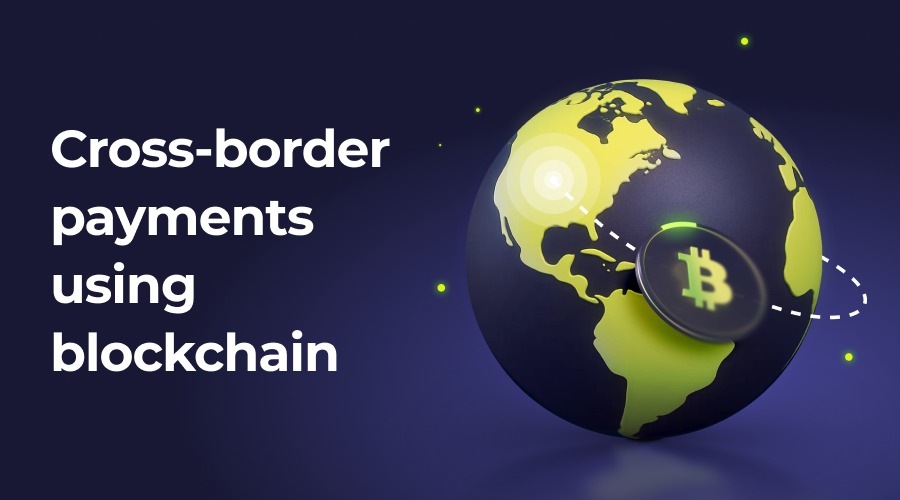
How Financial Institutions Use Blockchain to Streamline Cross-Border Payments
Tuesday,09/12/2025|12:57GMTby
WhiteBIT
Blockchain makes cross-border payments instant, secure, and cheaper using digital assets.
Cross-border transactions often involve high costs, delays, and regulatory complexities. Traditional systems, with bank intermediaries and currency conversions, can take several days to process payments and incur fees of 3-5%. Institutions are increasingly turning to blockchain for a more efficient solution—enabling faster, secure, and transparent transactions.
Blockchain significantly reduces transaction times, enhances control, and minimizes fraud risks. With instant payments and the automation of transaction terms through smart contracts, blockchain is revolutionizing cross-border payments.
The nature of blockchain cross-border transactions
Cross-border transactions using blockchain involve the transfer of digital assets via a distributed ledger, where transactions are securely recorded in blocks and protected by cryptography. This system offers key benefits such as transparency, immutability, and real-time verification by network participants. Unlike traditional banking systems, blockchain removes the need for intermediaries, reducing reliance on SWIFT and local banking networks. Blockchain-based cross-border transactions can involve cryptocurrencies, including stablecoins, or tokenized fiat assets. The primary advantage lies in the ability to execute transactions instantly and automate processes with smart contracts, thereby minimizing operational risks.
Kinds of blockchain cross-border transactions
Cryptocurrencies enable instant transactions with low fees, making them ideal for international trade. Bitcoin and Ethereum are commonly used for payments, especially in regions with limited access to traditional banking. Stablecoins like USDC and Tether offer price stability and fast settlements, making them particularly suitable for corporate and B2B transactions.
Smart contracts streamline cross-border processes by automating actions like releasing funds upon delivery confirmation, accelerating transaction times. Additionally, fiat currency tokenization and Ripple (XRP)-based networks allow banks and payment providers to process international transfers quickly, with transparent status updates and minimal fees.
Pros of blockchain in cross-border transactions
Blockchain transactions are crucial for corporate clients handling high volumes of cross-border payments, offering enhanced transparency, security, and speed. Blockchain reduces transaction times from days to seconds, enabling real-time transfers. With no intermediaries involved, fees are lower, and processes are more efficient. Each transaction is securely recorded in the blockchain, ensuring transparency and full control.
Blockchain cross-border transactions enable near-instant operations with fees ranging from 0.1% to 1%. The distributed ledger ensures transparency, while the absence of intermediaries and the use of smart contracts for automation streamline processes.
Applications for blockchain in cross-border transactions
Blockchain technology is transforming cross-border transactions across various sectors by enabling instant money transfers, ensuring transparency, and reducing fees. Here are the key areas of application:
International transfers Blockchain enables banks and payment services to process instant cross-border payments with minimal fees. Digital registries provide transparency, traceability, and automatic transaction verification, simplifying both corporate and retail settlements while reducing reliance on traditional payment systems.
Online payments E-commerce platforms uses blockchain for fast settlements with international customers. Using stablecoins and cryptocurrencies fixes payment costs, minimizing exchange rate risks and speeding up order processing.
B2B payments Blockchain is used by companies to pay international suppliers. It reduces operational risks, simplifies auditing, and allows real-time tracking of each transaction.
Additional use cases Tokenized fiat currencies and micropayments, such as freelancer payments through blockchain-based cryptocurrencies, also benefit from instant execution and operational transparency.
Real-world examples of blockchain use in cross-border transactions
WhiteBIT offers a set of tailored solutions for institutional clients — mass payouts with fixed transaction fee within the EU zone, on- and off-ramping and wallet addresses generation. WhiteBIT’s infrastructure aims at institutional players, and meets all the compliance, audit and risk management requirements.
Cross-border transactions often involve high costs, delays, and regulatory complexities. Traditional systems, with bank intermediaries and currency conversions, can take several days to process payments and incur fees of 3-5%. Institutions are increasingly turning to blockchain for a more efficient solution—enabling faster, secure, and transparent transactions.
Blockchain significantly reduces transaction times, enhances control, and minimizes fraud risks. With instant payments and the automation of transaction terms through smart contracts, blockchain is revolutionizing cross-border payments.
The nature of blockchain cross-border transactions
Cross-border transactions using blockchain involve the transfer of digital assets via a distributed ledger, where transactions are securely recorded in blocks and protected by cryptography. This system offers key benefits such as transparency, immutability, and real-time verification by network participants. Unlike traditional banking systems, blockchain removes the need for intermediaries, reducing reliance on SWIFT and local banking networks. Blockchain-based cross-border transactions can involve cryptocurrencies, including stablecoins, or tokenized fiat assets. The primary advantage lies in the ability to execute transactions instantly and automate processes with smart contracts, thereby minimizing operational risks.
Kinds of blockchain cross-border transactions
Cryptocurrencies enable instant transactions with low fees, making them ideal for international trade. Bitcoin and Ethereum are commonly used for payments, especially in regions with limited access to traditional banking. Stablecoins like USDC and Tether offer price stability and fast settlements, making them particularly suitable for corporate and B2B transactions.
Smart contracts streamline cross-border processes by automating actions like releasing funds upon delivery confirmation, accelerating transaction times. Additionally, fiat currency tokenization and Ripple (XRP)-based networks allow banks and payment providers to process international transfers quickly, with transparent status updates and minimal fees.
Pros of blockchain in cross-border transactions
Blockchain transactions are crucial for corporate clients handling high volumes of cross-border payments, offering enhanced transparency, security, and speed. Blockchain reduces transaction times from days to seconds, enabling real-time transfers. With no intermediaries involved, fees are lower, and processes are more efficient. Each transaction is securely recorded in the blockchain, ensuring transparency and full control.
Blockchain cross-border transactions enable near-instant operations with fees ranging from 0.1% to 1%. The distributed ledger ensures transparency, while the absence of intermediaries and the use of smart contracts for automation streamline processes.
Applications for blockchain in cross-border transactions
Blockchain technology is transforming cross-border transactions across various sectors by enabling instant money transfers, ensuring transparency, and reducing fees. Here are the key areas of application:
International transfers Blockchain enables banks and payment services to process instant cross-border payments with minimal fees. Digital registries provide transparency, traceability, and automatic transaction verification, simplifying both corporate and retail settlements while reducing reliance on traditional payment systems.
Online payments E-commerce platforms uses blockchain for fast settlements with international customers. Using stablecoins and cryptocurrencies fixes payment costs, minimizing exchange rate risks and speeding up order processing.
B2B payments Blockchain is used by companies to pay international suppliers. It reduces operational risks, simplifies auditing, and allows real-time tracking of each transaction.
Additional use cases Tokenized fiat currencies and micropayments, such as freelancer payments through blockchain-based cryptocurrencies, also benefit from instant execution and operational transparency.
Real-world examples of blockchain use in cross-border transactions
WhiteBIT offers a set of tailored solutions for institutional clients — mass payouts with fixed transaction fee within the EU zone, on- and off-ramping and wallet addresses generation. WhiteBIT’s infrastructure aims at institutional players, and meets all the compliance, audit and risk management requirements.
FP Markets Winner Spotlight 🏆 | Global Broker of the Year 2025 #Trading #Broker #Innovation #Shorts
FP Markets Winner Spotlight 🏆 | Global Broker of the Year 2025 #Trading #Broker #Innovation #Shorts
FP Markets takes the spotlight as Global Broker of the Year 2025 at the Finance Magnates Awards.
Martin Stoilov, Head of Client Experience, shares that trust, innovation, and people played a key role in the company’s success, supported by a strong foundation of integrity and client-centricity.
Following this milestone, FP Markets continues to focus on growth, technology investment, and its core values of transparency and excellence.
👉 Be part of FM Awards 2026: https://awards.financemagnates.com/#nominate
FP Markets takes the spotlight as Global Broker of the Year 2025 at the Finance Magnates Awards.
Martin Stoilov, Head of Client Experience, shares that trust, innovation, and people played a key role in the company’s success, supported by a strong foundation of integrity and client-centricity.
Following this milestone, FP Markets continues to focus on growth, technology investment, and its core values of transparency and excellence.
👉 Be part of FM Awards 2026: https://awards.financemagnates.com/#nominate
In this video, we review @HolaPrimeMarketsOfficial, a multi-asset forex and CFDs broker offering different account types, trading platforms, and flexible trading conditions.
We cover the broker’s overall offering, including account options, trading environment, platforms like MT4 and MT5, and additional services such as managed accounts and fast withdrawals.
Watch the full video to see if Hola Prime Markets fits your trading needs.
📣 Stay up to date with the latest in finance and trading. Follow Finance Magnates for industry news, insights, and global event coverage.
Connect with us:
🔗 LinkedIn: /financemagnates
👍 Facebook: /financemagnates
📸 Instagram: https://www.instagram.com/financemagnates
🐦 X: https://x.com/financemagnates
🎥 TikTok: https://www.tiktok.com/tag/financemagnates
▶️ YouTube: /@financemagnates_official
#HolaPrime #ForexBroker #CFDTrading #FinanceMagnates #Trading #Forex #BrokerReview
In this video, we review @HolaPrimeMarketsOfficial, a multi-asset forex and CFDs broker offering different account types, trading platforms, and flexible trading conditions.
We cover the broker’s overall offering, including account options, trading environment, platforms like MT4 and MT5, and additional services such as managed accounts and fast withdrawals.
Watch the full video to see if Hola Prime Markets fits your trading needs.
📣 Stay up to date with the latest in finance and trading. Follow Finance Magnates for industry news, insights, and global event coverage.
Connect with us:
🔗 LinkedIn: /financemagnates
👍 Facebook: /financemagnates
📸 Instagram: https://www.instagram.com/financemagnates
🐦 X: https://x.com/financemagnates
🎥 TikTok: https://www.tiktok.com/tag/financemagnates
▶️ YouTube: /@financemagnates_official
#HolaPrime #ForexBroker #CFDTrading #FinanceMagnates #Trading #Forex #BrokerReview
Hola Prime Review: What You Need to Know | Full Breakdown by Finance Magnates
Hola Prime Review: What You Need to Know | Full Breakdown by Finance Magnates
In this video, we review @HolaPrime_Global, a proprietary trading firm offering evaluation programs and performance-based payouts in simulated market environments.
We cover how the challenge model works, including account types, profit splits (up to 95%), trading rules, and what it takes to reach a funded account. You’ll also learn about available platforms like MT4, MT5, cTrader, and more, along with insights into payouts, support, and trading conditions.
Watch the full video to see if Hola Prime fits your trading style.
📣 Stay up to date with the latest in finance and trading. Follow Finance Magnates for industry news, insights, and global event coverage.
Connect with us:
🔗 LinkedIn: /financemagnates
👍 Facebook: /financemagnates
📸 Instagram: https://www.instagram.com/financemagnates
🐦 X: https://x.com/financemagnates
🎥 TikTok: https://www.tiktok.com/tag/financemagnates
▶️ YouTube: /@financemagnates_official
#HolaPrime #PropFirm #Trading #FinanceMagnates #Forex #FuturesTrading #TradingReview #PropFirmReview
In this video, we review @HolaPrime_Global, a proprietary trading firm offering evaluation programs and performance-based payouts in simulated market environments.
We cover how the challenge model works, including account types, profit splits (up to 95%), trading rules, and what it takes to reach a funded account. You’ll also learn about available platforms like MT4, MT5, cTrader, and more, along with insights into payouts, support, and trading conditions.
Watch the full video to see if Hola Prime fits your trading style.
📣 Stay up to date with the latest in finance and trading. Follow Finance Magnates for industry news, insights, and global event coverage.
Connect with us:
🔗 LinkedIn: /financemagnates
👍 Facebook: /financemagnates
📸 Instagram: https://www.instagram.com/financemagnates
🐦 X: https://x.com/financemagnates
🎥 TikTok: https://www.tiktok.com/tag/financemagnates
▶️ YouTube: /@financemagnates_official
#HolaPrime #PropFirm #Trading #FinanceMagnates #Forex #FuturesTrading #TradingReview #PropFirmReview
Axi Winner Spotlight 🏆 | Global Most Innovative Broker 2025 #Innovation #Trading #Fintech #Broker
Axi Winner Spotlight 🏆 | Global Most Innovative Broker 2025 #Innovation #Trading #Fintech #Broker
Axi takes the spotlight at the Finance Magnates Awards, winning Global Most Innovative Broker 2025.
Olivia Xenofontos and Ivanna Openko share how the team will feel: proud, motivated, and ready to keep delivering.
They also describe the night as well-organized, focused, and enjoyable for all.
👉 Be part of FM Awards 2026.
Axi takes the spotlight at the Finance Magnates Awards, winning Global Most Innovative Broker 2025.
Olivia Xenofontos and Ivanna Openko share how the team will feel: proud, motivated, and ready to keep delivering.
They also describe the night as well-organized, focused, and enjoyable for all.
👉 Be part of FM Awards 2026.
Recognition that matters.
Built on transparency.
Driven by the industry.
The Finance Magnates Awards 2026.
Nominations are now open.
🔗 https://awards.financemagnates.com/?utm_source=SM&utm_medium=social&utm_campaign=recognition-matters
Recognition that matters.
Built on transparency.
Driven by the industry.
The Finance Magnates Awards 2026.
Nominations are now open.
🔗 https://awards.financemagnates.com/?utm_source=SM&utm_medium=social&utm_campaign=recognition-matters