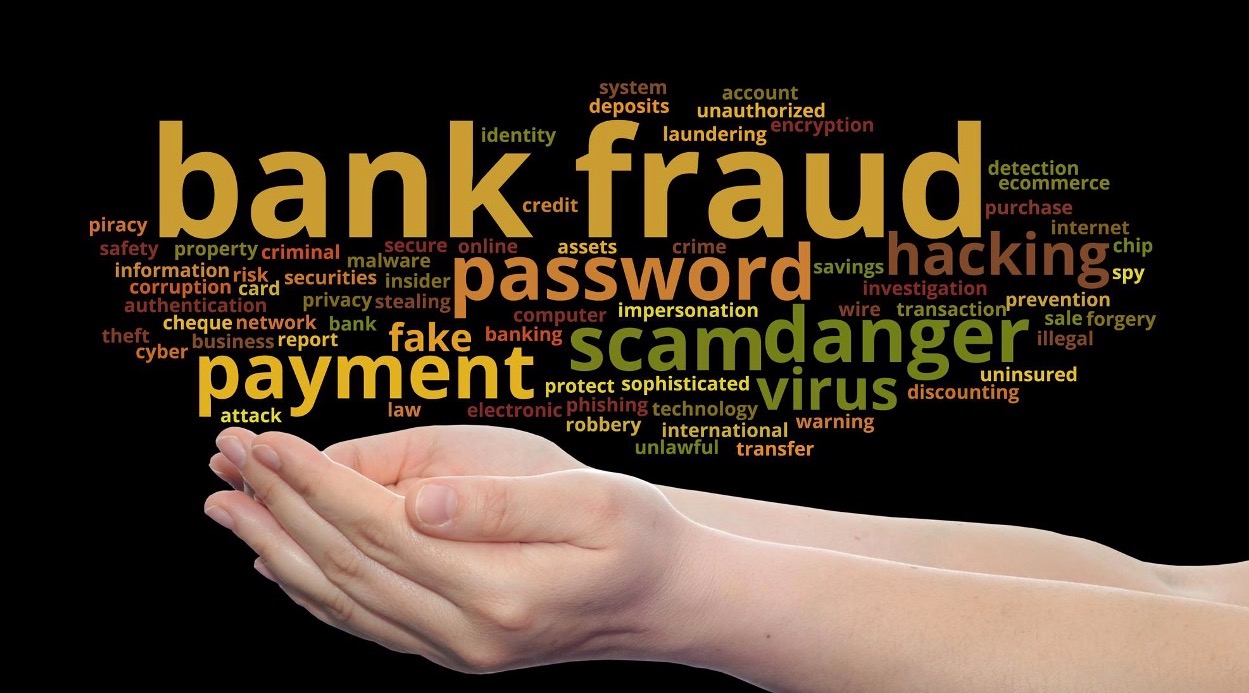
For many, this is not surprising. It’s not difficult to see what makes banks appealing to cybercriminals.
Besides direct monetary gain, threat actors can obtain the sensitive information of millions of people who trust their bank with their personal data.
Banks are already investing a lot in cybersecurity — especially as they add more convenient services such as mobile applications and online banking for their users.
So why are successful breaches of financial institutions still headlining in the news?
For starters, let’s take a look at the latest cybersecurity breaches to get a sense of how cybercriminals exploit weaknesses to breach financial institutions.
Recent Banking Breaches
What can we learn from the latest hacking of financial institutions? When we compare recent cyber incidents in the financial sector, clear patterns emerge:
● A successful cyberattack can set financial institutions back millions
● Hackers use versatile methods to obtain sensitive data or financially damage institutions
● Even major banks that already allocate a lot of resources towards cybersecurity can be breached
● Financial damage is not necessarily the hacker’s endgame
In April 2022, the platform Beanstalk Farms reported a loss of $180 million in Bean cryptocurrency. Hackers exploited voting rights to obtain the currency and caused a decrease in the value of the Bean.
In the last couple of months, researchers have uncovered different malware that has been used to target financial institutions.
For example, in South Korea, they spotted Fakecalls. This trojan called victims and impersonated banking officials, urging them to disclose banking information and make transfers.
Some of the major financial institutions that have recently fallen victim to cyberattacks include Block and Flagstar Bank.
Flagstar Bank’s perpetrators leaked the social security numbers of 1.5 million users after a data breach.
Layered Security to Protect Finances
What kind of cybersecurity do financial institutions need to deploy on their premises to avoid such attacks?
Comprehensive and layered cybersecurity. This means having different tools, protocols, and systems that cover any possible weak spot within the infrastructure itself. Cybersecurity mesh can improve collaboration between various security solutions.
Instead of working in silos, the model integrates the architecture into a more flexible and collaborative one. Companies that adopt this approach can add more security tools as they grow, as well as adjust security functions based on their needs.
What’s more, to continually monitor movement within the infrastructure, CSMA utilizes the power of artificial intelligence. This delegates repetitive tasks to IA and frees up time for cyber analysts, enabling them to allocate more resources toward mitigating advanced threats.
Final Word
Financial institutions already invest a lot in their security because there’s a lot at stake.
Losses following an attack include people whose sensitive information has been stolen, different currencies (e.g., crypto), leaked portfolios, and lost life savings.
Recurring attacks can, and often do, lead to a lack of trust and therefore, loss of clients.
To protect users' personal information — which in the case of financial institutions can lead to data leaks and further attacks on different infrastructures — it’s necessary to deploy strong and layered security.
Recent major attacks on financial institutions have shown that institutions have to guard their assets against different types of attacks — even from those they can’t yet expect.
Cybersecurity Mesh Architecture encourages working smart instead of hard by uniting the tools a business would use in a single infrastructure.
For many, this is not surprising. It’s not difficult to see what makes banks appealing to cybercriminals.
Besides direct monetary gain, threat actors can obtain the sensitive information of millions of people who trust their bank with their personal data.
Banks are already investing a lot in cybersecurity — especially as they add more convenient services such as mobile applications and online banking for their users.
So why are successful breaches of financial institutions still headlining in the news?
For starters, let’s take a look at the latest cybersecurity breaches to get a sense of how cybercriminals exploit weaknesses to breach financial institutions.
Recent Banking Breaches
What can we learn from the latest hacking of financial institutions? When we compare recent cyber incidents in the financial sector, clear patterns emerge:
● A successful cyberattack can set financial institutions back millions
● Hackers use versatile methods to obtain sensitive data or financially damage institutions
● Even major banks that already allocate a lot of resources towards cybersecurity can be breached
● Financial damage is not necessarily the hacker’s endgame
In April 2022, the platform Beanstalk Farms reported a loss of $180 million in Bean cryptocurrency. Hackers exploited voting rights to obtain the currency and caused a decrease in the value of the Bean.
In the last couple of months, researchers have uncovered different malware that has been used to target financial institutions.
For example, in South Korea, they spotted Fakecalls. This trojan called victims and impersonated banking officials, urging them to disclose banking information and make transfers.
Some of the major financial institutions that have recently fallen victim to cyberattacks include Block and Flagstar Bank.
Flagstar Bank’s perpetrators leaked the social security numbers of 1.5 million users after a data breach.
Layered Security to Protect Finances
What kind of cybersecurity do financial institutions need to deploy on their premises to avoid such attacks?
Comprehensive and layered cybersecurity. This means having different tools, protocols, and systems that cover any possible weak spot within the infrastructure itself. Cybersecurity mesh can improve collaboration between various security solutions.
Instead of working in silos, the model integrates the architecture into a more flexible and collaborative one. Companies that adopt this approach can add more security tools as they grow, as well as adjust security functions based on their needs.
What’s more, to continually monitor movement within the infrastructure, CSMA utilizes the power of artificial intelligence. This delegates repetitive tasks to IA and frees up time for cyber analysts, enabling them to allocate more resources toward mitigating advanced threats.
Final Word
Financial institutions already invest a lot in their security because there’s a lot at stake.
Losses following an attack include people whose sensitive information has been stolen, different currencies (e.g., crypto), leaked portfolios, and lost life savings.
Recurring attacks can, and often do, lead to a lack of trust and therefore, loss of clients.
To protect users' personal information — which in the case of financial institutions can lead to data leaks and further attacks on different infrastructures — it’s necessary to deploy strong and layered security.
Recent major attacks on financial institutions have shown that institutions have to guard their assets against different types of attacks — even from those they can’t yet expect.
Cybersecurity Mesh Architecture encourages working smart instead of hard by uniting the tools a business would use in a single infrastructure.
FP Markets Winner Spotlight 🏆 | Global Broker of the Year 2025 #Trading #Broker #Innovation #Shorts
FP Markets Winner Spotlight 🏆 | Global Broker of the Year 2025 #Trading #Broker #Innovation #Shorts
FP Markets takes the spotlight as Global Broker of the Year 2025 at the Finance Magnates Awards.
Martin Stoilov, Head of Client Experience, shares that trust, innovation, and people played a key role in the company’s success, supported by a strong foundation of integrity and client-centricity.
Following this milestone, FP Markets continues to focus on growth, technology investment, and its core values of transparency and excellence.
👉 Be part of FM Awards 2026: https://awards.financemagnates.com/#nominate
FP Markets takes the spotlight as Global Broker of the Year 2025 at the Finance Magnates Awards.
Martin Stoilov, Head of Client Experience, shares that trust, innovation, and people played a key role in the company’s success, supported by a strong foundation of integrity and client-centricity.
Following this milestone, FP Markets continues to focus on growth, technology investment, and its core values of transparency and excellence.
👉 Be part of FM Awards 2026: https://awards.financemagnates.com/#nominate
In this video, we review @HolaPrimeMarketsOfficial, a multi-asset forex and CFDs broker offering different account types, trading platforms, and flexible trading conditions.
We cover the broker’s overall offering, including account options, trading environment, platforms like MT4 and MT5, and additional services such as managed accounts and fast withdrawals.
Watch the full video to see if Hola Prime Markets fits your trading needs.
📣 Stay up to date with the latest in finance and trading. Follow Finance Magnates for industry news, insights, and global event coverage.
Connect with us:
🔗 LinkedIn: /financemagnates
👍 Facebook: /financemagnates
📸 Instagram: https://www.instagram.com/financemagnates
🐦 X: https://x.com/financemagnates
🎥 TikTok: https://www.tiktok.com/tag/financemagnates
▶️ YouTube: /@financemagnates_official
#HolaPrime #ForexBroker #CFDTrading #FinanceMagnates #Trading #Forex #BrokerReview
In this video, we review @HolaPrimeMarketsOfficial, a multi-asset forex and CFDs broker offering different account types, trading platforms, and flexible trading conditions.
We cover the broker’s overall offering, including account options, trading environment, platforms like MT4 and MT5, and additional services such as managed accounts and fast withdrawals.
Watch the full video to see if Hola Prime Markets fits your trading needs.
📣 Stay up to date with the latest in finance and trading. Follow Finance Magnates for industry news, insights, and global event coverage.
Connect with us:
🔗 LinkedIn: /financemagnates
👍 Facebook: /financemagnates
📸 Instagram: https://www.instagram.com/financemagnates
🐦 X: https://x.com/financemagnates
🎥 TikTok: https://www.tiktok.com/tag/financemagnates
▶️ YouTube: /@financemagnates_official
#HolaPrime #ForexBroker #CFDTrading #FinanceMagnates #Trading #Forex #BrokerReview
Hola Prime Review: What You Need to Know | Full Breakdown by Finance Magnates
Hola Prime Review: What You Need to Know | Full Breakdown by Finance Magnates
In this video, we review @HolaPrime_Global, a proprietary trading firm offering evaluation programs and performance-based payouts in simulated market environments.
We cover how the challenge model works, including account types, profit splits (up to 95%), trading rules, and what it takes to reach a funded account. You’ll also learn about available platforms like MT4, MT5, cTrader, and more, along with insights into payouts, support, and trading conditions.
Watch the full video to see if Hola Prime fits your trading style.
📣 Stay up to date with the latest in finance and trading. Follow Finance Magnates for industry news, insights, and global event coverage.
Connect with us:
🔗 LinkedIn: /financemagnates
👍 Facebook: /financemagnates
📸 Instagram: https://www.instagram.com/financemagnates
🐦 X: https://x.com/financemagnates
🎥 TikTok: https://www.tiktok.com/tag/financemagnates
▶️ YouTube: /@financemagnates_official
#HolaPrime #PropFirm #Trading #FinanceMagnates #Forex #FuturesTrading #TradingReview #PropFirmReview
In this video, we review @HolaPrime_Global, a proprietary trading firm offering evaluation programs and performance-based payouts in simulated market environments.
We cover how the challenge model works, including account types, profit splits (up to 95%), trading rules, and what it takes to reach a funded account. You’ll also learn about available platforms like MT4, MT5, cTrader, and more, along with insights into payouts, support, and trading conditions.
Watch the full video to see if Hola Prime fits your trading style.
📣 Stay up to date with the latest in finance and trading. Follow Finance Magnates for industry news, insights, and global event coverage.
Connect with us:
🔗 LinkedIn: /financemagnates
👍 Facebook: /financemagnates
📸 Instagram: https://www.instagram.com/financemagnates
🐦 X: https://x.com/financemagnates
🎥 TikTok: https://www.tiktok.com/tag/financemagnates
▶️ YouTube: /@financemagnates_official
#HolaPrime #PropFirm #Trading #FinanceMagnates #Forex #FuturesTrading #TradingReview #PropFirmReview
Axi Winner Spotlight 🏆 | Global Most Innovative Broker 2025 #Innovation #Trading #Fintech #Broker
Axi Winner Spotlight 🏆 | Global Most Innovative Broker 2025 #Innovation #Trading #Fintech #Broker
Axi takes the spotlight at the Finance Magnates Awards, winning Global Most Innovative Broker 2025.
Olivia Xenofontos and Ivanna Openko share how the team will feel: proud, motivated, and ready to keep delivering.
They also describe the night as well-organized, focused, and enjoyable for all.
👉 Be part of FM Awards 2026.
Axi takes the spotlight at the Finance Magnates Awards, winning Global Most Innovative Broker 2025.
Olivia Xenofontos and Ivanna Openko share how the team will feel: proud, motivated, and ready to keep delivering.
They also describe the night as well-organized, focused, and enjoyable for all.
👉 Be part of FM Awards 2026.
Recognition that matters.
Built on transparency.
Driven by the industry.
The Finance Magnates Awards 2026.
Nominations are now open.
🔗 https://awards.financemagnates.com/?utm_source=SM&utm_medium=social&utm_campaign=recognition-matters
Recognition that matters.
Built on transparency.
Driven by the industry.
The Finance Magnates Awards 2026.
Nominations are now open.
🔗 https://awards.financemagnates.com/?utm_source=SM&utm_medium=social&utm_campaign=recognition-matters