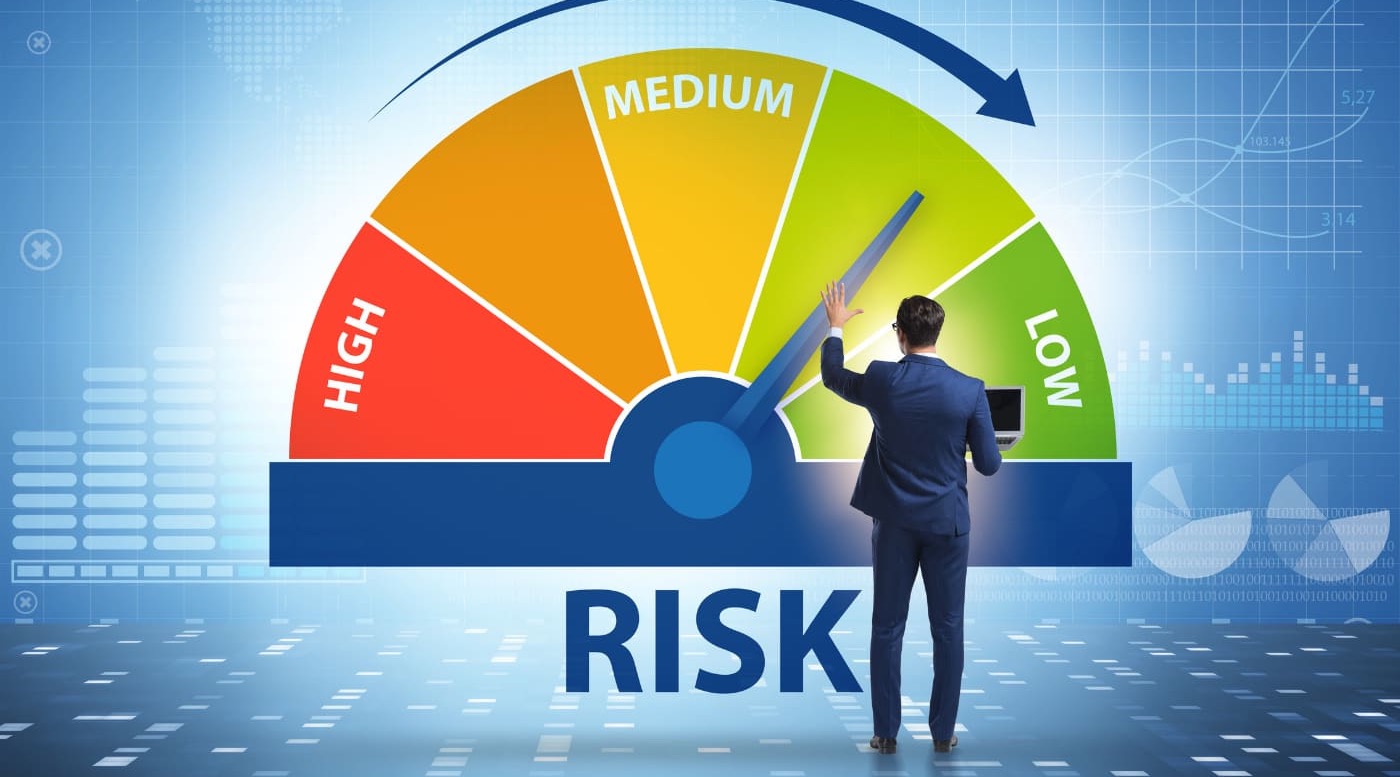
The best way to ensure results is to have foundations that are effective and scalable.
This article was written by Jeff Wilkins, Managing Director of IS Risk, part of ISAM Capital Markets.
I am often asked ‘What is the holy grail of risk management?’ The reality is, there is no such thing. One model does not work for everyone and you need to be able to adapt according to changes in the market. However, having worked in risk management advisory for over 15 years – and with IS Risk overseeing $2 trillion of monthly notional trade volume - I certainly have a list of ‘do’s and don’ts’ relating to the most effective way for FX brokers to manage risk.
Top of the list for what not to do, is to not have an overcomplicated risk model. We see this far too often and it certainly does not generate the best results or enable a client to act quickly when market conditions suddenly change.
My other ‘pet hate’, which happens with alarming frequency in some parts of the world, is a CEO or business owner making their risk team focus on client drop. This always end up pulling the risk team down the wrong path, and they are therefore unable to deliver optimum results.
In my view, the best way to ensure consistent results is to have foundations that are simple, effective and scalable. Here are my top 5 tips for maximising profits and minimizing risk.
Jeff Wilkins, Managing Director of IS Risk
1) Deploy technology that can systematically alert you to what’s happening in the market and can help you to respond accordingly. With the right automated system in place, if your business doubles tomorrow you don’t have to suddenly employ a number of new employees. You will have the technology in place to enable you to scale and manage your risk effectively as the business grows.
2) Monetize flow on a consistent basis. The way to do this is by taking an informed approach to risk management and adapting your business models accordingly. We are able to help clients with this through our risk advisory service as, from our vantage point, we can spot trends, regionally and globally, which brokers (no matter how large they are) are unable to see.
3) Employ a good risk manager - which I know can be a challenge in the current climate but it makes all the difference. We often work with our clients to help them to select their in-house risk managers because from a risk advisory perspective, it makes a huge difference to have someone experienced within the brokerage who really understands your business. The ideal in-house risk manager is a quick thinker who doesn’t make snap decisions. I think of a good risk manager in terms of a Venn diagram – one circle is smart, one circle is experienced and one is trustworthy. Not many people genuinely fit right in the middle. If you have a good risk manager in your firm, lock them in!
4) Select your risk management technology partner very carefully – many companies offering risk solutions are pure technology providers. They don’t have a team of risk management experts in their businesses who have worked in risk teams within the industry. This limits the support and expertise they can provide to you.
5) Make sure the risk team has final sign off on any commercial offering. Far too often we see sales leading the charge with upside down commercial offerings that lock risk desks into managing flow with their arms tied behind their backs. A great example of this right now is certain brokers marking down from the spreads they receive from the LP. There seems to be an artificial race to zero and this leaves brokers with little options on how to handle risk. This commercial strategy will backfire soon.
With simple processes and procedures, a good understanding of your clients, a scalable model and the right people in place, you will not only be able to manage your risk effectively in today’s environment but you will also have set yourself up for future success.
IS Risk provides risk management, technology, hosting, and optimization. The US-based firm, part of ISAM Capital Markets, works with brokers all over the globe and is the only regulated risk advisor in the retail FX industry.
This article was written by Jeff Wilkins, Managing Director of IS Risk, part of ISAM Capital Markets.
I am often asked ‘What is the holy grail of risk management?’ The reality is, there is no such thing. One model does not work for everyone and you need to be able to adapt according to changes in the market. However, having worked in risk management advisory for over 15 years – and with IS Risk overseeing $2 trillion of monthly notional trade volume - I certainly have a list of ‘do’s and don’ts’ relating to the most effective way for FX brokers to manage risk.
Top of the list for what not to do, is to not have an overcomplicated risk model. We see this far too often and it certainly does not generate the best results or enable a client to act quickly when market conditions suddenly change.
My other ‘pet hate’, which happens with alarming frequency in some parts of the world, is a CEO or business owner making their risk team focus on client drop. This always end up pulling the risk team down the wrong path, and they are therefore unable to deliver optimum results.
In my view, the best way to ensure consistent results is to have foundations that are simple, effective and scalable. Here are my top 5 tips for maximising profits and minimizing risk.
Jeff Wilkins, Managing Director of IS Risk
1) Deploy technology that can systematically alert you to what’s happening in the market and can help you to respond accordingly. With the right automated system in place, if your business doubles tomorrow you don’t have to suddenly employ a number of new employees. You will have the technology in place to enable you to scale and manage your risk effectively as the business grows.
2) Monetize flow on a consistent basis. The way to do this is by taking an informed approach to risk management and adapting your business models accordingly. We are able to help clients with this through our risk advisory service as, from our vantage point, we can spot trends, regionally and globally, which brokers (no matter how large they are) are unable to see.
3) Employ a good risk manager - which I know can be a challenge in the current climate but it makes all the difference. We often work with our clients to help them to select their in-house risk managers because from a risk advisory perspective, it makes a huge difference to have someone experienced within the brokerage who really understands your business. The ideal in-house risk manager is a quick thinker who doesn’t make snap decisions. I think of a good risk manager in terms of a Venn diagram – one circle is smart, one circle is experienced and one is trustworthy. Not many people genuinely fit right in the middle. If you have a good risk manager in your firm, lock them in!
4) Select your risk management technology partner very carefully – many companies offering risk solutions are pure technology providers. They don’t have a team of risk management experts in their businesses who have worked in risk teams within the industry. This limits the support and expertise they can provide to you.
5) Make sure the risk team has final sign off on any commercial offering. Far too often we see sales leading the charge with upside down commercial offerings that lock risk desks into managing flow with their arms tied behind their backs. A great example of this right now is certain brokers marking down from the spreads they receive from the LP. There seems to be an artificial race to zero and this leaves brokers with little options on how to handle risk. This commercial strategy will backfire soon.
With simple processes and procedures, a good understanding of your clients, a scalable model and the right people in place, you will not only be able to manage your risk effectively in today’s environment but you will also have set yourself up for future success.
IS Risk provides risk management, technology, hosting, and optimization. The US-based firm, part of ISAM Capital Markets, works with brokers all over the globe and is the only regulated risk advisor in the retail FX industry.
FP Markets Winner Spotlight 🏆 | Global Broker of the Year 2025 #Trading #Broker #Innovation #Shorts
FP Markets Winner Spotlight 🏆 | Global Broker of the Year 2025 #Trading #Broker #Innovation #Shorts
FP Markets takes the spotlight as Global Broker of the Year 2025 at the Finance Magnates Awards.
Martin Stoilov, Head of Client Experience, shares that trust, innovation, and people played a key role in the company’s success, supported by a strong foundation of integrity and client-centricity.
Following this milestone, FP Markets continues to focus on growth, technology investment, and its core values of transparency and excellence.
👉 Be part of FM Awards 2026: https://awards.financemagnates.com/#nominate
FP Markets takes the spotlight as Global Broker of the Year 2025 at the Finance Magnates Awards.
Martin Stoilov, Head of Client Experience, shares that trust, innovation, and people played a key role in the company’s success, supported by a strong foundation of integrity and client-centricity.
Following this milestone, FP Markets continues to focus on growth, technology investment, and its core values of transparency and excellence.
👉 Be part of FM Awards 2026: https://awards.financemagnates.com/#nominate
In this video, we review @HolaPrimeMarketsOfficial, a multi-asset forex and CFDs broker offering different account types, trading platforms, and flexible trading conditions.
We cover the broker’s overall offering, including account options, trading environment, platforms like MT4 and MT5, and additional services such as managed accounts and fast withdrawals.
Watch the full video to see if Hola Prime Markets fits your trading needs.
📣 Stay up to date with the latest in finance and trading. Follow Finance Magnates for industry news, insights, and global event coverage.
Connect with us:
🔗 LinkedIn: /financemagnates
👍 Facebook: /financemagnates
📸 Instagram: https://www.instagram.com/financemagnates
🐦 X: https://x.com/financemagnates
🎥 TikTok: https://www.tiktok.com/tag/financemagnates
▶️ YouTube: /@financemagnates_official
#HolaPrime #ForexBroker #CFDTrading #FinanceMagnates #Trading #Forex #BrokerReview
In this video, we review @HolaPrimeMarketsOfficial, a multi-asset forex and CFDs broker offering different account types, trading platforms, and flexible trading conditions.
We cover the broker’s overall offering, including account options, trading environment, platforms like MT4 and MT5, and additional services such as managed accounts and fast withdrawals.
Watch the full video to see if Hola Prime Markets fits your trading needs.
📣 Stay up to date with the latest in finance and trading. Follow Finance Magnates for industry news, insights, and global event coverage.
Connect with us:
🔗 LinkedIn: /financemagnates
👍 Facebook: /financemagnates
📸 Instagram: https://www.instagram.com/financemagnates
🐦 X: https://x.com/financemagnates
🎥 TikTok: https://www.tiktok.com/tag/financemagnates
▶️ YouTube: /@financemagnates_official
#HolaPrime #ForexBroker #CFDTrading #FinanceMagnates #Trading #Forex #BrokerReview
Hola Prime Review: What You Need to Know | Full Breakdown by Finance Magnates
Hola Prime Review: What You Need to Know | Full Breakdown by Finance Magnates
In this video, we review @HolaPrime_Global, a proprietary trading firm offering evaluation programs and performance-based payouts in simulated market environments.
We cover how the challenge model works, including account types, profit splits (up to 95%), trading rules, and what it takes to reach a funded account. You’ll also learn about available platforms like MT4, MT5, cTrader, and more, along with insights into payouts, support, and trading conditions.
Watch the full video to see if Hola Prime fits your trading style.
📣 Stay up to date with the latest in finance and trading. Follow Finance Magnates for industry news, insights, and global event coverage.
Connect with us:
🔗 LinkedIn: /financemagnates
👍 Facebook: /financemagnates
📸 Instagram: https://www.instagram.com/financemagnates
🐦 X: https://x.com/financemagnates
🎥 TikTok: https://www.tiktok.com/tag/financemagnates
▶️ YouTube: /@financemagnates_official
#HolaPrime #PropFirm #Trading #FinanceMagnates #Forex #FuturesTrading #TradingReview #PropFirmReview
In this video, we review @HolaPrime_Global, a proprietary trading firm offering evaluation programs and performance-based payouts in simulated market environments.
We cover how the challenge model works, including account types, profit splits (up to 95%), trading rules, and what it takes to reach a funded account. You’ll also learn about available platforms like MT4, MT5, cTrader, and more, along with insights into payouts, support, and trading conditions.
Watch the full video to see if Hola Prime fits your trading style.
📣 Stay up to date with the latest in finance and trading. Follow Finance Magnates for industry news, insights, and global event coverage.
Connect with us:
🔗 LinkedIn: /financemagnates
👍 Facebook: /financemagnates
📸 Instagram: https://www.instagram.com/financemagnates
🐦 X: https://x.com/financemagnates
🎥 TikTok: https://www.tiktok.com/tag/financemagnates
▶️ YouTube: /@financemagnates_official
#HolaPrime #PropFirm #Trading #FinanceMagnates #Forex #FuturesTrading #TradingReview #PropFirmReview
Axi Winner Spotlight 🏆 | Global Most Innovative Broker 2025 #Innovation #Trading #Fintech #Broker
Axi Winner Spotlight 🏆 | Global Most Innovative Broker 2025 #Innovation #Trading #Fintech #Broker
Axi takes the spotlight at the Finance Magnates Awards, winning Global Most Innovative Broker 2025.
Olivia Xenofontos and Ivanna Openko share how the team will feel: proud, motivated, and ready to keep delivering.
They also describe the night as well-organized, focused, and enjoyable for all.
👉 Be part of FM Awards 2026.
Axi takes the spotlight at the Finance Magnates Awards, winning Global Most Innovative Broker 2025.
Olivia Xenofontos and Ivanna Openko share how the team will feel: proud, motivated, and ready to keep delivering.
They also describe the night as well-organized, focused, and enjoyable for all.
👉 Be part of FM Awards 2026.
Recognition that matters.
Built on transparency.
Driven by the industry.
The Finance Magnates Awards 2026.
Nominations are now open.
🔗 https://awards.financemagnates.com/?utm_source=SM&utm_medium=social&utm_campaign=recognition-matters
Recognition that matters.
Built on transparency.
Driven by the industry.
The Finance Magnates Awards 2026.
Nominations are now open.
🔗 https://awards.financemagnates.com/?utm_source=SM&utm_medium=social&utm_campaign=recognition-matters