“Crypto Users Still Have to Choose Between Convenience and Decentralization”
Thursday,30/06/2022|10:46GMTby
FM
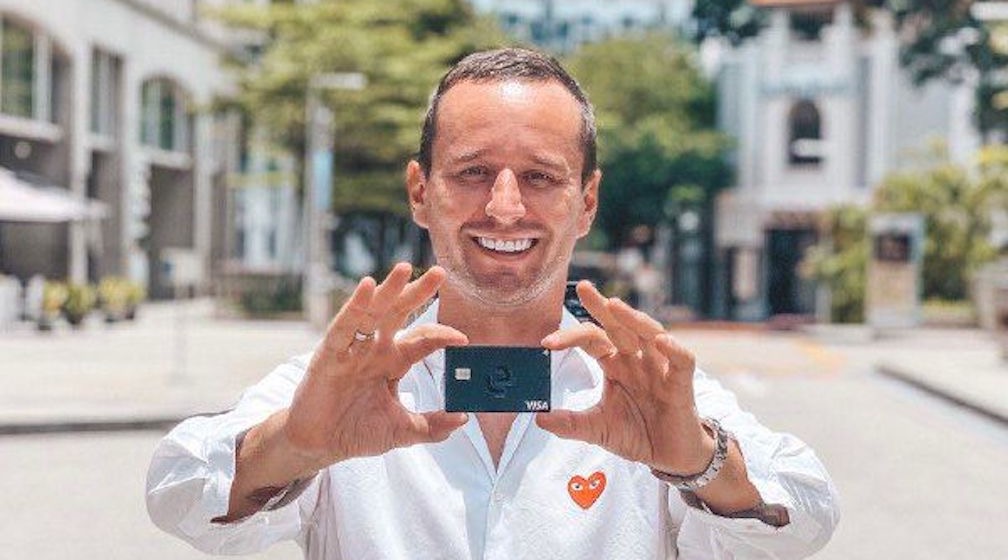
Alex Bychkov, Embily's CEO explains the growing demand for crypto processing products.
Alex Bychkov CEO of Embily
Crypto services still lack convenience, but the crucial moment is getting closer as more and more users around the world seek ways to use their crypto not just as an investment tool.
Alex Bychkov CEO of Embily explains why the demand for crypto processing products is growing, what regions are disposed the most to crypto payments, and what crypto has in common with skateboarding.
Cryptocurrencies have existed for over 12 years. If we can talk about mass adoption of crypto as an investment instrument, then crypto is still a curiosity for everyday spending. Why?
The answer is obvious. The payment infrastructure serving cryptocurrencies is still at a low level of development. Users have to choose: either convenience with the usual fiat bank card, or decentralization with a bunch of headaches.
Bitcoin was designed to allow asset owners to take control back into their own hands, but it turned out that not everyone needed this control. It is more needed when it comes to large sums, investments, while when it comes to routine expenses, users are ready to give up control for the sake of speed and convenience. In this field, cryptocurrencies lose heavily to the already established traditional banking infrastructure. But this is slowly changing because it turns out that there is a growing segment of users who are interested in both asset control and convenience.
What is the reason for the growth of this category of users?
One of the reasons is that more and more employees, especially in IT companies and companies working with cryptocurrencies, receive their salaries or part of it in cryptocurrencies. If the headquarter is located in one jurisdiction, and employees live in other countries with a different currency, it is easier for company to pay them in crypto.
Especially in the current situation, when the financial and banking connections between different regions are disrupted, and payments are periodically frozen, suspended, and reach the addressee with a delay or do not reach at all. Another reason is that people who have already experienced the advantages of cryptocurrencies as an investment tool want to be able to use cryptocurrencies as a means of payment.
However, many people still talk about the difficulty of using cryptocurrencies in everyday life. Do you agree with them?
I agree that the infrastructure for everyday payments in cryptocurrencies is still developing, and for a number of users these complexities are a high barrier to entry into this space. That is why I consider infrastructure solutions to be the most interesting and promising direction for startups now. There is demand, interest from the target audience. There is space for rapid growth.
I am an avid startuper. And this type of entrepreneurs always needs the most. This thirst for new experiences resembles to me a delight of extreme sports: it's scary, but you jump into the unknown - to reach the point break. This is very familiar to me, because before moving to Singapore and establishing Embily I was obsessed with skateboarding, snowboarding, and all other kinds of “boarding”, I launched one of the largest distributors of extreme sports products in the local Eastern European market Freestyle Dist.
I see a lot of similarities between extreme sports and cryptocurrencies. One of them is a big role played by the community. The community is a driving force. Its members are not just consumers; they are active. Sometimes new services at Embily are born under the influence of the active community of our users. They write to us what they would like to see in the list of services, and we look at how this can be implemented.
What markets seem to be the most promising for crypto processing?
In my opinion, these are two main markets, US and South-Asian. They are very different, but they are similar in one thing - users in these markets like to test new products. The Asian market is also interesting in terms of demographics: the population is growing rapidly here.
The share of young people is consistently high, and this is the main target audience for payment products using cryptocurrencies. In the US market, cryptocurrencies reached popularity mostly as a tool for trading and investing. And when a user already has a lot of different coins in his investment portfolio, he wants to be able to easily use them in everyday payments.
Now the crypto market is experiencing the consequences of the shock phenomena associated with the collapse of the UST, which led to a wave of financial problems among the crypto-lending platforms. Does this also threaten the safety of funds on crypto card accounts?
I can't speak for all crypto cards. But I can tell you about our product, Embily. Embily card holders retain full control over their coins because the coins continue to be stored in their own wallets. Embily crypto cards are replenished with
cryptocurrencies with instant conversion into Euro at the current rate. That is, euros are stored on the Embily card account, not cryptocurrencies. This is an account with the usual IBAN number. Embily serves as a bridge between the world of digital assets and traditional financial system with its developed payment infrastructure. That’s the idea: not to build payment infrastructure for crypto from scratch, but to use elements from the traditional financial system as bricks.
Crypto services still lack convenience, but the crucial moment is getting closer as more and more users around the world seek ways to use their crypto not just as an investment tool.
Alex Bychkov CEO of Embily explains why the demand for crypto processing products is growing, what regions are disposed the most to crypto payments, and what crypto has in common with skateboarding.
Cryptocurrencies have existed for over 12 years. If we can talk about mass adoption of crypto as an investment instrument, then crypto is still a curiosity for everyday spending. Why?
The answer is obvious. The payment infrastructure serving cryptocurrencies is still at a low level of development. Users have to choose: either convenience with the usual fiat bank card, or decentralization with a bunch of headaches.
Bitcoin was designed to allow asset owners to take control back into their own hands, but it turned out that not everyone needed this control. It is more needed when it comes to large sums, investments, while when it comes to routine expenses, users are ready to give up control for the sake of speed and convenience. In this field, cryptocurrencies lose heavily to the already established traditional banking infrastructure. But this is slowly changing because it turns out that there is a growing segment of users who are interested in both asset control and convenience.
What is the reason for the growth of this category of users?
One of the reasons is that more and more employees, especially in IT companies and companies working with cryptocurrencies, receive their salaries or part of it in cryptocurrencies. If the headquarter is located in one jurisdiction, and employees live in other countries with a different currency, it is easier for company to pay them in crypto.
Especially in the current situation, when the financial and banking connections between different regions are disrupted, and payments are periodically frozen, suspended, and reach the addressee with a delay or do not reach at all. Another reason is that people who have already experienced the advantages of cryptocurrencies as an investment tool want to be able to use cryptocurrencies as a means of payment.
However, many people still talk about the difficulty of using cryptocurrencies in everyday life. Do you agree with them?
I agree that the infrastructure for everyday payments in cryptocurrencies is still developing, and for a number of users these complexities are a high barrier to entry into this space. That is why I consider infrastructure solutions to be the most interesting and promising direction for startups now. There is demand, interest from the target audience. There is space for rapid growth.
I am an avid startuper. And this type of entrepreneurs always needs the most. This thirst for new experiences resembles to me a delight of extreme sports: it's scary, but you jump into the unknown - to reach the point break. This is very familiar to me, because before moving to Singapore and establishing Embily I was obsessed with skateboarding, snowboarding, and all other kinds of “boarding”, I launched one of the largest distributors of extreme sports products in the local Eastern European market Freestyle Dist.
I see a lot of similarities between extreme sports and cryptocurrencies. One of them is a big role played by the community. The community is a driving force. Its members are not just consumers; they are active. Sometimes new services at Embily are born under the influence of the active community of our users. They write to us what they would like to see in the list of services, and we look at how this can be implemented.
What markets seem to be the most promising for crypto processing?
In my opinion, these are two main markets, US and South-Asian. They are very different, but they are similar in one thing - users in these markets like to test new products. The Asian market is also interesting in terms of demographics: the population is growing rapidly here.
The share of young people is consistently high, and this is the main target audience for payment products using cryptocurrencies. In the US market, cryptocurrencies reached popularity mostly as a tool for trading and investing. And when a user already has a lot of different coins in his investment portfolio, he wants to be able to easily use them in everyday payments.
Now the crypto market is experiencing the consequences of the shock phenomena associated with the collapse of the UST, which led to a wave of financial problems among the crypto-lending platforms. Does this also threaten the safety of funds on crypto card accounts?
I can't speak for all crypto cards. But I can tell you about our product, Embily. Embily card holders retain full control over their coins because the coins continue to be stored in their own wallets. Embily crypto cards are replenished with
cryptocurrencies with instant conversion into Euro at the current rate. That is, euros are stored on the Embily card account, not cryptocurrencies. This is an account with the usual IBAN number. Embily serves as a bridge between the world of digital assets and traditional financial system with its developed payment infrastructure. That’s the idea: not to build payment infrastructure for crypto from scratch, but to use elements from the traditional financial system as bricks.
FP Markets Winner Spotlight 🏆 | Global Broker of the Year 2025 #Trading #Broker #Innovation #Shorts
FP Markets Winner Spotlight 🏆 | Global Broker of the Year 2025 #Trading #Broker #Innovation #Shorts
FP Markets takes the spotlight as Global Broker of the Year 2025 at the Finance Magnates Awards.
Martin Stoilov, Head of Client Experience, shares that trust, innovation, and people played a key role in the company’s success, supported by a strong foundation of integrity and client-centricity.
Following this milestone, FP Markets continues to focus on growth, technology investment, and its core values of transparency and excellence.
👉 Be part of FM Awards 2026: https://awards.financemagnates.com/#nominate
FP Markets takes the spotlight as Global Broker of the Year 2025 at the Finance Magnates Awards.
Martin Stoilov, Head of Client Experience, shares that trust, innovation, and people played a key role in the company’s success, supported by a strong foundation of integrity and client-centricity.
Following this milestone, FP Markets continues to focus on growth, technology investment, and its core values of transparency and excellence.
👉 Be part of FM Awards 2026: https://awards.financemagnates.com/#nominate
In this video, we review @HolaPrimeMarketsOfficial, a multi-asset forex and CFDs broker offering different account types, trading platforms, and flexible trading conditions.
We cover the broker’s overall offering, including account options, trading environment, platforms like MT4 and MT5, and additional services such as managed accounts and fast withdrawals.
Watch the full video to see if Hola Prime Markets fits your trading needs.
📣 Stay up to date with the latest in finance and trading. Follow Finance Magnates for industry news, insights, and global event coverage.
Connect with us:
🔗 LinkedIn: /financemagnates
👍 Facebook: /financemagnates
📸 Instagram: https://www.instagram.com/financemagnates
🐦 X: https://x.com/financemagnates
🎥 TikTok: https://www.tiktok.com/tag/financemagnates
▶️ YouTube: /@financemagnates_official
#HolaPrime #ForexBroker #CFDTrading #FinanceMagnates #Trading #Forex #BrokerReview
In this video, we review @HolaPrimeMarketsOfficial, a multi-asset forex and CFDs broker offering different account types, trading platforms, and flexible trading conditions.
We cover the broker’s overall offering, including account options, trading environment, platforms like MT4 and MT5, and additional services such as managed accounts and fast withdrawals.
Watch the full video to see if Hola Prime Markets fits your trading needs.
📣 Stay up to date with the latest in finance and trading. Follow Finance Magnates for industry news, insights, and global event coverage.
Connect with us:
🔗 LinkedIn: /financemagnates
👍 Facebook: /financemagnates
📸 Instagram: https://www.instagram.com/financemagnates
🐦 X: https://x.com/financemagnates
🎥 TikTok: https://www.tiktok.com/tag/financemagnates
▶️ YouTube: /@financemagnates_official
#HolaPrime #ForexBroker #CFDTrading #FinanceMagnates #Trading #Forex #BrokerReview
Hola Prime Review: What You Need to Know | Full Breakdown by Finance Magnates
Hola Prime Review: What You Need to Know | Full Breakdown by Finance Magnates
In this video, we review @HolaPrime_Global, a proprietary trading firm offering evaluation programs and performance-based payouts in simulated market environments.
We cover how the challenge model works, including account types, profit splits (up to 95%), trading rules, and what it takes to reach a funded account. You’ll also learn about available platforms like MT4, MT5, cTrader, and more, along with insights into payouts, support, and trading conditions.
Watch the full video to see if Hola Prime fits your trading style.
📣 Stay up to date with the latest in finance and trading. Follow Finance Magnates for industry news, insights, and global event coverage.
Connect with us:
🔗 LinkedIn: /financemagnates
👍 Facebook: /financemagnates
📸 Instagram: https://www.instagram.com/financemagnates
🐦 X: https://x.com/financemagnates
🎥 TikTok: https://www.tiktok.com/tag/financemagnates
▶️ YouTube: /@financemagnates_official
#HolaPrime #PropFirm #Trading #FinanceMagnates #Forex #FuturesTrading #TradingReview #PropFirmReview
In this video, we review @HolaPrime_Global, a proprietary trading firm offering evaluation programs and performance-based payouts in simulated market environments.
We cover how the challenge model works, including account types, profit splits (up to 95%), trading rules, and what it takes to reach a funded account. You’ll also learn about available platforms like MT4, MT5, cTrader, and more, along with insights into payouts, support, and trading conditions.
Watch the full video to see if Hola Prime fits your trading style.
📣 Stay up to date with the latest in finance and trading. Follow Finance Magnates for industry news, insights, and global event coverage.
Connect with us:
🔗 LinkedIn: /financemagnates
👍 Facebook: /financemagnates
📸 Instagram: https://www.instagram.com/financemagnates
🐦 X: https://x.com/financemagnates
🎥 TikTok: https://www.tiktok.com/tag/financemagnates
▶️ YouTube: /@financemagnates_official
#HolaPrime #PropFirm #Trading #FinanceMagnates #Forex #FuturesTrading #TradingReview #PropFirmReview
Axi Winner Spotlight 🏆 | Global Most Innovative Broker 2025 #Innovation #Trading #Fintech #Broker
Axi Winner Spotlight 🏆 | Global Most Innovative Broker 2025 #Innovation #Trading #Fintech #Broker
Axi takes the spotlight at the Finance Magnates Awards, winning Global Most Innovative Broker 2025.
Olivia Xenofontos and Ivanna Openko share how the team will feel: proud, motivated, and ready to keep delivering.
They also describe the night as well-organized, focused, and enjoyable for all.
👉 Be part of FM Awards 2026.
Axi takes the spotlight at the Finance Magnates Awards, winning Global Most Innovative Broker 2025.
Olivia Xenofontos and Ivanna Openko share how the team will feel: proud, motivated, and ready to keep delivering.
They also describe the night as well-organized, focused, and enjoyable for all.
👉 Be part of FM Awards 2026.
Recognition that matters.
Built on transparency.
Driven by the industry.
The Finance Magnates Awards 2026.
Nominations are now open.
🔗 https://awards.financemagnates.com/?utm_source=SM&utm_medium=social&utm_campaign=recognition-matters
Recognition that matters.
Built on transparency.
Driven by the industry.
The Finance Magnates Awards 2026.
Nominations are now open.
🔗 https://awards.financemagnates.com/?utm_source=SM&utm_medium=social&utm_campaign=recognition-matters