Could Tokenized Stocks Bring Volume to the Market?
Thursday,12/05/2022|14:57GMTby
FM
How do stocks work and how they can be manipulated?
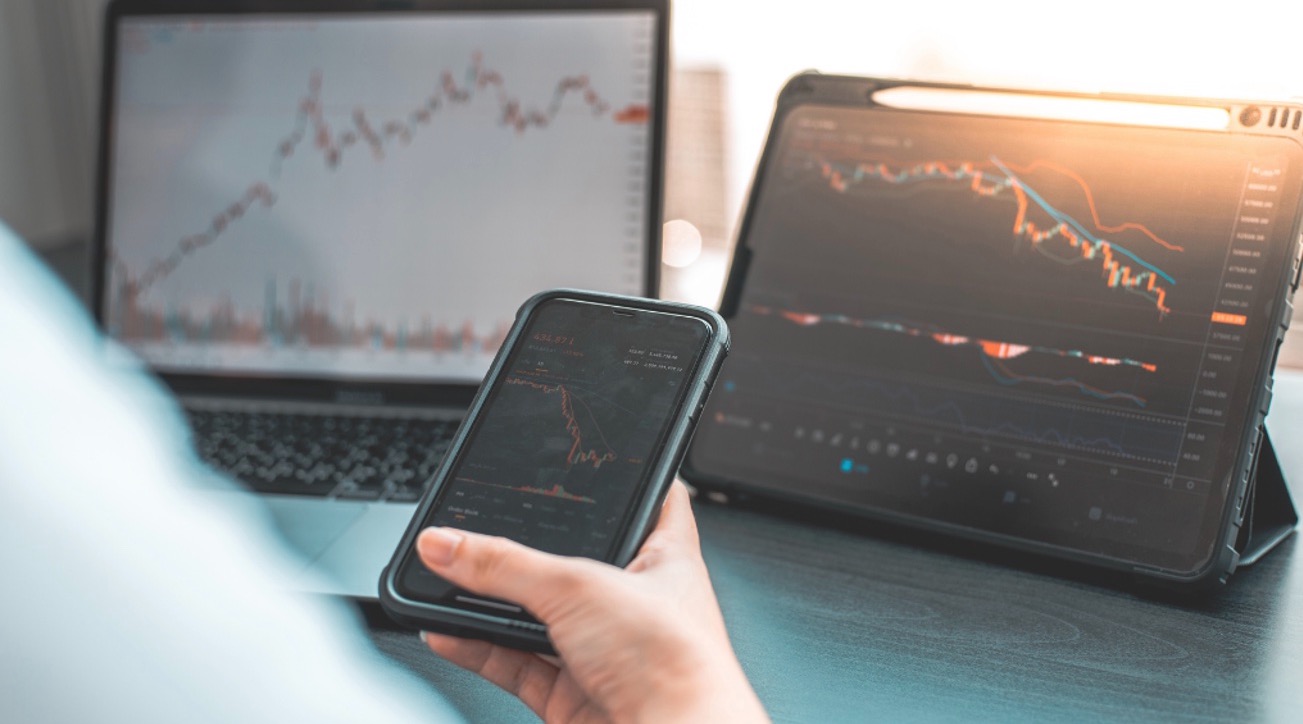
Image source: Canva
Even though everyone is talking about investing in cryptocurrencies nowadays, it’s safe to say that stocks are still one of the most popular options for investors, especially professionals.
Even though they aren’t as volatile as cryptos, stocks are far from perfect, as there’s plenty of room for manipulating prices and scamming interested investors. This article will briefly explain how stocks work and how they can be manipulated. After that, it’ll focus on blockchain and how it could be combined to make stocks safer.
How Stocks Work
Companies that need money to fund their operations gain the right to issue stocks. By buying stock shares, investors are basically funding the company and purchasing a part of it, hoping that the company will be successful. If that happens, stock owners can profit from selling the shares at a higher price than when they bought them.
A stock represents proof of company ownership, meaning you’ll buy a small part of a company when buying a stock. By buying more shares, you’ll become the owner of a more significant portion of the company.
Some stocks pay dividends, meaning you don’t have to sell them to get a profit. Companies pay a portion of their profit monthly or annually to owners.
How Are Stocks Manipulated?
Stocks can be manipulated in many ways, which is an ongoing issue for investors. Recently, JP Morgan Chase had to pay $920 million after the “spoofing” incident. The company placed one-sided orders that it never wanted to execute in the first place, which created a false impression of popularity and attracted investors. It certainly isn’t the first one to use such illegal practices.
Other illegal practices include:
Churning — When brokers buy and sell stocks for their benefit rather than their customers’.
Wash trading — When an investor buys and sells the same legal instruments simultaneously to create artificial marketplace activity.
Pump and dump — Spread false info to pump a stock’s price and then sell it all when it reaches a specific price.
Painting the tape — When several investors trade stocks among themselves to create artificial activity on the market.
Bear raiding — Spreading false rumors about the target company and engaging in concerted short-selling
Stock bashing — Spreading false information about a company to devalue a stock.
Is Blockchain the Solution to Ongoing Stock Problems?
Blockchain is often perceived as a solution to ongoing issues with stocks, mainly because it offers a certain level of transparency for all transactions, making it more difficult to engage in market manipulation. That said, it wouldn’t completely eliminate them, as some of the market manipulation practices are also present in the crypto world. Therefore, “solution” might be too strong a word — perhaps “upgrade” is a better term. That said, we also have to consider that blockchain’s power is still being explored, and maybe it could improve stock investing even more in the future.
Moreover, blockchain would bring many additional benefits, such as faster and simpler trading, more security, more affordable transactions, and many others.
Many companies are already considering “going crypto” with their stocks, and perhaps the most famous example is Tesla selling crypto stocks via Binance. Unfortunately, the SEC didn’t give this operation the green light, so it had to be stopped. The good news is that certain exchanges, such as SOMA Finance, already have the required permits from the SEC and can consider introducing crypto stocks in the future. SOMA is a multi-asset decentralized exchange available in many countries around the globe. It can list and offer the trading of cryptos, tokenized equities, NFTs, ETFs, and more.
Final Thoughts: Future of Stocks
Even though we might not see the entire stock market pairing up with blockchain technology, a few companies will certainly do so. The practical benefits of stocks being available as blockchain-based tokens are undeniable.
Unfortunately, the SEC will always be strict about what is and isn’t possible. Since cryptos are still being defined and regulated, there might be further restrictions imposed by the SEC in the future that will stand in the way of crypto stocks. After all, we’ve already seen the SEC at work preventing Binance and Tesla from achieving their goals.
Even though everyone is talking about investing in cryptocurrencies nowadays, it’s safe to say that stocks are still one of the most popular options for investors, especially professionals.
Even though they aren’t as volatile as cryptos, stocks are far from perfect, as there’s plenty of room for manipulating prices and scamming interested investors. This article will briefly explain how stocks work and how they can be manipulated. After that, it’ll focus on blockchain and how it could be combined to make stocks safer.
How Stocks Work
Companies that need money to fund their operations gain the right to issue stocks. By buying stock shares, investors are basically funding the company and purchasing a part of it, hoping that the company will be successful. If that happens, stock owners can profit from selling the shares at a higher price than when they bought them.
A stock represents proof of company ownership, meaning you’ll buy a small part of a company when buying a stock. By buying more shares, you’ll become the owner of a more significant portion of the company.
Some stocks pay dividends, meaning you don’t have to sell them to get a profit. Companies pay a portion of their profit monthly or annually to owners.
How Are Stocks Manipulated?
Stocks can be manipulated in many ways, which is an ongoing issue for investors. Recently, JP Morgan Chase had to pay $920 million after the “spoofing” incident. The company placed one-sided orders that it never wanted to execute in the first place, which created a false impression of popularity and attracted investors. It certainly isn’t the first one to use such illegal practices.
Other illegal practices include:
Churning — When brokers buy and sell stocks for their benefit rather than their customers’.
Wash trading — When an investor buys and sells the same legal instruments simultaneously to create artificial marketplace activity.
Pump and dump — Spread false info to pump a stock’s price and then sell it all when it reaches a specific price.
Painting the tape — When several investors trade stocks among themselves to create artificial activity on the market.
Bear raiding — Spreading false rumors about the target company and engaging in concerted short-selling
Stock bashing — Spreading false information about a company to devalue a stock.
Is Blockchain the Solution to Ongoing Stock Problems?
Blockchain is often perceived as a solution to ongoing issues with stocks, mainly because it offers a certain level of transparency for all transactions, making it more difficult to engage in market manipulation. That said, it wouldn’t completely eliminate them, as some of the market manipulation practices are also present in the crypto world. Therefore, “solution” might be too strong a word — perhaps “upgrade” is a better term. That said, we also have to consider that blockchain’s power is still being explored, and maybe it could improve stock investing even more in the future.
Moreover, blockchain would bring many additional benefits, such as faster and simpler trading, more security, more affordable transactions, and many others.
Many companies are already considering “going crypto” with their stocks, and perhaps the most famous example is Tesla selling crypto stocks via Binance. Unfortunately, the SEC didn’t give this operation the green light, so it had to be stopped. The good news is that certain exchanges, such as SOMA Finance, already have the required permits from the SEC and can consider introducing crypto stocks in the future. SOMA is a multi-asset decentralized exchange available in many countries around the globe. It can list and offer the trading of cryptos, tokenized equities, NFTs, ETFs, and more.
Final Thoughts: Future of Stocks
Even though we might not see the entire stock market pairing up with blockchain technology, a few companies will certainly do so. The practical benefits of stocks being available as blockchain-based tokens are undeniable.
Unfortunately, the SEC will always be strict about what is and isn’t possible. Since cryptos are still being defined and regulated, there might be further restrictions imposed by the SEC in the future that will stand in the way of crypto stocks. After all, we’ve already seen the SEC at work preventing Binance and Tesla from achieving their goals.
FP Markets Winner Spotlight 🏆 | Global Broker of the Year 2025 #Trading #Broker #Innovation #Shorts
FP Markets Winner Spotlight 🏆 | Global Broker of the Year 2025 #Trading #Broker #Innovation #Shorts
FP Markets takes the spotlight as Global Broker of the Year 2025 at the Finance Magnates Awards.
Martin Stoilov, Head of Client Experience, shares that trust, innovation, and people played a key role in the company’s success, supported by a strong foundation of integrity and client-centricity.
Following this milestone, FP Markets continues to focus on growth, technology investment, and its core values of transparency and excellence.
👉 Be part of FM Awards 2026: https://awards.financemagnates.com/#nominate
FP Markets takes the spotlight as Global Broker of the Year 2025 at the Finance Magnates Awards.
Martin Stoilov, Head of Client Experience, shares that trust, innovation, and people played a key role in the company’s success, supported by a strong foundation of integrity and client-centricity.
Following this milestone, FP Markets continues to focus on growth, technology investment, and its core values of transparency and excellence.
👉 Be part of FM Awards 2026: https://awards.financemagnates.com/#nominate
In this video, we review @HolaPrimeMarketsOfficial, a multi-asset forex and CFDs broker offering different account types, trading platforms, and flexible trading conditions.
We cover the broker’s overall offering, including account options, trading environment, platforms like MT4 and MT5, and additional services such as managed accounts and fast withdrawals.
Watch the full video to see if Hola Prime Markets fits your trading needs.
📣 Stay up to date with the latest in finance and trading. Follow Finance Magnates for industry news, insights, and global event coverage.
Connect with us:
🔗 LinkedIn: /financemagnates
👍 Facebook: /financemagnates
📸 Instagram: https://www.instagram.com/financemagnates
🐦 X: https://x.com/financemagnates
🎥 TikTok: https://www.tiktok.com/tag/financemagnates
▶️ YouTube: /@financemagnates_official
#HolaPrime #ForexBroker #CFDTrading #FinanceMagnates #Trading #Forex #BrokerReview
In this video, we review @HolaPrimeMarketsOfficial, a multi-asset forex and CFDs broker offering different account types, trading platforms, and flexible trading conditions.
We cover the broker’s overall offering, including account options, trading environment, platforms like MT4 and MT5, and additional services such as managed accounts and fast withdrawals.
Watch the full video to see if Hola Prime Markets fits your trading needs.
📣 Stay up to date with the latest in finance and trading. Follow Finance Magnates for industry news, insights, and global event coverage.
Connect with us:
🔗 LinkedIn: /financemagnates
👍 Facebook: /financemagnates
📸 Instagram: https://www.instagram.com/financemagnates
🐦 X: https://x.com/financemagnates
🎥 TikTok: https://www.tiktok.com/tag/financemagnates
▶️ YouTube: /@financemagnates_official
#HolaPrime #ForexBroker #CFDTrading #FinanceMagnates #Trading #Forex #BrokerReview
Hola Prime Review: What You Need to Know | Full Breakdown by Finance Magnates
Hola Prime Review: What You Need to Know | Full Breakdown by Finance Magnates
In this video, we review @HolaPrime_Global, a proprietary trading firm offering evaluation programs and performance-based payouts in simulated market environments.
We cover how the challenge model works, including account types, profit splits (up to 95%), trading rules, and what it takes to reach a funded account. You’ll also learn about available platforms like MT4, MT5, cTrader, and more, along with insights into payouts, support, and trading conditions.
Watch the full video to see if Hola Prime fits your trading style.
📣 Stay up to date with the latest in finance and trading. Follow Finance Magnates for industry news, insights, and global event coverage.
Connect with us:
🔗 LinkedIn: /financemagnates
👍 Facebook: /financemagnates
📸 Instagram: https://www.instagram.com/financemagnates
🐦 X: https://x.com/financemagnates
🎥 TikTok: https://www.tiktok.com/tag/financemagnates
▶️ YouTube: /@financemagnates_official
#HolaPrime #PropFirm #Trading #FinanceMagnates #Forex #FuturesTrading #TradingReview #PropFirmReview
In this video, we review @HolaPrime_Global, a proprietary trading firm offering evaluation programs and performance-based payouts in simulated market environments.
We cover how the challenge model works, including account types, profit splits (up to 95%), trading rules, and what it takes to reach a funded account. You’ll also learn about available platforms like MT4, MT5, cTrader, and more, along with insights into payouts, support, and trading conditions.
Watch the full video to see if Hola Prime fits your trading style.
📣 Stay up to date with the latest in finance and trading. Follow Finance Magnates for industry news, insights, and global event coverage.
Connect with us:
🔗 LinkedIn: /financemagnates
👍 Facebook: /financemagnates
📸 Instagram: https://www.instagram.com/financemagnates
🐦 X: https://x.com/financemagnates
🎥 TikTok: https://www.tiktok.com/tag/financemagnates
▶️ YouTube: /@financemagnates_official
#HolaPrime #PropFirm #Trading #FinanceMagnates #Forex #FuturesTrading #TradingReview #PropFirmReview
Axi Winner Spotlight 🏆 | Global Most Innovative Broker 2025 #Innovation #Trading #Fintech #Broker
Axi Winner Spotlight 🏆 | Global Most Innovative Broker 2025 #Innovation #Trading #Fintech #Broker
Axi takes the spotlight at the Finance Magnates Awards, winning Global Most Innovative Broker 2025.
Olivia Xenofontos and Ivanna Openko share how the team will feel: proud, motivated, and ready to keep delivering.
They also describe the night as well-organized, focused, and enjoyable for all.
👉 Be part of FM Awards 2026.
Axi takes the spotlight at the Finance Magnates Awards, winning Global Most Innovative Broker 2025.
Olivia Xenofontos and Ivanna Openko share how the team will feel: proud, motivated, and ready to keep delivering.
They also describe the night as well-organized, focused, and enjoyable for all.
👉 Be part of FM Awards 2026.
Recognition that matters.
Built on transparency.
Driven by the industry.
The Finance Magnates Awards 2026.
Nominations are now open.
🔗 https://awards.financemagnates.com/?utm_source=SM&utm_medium=social&utm_campaign=recognition-matters
Recognition that matters.
Built on transparency.
Driven by the industry.
The Finance Magnates Awards 2026.
Nominations are now open.
🔗 https://awards.financemagnates.com/?utm_source=SM&utm_medium=social&utm_campaign=recognition-matters