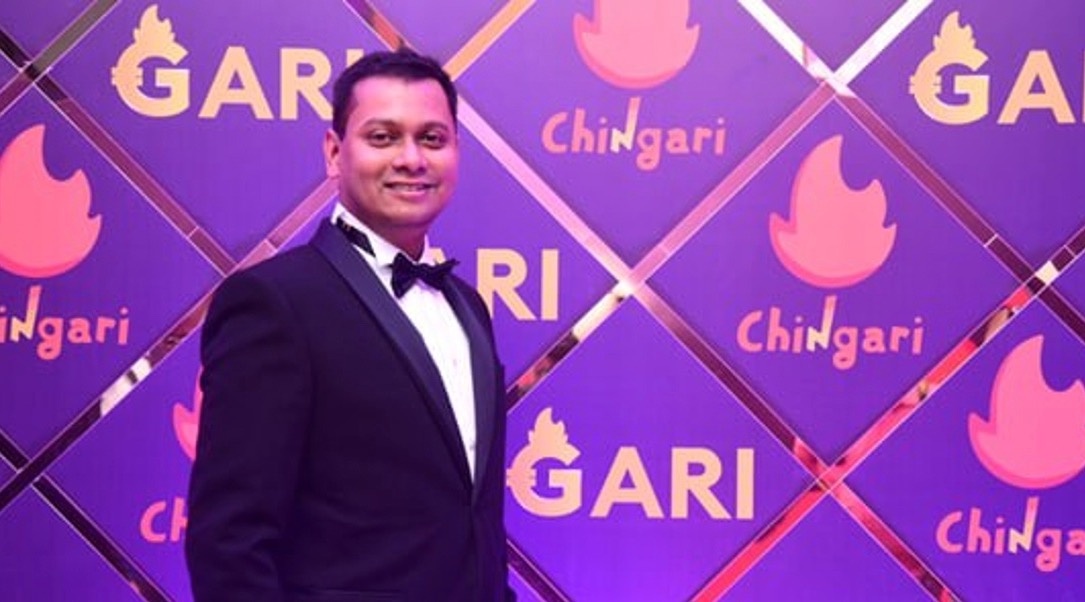
Chingari CEO Sumit Ghosh: “Product Fundamentals are the Only Thing that Matter”
Thursday,14/07/2022|13:08GMTby
FM
It has been a pretty rough ride for crypto investors this year but the strong will survive
GARI. Sumit Ghosh
With cryptocurrency token prices continuing their downward spiral, the chief executive of one of India’s biggest blockchain projects has called for calm, pointing out that in bear markets the only thing that investors need to pay attention to are a project’s fundamentals.
It has been a pretty rough ride for crypto investors this year, with the prices of virtually every top token falling far below the all-time highs they set at the height of 2021’s bull run. The value of Bitcoin, for example, currently sits more than 70% below its peak of just over $69,000 set in November 2021, while other projects like Ethereum, Solana and Avalanche have all fallen even further.
The emergence of another crypto winter is not news, but earlier this month Indian cryptocurrency investors were recently reminded of just how brutal the market picture is and how negative sentiment has become. Crypto prices on many local exchanges hit new lows amid a reported “liquidity crunch” that’s quite unique to the country.
The liquidity crisis stems from a recent decision by Indian authorities to enforce a new crypto transaction tax law, causing trading volumes on exchanges in the country plummet shortly after it was introduced. Under the Foreign Exchange Management Act 1999, cryptocurrency traders are required to pay a 1% tax on all trades valued at $126 or more. In the wake of the law’s introduction, trading volumes at top Indian exchanges like WazirX, ZebPay and CoinDCX all fell by 50% or more as investors digested the news.
The lack of volume resulted in a sudden loss of liquidity on all of India’s major exchanges. Token prices plummeted across the board, with the price of BTC falling below $18,000, despite trading at above $20,000 on most international exchanges. Similarly, the price of ETH also dipped under $1,000, well below its global baseline.
From the perspective of crypto holders, the law was introduced at the worst possible time. Combine the lower liquidity with an overwhelming bear market sentiment, and it spelled disaster for a number of tokens.
It was in the midst of this crisis that Chinagari app founder and CEO Sumit Ghosh tweeted to remind his followers that what matters most is not so much the current price, but rather the fundamentals of crypto projects.
Ghosh’s tweet was timely because his company’s native cryptocurrency, the newly-launched GARI token, took a bigger hit than most, with its value falling due to the combination of a loss of liquidity on exchanges and a huge sell order being placed by a so-called “whale”, who reportedly shifted $2 million worth of tokens at once.
GARI’s price decline was keenly felt by Indians due to its huge following there. Chingari is one of India’s most downloaded apps, a short video sharing service that’s similar to TikTok. With GARI, Chingari is aiming to foster a creator economy that rewards users for creating content and sharing it on its platform. The launch of GARI, which was heavily promoted by Bollywood superstar Salman Khan, generated a lot of excitement within Chingari’s community of more than 40 million monthly active users.
Through his tweet, Ghosh was attempting to remind the community that the price drop is merely a common and most likely temporary event. Crypto markets are a volatile place, and prices can swing wildly from one extreme to another in a matter of hours. What matters most is not so much the price of any given, but rather the fact that crypto projects are built on solid ground. So long as a token has strong fundamentals, a community that believes and a genuine use case, it remains a good investment.
Looking at things from that perspective, the current dip in GARI’s price could actually turn out to be a good thing for those who believe in the project. After all, the Chingari app remains extremely popular and is a very profitable business. It’s going nowhere, and neither is GARI given the huge amount of time and effort that has gone into getting the project off the ground. Fueling the crypto creator economy remains one of the most promising use cases for blockchain technology, and Chingari is at the forefront of those efforts.
As those in crypto circles often like to say, bear markets are the best time for builders. When token prices are down and liquidity is at a premium, it very often has the effect of weeding out the unsustainable projects that emerged over the previous bull run. If so, that should leave ample room for well-funded projects like GARI to keep on innovating and, most importantly, rewarding users for creating catchy content, as it was designed to do.
With cryptocurrency token prices continuing their downward spiral, the chief executive of one of India’s biggest blockchain projects has called for calm, pointing out that in bear markets the only thing that investors need to pay attention to are a project’s fundamentals.
It has been a pretty rough ride for crypto investors this year, with the prices of virtually every top token falling far below the all-time highs they set at the height of 2021’s bull run. The value of Bitcoin, for example, currently sits more than 70% below its peak of just over $69,000 set in November 2021, while other projects like Ethereum, Solana and Avalanche have all fallen even further.
The emergence of another crypto winter is not news, but earlier this month Indian cryptocurrency investors were recently reminded of just how brutal the market picture is and how negative sentiment has become. Crypto prices on many local exchanges hit new lows amid a reported “liquidity crunch” that’s quite unique to the country.
The liquidity crisis stems from a recent decision by Indian authorities to enforce a new crypto transaction tax law, causing trading volumes on exchanges in the country plummet shortly after it was introduced. Under the Foreign Exchange Management Act 1999, cryptocurrency traders are required to pay a 1% tax on all trades valued at $126 or more. In the wake of the law’s introduction, trading volumes at top Indian exchanges like WazirX, ZebPay and CoinDCX all fell by 50% or more as investors digested the news.
The lack of volume resulted in a sudden loss of liquidity on all of India’s major exchanges. Token prices plummeted across the board, with the price of BTC falling below $18,000, despite trading at above $20,000 on most international exchanges. Similarly, the price of ETH also dipped under $1,000, well below its global baseline.
From the perspective of crypto holders, the law was introduced at the worst possible time. Combine the lower liquidity with an overwhelming bear market sentiment, and it spelled disaster for a number of tokens.
It was in the midst of this crisis that Chinagari app founder and CEO Sumit Ghosh tweeted to remind his followers that what matters most is not so much the current price, but rather the fundamentals of crypto projects.
Ghosh’s tweet was timely because his company’s native cryptocurrency, the newly-launched GARI token, took a bigger hit than most, with its value falling due to the combination of a loss of liquidity on exchanges and a huge sell order being placed by a so-called “whale”, who reportedly shifted $2 million worth of tokens at once.
GARI’s price decline was keenly felt by Indians due to its huge following there. Chingari is one of India’s most downloaded apps, a short video sharing service that’s similar to TikTok. With GARI, Chingari is aiming to foster a creator economy that rewards users for creating content and sharing it on its platform. The launch of GARI, which was heavily promoted by Bollywood superstar Salman Khan, generated a lot of excitement within Chingari’s community of more than 40 million monthly active users.
Through his tweet, Ghosh was attempting to remind the community that the price drop is merely a common and most likely temporary event. Crypto markets are a volatile place, and prices can swing wildly from one extreme to another in a matter of hours. What matters most is not so much the price of any given, but rather the fact that crypto projects are built on solid ground. So long as a token has strong fundamentals, a community that believes and a genuine use case, it remains a good investment.
Looking at things from that perspective, the current dip in GARI’s price could actually turn out to be a good thing for those who believe in the project. After all, the Chingari app remains extremely popular and is a very profitable business. It’s going nowhere, and neither is GARI given the huge amount of time and effort that has gone into getting the project off the ground. Fueling the crypto creator economy remains one of the most promising use cases for blockchain technology, and Chingari is at the forefront of those efforts.
As those in crypto circles often like to say, bear markets are the best time for builders. When token prices are down and liquidity is at a premium, it very often has the effect of weeding out the unsustainable projects that emerged over the previous bull run. If so, that should leave ample room for well-funded projects like GARI to keep on innovating and, most importantly, rewarding users for creating catchy content, as it was designed to do.
FP Markets Winner Spotlight 🏆 | Global Broker of the Year 2025 #Trading #Broker #Innovation #Shorts
FP Markets Winner Spotlight 🏆 | Global Broker of the Year 2025 #Trading #Broker #Innovation #Shorts
FP Markets takes the spotlight as Global Broker of the Year 2025 at the Finance Magnates Awards.
Martin Stoilov, Head of Client Experience, shares that trust, innovation, and people played a key role in the company’s success, supported by a strong foundation of integrity and client-centricity.
Following this milestone, FP Markets continues to focus on growth, technology investment, and its core values of transparency and excellence.
👉 Be part of FM Awards 2026: https://awards.financemagnates.com/#nominate
FP Markets takes the spotlight as Global Broker of the Year 2025 at the Finance Magnates Awards.
Martin Stoilov, Head of Client Experience, shares that trust, innovation, and people played a key role in the company’s success, supported by a strong foundation of integrity and client-centricity.
Following this milestone, FP Markets continues to focus on growth, technology investment, and its core values of transparency and excellence.
👉 Be part of FM Awards 2026: https://awards.financemagnates.com/#nominate
In this video, we review @HolaPrimeMarketsOfficial, a multi-asset forex and CFDs broker offering different account types, trading platforms, and flexible trading conditions.
We cover the broker’s overall offering, including account options, trading environment, platforms like MT4 and MT5, and additional services such as managed accounts and fast withdrawals.
Watch the full video to see if Hola Prime Markets fits your trading needs.
📣 Stay up to date with the latest in finance and trading. Follow Finance Magnates for industry news, insights, and global event coverage.
Connect with us:
🔗 LinkedIn: /financemagnates
👍 Facebook: /financemagnates
📸 Instagram: https://www.instagram.com/financemagnates
🐦 X: https://x.com/financemagnates
🎥 TikTok: https://www.tiktok.com/tag/financemagnates
▶️ YouTube: /@financemagnates_official
#HolaPrime #ForexBroker #CFDTrading #FinanceMagnates #Trading #Forex #BrokerReview
In this video, we review @HolaPrimeMarketsOfficial, a multi-asset forex and CFDs broker offering different account types, trading platforms, and flexible trading conditions.
We cover the broker’s overall offering, including account options, trading environment, platforms like MT4 and MT5, and additional services such as managed accounts and fast withdrawals.
Watch the full video to see if Hola Prime Markets fits your trading needs.
📣 Stay up to date with the latest in finance and trading. Follow Finance Magnates for industry news, insights, and global event coverage.
Connect with us:
🔗 LinkedIn: /financemagnates
👍 Facebook: /financemagnates
📸 Instagram: https://www.instagram.com/financemagnates
🐦 X: https://x.com/financemagnates
🎥 TikTok: https://www.tiktok.com/tag/financemagnates
▶️ YouTube: /@financemagnates_official
#HolaPrime #ForexBroker #CFDTrading #FinanceMagnates #Trading #Forex #BrokerReview
Hola Prime Review: What You Need to Know | Full Breakdown by Finance Magnates
Hola Prime Review: What You Need to Know | Full Breakdown by Finance Magnates
In this video, we review @HolaPrime_Global, a proprietary trading firm offering evaluation programs and performance-based payouts in simulated market environments.
We cover how the challenge model works, including account types, profit splits (up to 95%), trading rules, and what it takes to reach a funded account. You’ll also learn about available platforms like MT4, MT5, cTrader, and more, along with insights into payouts, support, and trading conditions.
Watch the full video to see if Hola Prime fits your trading style.
📣 Stay up to date with the latest in finance and trading. Follow Finance Magnates for industry news, insights, and global event coverage.
Connect with us:
🔗 LinkedIn: /financemagnates
👍 Facebook: /financemagnates
📸 Instagram: https://www.instagram.com/financemagnates
🐦 X: https://x.com/financemagnates
🎥 TikTok: https://www.tiktok.com/tag/financemagnates
▶️ YouTube: /@financemagnates_official
#HolaPrime #PropFirm #Trading #FinanceMagnates #Forex #FuturesTrading #TradingReview #PropFirmReview
In this video, we review @HolaPrime_Global, a proprietary trading firm offering evaluation programs and performance-based payouts in simulated market environments.
We cover how the challenge model works, including account types, profit splits (up to 95%), trading rules, and what it takes to reach a funded account. You’ll also learn about available platforms like MT4, MT5, cTrader, and more, along with insights into payouts, support, and trading conditions.
Watch the full video to see if Hola Prime fits your trading style.
📣 Stay up to date with the latest in finance and trading. Follow Finance Magnates for industry news, insights, and global event coverage.
Connect with us:
🔗 LinkedIn: /financemagnates
👍 Facebook: /financemagnates
📸 Instagram: https://www.instagram.com/financemagnates
🐦 X: https://x.com/financemagnates
🎥 TikTok: https://www.tiktok.com/tag/financemagnates
▶️ YouTube: /@financemagnates_official
#HolaPrime #PropFirm #Trading #FinanceMagnates #Forex #FuturesTrading #TradingReview #PropFirmReview
Axi Winner Spotlight 🏆 | Global Most Innovative Broker 2025 #Innovation #Trading #Fintech #Broker
Axi Winner Spotlight 🏆 | Global Most Innovative Broker 2025 #Innovation #Trading #Fintech #Broker
Axi takes the spotlight at the Finance Magnates Awards, winning Global Most Innovative Broker 2025.
Olivia Xenofontos and Ivanna Openko share how the team will feel: proud, motivated, and ready to keep delivering.
They also describe the night as well-organized, focused, and enjoyable for all.
👉 Be part of FM Awards 2026.
Axi takes the spotlight at the Finance Magnates Awards, winning Global Most Innovative Broker 2025.
Olivia Xenofontos and Ivanna Openko share how the team will feel: proud, motivated, and ready to keep delivering.
They also describe the night as well-organized, focused, and enjoyable for all.
👉 Be part of FM Awards 2026.
Recognition that matters.
Built on transparency.
Driven by the industry.
The Finance Magnates Awards 2026.
Nominations are now open.
🔗 https://awards.financemagnates.com/?utm_source=SM&utm_medium=social&utm_campaign=recognition-matters
Recognition that matters.
Built on transparency.
Driven by the industry.
The Finance Magnates Awards 2026.
Nominations are now open.
🔗 https://awards.financemagnates.com/?utm_source=SM&utm_medium=social&utm_campaign=recognition-matters