FED rate cut pushes capital from US to European/Chinese assets. Opportunities in DAX & Hang Seng.
The FED’s week hasn’t brought any surprises to the market. The Federal Reserve had expectedly moved the interest rate down for one quarter a point, with 3 members voting against the decision, out of 10. Jerome Powell, the existing FED’s governor, had confirmed another rate cut in 2026, after which, the FED would probably take a break, as the employment situation looks stable, and the next focus in the dual-mandate of the FED would be to focus on inflation.
However, traders are already starting to discount the dovishness of a supposed new FED’s president Kevin Hassett, who is known for his dovish rethorics. He had mentioned earlier this week that there might be even more than 3 rate cuts.
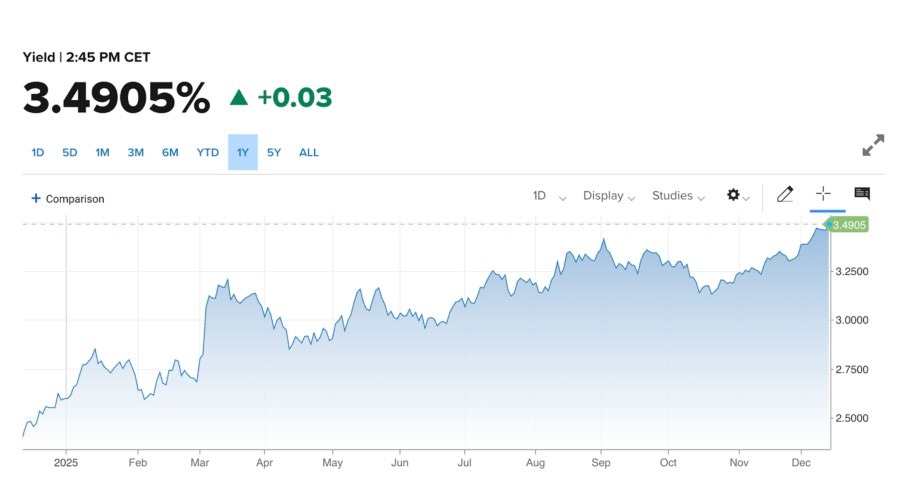
Euro, Yen and other major currencies are driven by hawkish narratives, in comparison to the US dollar. For example, the yield of 30-year bonds of Germany had reached yet another peak.
Other than declining the interest rates, the FED had announced buybacks of short-term bonds (T-bills) for about 40 billion monthly, which pushes down the real interest rate and brings some liquidity to the markets: that’s considered mildly positive news for stocks, metals and crypto.
The US stocks indices, however, struggle to maintain the momentum, whereas metals display a solid rally, having driven Gold above $4300, and silver to the new historical high. Platinum and palladium have set new intermediate-term highs too.
Bitcoin struggles to keep the momentum, having locked in a relatively narrow trading range near 92000 - 93000 price area. After the substantial outflow from Bitcoin ETFs and the rotation from crypto back to fiat assets, Bitcoin tries to find some demand back.
So far, the main driving narrative now is the differential between US and European assets, in favor of the latter. Chinese stocks also attract a significant amount of capital flows and hedge funds prepare for a rally, as Bloomberg experts say. Let’s dive into potential opportunities, given the information above.
DAX
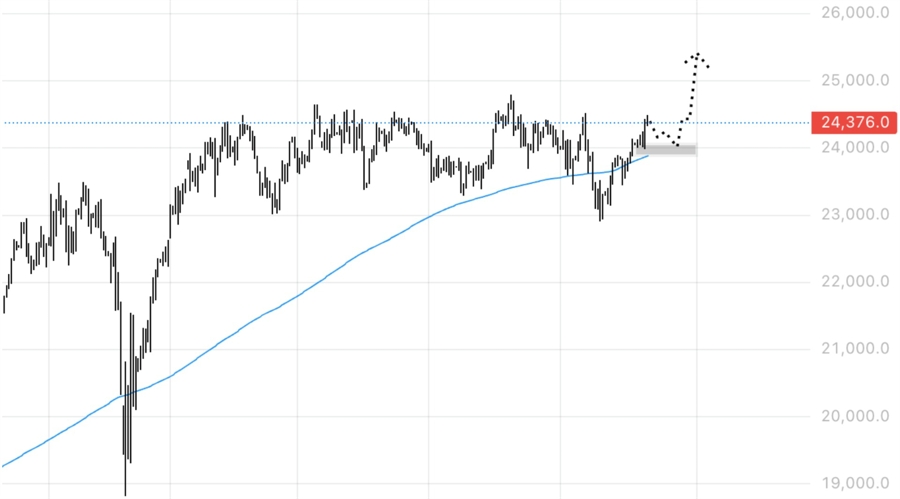
DAX is setting up for the breakout of the massive consolidation pattern, having been built since June 2025. Despite the end of dovish monetary policy in the EU, inflation keeps steady around 2.3%. German bond yields have reached another peak, and stocks might attract some capital flows too, as yields are not expected to continue rising.
European stocks look like a balanced decision given the pressure on the US dollar and overheated AI sector. Before breaking to the new peak, DAX is supposed to test the 20-day moving average, as the probability of immediate continuation is relatively low.
DE30. Source: Exness.com
HANG SENG
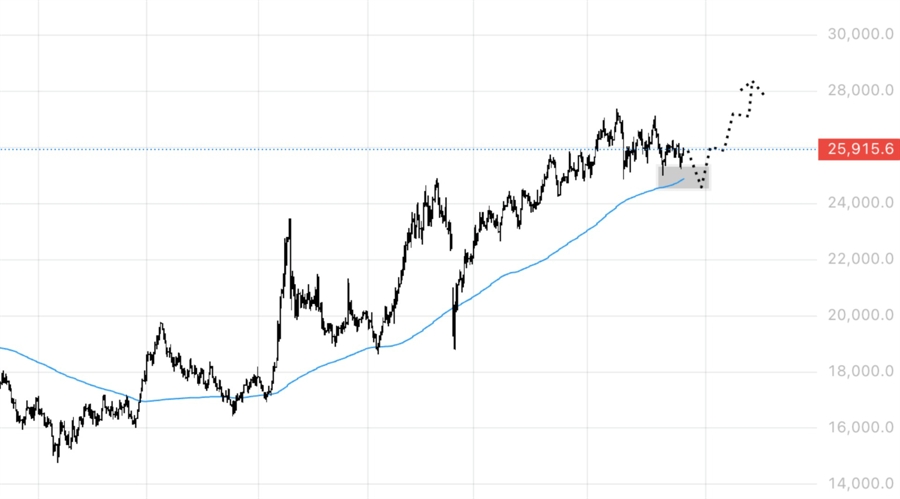
The Hang Seng index is locked in a consolidation, right above the 200-day moving average.
The market loses volatility, and in order to find a trigger for the move, it may need to test the strategic support zone below (200-day moving average).
That’s the common pattern for the triangular formation - it might be shaken to both sides with quick price impacts before determining the direction.
The logical destination for the move would be the 24500 area: after testing this area, the market may reverse higher and find a buying pressure as shown at the chart below.
HK50. Source: Exness.com
The FED’s week hasn’t brought any surprises to the market. The Federal Reserve had expectedly moved the interest rate down for one quarter a point, with 3 members voting against the decision, out of 10. Jerome Powell, the existing FED’s governor, had confirmed another rate cut in 2026, after which, the FED would probably take a break, as the employment situation looks stable, and the next focus in the dual-mandate of the FED would be to focus on inflation.
However, traders are already starting to discount the dovishness of a supposed new FED’s president Kevin Hassett, who is known for his dovish rethorics. He had mentioned earlier this week that there might be even more than 3 rate cuts.
Euro, Yen and other major currencies are driven by hawkish narratives, in comparison to the US dollar. For example, the yield of 30-year bonds of Germany had reached yet another peak.
Other than declining the interest rates, the FED had announced buybacks of short-term bonds (T-bills) for about 40 billion monthly, which pushes down the real interest rate and brings some liquidity to the markets: that’s considered mildly positive news for stocks, metals and crypto.
The US stocks indices, however, struggle to maintain the momentum, whereas metals display a solid rally, having driven Gold above $4300, and silver to the new historical high. Platinum and palladium have set new intermediate-term highs too.
Bitcoin struggles to keep the momentum, having locked in a relatively narrow trading range near 92000 - 93000 price area. After the substantial outflow from Bitcoin ETFs and the rotation from crypto back to fiat assets, Bitcoin tries to find some demand back.
So far, the main driving narrative now is the differential between US and European assets, in favor of the latter. Chinese stocks also attract a significant amount of capital flows and hedge funds prepare for a rally, as Bloomberg experts say. Let’s dive into potential opportunities, given the information above.
DAX
DAX is setting up for the breakout of the massive consolidation pattern, having been built since June 2025. Despite the end of dovish monetary policy in the EU, inflation keeps steady around 2.3%. German bond yields have reached another peak, and stocks might attract some capital flows too, as yields are not expected to continue rising.
European stocks look like a balanced decision given the pressure on the US dollar and overheated AI sector. Before breaking to the new peak, DAX is supposed to test the 20-day moving average, as the probability of immediate continuation is relatively low.
DE30. Source: Exness.com
HANG SENG
The Hang Seng index is locked in a consolidation, right above the 200-day moving average.
The market loses volatility, and in order to find a trigger for the move, it may need to test the strategic support zone below (200-day moving average).
That’s the common pattern for the triangular formation - it might be shaken to both sides with quick price impacts before determining the direction.
The logical destination for the move would be the 24500 area: after testing this area, the market may reverse higher and find a buying pressure as shown at the chart below.
Your CEO probably knows the industry better than anyone. But does the market hear them?
CMC Markets’ Artur Delijergijevs on Metals Demand, Volatility, & Stable Execution
CMC Markets’ Artur Delijergijevs on Metals Demand, Volatility, & Stable Execution
In this exclusive Executive Interview, Finance Magnates speaks with Artur Delijergijevs, Head of Systematic Market Making at CMC Markets, about the current state of metals demand and market volatility.
Delijergijevs offers a desk-level view on:
- Metals Demand: Why metals are seeing the strongest demand from both retail and institutional clients right now.
- The Safe-Haven Debate: Questioning whether gold still fits the classic safe-haven definition given large daily price movements.
- Volatile Market Prep: How a market-making desk prepares its systems and pricing for stressed market conditions and high-impact economic events.
- Hybrid Execution: Why the best execution model combines electronic speed with human relationship support, especially during volatility.
- AI in Workflow: Where CMC Markets is integrating machine learning for risk management and pricing, and the limitations of AI during stressed markets.
- Dubai's Role: The strategic importance of Dubai’s location for covering global trading sessions across Asia, Europe, and the US.
Watch to understand how CMC Markets maintains stable pricing and reliable execution quality in high-volatility environments.
#CMCmarkets #forex #metals #gold #trading #volatility #MarketMaking #iFXDubai #FinanceMagnates #Finance #Fintech #Execution #AlgorithmicTrading #RiskManagement
In this exclusive Executive Interview, Finance Magnates speaks with Artur Delijergijevs, Head of Systematic Market Making at CMC Markets, about the current state of metals demand and market volatility.
Delijergijevs offers a desk-level view on:
- Metals Demand: Why metals are seeing the strongest demand from both retail and institutional clients right now.
- The Safe-Haven Debate: Questioning whether gold still fits the classic safe-haven definition given large daily price movements.
- Volatile Market Prep: How a market-making desk prepares its systems and pricing for stressed market conditions and high-impact economic events.
- Hybrid Execution: Why the best execution model combines electronic speed with human relationship support, especially during volatility.
- AI in Workflow: Where CMC Markets is integrating machine learning for risk management and pricing, and the limitations of AI during stressed markets.
- Dubai's Role: The strategic importance of Dubai’s location for covering global trading sessions across Asia, Europe, and the US.
Watch to understand how CMC Markets maintains stable pricing and reliable execution quality in high-volatility environments.
#CMCmarkets #forex #metals #gold #trading #volatility #MarketMaking #iFXDubai #FinanceMagnates #Finance #Fintech #Execution #AlgorithmicTrading #RiskManagement
Finance Magnates Awards 2026 – Nominations Now Open
Finance Magnates Awards 2026 – Nominations Now Open
The Finance Magnates Awards 2026 nominations are now open. 🏆
From fintech innovators to leading brokers, this is where the finance industry celebrates its biggest achievements.
Winners will be announced at the Cyprus Gala Dinner on November 6, 2026.
Nominate your brand now.
https://awards.financemagnates.com/?utm_source=linkedin&utm_medium=video&utm_campaign=nominations-open
#FMAwards #FinanceMagnates #FintechAwards #Fintech #FinanceIndustry
The Finance Magnates Awards 2026 nominations are now open. 🏆
From fintech innovators to leading brokers, this is where the finance industry celebrates its biggest achievements.
Winners will be announced at the Cyprus Gala Dinner on November 6, 2026.
Nominate your brand now.
https://awards.financemagnates.com/?utm_source=linkedin&utm_medium=video&utm_campaign=nominations-open
#FMAwards #FinanceMagnates #FintechAwards #Fintech #FinanceIndustry
Finance Magnates Awards 2026 | Nominations Now Open 🏆#Fintech #FMAwards #TradingIndustry
Finance Magnates Awards 2026 | Nominations Now Open 🏆#Fintech #FMAwards #TradingIndustry
Lights on. Cameras ready. 🎬
Finance Magnates Awards 2026 nominations are now open. 🏆
#FMAwards #FinanceMagnates #FintechAwards #Fintech
Lights on. Cameras ready. 🎬
Finance Magnates Awards 2026 nominations are now open. 🏆
#FMAwards #FinanceMagnates #FintechAwards #Fintech
Exness sees trust as the key theme for growth in MENA Trading Growth for 2026
Exness sees trust as the key theme for growth in MENA Trading Growth for 2026
Mohammad Amer, Regional Commercial Director at Exness, sits down to discuss the booming MENA financial trading market. Find out why Dubai is key to the company's growth strategy, how a mobile-first generation is changing expectations, and why trust will be the defining theme for traders in 2026.
In this interview, you'll learn:
* Why Dubai and the MENA region are critical growth markets for fintech and online trading.
* How Exness is addressing the demands of mobile-first, younger traders through engineering, platform stability, and transparent conditions.
* The essential role local talent plays in providing a culturally relevant and compliant user experience.
* Mohammad Amer's outlook on the future of the online trading industry and why stronger controls and systems are necessary.
* Why "trust" isn't just a brand value, but has commercial value—and why he predicts 2026 will be the "Year of Trust."
Key Takeaways:
➡️ The MENA region is rapidly shaping global financial markets.
➡️ New traders expect stability, precise execution, and transparency.
➡️ Local expertise is key to regulatory compliance and user experience.
➡️ Future success belongs to firms capable of meeting rising standards across regulation and platform consistency.
Read the full article at: https://www.financemagnates.com/thought-leadership/exness-sees-trust-as-the-key-theme-for-growth-in-mena-trading-growth-for-2026/
#Exness #MENA #Trading #FinTech #Dubai #OnlineTrading #FinanceMagnates #MohammadAmer #Trust #MobileTrading
Mohammad Amer, Regional Commercial Director at Exness, sits down to discuss the booming MENA financial trading market. Find out why Dubai is key to the company's growth strategy, how a mobile-first generation is changing expectations, and why trust will be the defining theme for traders in 2026.
In this interview, you'll learn:
* Why Dubai and the MENA region are critical growth markets for fintech and online trading.
* How Exness is addressing the demands of mobile-first, younger traders through engineering, platform stability, and transparent conditions.
* The essential role local talent plays in providing a culturally relevant and compliant user experience.
* Mohammad Amer's outlook on the future of the online trading industry and why stronger controls and systems are necessary.
* Why "trust" isn't just a brand value, but has commercial value—and why he predicts 2026 will be the "Year of Trust."
Key Takeaways:
➡️ The MENA region is rapidly shaping global financial markets.
➡️ New traders expect stability, precise execution, and transparency.
➡️ Local expertise is key to regulatory compliance and user experience.
➡️ Future success belongs to firms capable of meeting rising standards across regulation and platform consistency.
Read the full article at: https://www.financemagnates.com/thought-leadership/exness-sees-trust-as-the-key-theme-for-growth-in-mena-trading-growth-for-2026/
#Exness #MENA #Trading #FinTech #Dubai #OnlineTrading #FinanceMagnates #MohammadAmer #Trust #MobileTrading
Paytiko CEO Razi Salih on Why Payment Orchestration is a MUST-HAVE for Brokers in 2026
Paytiko CEO Razi Salih on Why Payment Orchestration is a MUST-HAVE for Brokers in 2026
At iFX Expo Dubai, Finance Magnates spoke with Razi Salih, CEO at Paytiko, about the evolution of the payments ecosystem and why payment orchestration has shifted from an option to a necessity for brokers, prop firms, and exchanges.
Mr. Salih explains how global expansion, the need for deep localisation, and the sheer number of new payment methods, from instant banking to stablecoins, are driving this critical infrastructure shift.
#PaymentOrchestration #Fintech #Brokerage #TradingPayments #RaziSalih #Paytiko #iFXExpoDubai #Stablecoins #AIinFintech
At iFX Expo Dubai, Finance Magnates spoke with Razi Salih, CEO at Paytiko, about the evolution of the payments ecosystem and why payment orchestration has shifted from an option to a necessity for brokers, prop firms, and exchanges.
Mr. Salih explains how global expansion, the need for deep localisation, and the sheer number of new payment methods, from instant banking to stablecoins, are driving this critical infrastructure shift.
#PaymentOrchestration #Fintech #Brokerage #TradingPayments #RaziSalih #Paytiko #iFXExpoDubai #Stablecoins #AIinFintech