Born2trade CEO: “Everything is about gold now. Gold traders dictate industry standards and features”

Friday, 23/10/2026 | 10:38 GMT by Born2trade
Disclaimer
  • Born2trade CEO Konstantin Rashap shares his take on gold's record-breaking year, why retail traders are so concentrated on the metal right now, and what active traders are seeking in a broker.
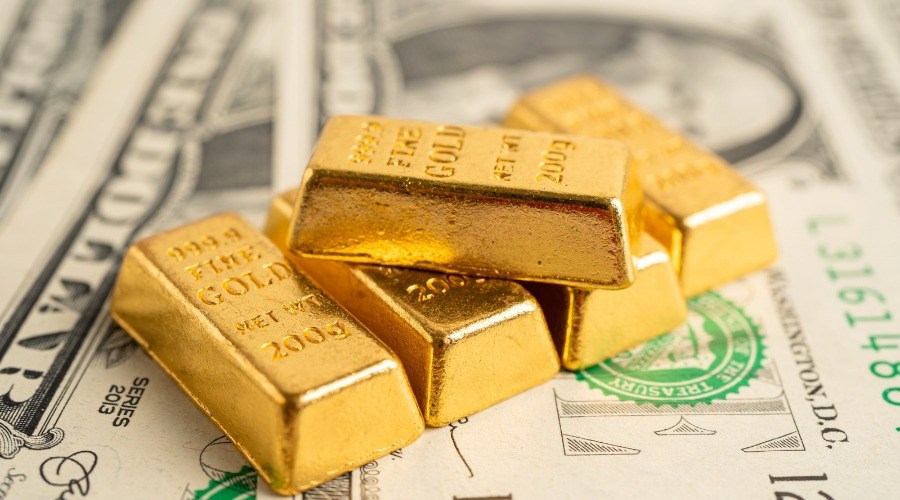
Gold trading concept: small gold bars lying on US dollar bills

Gold has lost about a quarter of its value since January, the Fed is hiking, and retail traders are more focused on the metal than ever. After 25 years in brokerage, here is what I think that means for traders and for the brokers who serve them.

Gold trades around $4,100–4,200 an ounce, roughly 24% below the record near $5,600 it set at the end of January, according to CIBC Capital Markets. The Federal Reserve is raising rates, not cutting them. By the old textbook, this should be a quiet time for gold.

However, it is not. In my more than 25 years in brokerage and trading, I have rarely seen retail clients this concentrated on one instrument. In our experience, and from what we see across the industry, between 70% and sometimes 90% of retail clients trade gold. That is a fact no broker can afford to ignore.

Why everyone trades gold

Nobody can give a precise answer to this, so I can only share how I see it. We live in a very complicated environment: geopolitical events, the war in Ukraine, uncertainty in the Middle East, and inflationary pressure that has kept building since COVID. Market participants — and simply people, are cautious about everything around them. Absolutely everything.

I read the total concentration on gold as a lack of trust in broader markets and investment instruments.

Gold stays the clearest asset for investors and traders, even though it is anything but clear when it comes to predicting its price.

The big money appears to agree. Central banks bought 345 tonnes of gold in the first half of 2026, according to World Gold Council data cited by CIBC, and gold-backed ETFs attracted a record $30.7 billion in the third quarter.

For brokers, the lesson is simple. The market and traders dictate what matters. A broker has to listen to its clients and build every development around their needs — not around its own dreams and ideas. That is how business works, and in 2026 the clients are telling us, very clearly, that they want gold.

Gold has no P/E ratio, and no obvious floor

Is gold expensive or cheap? From a classic valuation point of view, gold is much harder to judge than the S&P 500, the Nasdaq, or any asset with earnings, a P/E ratio, or similar measures. Honestly speaking, gold can cost $1,000–3,000, or $4,000–6,000 and higher. Naming a floor is far more complicated than for any equity index.

January showed how quickly sentiment can turn. Gold set a record of about $5,595 an ounce on 29 January. The next day it fell more than 9% — its sharpest one-day drop since 1983 — after Kevin Warsh was named as the next Fed Chair. By late June it had slipped below $4,000, roughly 29% off the high. And yet, compared with what markets are capable of, that crash was nothing.

So what is my estimate? I am convinced gold will stay one of the most actively traded assets through the end of 2026, and most likely through 2027. Over a one-year horizon, I see plenty of reasons for it to fluctuate anywhere between $3,000 and $6,000 if something truly unpredictable happens.

The forces on each side are clear. The Fed’s rate path and its fight with inflation — the Fed raised rates by 25 basis points in September, and the 10-year Treasury yield is above 5% — are calming bullish sentiment. Global risks, uncertainty, and central bank demand are helping the bulls. I expect this balance to continue for the next few quarters. For reference, CIBC now forecasts $4,500 for the fourth quarter and an average of $5,200 in 2027.

I watched Lehman collapse on my trading screen

What about stocks, indices, and AI? I see a lot of signs of a bubble, and similarities with the dot-com era and even the 2008 crisis.

I remember 2008 not from textbooks but from my monitor. I watched Lehman Brothers collapse through the trading platform. I watched the S&P and the Nasdaq fall while the Japanese yen rose in record steps in September that year.

The new wave of traders, many of whom have only known rising markets, needs to study this history, be aware of it, and be prepared. For many years, financial markets have mostly been in rise mode, with very short-lived corrections. That will not last forever, and traders must understand it.

There is another side to this. Being ready for big swings is good for active traders, because the biggest opportunities come in exactly those periods — together with the biggest risks.

What active gold traders demand from a broker

If I had to put it in one word, it would be flexibility. It starts with how clients deposit, runs through trading conditions and leverage, and ends with how they withdraw.

Money moving to a broker and out of a broker must be fast, even ultra-fast. Right now there is no faster or more flexible route than crypto deposits and withdrawals. Even open banking and cards are not that friendly for active traders and investors.

Trading conditions must be just as flexible. Active clients need to hold positions at low cost, react quickly, and sit more comfortably through turbulence. That is why brokers are now competing on the cost of holding gold overnight, on the choice of leverage and on loyalty schemes, not only on spreads. At Born2trade, for example, we have answered this with positive overnight swaps on long gold positions and a gold-linked loyalty programme. We also offer a separate low-commission, fast-execution account for traders who care most about speed. The direction is set by clients, not by us.

How to choose a broker in a turbulent market

In simple words, trade with a broker you feel comfortable with. That is the main criterion.

Regulation plays a growing role in that choice. Brokers regulated by Tier-1 and Tier-2 authorities are more and more often the first choice for clients, and for objective reasons: stronger investor protection, clearer rules, and more confidence in how client money is handled. That is a real competitive advantage, and clients see it. Still, regulation alone is not a 100% guarantee that a broker is fair, or that it fits you and your trading style.

Group reputation and openness to the public are key factors in judging how reliable your broker is. The company’s owners and top management should not be hidden. They should be open and reachable, and trading conditions should be clear and genuinely beneficial to clients.

More important than anything else, though, is one rule: the initiative to trade must come from the client.

It is great when a broker promotes good, competitive conditions — that is what competition is for. But there should be no promises of fast profits and no pushy sales at all. A solid, fair and legal broker will never push anyone, least of all a beginner, by calling constantly or pressuring them. The initiative must come from the trader, all the time.

Gold discipline and a clear mind

Gold will keep testing traders in both directions over the coming quarters. The brokers that win will be the ones that listen to those traders and build around what they actually need. The traders who win will be the ones who respect the risk as much as the opportunity.

My wish for every trader, and every gold trader in particular, is simple: gold discipline and a clear mind.

Konstantin Rashap is CEO and Co-founder of Born2trade, an online broker offering trading in currencies, metals, commodities, indices, stocks and cryptocurrencies on MetaTrader 5. He has more than 25 years of experience in the brokerage industry and in trading.

The views expressed are the author’s own and are for information only. They are not investment advice or a price forecast. Trading CFDs and other leveraged products carries a high risk of losing money rapidly.

Market data is as of October 2026, drawn from CIBC Capital Markets, World Gold Council data, Reuters, and published market reports.

Disclaimer

Thought Leadership

!"#$%&'()*+,-./0123456789:;<=>?@ABCDEFGHIJKLMNOPQRSTUVWXYZ[\]^_`abcdefghijklmnopqrstuvwxyz{|} !"#$%&'()*+,-./0123456789:;<=>?@ABCDEFGHIJKLMNOPQRSTUVWXYZ[\]^_`abcdefghijklmnopqrstuvwxyz{|}