USD bulls are stuck in a familiar place, anxiously watching the Federal Reserve and Yellen's comments heading into H2.
Bloomberg
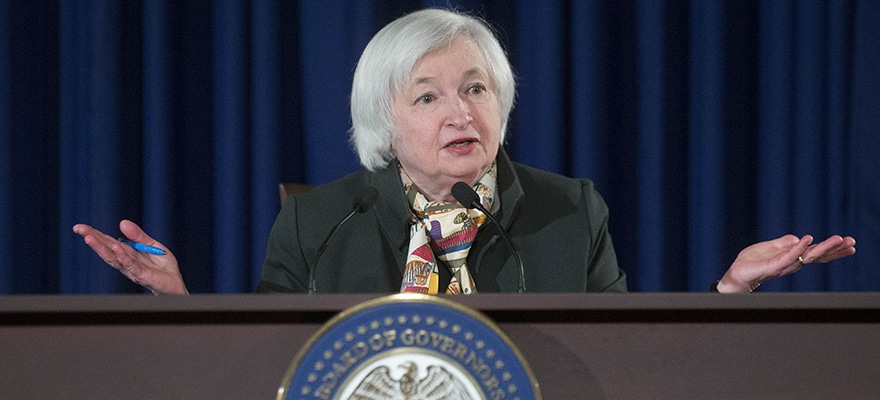
After switching from dovish to hawkish and back again, Federal Reserve Chair Janet Yellen has confused the outlook on interest rates once more as emerging economic data points appear unsupportive of additional monetary tightening.
With market participants eagerly trying to understand the path of rates over the next 6-months, the one clear item that is becoming readily apparent is the split on the forecast. While certain FOMC Members are calling for higher rates, some as many as two or three hikes before the end of 2016, others on the Open Market Committee are not convinced that the economy will be able to withstand the shock.
Taken together, these factors have seen the US dollar fall off a cliff, but that may not prevent the Dollar Index from rising further over the coming weeks and months as US rate policy diverges from other advanced economies.
Uneven Growth
Even though the US economy received a great upgrade during the second estimate of first quarter GDP, rising from an initial reading of 0.50% to 0.80%, it is not necessarily indicative of full speed ahead.
The most worrisome indication yet has come from the latest US nonfarm payrolls figure which sank at the quickest pace in years and has often served as an early warning sign that a recession is just around the corner.
The latest nonfarm employment number showed job creation of 38,000 during May, the lowest figure in over 5 years. Moreover, the loss in manufacturing jobs has continued, suggesting that key areas of the economy are coming under pressure because of the US dollar’s strength versus other currencies.
Despite the unemployment rate dropping to the lowest levels since 2007, slack remains in the labor economy, and is likely to hinder more hawkish developments at the Federal Reserve. While just weeks ago Fed Chair Yellen was hinting at higher interest rates, flanked by key voting members of the FOMC, her remarks from earlier this the week underlined the growing uncertainty about the path of rates.
For one, she failed to address a rate hike timeline in spite of mentioning that the economy was making progress. Although Fed Funds futures are not convinced that any action will happen until December, it seems to contradict some of the language in her speech, stating unequivocally that, “the federal funds rate will probably need to rise gradually over time.”
The lack of a qualified for “gradually” makes it difficult to assess what she actually means. No matter the perception of hawkish or dovish, the US Dollar Index reaction to the speech was very volatile, though the index did manage to close the American session modestly higher before opening lower during the Asian session.
Weaker consumption is one area that could dent the Federal Reserve’s best intentions to tighten monetary policy
As one of the key drivers of US economic activity, weaker consumption is one area that could dent the Federal Reserve’s best intentions to tighten monetary policy. Even though June is expected to be a “live” meeting for the FOMC, it does not necessarily imply action is on the table, especially in light of the numerous risk factors.
However, despite the poor outlook domestically, the external outlook is much worse, contributing to the possibility that the dollar reversal that began back in May is still in its early stages.
Bullish Breakout Waiting In The Wings
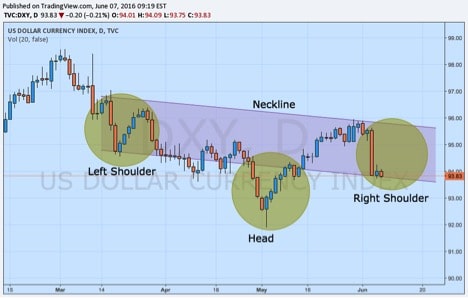
While not necessarily conforming to standard head and shoulders patterns, the emergence of a more tilted bullish pattern could indicate the recent correction lower in the Dollar Index is just temporary.
With the right shoulder in the process of forming, the key level on the upside remains the trendline that represents the neck line of the pattern. Should this level be overcome, a move back above 96.00 is possible, potentially catalyzing a run towards 100.00 once more.
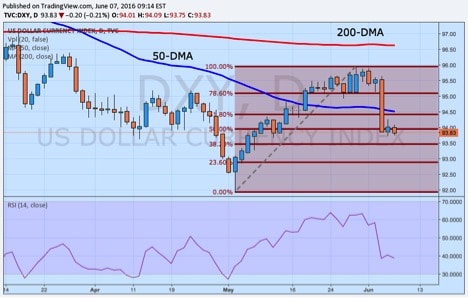
A look at the Fibonacci levels shows that from the trend between the May lows and highs, a 50.0% retracement has occurred, meaning that even if the index slides modestly further, the most recent uptrend may still remain intact.
However, with both the 50-day and 200-day moving averages trending lower above the price action, they are acting as resistance against any sustained rise in the US Dollar Index.
Going Forward
Although the coming sessions are absent more critical fundamental data about the economy, there are several factors that may contribute to a stronger dollar over the coming weeks.
The US Dollar Index will remain a strong reflection of expectations
For one, if conditions in other advanced economies deteriorate, then there is a strong possibility that the US dollar will feel the impact of haven flows looking for quality assets. Any news, announcements, or remarks from key policymakers that suggest a timeline could also contribute to bullishness in the Dollar Index.
Even though Yellen’s most recent comments left a lot of be desired as far as certainty towards the pace of rate hikes, they remain on the table despite futures which indicate that they are very unlikely. In the meantime, the US Dollar Index will remain a strong reflection of those expectations and how they are set to evolve over time.
After switching from dovish to hawkish and back again, Federal Reserve Chair Janet Yellen has confused the outlook on interest rates once more as emerging economic data points appear unsupportive of additional monetary tightening.
With market participants eagerly trying to understand the path of rates over the next 6-months, the one clear item that is becoming readily apparent is the split on the forecast. While certain FOMC Members are calling for higher rates, some as many as two or three hikes before the end of 2016, others on the Open Market Committee are not convinced that the economy will be able to withstand the shock.
Taken together, these factors have seen the US dollar fall off a cliff, but that may not prevent the Dollar Index from rising further over the coming weeks and months as US rate policy diverges from other advanced economies.
Uneven Growth
Even though the US economy received a great upgrade during the second estimate of first quarter GDP, rising from an initial reading of 0.50% to 0.80%, it is not necessarily indicative of full speed ahead.
The most worrisome indication yet has come from the latest US nonfarm payrolls figure which sank at the quickest pace in years and has often served as an early warning sign that a recession is just around the corner.
The latest nonfarm employment number showed job creation of 38,000 during May, the lowest figure in over 5 years. Moreover, the loss in manufacturing jobs has continued, suggesting that key areas of the economy are coming under pressure because of the US dollar’s strength versus other currencies.
Despite the unemployment rate dropping to the lowest levels since 2007, slack remains in the labor economy, and is likely to hinder more hawkish developments at the Federal Reserve. While just weeks ago Fed Chair Yellen was hinting at higher interest rates, flanked by key voting members of the FOMC, her remarks from earlier this the week underlined the growing uncertainty about the path of rates.
For one, she failed to address a rate hike timeline in spite of mentioning that the economy was making progress. Although Fed Funds futures are not convinced that any action will happen until December, it seems to contradict some of the language in her speech, stating unequivocally that, “the federal funds rate will probably need to rise gradually over time.”
The lack of a qualified for “gradually” makes it difficult to assess what she actually means. No matter the perception of hawkish or dovish, the US Dollar Index reaction to the speech was very volatile, though the index did manage to close the American session modestly higher before opening lower during the Asian session.
Weaker consumption is one area that could dent the Federal Reserve’s best intentions to tighten monetary policy
As one of the key drivers of US economic activity, weaker consumption is one area that could dent the Federal Reserve’s best intentions to tighten monetary policy. Even though June is expected to be a “live” meeting for the FOMC, it does not necessarily imply action is on the table, especially in light of the numerous risk factors.
However, despite the poor outlook domestically, the external outlook is much worse, contributing to the possibility that the dollar reversal that began back in May is still in its early stages.
Bullish Breakout Waiting In The Wings
While not necessarily conforming to standard head and shoulders patterns, the emergence of a more tilted bullish pattern could indicate the recent correction lower in the Dollar Index is just temporary.
With the right shoulder in the process of forming, the key level on the upside remains the trendline that represents the neck line of the pattern. Should this level be overcome, a move back above 96.00 is possible, potentially catalyzing a run towards 100.00 once more.
A look at the Fibonacci levels shows that from the trend between the May lows and highs, a 50.0% retracement has occurred, meaning that even if the index slides modestly further, the most recent uptrend may still remain intact.
However, with both the 50-day and 200-day moving averages trending lower above the price action, they are acting as resistance against any sustained rise in the US Dollar Index.
Going Forward
Although the coming sessions are absent more critical fundamental data about the economy, there are several factors that may contribute to a stronger dollar over the coming weeks.
The US Dollar Index will remain a strong reflection of expectations
For one, if conditions in other advanced economies deteriorate, then there is a strong possibility that the US dollar will feel the impact of haven flows looking for quality assets. Any news, announcements, or remarks from key policymakers that suggest a timeline could also contribute to bullishness in the Dollar Index.
Even though Yellen’s most recent comments left a lot of be desired as far as certainty towards the pace of rate hikes, they remain on the table despite futures which indicate that they are very unlikely. In the meantime, the US Dollar Index will remain a strong reflection of those expectations and how they are set to evolve over time.
Idan is the VP trading for anyoption.com. He is a seasoned professional with years of experience trading and has a vast knowledge of the financial markets. An expert in the binary options hedging field - Idan provides insights, guidance and coordination in business planning, risk management and technology strategies. He holds a BA in Economics Management and is now busy finishing his MBA in Finance. Idan is the VP trading for anyoption.com. He is a seasoned professional with years of experience and a vast knowledge of the financial markets. An expert in the binary options hedging field - Idan provides insights, guidance and coordination in business planning, risk management and technology strategies. He holds a BA in Economics Management and is now busy finishing his MBA in Finance.
FXCM UK Holds $110m in Client Money; IG CEO Questions Prediction Market Volumes
FXCM UK Holds $110m in Client Money; IG CEO Questions Prediction Market Volumes
FXCM UK Holds $110m in Client Money; IG CEO Questions Prediction Market Volumes
FXCM UK Holds $110m in Client Money; IG CEO Questions Prediction Market Volumes
Today’s financial news recap covers FXCM's UK arm holds $110 million in client money ahead of its sale to Trade Nation, Citadel Securities' UK profit falls 38 per cent, and Kraken secures its final Dubai crypto licence.
Finance Magnates Daily Recap brings you the latest news from forex and CFD brokers, fintech, payments, cryptocurrency, digital assets, trading platforms, financial regulation and global markets.
Get the key company news, executive moves, deals, regulatory updates and market developments of the day, in just a few minutes. New episodes published every weekday.
Read more: https://www.financemagnates.com
#FinanceMagnates #ForexNews #FintechNews
Today’s financial news recap covers FXCM's UK arm holds $110 million in client money ahead of its sale to Trade Nation, Citadel Securities' UK profit falls 38 per cent, and Kraken secures its final Dubai crypto licence.
Finance Magnates Daily Recap brings you the latest news from forex and CFD brokers, fintech, payments, cryptocurrency, digital assets, trading platforms, financial regulation and global markets.
Get the key company news, executive moves, deals, regulatory updates and market developments of the day, in just a few minutes. New episodes published every weekday.
Read more: https://www.financemagnates.com
#FinanceMagnates #ForexNews #FintechNews
Today’s financial news recap covers FXCM's UK arm holds $110 million in client money ahead of its sale to Trade Nation, Citadel Securities' UK profit falls 38 per cent, and Kraken secures its final Dubai crypto licence.
Finance Magnates Daily Recap brings you the latest news from forex and CFD brokers, fintech, payments, cryptocurrency, digital assets, trading platforms, financial regulation and global markets.
Get the key company news, executive moves, deals, regulatory updates and market developments of the day, in just a few minutes. New episodes published every weekday.
Read more: https://www.financemagnates.com
#FinanceMagnates #ForexNews #FintechNews
Today’s financial news recap covers FXCM's UK arm holds $110 million in client money ahead of its sale to Trade Nation, Citadel Securities' UK profit falls 38 per cent, and Kraken secures its final Dubai crypto licence.
Finance Magnates Daily Recap brings you the latest news from forex and CFD brokers, fintech, payments, cryptocurrency, digital assets, trading platforms, financial regulation and global markets.
Get the key company news, executive moves, deals, regulatory updates and market developments of the day, in just a few minutes. New episodes published every weekday.
Read more: https://www.financemagnates.com
#FinanceMagnates #ForexNews #FintechNews
Today’s financial news recap covers AvaTrade agrees to acquire most of FXCM, NAGA secures eight million dollars in new financing, and Wise seeks a tax settlement in the UK.
Finance Magnates Daily Recap brings you the latest news from forex and CFD brokers, fintech, payments, cryptocurrency, digital assets, trading platforms, financial regulation and global markets.
Get the key company news, executive moves, deals, regulatory updates and market developments of the day, in just a few minutes. New episodes published every weekday.
Read more: https://www.financemagnates.com
#FinanceMagnates #ForexNews #FintechNews
Today’s financial news recap covers AvaTrade agrees to acquire most of FXCM, NAGA secures eight million dollars in new financing, and Wise seeks a tax settlement in the UK.
Finance Magnates Daily Recap brings you the latest news from forex and CFD brokers, fintech, payments, cryptocurrency, digital assets, trading platforms, financial regulation and global markets.
Get the key company news, executive moves, deals, regulatory updates and market developments of the day, in just a few minutes. New episodes published every weekday.
Read more: https://www.financemagnates.com
#FinanceMagnates #ForexNews #FintechNews
Today’s financial news recap covers AvaTrade agrees to acquire most of FXCM, NAGA secures eight million dollars in new financing, and Wise seeks a tax settlement in the UK.
Finance Magnates Daily Recap brings you the latest news from forex and CFD brokers, fintech, payments, cryptocurrency, digital assets, trading platforms, financial regulation and global markets.
Get the key company news, executive moves, deals, regulatory updates and market developments of the day, in just a few minutes. New episodes published every weekday.
Read more: https://www.financemagnates.com
#FinanceMagnates #ForexNews #FintechNews
Today’s financial news recap covers AvaTrade agrees to acquire most of FXCM, NAGA secures eight million dollars in new financing, and Wise seeks a tax settlement in the UK.
Finance Magnates Daily Recap brings you the latest news from forex and CFD brokers, fintech, payments, cryptocurrency, digital assets, trading platforms, financial regulation and global markets.
Get the key company news, executive moves, deals, regulatory updates and market developments of the day, in just a few minutes. New episodes published every weekday.
Read more: https://www.financemagnates.com
#FinanceMagnates #ForexNews #FintechNews
Today’s financial news recap covers AvaTrade agrees to acquire most of FXCM, NAGA secures eight million dollars in new financing, and Wise seeks a tax settlement in the UK.
Finance Magnates Daily Recap brings you the latest news from forex and CFD brokers, fintech, payments, cryptocurrency, digital assets, trading platforms, financial regulation and global markets.
Get the key company news, executive moves, deals, regulatory updates and market developments of the day, in just a few minutes. New episodes published every weekday.
Read more: https://www.financemagnates.com
#FinanceMagnates #ForexNews #FintechNews
Today’s financial news recap covers AvaTrade agrees to acquire most of FXCM, NAGA secures eight million dollars in new financing, and Wise seeks a tax settlement in the UK.
Finance Magnates Daily Recap brings you the latest news from forex and CFD brokers, fintech, payments, cryptocurrency, digital assets, trading platforms, financial regulation and global markets.
Get the key company news, executive moves, deals, regulatory updates and market developments of the day, in just a few minutes. New episodes published every weekday.
Read more: https://www.financemagnates.com
#FinanceMagnates #ForexNews #FintechNews
XTB Adds Overnight US Stock Trading; Nasdaq Ventures Invests in One Trading
XTB Adds Overnight US Stock Trading; Nasdaq Ventures Invests in One Trading
XTB Adds Overnight US Stock Trading; Nasdaq Ventures Invests in One Trading
XTB Adds Overnight US Stock Trading; Nasdaq Ventures Invests in One Trading
XTB Adds Overnight US Stock Trading; Nasdaq Ventures Invests in One Trading
XTB Adds Overnight US Stock Trading; Nasdaq Ventures Invests in One Trading
Today’s financial news recap covers XTB expands overnight US stock trading, Fortrade reports higher revenue, Nasdaq backs One Trading, and Vest Labs raises 13 million dollars.
Finance Magnates Daily Recap brings you the latest news from forex and CFD brokers, fintech, payments, cryptocurrency, digital assets, trading platforms, financial regulation and global markets.
Get the key company news, executive moves, deals, regulatory updates and market developments of the day, in just a few minutes. New episodes published every weekday.
Read more: https://www.financemagnates.com
#FinanceMagnates #ForexNews #FintechNews
Today’s financial news recap covers XTB expands overnight US stock trading, Fortrade reports higher revenue, Nasdaq backs One Trading, and Vest Labs raises 13 million dollars.
Finance Magnates Daily Recap brings you the latest news from forex and CFD brokers, fintech, payments, cryptocurrency, digital assets, trading platforms, financial regulation and global markets.
Get the key company news, executive moves, deals, regulatory updates and market developments of the day, in just a few minutes. New episodes published every weekday.
Read more: https://www.financemagnates.com
#FinanceMagnates #ForexNews #FintechNews
Today’s financial news recap covers XTB expands overnight US stock trading, Fortrade reports higher revenue, Nasdaq backs One Trading, and Vest Labs raises 13 million dollars.
Finance Magnates Daily Recap brings you the latest news from forex and CFD brokers, fintech, payments, cryptocurrency, digital assets, trading platforms, financial regulation and global markets.
Get the key company news, executive moves, deals, regulatory updates and market developments of the day, in just a few minutes. New episodes published every weekday.
Read more: https://www.financemagnates.com
#FinanceMagnates #ForexNews #FintechNews
Today’s financial news recap covers XTB expands overnight US stock trading, Fortrade reports higher revenue, Nasdaq backs One Trading, and Vest Labs raises 13 million dollars.
Finance Magnates Daily Recap brings you the latest news from forex and CFD brokers, fintech, payments, cryptocurrency, digital assets, trading platforms, financial regulation and global markets.
Get the key company news, executive moves, deals, regulatory updates and market developments of the day, in just a few minutes. New episodes published every weekday.
Read more: https://www.financemagnates.com
#FinanceMagnates #ForexNews #FintechNews
Today’s financial news recap covers XTB expands overnight US stock trading, Fortrade reports higher revenue, Nasdaq backs One Trading, and Vest Labs raises 13 million dollars.
Finance Magnates Daily Recap brings you the latest news from forex and CFD brokers, fintech, payments, cryptocurrency, digital assets, trading platforms, financial regulation and global markets.
Get the key company news, executive moves, deals, regulatory updates and market developments of the day, in just a few minutes. New episodes published every weekday.
Read more: https://www.financemagnates.com
#FinanceMagnates #ForexNews #FintechNews
Today’s financial news recap covers XTB expands overnight US stock trading, Fortrade reports higher revenue, Nasdaq backs One Trading, and Vest Labs raises 13 million dollars.
Finance Magnates Daily Recap brings you the latest news from forex and CFD brokers, fintech, payments, cryptocurrency, digital assets, trading platforms, financial regulation and global markets.
Get the key company news, executive moves, deals, regulatory updates and market developments of the day, in just a few minutes. New episodes published every weekday.
Read more: https://www.financemagnates.com
#FinanceMagnates #ForexNews #FintechNews
CMC Founder Downplays Volatility Hit; Devexperts Names CEO
CMC Founder Downplays Volatility Hit; Devexperts Names CEO
CMC Founder Downplays Volatility Hit; Devexperts Names CEO
CMC Founder Downplays Volatility Hit; Devexperts Names CEO
CMC Founder Downplays Volatility Hit; Devexperts Names CEO
CMC Founder Downplays Volatility Hit; Devexperts Names CEO
Today’s financial news recap covers low volatility pressures brokers, Devexperts names a new CEO, Saxo cuts onboarding time, and OKX reaches a 25 billion dollar valuation.
Finance Magnates Daily Recap brings you the latest news from forex and CFD brokers, fintech, payments, cryptocurrency, digital assets, trading platforms, financial regulation and global markets.
Get the key company news, executive moves, deals, regulatory updates and market developments of the day, in just a few minutes. New episodes published every weekday.
Read more: https://www.financemagnates.com
#FinanceMagnates #ForexNews #FintechNews
Today’s financial news recap covers low volatility pressures brokers, Devexperts names a new CEO, Saxo cuts onboarding time, and OKX reaches a 25 billion dollar valuation.
Finance Magnates Daily Recap brings you the latest news from forex and CFD brokers, fintech, payments, cryptocurrency, digital assets, trading platforms, financial regulation and global markets.
Get the key company news, executive moves, deals, regulatory updates and market developments of the day, in just a few minutes. New episodes published every weekday.
Read more: https://www.financemagnates.com
#FinanceMagnates #ForexNews #FintechNews
Today’s financial news recap covers low volatility pressures brokers, Devexperts names a new CEO, Saxo cuts onboarding time, and OKX reaches a 25 billion dollar valuation.
Finance Magnates Daily Recap brings you the latest news from forex and CFD brokers, fintech, payments, cryptocurrency, digital assets, trading platforms, financial regulation and global markets.
Get the key company news, executive moves, deals, regulatory updates and market developments of the day, in just a few minutes. New episodes published every weekday.
Read more: https://www.financemagnates.com
#FinanceMagnates #ForexNews #FintechNews
Today’s financial news recap covers low volatility pressures brokers, Devexperts names a new CEO, Saxo cuts onboarding time, and OKX reaches a 25 billion dollar valuation.
Finance Magnates Daily Recap brings you the latest news from forex and CFD brokers, fintech, payments, cryptocurrency, digital assets, trading platforms, financial regulation and global markets.
Get the key company news, executive moves, deals, regulatory updates and market developments of the day, in just a few minutes. New episodes published every weekday.
Read more: https://www.financemagnates.com
#FinanceMagnates #ForexNews #FintechNews
Today’s financial news recap covers low volatility pressures brokers, Devexperts names a new CEO, Saxo cuts onboarding time, and OKX reaches a 25 billion dollar valuation.
Finance Magnates Daily Recap brings you the latest news from forex and CFD brokers, fintech, payments, cryptocurrency, digital assets, trading platforms, financial regulation and global markets.
Get the key company news, executive moves, deals, regulatory updates and market developments of the day, in just a few minutes. New episodes published every weekday.
Read more: https://www.financemagnates.com
#FinanceMagnates #ForexNews #FintechNews
Today’s financial news recap covers low volatility pressures brokers, Devexperts names a new CEO, Saxo cuts onboarding time, and OKX reaches a 25 billion dollar valuation.
Finance Magnates Daily Recap brings you the latest news from forex and CFD brokers, fintech, payments, cryptocurrency, digital assets, trading platforms, financial regulation and global markets.
Get the key company news, executive moves, deals, regulatory updates and market developments of the day, in just a few minutes. New episodes published every weekday.
Read more: https://www.financemagnates.com
#FinanceMagnates #ForexNews #FintechNews
Today’s financial news recap covers Trade Nation buys FXCM's UK client book, Trading 212 reports higher revenue, the CFTC's move to allow perpetual index futures.
Finance Magnates Daily Recap brings you the latest news from forex and CFD brokers, fintech, payments, cryptocurrency, digital assets, trading platforms, financial regulation and global markets.
Get the key company news, executive moves, deals, regulatory updates and market developments of the day, in just a few minutes. New episodes published every weekday.
Read more: https://www.financemagnates.com
#FinanceMagnates #ForexNews #FintechNews
Today’s financial news recap covers Trade Nation buys FXCM's UK client book, Trading 212 reports higher revenue, the CFTC's move to allow perpetual index futures.
Finance Magnates Daily Recap brings you the latest news from forex and CFD brokers, fintech, payments, cryptocurrency, digital assets, trading platforms, financial regulation and global markets.
Get the key company news, executive moves, deals, regulatory updates and market developments of the day, in just a few minutes. New episodes published every weekday.
Read more: https://www.financemagnates.com
#FinanceMagnates #ForexNews #FintechNews
Today’s financial news recap covers Trade Nation buys FXCM's UK client book, Trading 212 reports higher revenue, the CFTC's move to allow perpetual index futures.
Finance Magnates Daily Recap brings you the latest news from forex and CFD brokers, fintech, payments, cryptocurrency, digital assets, trading platforms, financial regulation and global markets.
Get the key company news, executive moves, deals, regulatory updates and market developments of the day, in just a few minutes. New episodes published every weekday.
Read more: https://www.financemagnates.com
#FinanceMagnates #ForexNews #FintechNews
Today’s financial news recap covers Trade Nation buys FXCM's UK client book, Trading 212 reports higher revenue, the CFTC's move to allow perpetual index futures.
Finance Magnates Daily Recap brings you the latest news from forex and CFD brokers, fintech, payments, cryptocurrency, digital assets, trading platforms, financial regulation and global markets.
Get the key company news, executive moves, deals, regulatory updates and market developments of the day, in just a few minutes. New episodes published every weekday.
Read more: https://www.financemagnates.com
#FinanceMagnates #ForexNews #FintechNews
Today’s financial news recap covers Trade Nation buys FXCM's UK client book, Trading 212 reports higher revenue, the CFTC's move to allow perpetual index futures.
Finance Magnates Daily Recap brings you the latest news from forex and CFD brokers, fintech, payments, cryptocurrency, digital assets, trading platforms, financial regulation and global markets.
Get the key company news, executive moves, deals, regulatory updates and market developments of the day, in just a few minutes. New episodes published every weekday.
Read more: https://www.financemagnates.com
#FinanceMagnates #ForexNews #FintechNews
Today’s financial news recap covers Trade Nation buys FXCM's UK client book, Trading 212 reports higher revenue, the CFTC's move to allow perpetual index futures.
Finance Magnates Daily Recap brings you the latest news from forex and CFD brokers, fintech, payments, cryptocurrency, digital assets, trading platforms, financial regulation and global markets.
Get the key company news, executive moves, deals, regulatory updates and market developments of the day, in just a few minutes. New episodes published every weekday.
Read more: https://www.financemagnates.com
#FinanceMagnates #ForexNews #FintechNews