Buying and selling cryptocurrency on margin is a legitimate way for responsible investors to maximize returns.
Source: Pixabay
What if someone can go back in time and buy bitcoin or any of the other hot Cryptocurrencies three or four years ago? What if the same person would have been able to borrow funds from a broker to amplify the investment's return?
Such a scenario was very realistic thanks to the growth in demand for trading cryptocurrency on margin.
Trading on margin is an industry-standard practice across all asset classes. Many investors have been using margin to trade stocks, buy gold, or speculate on oil future contracts for decades.
While the introduction of margin in the cryptocurrency universe is fairly new by comparison, the concept is identical to all other asset classes.
But just because an investor can buy cryptocurrency on margin, it doesn’t mean they should.
What Is Cryptocurrency Margin?
Trading cryptocurrency on margin is becoming a more important feature that brokers are offering clients and investors can find relevant information from a cryptocurrency margin trading guide.
In essence, the broker loans funds to the client to use in their trading or investment account. Buying cryptocurrencies on margin is often interchanged with other terms like leverage or buying on credit.
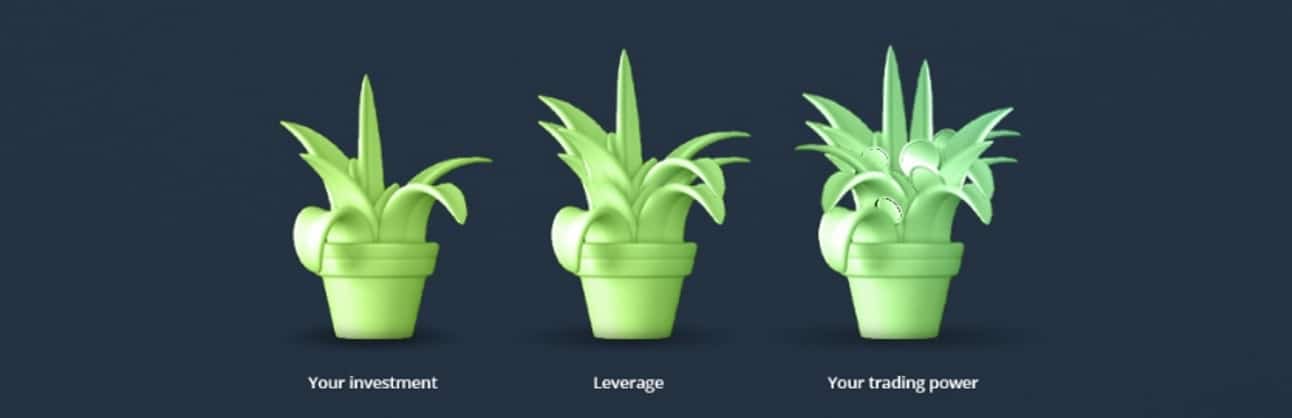
The amount that is loaned is expressed as a multiplier on the cash balance. For example, a $5,000 deposit onto a brokerage account that offers a margin of 10 times would let the client have access to $50,000 to trade or invest.
The amount of leverage provided will certainly vary by broker and level of experience.
The amount loaned to the investor will be subject to interest or other fees. After all, the broker has no real motivation to hand out free money to clients. As such, providing margin to clients is becoming a bigger source of revenue for brokers.
Europe-based cryptocurrency brokers are known to offer much higher leverage rates than their American rivals. It wouldn’t be uncommon for some traders
Tip #1: Do You Even Need Margin To Trade Cryptocurrency?
Since borrowed capital comes at a cost, many investors or traders can avoid unnecessary fees if they don’t need access to margin or leverage in the first place.
If someone wants to sell part of their stock portfolio to gain exposure to a portfolio of cryptocurrency, there isn’t much of a need for margin.
Tip #2: Use Margin Wisely
It needs to be emphasized that margin is borrowed money so the investor or trader should treat it as if it is their own money. Trading and investing with someone else’s money could deceive novice individuals into thinking they can take unnecessary risks since the money isn’t theirs.
Anyone that can't respect this basic principle may want to think twice about borrowing funds.
The growing competitive landscape in the cryptocurrency industry means many brokers are trying to carve out a niche for themselves by specializing in one aspect of the business.
Some brokers cater specifically to day traders looking for access to trade cryptocurrency on margin.
Their margin rates will drastically differ from other brokers that offer rates and features for buy-and-hold investors looking to invest for the longer-term.
Tip #4: Understand The Loss Potential
Cryptocurrency brokers aren’t in the business of deceiving their customers -- at least the majority aren’t. The honest brokers will make it abundantly clear to customers that trading cryptocurrency on margin or leverage can result in losses above and beyond the initial investment.
The math behind this statement makes it easy to understand how this is possible.
Suppose an investor deposits $10,000 and is offered a margin rate of 10 times their deposit. The entire $100,000 is invested in a cryptocurrency and one week later it suddenly losses 15% in value.
The position is now worth $85,000, representing a loss of $15,000 to the customer.
Cryptocurrency brokers do make use of advanced and sophisticated risk management tools that liquidate a position when it approaches a loss equal to the cash deposit.
But in many cases due to Liquidity issues in a fast-moving market, it may not be possible to get out of a position without extra losses.
In this case, the customer would need to pay the broker an additional $5,000 to cover their losses. Brokers can and will use all legal measures at their disposal to recover the funds they are rightfully entitled to.
Anyone who will stress about this very realistic and common scenario should avoid buying cryptocurrency on margin in the first place.
Tip #5: Please, Please Don’t Take Out A Second Loan
Investors that want to take out a second mortgage on their homes or secure a large line of credit to buy cryptocurrency on extreme margin are discouraged from doing so under all circumstances.
As hard as it may be for many investors to owe a cryptocurrency broker an extra $5,000 because of a large loss, it is a whole different scenario if an investor owes a bank $50,000 or more because of losses.
When it comes to legal recourse, banks have what seems like unlimited resources at their disposal to recover money owed to them.
Joseph Borg is the President of the North American Securities Administrators Association, an organization devoted to investor protection.
His comments in 2018 give the impression he is a friend of the cryptocurrency industry and recognizes an individual’s rights to invest their money how they see fit.
He said:
“It’s not the first time mania such as bitcoin has reached out and touched folks to the point where they’re like ‘I gotta get in, I gotta get in—let me go tap my line of credit in my bank,’” said Borg. “It’s the same thing that got people in trouble in ’06 and ’07.”
Conclusion: Use Common Sense
Like everything else in life, common sense more often than note prevails. If buying cryptocurrency on margin is something that would cause undue stress then by all means avoid all temptations.
But sophisticated traders and investors with many years of experience buying stock or other asset classes on margin have no reason not to do the same with cryptocurrency.
What if someone can go back in time and buy bitcoin or any of the other hot Cryptocurrencies three or four years ago? What if the same person would have been able to borrow funds from a broker to amplify the investment's return?
Such a scenario was very realistic thanks to the growth in demand for trading cryptocurrency on margin.
Trading on margin is an industry-standard practice across all asset classes. Many investors have been using margin to trade stocks, buy gold, or speculate on oil future contracts for decades.
While the introduction of margin in the cryptocurrency universe is fairly new by comparison, the concept is identical to all other asset classes.
But just because an investor can buy cryptocurrency on margin, it doesn’t mean they should.
What Is Cryptocurrency Margin?
Trading cryptocurrency on margin is becoming a more important feature that brokers are offering clients and investors can find relevant information from a cryptocurrency margin trading guide.
In essence, the broker loans funds to the client to use in their trading or investment account. Buying cryptocurrencies on margin is often interchanged with other terms like leverage or buying on credit.
The amount that is loaned is expressed as a multiplier on the cash balance. For example, a $5,000 deposit onto a brokerage account that offers a margin of 10 times would let the client have access to $50,000 to trade or invest.
The amount of leverage provided will certainly vary by broker and level of experience.
The amount loaned to the investor will be subject to interest or other fees. After all, the broker has no real motivation to hand out free money to clients. As such, providing margin to clients is becoming a bigger source of revenue for brokers.
Europe-based cryptocurrency brokers are known to offer much higher leverage rates than their American rivals. It wouldn’t be uncommon for some traders
Tip #1: Do You Even Need Margin To Trade Cryptocurrency?
Since borrowed capital comes at a cost, many investors or traders can avoid unnecessary fees if they don’t need access to margin or leverage in the first place.
If someone wants to sell part of their stock portfolio to gain exposure to a portfolio of cryptocurrency, there isn’t much of a need for margin.
Tip #2: Use Margin Wisely
It needs to be emphasized that margin is borrowed money so the investor or trader should treat it as if it is their own money. Trading and investing with someone else’s money could deceive novice individuals into thinking they can take unnecessary risks since the money isn’t theirs.
Anyone that can't respect this basic principle may want to think twice about borrowing funds.
The growing competitive landscape in the cryptocurrency industry means many brokers are trying to carve out a niche for themselves by specializing in one aspect of the business.
Some brokers cater specifically to day traders looking for access to trade cryptocurrency on margin.
Their margin rates will drastically differ from other brokers that offer rates and features for buy-and-hold investors looking to invest for the longer-term.
Tip #4: Understand The Loss Potential
Cryptocurrency brokers aren’t in the business of deceiving their customers -- at least the majority aren’t. The honest brokers will make it abundantly clear to customers that trading cryptocurrency on margin or leverage can result in losses above and beyond the initial investment.
The math behind this statement makes it easy to understand how this is possible.
Suppose an investor deposits $10,000 and is offered a margin rate of 10 times their deposit. The entire $100,000 is invested in a cryptocurrency and one week later it suddenly losses 15% in value.
The position is now worth $85,000, representing a loss of $15,000 to the customer.
Cryptocurrency brokers do make use of advanced and sophisticated risk management tools that liquidate a position when it approaches a loss equal to the cash deposit.
But in many cases due to Liquidity issues in a fast-moving market, it may not be possible to get out of a position without extra losses.
In this case, the customer would need to pay the broker an additional $5,000 to cover their losses. Brokers can and will use all legal measures at their disposal to recover the funds they are rightfully entitled to.
Anyone who will stress about this very realistic and common scenario should avoid buying cryptocurrency on margin in the first place.
Tip #5: Please, Please Don’t Take Out A Second Loan
Investors that want to take out a second mortgage on their homes or secure a large line of credit to buy cryptocurrency on extreme margin are discouraged from doing so under all circumstances.
As hard as it may be for many investors to owe a cryptocurrency broker an extra $5,000 because of a large loss, it is a whole different scenario if an investor owes a bank $50,000 or more because of losses.
When it comes to legal recourse, banks have what seems like unlimited resources at their disposal to recover money owed to them.
Joseph Borg is the President of the North American Securities Administrators Association, an organization devoted to investor protection.
His comments in 2018 give the impression he is a friend of the cryptocurrency industry and recognizes an individual’s rights to invest their money how they see fit.
He said:
“It’s not the first time mania such as bitcoin has reached out and touched folks to the point where they’re like ‘I gotta get in, I gotta get in—let me go tap my line of credit in my bank,’” said Borg. “It’s the same thing that got people in trouble in ’06 and ’07.”
Conclusion: Use Common Sense
Like everything else in life, common sense more often than note prevails. If buying cryptocurrency on margin is something that would cause undue stress then by all means avoid all temptations.
But sophisticated traders and investors with many years of experience buying stock or other asset classes on margin have no reason not to do the same with cryptocurrency.
Engineered Trust – A Conversation with Adam Phillips, CEO of FXT
CMC Markets’ Artur Delijergijevs on Metals Demand, Volatility, & Stable Execution
CMC Markets’ Artur Delijergijevs on Metals Demand, Volatility, & Stable Execution
In this exclusive Executive Interview, Finance Magnates speaks with Artur Delijergijevs, Head of Systematic Market Making at CMC Markets, about the current state of metals demand and market volatility.
Delijergijevs offers a desk-level view on:
- Metals Demand: Why metals are seeing the strongest demand from both retail and institutional clients right now.
- The Safe-Haven Debate: Questioning whether gold still fits the classic safe-haven definition given large daily price movements.
- Volatile Market Prep: How a market-making desk prepares its systems and pricing for stressed market conditions and high-impact economic events.
- Hybrid Execution: Why the best execution model combines electronic speed with human relationship support, especially during volatility.
- AI in Workflow: Where CMC Markets is integrating machine learning for risk management and pricing, and the limitations of AI during stressed markets.
- Dubai's Role: The strategic importance of Dubai’s location for covering global trading sessions across Asia, Europe, and the US.
Watch to understand how CMC Markets maintains stable pricing and reliable execution quality in high-volatility environments.
#CMCmarkets #forex #metals #gold #trading #volatility #MarketMaking #iFXDubai #FinanceMagnates #Finance #Fintech #Execution #AlgorithmicTrading #RiskManagement
In this exclusive Executive Interview, Finance Magnates speaks with Artur Delijergijevs, Head of Systematic Market Making at CMC Markets, about the current state of metals demand and market volatility.
Delijergijevs offers a desk-level view on:
- Metals Demand: Why metals are seeing the strongest demand from both retail and institutional clients right now.
- The Safe-Haven Debate: Questioning whether gold still fits the classic safe-haven definition given large daily price movements.
- Volatile Market Prep: How a market-making desk prepares its systems and pricing for stressed market conditions and high-impact economic events.
- Hybrid Execution: Why the best execution model combines electronic speed with human relationship support, especially during volatility.
- AI in Workflow: Where CMC Markets is integrating machine learning for risk management and pricing, and the limitations of AI during stressed markets.
- Dubai's Role: The strategic importance of Dubai’s location for covering global trading sessions across Asia, Europe, and the US.
Watch to understand how CMC Markets maintains stable pricing and reliable execution quality in high-volatility environments.
#CMCmarkets #forex #metals #gold #trading #volatility #MarketMaking #iFXDubai #FinanceMagnates #Finance #Fintech #Execution #AlgorithmicTrading #RiskManagement
Finance Magnates Awards 2026 – Nominations Now Open
Finance Magnates Awards 2026 – Nominations Now Open
The Finance Magnates Awards 2026 nominations are now open. 🏆
From fintech innovators to leading brokers, this is where the finance industry celebrates its biggest achievements.
Winners will be announced at the Cyprus Gala Dinner on November 6, 2026.
Nominate your brand now.
https://awards.financemagnates.com/?utm_source=linkedin&utm_medium=video&utm_campaign=nominations-open
#FMAwards #FinanceMagnates #FintechAwards #Fintech #FinanceIndustry
The Finance Magnates Awards 2026 nominations are now open. 🏆
From fintech innovators to leading brokers, this is where the finance industry celebrates its biggest achievements.
Winners will be announced at the Cyprus Gala Dinner on November 6, 2026.
Nominate your brand now.
https://awards.financemagnates.com/?utm_source=linkedin&utm_medium=video&utm_campaign=nominations-open
#FMAwards #FinanceMagnates #FintechAwards #Fintech #FinanceIndustry
Finance Magnates Awards 2026 | Nominations Now Open 🏆#Fintech #FMAwards #TradingIndustry
Finance Magnates Awards 2026 | Nominations Now Open 🏆#Fintech #FMAwards #TradingIndustry
Lights on. Cameras ready. 🎬
Finance Magnates Awards 2026 nominations are now open. 🏆
#FMAwards #FinanceMagnates #FintechAwards #Fintech
Lights on. Cameras ready. 🎬
Finance Magnates Awards 2026 nominations are now open. 🏆
#FMAwards #FinanceMagnates #FintechAwards #Fintech
Exness sees trust as the key theme for growth in MENA Trading Growth for 2026
Exness sees trust as the key theme for growth in MENA Trading Growth for 2026
Mohammad Amer, Regional Commercial Director at Exness, sits down to discuss the booming MENA financial trading market. Find out why Dubai is key to the company's growth strategy, how a mobile-first generation is changing expectations, and why trust will be the defining theme for traders in 2026.
In this interview, you'll learn:
* Why Dubai and the MENA region are critical growth markets for fintech and online trading.
* How Exness is addressing the demands of mobile-first, younger traders through engineering, platform stability, and transparent conditions.
* The essential role local talent plays in providing a culturally relevant and compliant user experience.
* Mohammad Amer's outlook on the future of the online trading industry and why stronger controls and systems are necessary.
* Why "trust" isn't just a brand value, but has commercial value—and why he predicts 2026 will be the "Year of Trust."
Key Takeaways:
➡️ The MENA region is rapidly shaping global financial markets.
➡️ New traders expect stability, precise execution, and transparency.
➡️ Local expertise is key to regulatory compliance and user experience.
➡️ Future success belongs to firms capable of meeting rising standards across regulation and platform consistency.
Read the full article at: https://www.financemagnates.com/thought-leadership/exness-sees-trust-as-the-key-theme-for-growth-in-mena-trading-growth-for-2026/
#Exness #MENA #Trading #FinTech #Dubai #OnlineTrading #FinanceMagnates #MohammadAmer #Trust #MobileTrading
Mohammad Amer, Regional Commercial Director at Exness, sits down to discuss the booming MENA financial trading market. Find out why Dubai is key to the company's growth strategy, how a mobile-first generation is changing expectations, and why trust will be the defining theme for traders in 2026.
In this interview, you'll learn:
* Why Dubai and the MENA region are critical growth markets for fintech and online trading.
* How Exness is addressing the demands of mobile-first, younger traders through engineering, platform stability, and transparent conditions.
* The essential role local talent plays in providing a culturally relevant and compliant user experience.
* Mohammad Amer's outlook on the future of the online trading industry and why stronger controls and systems are necessary.
* Why "trust" isn't just a brand value, but has commercial value—and why he predicts 2026 will be the "Year of Trust."
Key Takeaways:
➡️ The MENA region is rapidly shaping global financial markets.
➡️ New traders expect stability, precise execution, and transparency.
➡️ Local expertise is key to regulatory compliance and user experience.
➡️ Future success belongs to firms capable of meeting rising standards across regulation and platform consistency.
Read the full article at: https://www.financemagnates.com/thought-leadership/exness-sees-trust-as-the-key-theme-for-growth-in-mena-trading-growth-for-2026/
#Exness #MENA #Trading #FinTech #Dubai #OnlineTrading #FinanceMagnates #MohammadAmer #Trust #MobileTrading
Paytiko CEO Razi Salih on Why Payment Orchestration is a MUST-HAVE for Brokers in 2026
Paytiko CEO Razi Salih on Why Payment Orchestration is a MUST-HAVE for Brokers in 2026
At iFX Expo Dubai, Finance Magnates spoke with Razi Salih, CEO at Paytiko, about the evolution of the payments ecosystem and why payment orchestration has shifted from an option to a necessity for brokers, prop firms, and exchanges.
Mr. Salih explains how global expansion, the need for deep localisation, and the sheer number of new payment methods, from instant banking to stablecoins, are driving this critical infrastructure shift.
#PaymentOrchestration #Fintech #Brokerage #TradingPayments #RaziSalih #Paytiko #iFXExpoDubai #Stablecoins #AIinFintech
At iFX Expo Dubai, Finance Magnates spoke with Razi Salih, CEO at Paytiko, about the evolution of the payments ecosystem and why payment orchestration has shifted from an option to a necessity for brokers, prop firms, and exchanges.
Mr. Salih explains how global expansion, the need for deep localisation, and the sheer number of new payment methods, from instant banking to stablecoins, are driving this critical infrastructure shift.
#PaymentOrchestration #Fintech #Brokerage #TradingPayments #RaziSalih #Paytiko #iFXExpoDubai #Stablecoins #AIinFintech