Trading volumes at South East Asia's largest exchange saw an increase from a year earlier. The Singapore Exchange (SGX) posted overall growth in all asset classes.
Singapore’s premier trading bourse, the Singapore Exchange (SGX) has reported trading metrics for the month of July across all asset classes. The exchange saw the highest growth in futures and options volume, with the total number of contracts reaching 8.8 million, a 52% increase from a year earlier.
Singapore, one of Asia’s largest financial centres benefits from being an open marketplace for neighbouring countries whose capital markets environments are closed to foreign investors or are still in their infancy. SGX lists index contracts from across the region, such as India's; Nifty Futures and attracts a large number of Indian offshore trade flows.
Trading metrics July:
Derivatives
• Total futures and options volume increased 52% year-on-year to 8.8 million contracts.
• Year-on-year, China A50 Index Futures volume more than doubled to 1.7 million contracts and MSCI Taiwan Index Futures was up 30% to 1.9 million contracts. Nifty Index Futures was up 15% to 1.3 million contracts. Nikkei 225 Index Futures was up 44% from a year earlier to 2.7 million contracts and MSCI Indonesia Index Futures more than quadrupled to 32,737 contracts.
• Month-end open interest was up 21% year-on-year to 994,317 contracts.
• SICOM rubber futures volume was 21,603 contracts, up 6% from a year earlier.
Securities
• Total securities turnover was S$27.5 billion, up 2% year on year; securities daily average value (SDAV) was down 3% to S$1.2 billion year-on-year.
• Catalist turnover more than doubled year-on-year to S$1.3 billion.
• Turnover of foreign-currency based Mainboard shares increased 48% to S$1.4 billion.
• Funds raised from bond listings decreased 53% year-on-year to S$10.9 billion. The biggest bonds listed included a US$1 billion Indonesian sovereign bond and a US$700 million bond issue from Sumitomo Mitsui Banking Corporation.
OTC Clearing
• A total S$5.3 billion notional of new OTC financial derivatives transactions were cleared, a decline of 23% year-on-year.
• Volume of OTC commodities cleared increased 68% year-on-year to 50,547 contracts.
• Volume of iron ore swaps cleared more than doubled to 46,433 contracts from a year earlier.
Singapore strengthened its trading relationship with India at the India Infrastructure Forum organised in June by the Singapore Exchange (SGX) and the Confederation of Indian Industry (CII). The exchange will extend its list of Indian contracts with the launch of the INR USD futures contract, this quarter.
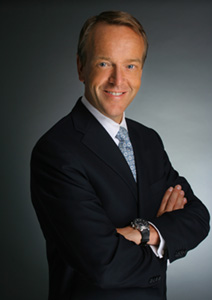
Magnus Bocker, CEO of SGX
Speaking at the event, Magnus Bocker, CEO of SGX, said in a statement: “India, one of the fastest growing economies in the world, offers a wide range of opportunities in infrastructure and many other sectors. Many Indian companies come to SGX, the Asian Gateway, to raise capital within a trusted environment to grow their business. Global investors also access Asia’s potential and manage their risks via SGX. We look forward to serving more companies including those from India as they expand and tap the region’s deep Liquidity pool.”
SGX is a 5% shareholder in India's, Bombay Stock Exchange.
Singapore’s premier trading bourse, the Singapore Exchange (SGX) has reported trading metrics for the month of July across all asset classes. The exchange saw the highest growth in futures and options volume, with the total number of contracts reaching 8.8 million, a 52% increase from a year earlier.
Singapore, one of Asia’s largest financial centres benefits from being an open marketplace for neighbouring countries whose capital markets environments are closed to foreign investors or are still in their infancy. SGX lists index contracts from across the region, such as India's; Nifty Futures and attracts a large number of Indian offshore trade flows.
Trading metrics July:
Derivatives
• Total futures and options volume increased 52% year-on-year to 8.8 million contracts.
• Year-on-year, China A50 Index Futures volume more than doubled to 1.7 million contracts and MSCI Taiwan Index Futures was up 30% to 1.9 million contracts. Nifty Index Futures was up 15% to 1.3 million contracts. Nikkei 225 Index Futures was up 44% from a year earlier to 2.7 million contracts and MSCI Indonesia Index Futures more than quadrupled to 32,737 contracts.
• Month-end open interest was up 21% year-on-year to 994,317 contracts.
• SICOM rubber futures volume was 21,603 contracts, up 6% from a year earlier.
Securities
• Total securities turnover was S$27.5 billion, up 2% year on year; securities daily average value (SDAV) was down 3% to S$1.2 billion year-on-year.
• Catalist turnover more than doubled year-on-year to S$1.3 billion.
• Turnover of foreign-currency based Mainboard shares increased 48% to S$1.4 billion.
• Funds raised from bond listings decreased 53% year-on-year to S$10.9 billion. The biggest bonds listed included a US$1 billion Indonesian sovereign bond and a US$700 million bond issue from Sumitomo Mitsui Banking Corporation.
OTC Clearing
• A total S$5.3 billion notional of new OTC financial derivatives transactions were cleared, a decline of 23% year-on-year.
• Volume of OTC commodities cleared increased 68% year-on-year to 50,547 contracts.
• Volume of iron ore swaps cleared more than doubled to 46,433 contracts from a year earlier.
Singapore strengthened its trading relationship with India at the India Infrastructure Forum organised in June by the Singapore Exchange (SGX) and the Confederation of Indian Industry (CII). The exchange will extend its list of Indian contracts with the launch of the INR USD futures contract, this quarter.
Magnus Bocker, CEO of SGX
Speaking at the event, Magnus Bocker, CEO of SGX, said in a statement: “India, one of the fastest growing economies in the world, offers a wide range of opportunities in infrastructure and many other sectors. Many Indian companies come to SGX, the Asian Gateway, to raise capital within a trusted environment to grow their business. Global investors also access Asia’s potential and manage their risks via SGX. We look forward to serving more companies including those from India as they expand and tap the region’s deep Liquidity pool.”
SGX is a 5% shareholder in India's, Bombay Stock Exchange.
Singapore Independent Wealth Sector Has Less Than 10% Market Share, but Vast Room for Growth
FP Markets Winner Spotlight 🏆 | Global Broker of the Year 2025 #Trading #Broker #Innovation #Shorts
FP Markets Winner Spotlight 🏆 | Global Broker of the Year 2025 #Trading #Broker #Innovation #Shorts
FP Markets takes the spotlight as Global Broker of the Year 2025 at the Finance Magnates Awards.
Martin Stoilov, Head of Client Experience, shares that trust, innovation, and people played a key role in the company’s success, supported by a strong foundation of integrity and client-centricity.
Following this milestone, FP Markets continues to focus on growth, technology investment, and its core values of transparency and excellence.
👉 Be part of FM Awards 2026: https://awards.financemagnates.com/#nominate
FP Markets takes the spotlight as Global Broker of the Year 2025 at the Finance Magnates Awards.
Martin Stoilov, Head of Client Experience, shares that trust, innovation, and people played a key role in the company’s success, supported by a strong foundation of integrity and client-centricity.
Following this milestone, FP Markets continues to focus on growth, technology investment, and its core values of transparency and excellence.
👉 Be part of FM Awards 2026: https://awards.financemagnates.com/#nominate
In this video, we review @HolaPrimeMarketsOfficial, a multi-asset forex and CFDs broker offering different account types, trading platforms, and flexible trading conditions.
We cover the broker’s overall offering, including account options, trading environment, platforms like MT4 and MT5, and additional services such as managed accounts and fast withdrawals.
Watch the full video to see if Hola Prime Markets fits your trading needs.
📣 Stay up to date with the latest in finance and trading. Follow Finance Magnates for industry news, insights, and global event coverage.
Connect with us:
🔗 LinkedIn: /financemagnates
👍 Facebook: /financemagnates
📸 Instagram: https://www.instagram.com/financemagnates
🐦 X: https://x.com/financemagnates
🎥 TikTok: https://www.tiktok.com/tag/financemagnates
▶️ YouTube: /@financemagnates_official
#HolaPrime #ForexBroker #CFDTrading #FinanceMagnates #Trading #Forex #BrokerReview
In this video, we review @HolaPrimeMarketsOfficial, a multi-asset forex and CFDs broker offering different account types, trading platforms, and flexible trading conditions.
We cover the broker’s overall offering, including account options, trading environment, platforms like MT4 and MT5, and additional services such as managed accounts and fast withdrawals.
Watch the full video to see if Hola Prime Markets fits your trading needs.
📣 Stay up to date with the latest in finance and trading. Follow Finance Magnates for industry news, insights, and global event coverage.
Connect with us:
🔗 LinkedIn: /financemagnates
👍 Facebook: /financemagnates
📸 Instagram: https://www.instagram.com/financemagnates
🐦 X: https://x.com/financemagnates
🎥 TikTok: https://www.tiktok.com/tag/financemagnates
▶️ YouTube: /@financemagnates_official
#HolaPrime #ForexBroker #CFDTrading #FinanceMagnates #Trading #Forex #BrokerReview
Hola Prime Review: What You Need to Know | Full Breakdown by Finance Magnates
Hola Prime Review: What You Need to Know | Full Breakdown by Finance Magnates
In this video, we review @HolaPrime_Global, a proprietary trading firm offering evaluation programs and performance-based payouts in simulated market environments.
We cover how the challenge model works, including account types, profit splits (up to 95%), trading rules, and what it takes to reach a funded account. You’ll also learn about available platforms like MT4, MT5, cTrader, and more, along with insights into payouts, support, and trading conditions.
Watch the full video to see if Hola Prime fits your trading style.
📣 Stay up to date with the latest in finance and trading. Follow Finance Magnates for industry news, insights, and global event coverage.
Connect with us:
🔗 LinkedIn: /financemagnates
👍 Facebook: /financemagnates
📸 Instagram: https://www.instagram.com/financemagnates
🐦 X: https://x.com/financemagnates
🎥 TikTok: https://www.tiktok.com/tag/financemagnates
▶️ YouTube: /@financemagnates_official
#HolaPrime #PropFirm #Trading #FinanceMagnates #Forex #FuturesTrading #TradingReview #PropFirmReview
In this video, we review @HolaPrime_Global, a proprietary trading firm offering evaluation programs and performance-based payouts in simulated market environments.
We cover how the challenge model works, including account types, profit splits (up to 95%), trading rules, and what it takes to reach a funded account. You’ll also learn about available platforms like MT4, MT5, cTrader, and more, along with insights into payouts, support, and trading conditions.
Watch the full video to see if Hola Prime fits your trading style.
📣 Stay up to date with the latest in finance and trading. Follow Finance Magnates for industry news, insights, and global event coverage.
Connect with us:
🔗 LinkedIn: /financemagnates
👍 Facebook: /financemagnates
📸 Instagram: https://www.instagram.com/financemagnates
🐦 X: https://x.com/financemagnates
🎥 TikTok: https://www.tiktok.com/tag/financemagnates
▶️ YouTube: /@financemagnates_official
#HolaPrime #PropFirm #Trading #FinanceMagnates #Forex #FuturesTrading #TradingReview #PropFirmReview
Axi Winner Spotlight 🏆 | Global Most Innovative Broker 2025 #Innovation #Trading #Fintech #Broker
Axi Winner Spotlight 🏆 | Global Most Innovative Broker 2025 #Innovation #Trading #Fintech #Broker
Axi takes the spotlight at the Finance Magnates Awards, winning Global Most Innovative Broker 2025.
Olivia Xenofontos and Ivanna Openko share how the team will feel: proud, motivated, and ready to keep delivering.
They also describe the night as well-organized, focused, and enjoyable for all.
👉 Be part of FM Awards 2026.
Axi takes the spotlight at the Finance Magnates Awards, winning Global Most Innovative Broker 2025.
Olivia Xenofontos and Ivanna Openko share how the team will feel: proud, motivated, and ready to keep delivering.
They also describe the night as well-organized, focused, and enjoyable for all.
👉 Be part of FM Awards 2026.
Recognition that matters.
Built on transparency.
Driven by the industry.
The Finance Magnates Awards 2026.
Nominations are now open.
🔗 https://awards.financemagnates.com/?utm_source=SM&utm_medium=social&utm_campaign=recognition-matters
Recognition that matters.
Built on transparency.
Driven by the industry.
The Finance Magnates Awards 2026.
Nominations are now open.
🔗 https://awards.financemagnates.com/?utm_source=SM&utm_medium=social&utm_campaign=recognition-matters