Financial markets are empowered by technology. Will virtual reality turn out to be the next step in retail trading evolution?
Finance Magnates
Depending on how virtual reality (VR) is defined, its history started a long time ago. Most observers of the scene agree that VR in the sense that we understand it today began to emerge sometime in the 1950s. However some elements of it can be found much earlier in history.
Already at the beginning of the last century, playwright Antonin Artaud was considering illusion and reality to be one and the same. In 1938 in a collection of essays, “Le Théâtre et son double”, he considered characters and objects in the theatre as "la réalité virtuelle" . Just a few years earlier, in 1935, Stanley G. Weinbaum in his short story "Pygmalion's Spectacles” described a goggle-based virtual reality system that displayed a holographic recording of fictional experiences.
More than 80 years later, two large FX brokers have introduced their own VR applications for trading. Japanese GMO Click Securities launched its product ‘GMO-FX VR Trade’ on the 31st of January 2017. Shortly after, on the 3rd of February, Swissquote Bank introduced its own solution. In both cases the trader is provided with access to a ‘virtual room’ and the ability to view it in 360 degrees. Is this how trading rooms will evolve?
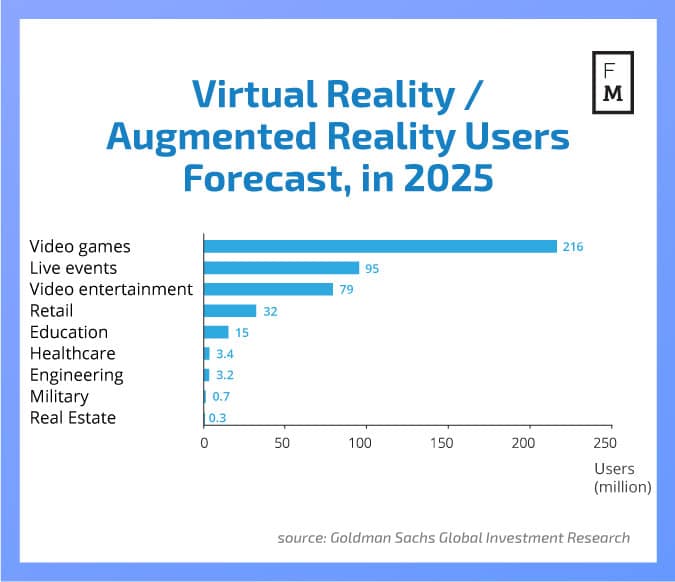
VR in the financial industry is still a new phenomenon. But so was mobile trading 10 years ago, and for some brokers today it is as important a platform as traditional desktop applications.
It is simply too early to call. So when will we know if it has succeeded? The answer to this question is not only in the hands of the financial industry.
“No one will ever buy a VR headset for financial services. That’s why the future of this technology in the financial services is strongly tied with VR becoming a mainstream technology - otherwise it will always be a niche gadget.” -
Maciej Wolański, CTO and Head of R&D, Comarch Financial Services.
To learn more about VR trading and other hot topics, get the new Intelligence Report:
Depending on how virtual reality (VR) is defined, its history started a long time ago. Most observers of the scene agree that VR in the sense that we understand it today began to emerge sometime in the 1950s. However some elements of it can be found much earlier in history.
Already at the beginning of the last century, playwright Antonin Artaud was considering illusion and reality to be one and the same. In 1938 in a collection of essays, “Le Théâtre et son double”, he considered characters and objects in the theatre as "la réalité virtuelle" . Just a few years earlier, in 1935, Stanley G. Weinbaum in his short story "Pygmalion's Spectacles” described a goggle-based virtual reality system that displayed a holographic recording of fictional experiences.
More than 80 years later, two large FX brokers have introduced their own VR applications for trading. Japanese GMO Click Securities launched its product ‘GMO-FX VR Trade’ on the 31st of January 2017. Shortly after, on the 3rd of February, Swissquote Bank introduced its own solution. In both cases the trader is provided with access to a ‘virtual room’ and the ability to view it in 360 degrees. Is this how trading rooms will evolve?
VR in the financial industry is still a new phenomenon. But so was mobile trading 10 years ago, and for some brokers today it is as important a platform as traditional desktop applications.
It is simply too early to call. So when will we know if it has succeeded? The answer to this question is not only in the hands of the financial industry.
“No one will ever buy a VR headset for financial services. That’s why the future of this technology in the financial services is strongly tied with VR becoming a mainstream technology - otherwise it will always be a niche gadget.” -
Maciej Wolański, CTO and Head of R&D, Comarch Financial Services.
To learn more about VR trading and other hot topics, get the new Intelligence Report:
Sylwester is a graduate of the Warsaw School of Economics, holding an MA in Finance and Banking. He currently serves as Head of the Insights & Reporting Hub at Finance Magnates. He is also a former minority partner in an NFA-registered US forex broker and has been involved in numerous forex and trading industry projects since 2003.
Privately, Sylwester is a husband and father to a 7-year-old daughter, as well as an enthusiast of trading and Formula 1.
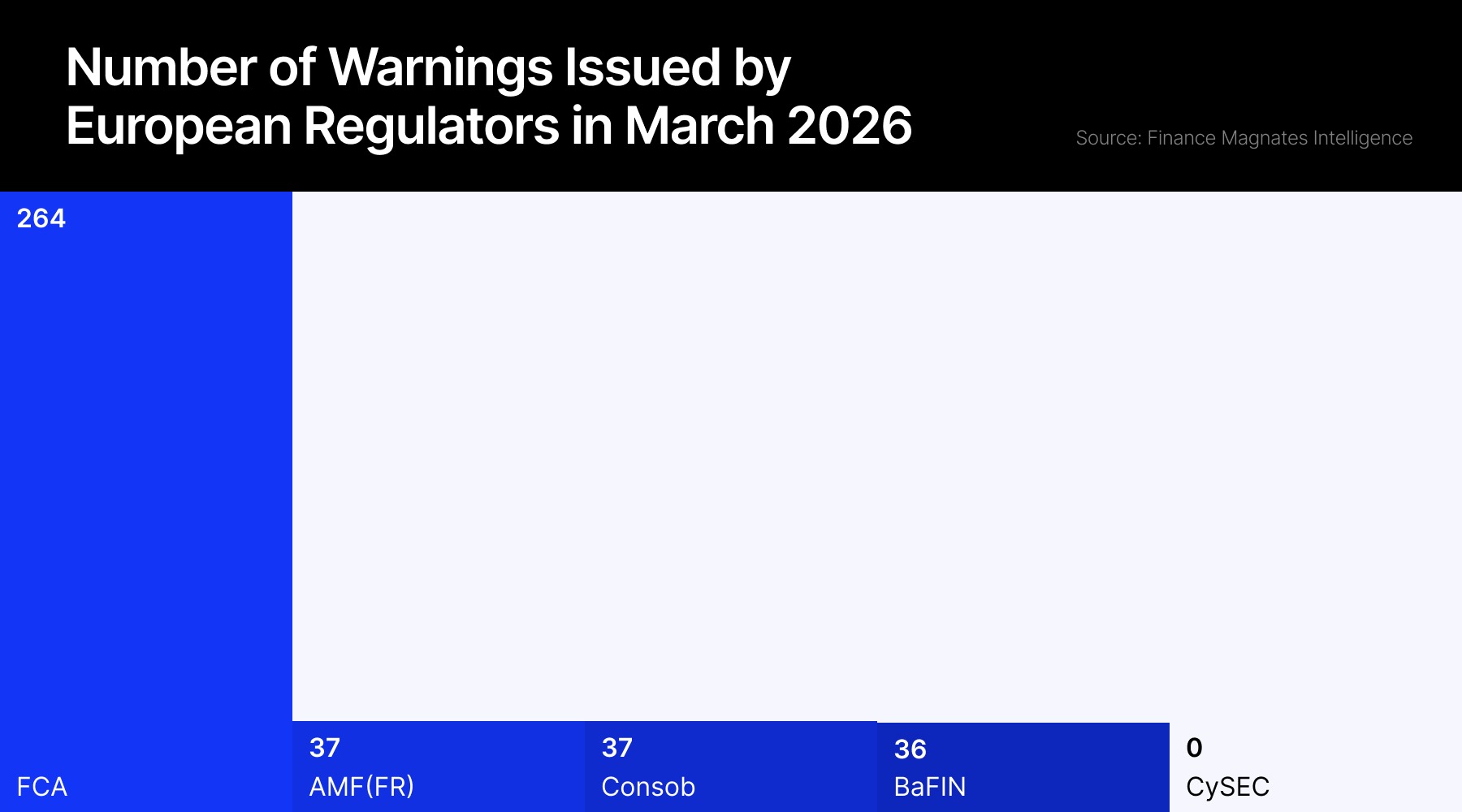
Italy’s Consob Tightens Net on AI-Fueled Scams With Fresh Website Bans
FP Markets Winner Spotlight 🏆 | Global Broker of the Year 2025 #Trading #Broker #Innovation #Shorts
FP Markets Winner Spotlight 🏆 | Global Broker of the Year 2025 #Trading #Broker #Innovation #Shorts
FP Markets takes the spotlight as Global Broker of the Year 2025 at the Finance Magnates Awards.
Martin Stoilov, Head of Client Experience, shares that trust, innovation, and people played a key role in the company’s success, supported by a strong foundation of integrity and client-centricity.
Following this milestone, FP Markets continues to focus on growth, technology investment, and its core values of transparency and excellence.
👉 Be part of FM Awards 2026: https://awards.financemagnates.com/#nominate
FP Markets takes the spotlight as Global Broker of the Year 2025 at the Finance Magnates Awards.
Martin Stoilov, Head of Client Experience, shares that trust, innovation, and people played a key role in the company’s success, supported by a strong foundation of integrity and client-centricity.
Following this milestone, FP Markets continues to focus on growth, technology investment, and its core values of transparency and excellence.
👉 Be part of FM Awards 2026: https://awards.financemagnates.com/#nominate
In this video, we review @HolaPrimeMarketsOfficial, a multi-asset forex and CFDs broker offering different account types, trading platforms, and flexible trading conditions.
We cover the broker’s overall offering, including account options, trading environment, platforms like MT4 and MT5, and additional services such as managed accounts and fast withdrawals.
Watch the full video to see if Hola Prime Markets fits your trading needs.
📣 Stay up to date with the latest in finance and trading. Follow Finance Magnates for industry news, insights, and global event coverage.
Connect with us:
🔗 LinkedIn: /financemagnates
👍 Facebook: /financemagnates
📸 Instagram: https://www.instagram.com/financemagnates
🐦 X: https://x.com/financemagnates
🎥 TikTok: https://www.tiktok.com/tag/financemagnates
▶️ YouTube: /@financemagnates_official
#HolaPrime #ForexBroker #CFDTrading #FinanceMagnates #Trading #Forex #BrokerReview
In this video, we review @HolaPrimeMarketsOfficial, a multi-asset forex and CFDs broker offering different account types, trading platforms, and flexible trading conditions.
We cover the broker’s overall offering, including account options, trading environment, platforms like MT4 and MT5, and additional services such as managed accounts and fast withdrawals.
Watch the full video to see if Hola Prime Markets fits your trading needs.
📣 Stay up to date with the latest in finance and trading. Follow Finance Magnates for industry news, insights, and global event coverage.
Connect with us:
🔗 LinkedIn: /financemagnates
👍 Facebook: /financemagnates
📸 Instagram: https://www.instagram.com/financemagnates
🐦 X: https://x.com/financemagnates
🎥 TikTok: https://www.tiktok.com/tag/financemagnates
▶️ YouTube: /@financemagnates_official
#HolaPrime #ForexBroker #CFDTrading #FinanceMagnates #Trading #Forex #BrokerReview
Hola Prime Review: What You Need to Know | Full Breakdown by Finance Magnates
Hola Prime Review: What You Need to Know | Full Breakdown by Finance Magnates
In this video, we review @HolaPrime_Global, a proprietary trading firm offering evaluation programs and performance-based payouts in simulated market environments.
We cover how the challenge model works, including account types, profit splits (up to 95%), trading rules, and what it takes to reach a funded account. You’ll also learn about available platforms like MT4, MT5, cTrader, and more, along with insights into payouts, support, and trading conditions.
Watch the full video to see if Hola Prime fits your trading style.
📣 Stay up to date with the latest in finance and trading. Follow Finance Magnates for industry news, insights, and global event coverage.
Connect with us:
🔗 LinkedIn: /financemagnates
👍 Facebook: /financemagnates
📸 Instagram: https://www.instagram.com/financemagnates
🐦 X: https://x.com/financemagnates
🎥 TikTok: https://www.tiktok.com/tag/financemagnates
▶️ YouTube: /@financemagnates_official
#HolaPrime #PropFirm #Trading #FinanceMagnates #Forex #FuturesTrading #TradingReview #PropFirmReview
In this video, we review @HolaPrime_Global, a proprietary trading firm offering evaluation programs and performance-based payouts in simulated market environments.
We cover how the challenge model works, including account types, profit splits (up to 95%), trading rules, and what it takes to reach a funded account. You’ll also learn about available platforms like MT4, MT5, cTrader, and more, along with insights into payouts, support, and trading conditions.
Watch the full video to see if Hola Prime fits your trading style.
📣 Stay up to date with the latest in finance and trading. Follow Finance Magnates for industry news, insights, and global event coverage.
Connect with us:
🔗 LinkedIn: /financemagnates
👍 Facebook: /financemagnates
📸 Instagram: https://www.instagram.com/financemagnates
🐦 X: https://x.com/financemagnates
🎥 TikTok: https://www.tiktok.com/tag/financemagnates
▶️ YouTube: /@financemagnates_official
#HolaPrime #PropFirm #Trading #FinanceMagnates #Forex #FuturesTrading #TradingReview #PropFirmReview
Axi Winner Spotlight 🏆 | Global Most Innovative Broker 2025 #Innovation #Trading #Fintech #Broker
Axi Winner Spotlight 🏆 | Global Most Innovative Broker 2025 #Innovation #Trading #Fintech #Broker
Axi takes the spotlight at the Finance Magnates Awards, winning Global Most Innovative Broker 2025.
Olivia Xenofontos and Ivanna Openko share how the team will feel: proud, motivated, and ready to keep delivering.
They also describe the night as well-organized, focused, and enjoyable for all.
👉 Be part of FM Awards 2026.
Axi takes the spotlight at the Finance Magnates Awards, winning Global Most Innovative Broker 2025.
Olivia Xenofontos and Ivanna Openko share how the team will feel: proud, motivated, and ready to keep delivering.
They also describe the night as well-organized, focused, and enjoyable for all.
👉 Be part of FM Awards 2026.
Recognition that matters.
Built on transparency.
Driven by the industry.
The Finance Magnates Awards 2026.
Nominations are now open.
🔗 https://awards.financemagnates.com/?utm_source=SM&utm_medium=social&utm_campaign=recognition-matters
Recognition that matters.
Built on transparency.
Driven by the industry.
The Finance Magnates Awards 2026.
Nominations are now open.
🔗 https://awards.financemagnates.com/?utm_source=SM&utm_medium=social&utm_campaign=recognition-matters