Customers of the broker in the city-state can trade fractional units on over 1,000 instruments across multiple asset classes.
Several other brokers have also introduced similar fractional share trading services.
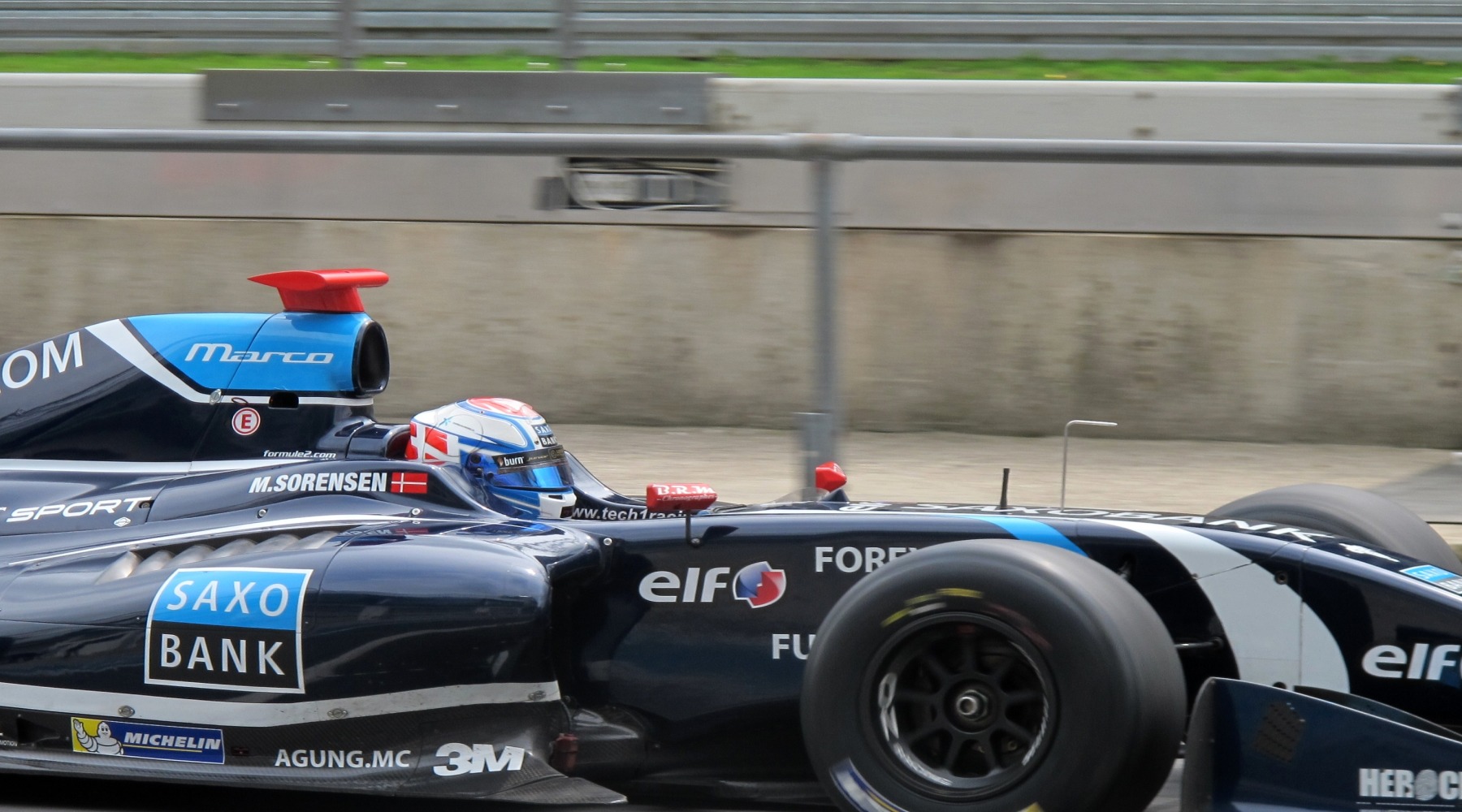
Saxo Bank branding on a Formula One car
Saxo Bank announced today (Tuesday) the launch of fractional trading for its clients in Singapore. The service is available for instruments across asset classes on the brokerage platform.
Lowering the Entry Barrier to Investing
Fractional shares allow traders to purchase part of a whole share with whatever capital they have. This significantly lowers the entry barrier to investing. For example, if Apple shares are trading at $200 each and a trader has only $100 available, they can buy $100 worth of Apple shares and will own half a share.
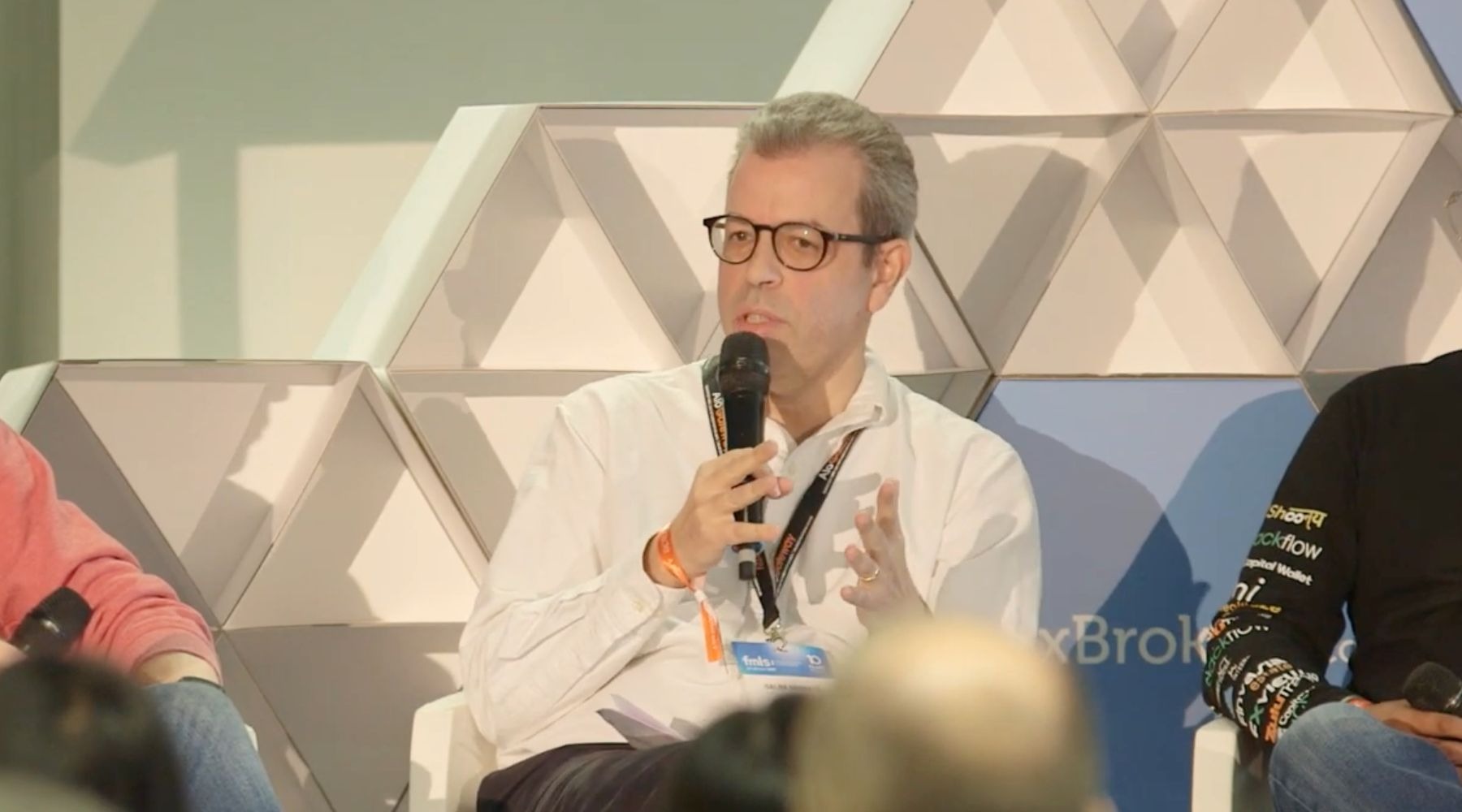
Kim Fournais, the Founder and CEO at Saxo Bank
“This allows clients to invest in high-priced stocks with a smaller amount of capital,” Saxo explained.
“Also, by investing precise amounts, investors are better able to fully utilise all available funds,” the bank added. “Overall, this offers clients more flexibility, allowing them to construct portfolios that fit different budgets.”
Although the concept of fractional share trading is not new, the service has gained popularity in recent years. Many brokers now offer fractional share trading to retail investors, thus lowering the entry barrier to the markets.
The growing popularity of fractional share trading has also drawn the attention of global regulators. Last year, the United States’ Financial Industry Regulatory Authority (FINRA) introduced new guidelines requiring the reporting of both whole share and fractional share quantities.
Meanwhile, Saxo Bank's ownership is changing. Earlier this year, Swiss private bank J. Safra Sarasin agreed to acquire a 70 per cent stake in Saxo Bank in a deal valued at around €1.1 billion ($1.19 billion). The transaction values the Danish online trading and investment services provider at approximately €1.6 billion.
The new owner will purchase Finnish firm Mandatum's 19.8 per cent stake in Saxo, along with the 49.9 per cent stake held by Chinese group Geely. Saxo Bank’s founder and CEO, Kim Fournais, will retain his 28 per cent stake and will continue to serve as the company’s CEO.
Saxo Bank announced today (Tuesday) the launch of fractional trading for its clients in Singapore. The service is available for instruments across asset classes on the brokerage platform.
Lowering the Entry Barrier to Investing
Fractional shares allow traders to purchase part of a whole share with whatever capital they have. This significantly lowers the entry barrier to investing. For example, if Apple shares are trading at $200 each and a trader has only $100 available, they can buy $100 worth of Apple shares and will own half a share.
Kim Fournais, the Founder and CEO at Saxo Bank
“This allows clients to invest in high-priced stocks with a smaller amount of capital,” Saxo explained.
“Also, by investing precise amounts, investors are better able to fully utilise all available funds,” the bank added. “Overall, this offers clients more flexibility, allowing them to construct portfolios that fit different budgets.”
Although the concept of fractional share trading is not new, the service has gained popularity in recent years. Many brokers now offer fractional share trading to retail investors, thus lowering the entry barrier to the markets.
The growing popularity of fractional share trading has also drawn the attention of global regulators. Last year, the United States’ Financial Industry Regulatory Authority (FINRA) introduced new guidelines requiring the reporting of both whole share and fractional share quantities.
Meanwhile, Saxo Bank's ownership is changing. Earlier this year, Swiss private bank J. Safra Sarasin agreed to acquire a 70 per cent stake in Saxo Bank in a deal valued at around €1.1 billion ($1.19 billion). The transaction values the Danish online trading and investment services provider at approximately €1.6 billion.
The new owner will purchase Finnish firm Mandatum's 19.8 per cent stake in Saxo, along with the 49.9 per cent stake held by Chinese group Geely. Saxo Bank’s founder and CEO, Kim Fournais, will retain his 28 per cent stake and will continue to serve as the company’s CEO.
Arnab Shome is an electronics engineer-turned-financial editor. He holds a Bachelor of Technology from the National Institute of Technology, Agartala. He entered the retail trading industry about a decade ago, covering the cryptocurrency market for Finance Magnates, and later expanded his coverage to include forex and CFDs as well.
His work at Finance Magnates includes C-level interviews, data-driven analysis, opinion pieces, and scoops of industry exclusives. He also contributes to Finance Magnates’ quarterly industry report.
Area of coverage:
1. CFD broker-related news
2. Industry-related Regulatory updates and developments
3. New retail trading trends
4. Prop trading industry updates
5. Executive interviews
Education:
Bachelor of Technology - National Institute of Technology, Agartala (India)
Webull Spent Big to Hit Record Revenue, and the Bill Is in the Fine Print
FP Markets Winner Spotlight 🏆 | Global Broker of the Year 2025 #Trading #Broker #Innovation #Shorts
FP Markets Winner Spotlight 🏆 | Global Broker of the Year 2025 #Trading #Broker #Innovation #Shorts
FP Markets takes the spotlight as Global Broker of the Year 2025 at the Finance Magnates Awards.
Martin Stoilov, Head of Client Experience, shares that trust, innovation, and people played a key role in the company’s success, supported by a strong foundation of integrity and client-centricity.
Following this milestone, FP Markets continues to focus on growth, technology investment, and its core values of transparency and excellence.
👉 Be part of FM Awards 2026: https://awards.financemagnates.com/#nominate
FP Markets takes the spotlight as Global Broker of the Year 2025 at the Finance Magnates Awards.
Martin Stoilov, Head of Client Experience, shares that trust, innovation, and people played a key role in the company’s success, supported by a strong foundation of integrity and client-centricity.
Following this milestone, FP Markets continues to focus on growth, technology investment, and its core values of transparency and excellence.
👉 Be part of FM Awards 2026: https://awards.financemagnates.com/#nominate
In this video, we review @HolaPrimeMarketsOfficial, a multi-asset forex and CFDs broker offering different account types, trading platforms, and flexible trading conditions.
We cover the broker’s overall offering, including account options, trading environment, platforms like MT4 and MT5, and additional services such as managed accounts and fast withdrawals.
Watch the full video to see if Hola Prime Markets fits your trading needs.
📣 Stay up to date with the latest in finance and trading. Follow Finance Magnates for industry news, insights, and global event coverage.
Connect with us:
🔗 LinkedIn: /financemagnates
👍 Facebook: /financemagnates
📸 Instagram: https://www.instagram.com/financemagnates
🐦 X: https://x.com/financemagnates
🎥 TikTok: https://www.tiktok.com/tag/financemagnates
▶️ YouTube: /@financemagnates_official
#HolaPrime #ForexBroker #CFDTrading #FinanceMagnates #Trading #Forex #BrokerReview
In this video, we review @HolaPrimeMarketsOfficial, a multi-asset forex and CFDs broker offering different account types, trading platforms, and flexible trading conditions.
We cover the broker’s overall offering, including account options, trading environment, platforms like MT4 and MT5, and additional services such as managed accounts and fast withdrawals.
Watch the full video to see if Hola Prime Markets fits your trading needs.
📣 Stay up to date with the latest in finance and trading. Follow Finance Magnates for industry news, insights, and global event coverage.
Connect with us:
🔗 LinkedIn: /financemagnates
👍 Facebook: /financemagnates
📸 Instagram: https://www.instagram.com/financemagnates
🐦 X: https://x.com/financemagnates
🎥 TikTok: https://www.tiktok.com/tag/financemagnates
▶️ YouTube: /@financemagnates_official
#HolaPrime #ForexBroker #CFDTrading #FinanceMagnates #Trading #Forex #BrokerReview
Hola Prime Review: What You Need to Know | Full Breakdown by Finance Magnates
Hola Prime Review: What You Need to Know | Full Breakdown by Finance Magnates
In this video, we review @HolaPrime_Global, a proprietary trading firm offering evaluation programs and performance-based payouts in simulated market environments.
We cover how the challenge model works, including account types, profit splits (up to 95%), trading rules, and what it takes to reach a funded account. You’ll also learn about available platforms like MT4, MT5, cTrader, and more, along with insights into payouts, support, and trading conditions.
Watch the full video to see if Hola Prime fits your trading style.
📣 Stay up to date with the latest in finance and trading. Follow Finance Magnates for industry news, insights, and global event coverage.
Connect with us:
🔗 LinkedIn: /financemagnates
👍 Facebook: /financemagnates
📸 Instagram: https://www.instagram.com/financemagnates
🐦 X: https://x.com/financemagnates
🎥 TikTok: https://www.tiktok.com/tag/financemagnates
▶️ YouTube: /@financemagnates_official
#HolaPrime #PropFirm #Trading #FinanceMagnates #Forex #FuturesTrading #TradingReview #PropFirmReview
In this video, we review @HolaPrime_Global, a proprietary trading firm offering evaluation programs and performance-based payouts in simulated market environments.
We cover how the challenge model works, including account types, profit splits (up to 95%), trading rules, and what it takes to reach a funded account. You’ll also learn about available platforms like MT4, MT5, cTrader, and more, along with insights into payouts, support, and trading conditions.
Watch the full video to see if Hola Prime fits your trading style.
📣 Stay up to date with the latest in finance and trading. Follow Finance Magnates for industry news, insights, and global event coverage.
Connect with us:
🔗 LinkedIn: /financemagnates
👍 Facebook: /financemagnates
📸 Instagram: https://www.instagram.com/financemagnates
🐦 X: https://x.com/financemagnates
🎥 TikTok: https://www.tiktok.com/tag/financemagnates
▶️ YouTube: /@financemagnates_official
#HolaPrime #PropFirm #Trading #FinanceMagnates #Forex #FuturesTrading #TradingReview #PropFirmReview
Axi Winner Spotlight 🏆 | Global Most Innovative Broker 2025 #Innovation #Trading #Fintech #Broker
Axi Winner Spotlight 🏆 | Global Most Innovative Broker 2025 #Innovation #Trading #Fintech #Broker
Axi takes the spotlight at the Finance Magnates Awards, winning Global Most Innovative Broker 2025.
Olivia Xenofontos and Ivanna Openko share how the team will feel: proud, motivated, and ready to keep delivering.
They also describe the night as well-organized, focused, and enjoyable for all.
👉 Be part of FM Awards 2026.
Axi takes the spotlight at the Finance Magnates Awards, winning Global Most Innovative Broker 2025.
Olivia Xenofontos and Ivanna Openko share how the team will feel: proud, motivated, and ready to keep delivering.
They also describe the night as well-organized, focused, and enjoyable for all.
👉 Be part of FM Awards 2026.
Recognition that matters.
Built on transparency.
Driven by the industry.
The Finance Magnates Awards 2026.
Nominations are now open.
🔗 https://awards.financemagnates.com/?utm_source=SM&utm_medium=social&utm_campaign=recognition-matters
Recognition that matters.
Built on transparency.
Driven by the industry.
The Finance Magnates Awards 2026.
Nominations are now open.
🔗 https://awards.financemagnates.com/?utm_source=SM&utm_medium=social&utm_campaign=recognition-matters