The derivatives arm of Robinhood (Nasdaq: HOOD) has sued Nevada and New Jersey gaming officials to prevent any enforcement actions in the two US states over its sports event contracts.
Preventing Possible Actions by the Authorities
According to court documents filed by Robinhood Derivatives on Tuesday, the lawsuit was filed against Nevada and New Jersey gaming regulators and their attorneys general. The trading platform alleged that the state authorities continued to try to stop it from offering event contracts in the two states.
In a separate complaint, the Robinhood unit detailed that it started offering the event contracts in the two states after the US federal courts allowed prediction market Kalshi to offer them earlier this year.
Event contracts allow people to trade on the outcome of any event, whether sports or politics. These contracts are simple in nature, as the outcome of any event can be either positive or negative.
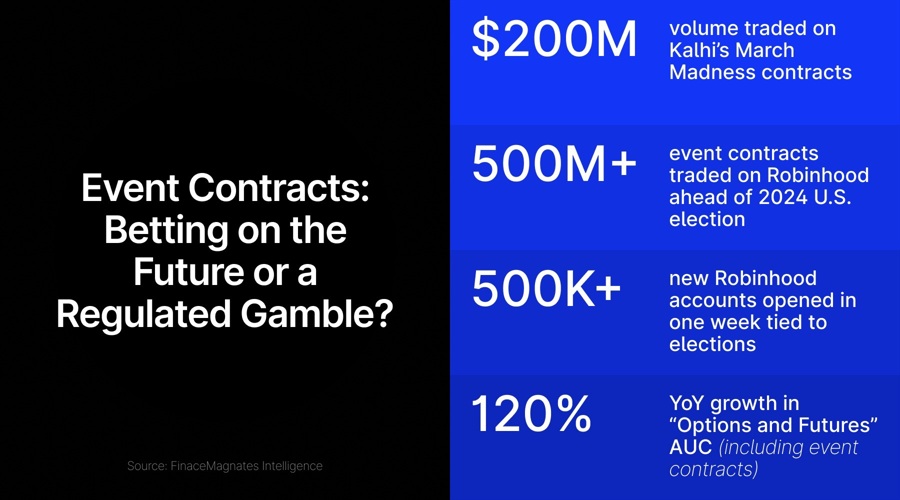
Robinhood launched its prediction markets hub in the two states earlier this year. Its contracts trade on the derivatives trading platform KalshiEx, which is a designated contract market under the Commodity Futures Trading Commission (CFTC).
“If states could regulate some but not all entities relevant to these transactions, such regulation would infringe on the CFTC’s exclusive jurisdiction and fracture what Congress intended to be a uniform set of regulations for commodity futures and swaps trading,” the Robinhood complaint added.
The company's legal pursuit came as it faced an “immediate threat of civil penalties and criminal prosecution” from state officials. It highlighted that the legal move came as it was left with no other choice.
The Event Contracts Market Is Growing
FinanceMagnates.com recently reported that Robinhood expanded its prediction markets to include professional and college football.
Since the launch of prediction markets, Robinhood has reported more than two billion contracts traded. The company already offers markets tied to cryptocurrencies, economic indicators, cultural events, and other sports.
Meanwhile, a significant part of the prediction market runs offshore, including crypto-based Polymarket. However, those platforms claim not to allow US residents.