Funded Unicorn is one of the very few firms that reportedly used the A-book model and mirrored traders’ positions “1:1 with real company capital.”
“It is important that anyone entering the space doesn’t do so blind; the types of order flow that a company can experience are vastly different to a brokerage,” said AFTX’s COO.
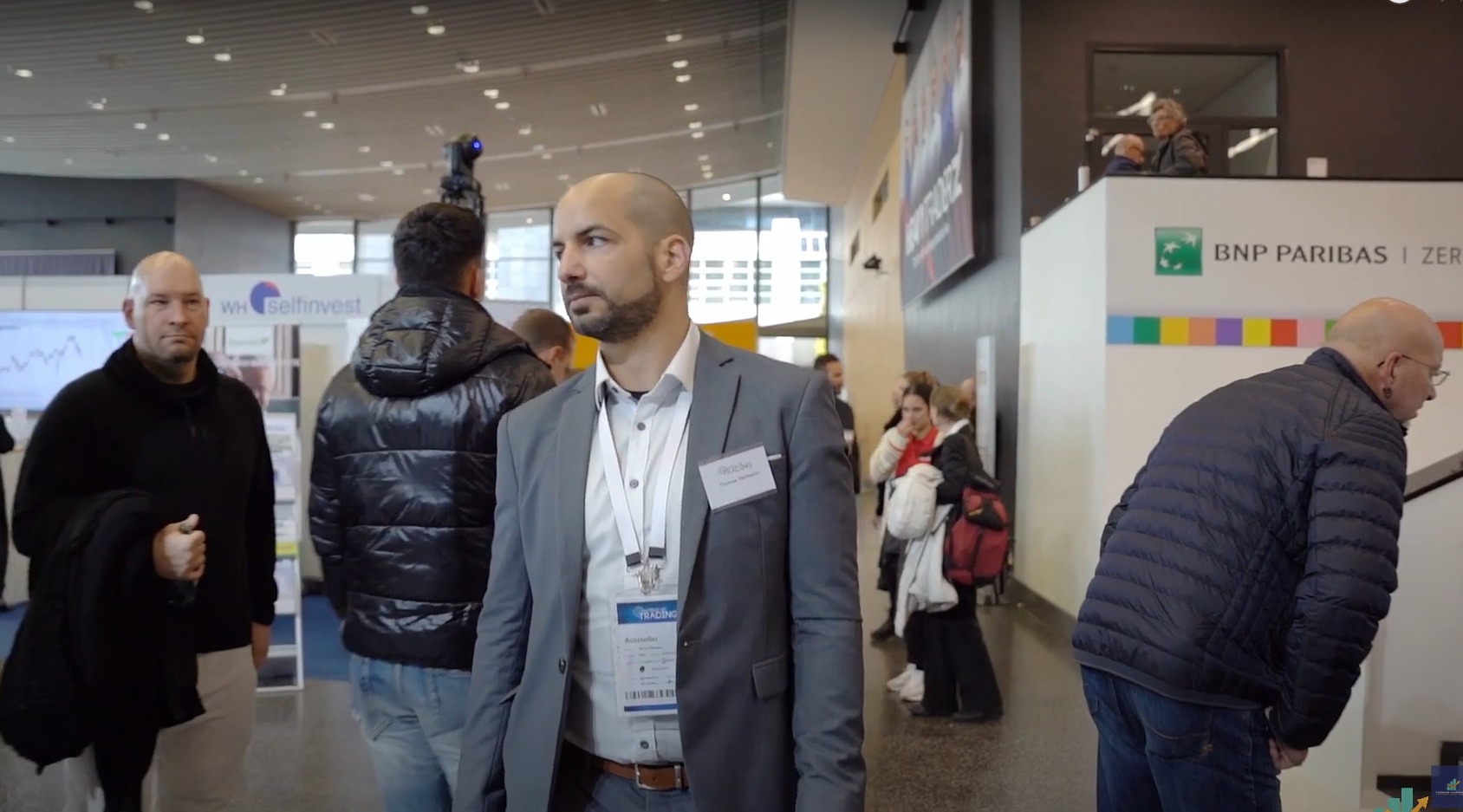
Thomas Hartmann, founder of Funded Unicorn (Courtesy: Thomas Hartmann/YouTube)
The recent collapse of Funded Unicorn has exposed weaknesses in the prop trading firm’s risk management. The firm used the much-respected A-book model to place all the risks on the market, but it did not work.
“As you know, all of our funded traders were mirrored 1:1 with real company capital,” the company wrote in a note to its users. “This procedure was part of our transparent and fair model. But it was precisely this approach that ultimately brought us to our knees.”
A screenshot of Funded Unicorn's website
The popularity of prop trading firms has grown in recent years. But the industry also faces strong criticism, mainly because of its structure and risk handling.
Most prop firms, including the biggest ones, offer trading in a simulated setting. They do not allow their clients to access live markets. These firms mostly use the B-book model to manage risk; however, by doing so, they become the counterparty to their traders.
Anton Sokolov, Marketing Manager at Brokeree Solutions
“Based on my observations, the majority of prop firms are relying on internal order processing,” Brokeree’s Marketing Manager, Anton Sokolov, earlier told FinanceMagnates.com. “Although we are seeing a completely different model for brokerage-backed firms, B-book is still the favoured model by far.”
B-Booking Is Controversial, but Popular
Many CFD brokers still use the B-book model to manage risk, but the model is often criticised due to misuse. The now-collapsed binary options industry almost entirely operated on the B-book model.
However, B-booking is often a necessity for prop trading firms rather than a choice. It also reduces the cost of execution as no real market trades take place.
James Glyde, PipFarm, CEO
“The amount of data you can collect from a trader before they’re funded is not enough to make any decision,” said James Glyde, CEO at PipFirm. “The rules needed to allow a prop firm to run an A-book model would be highly unpopular with the average trader.”
Many prop firms have been very successful with these models, although none openly admit to using B-booking. FTMO, which agreed to buy OANDA, generated $213 million in revenue in 2023 with an EBITDA of about $100 million.
However, B-booking does not make a prop firm foolproof. According to estimates gathered by Finance Magnates Intelligence, between 80 and 100 proprietary trading firms may have disappeared from the market in 2024. Although many factors other than risk management have pushed those companies out of business.
Is A-Booking Possible in Prop?
Several industry leaders have argued that the A-book model should be the standard in the prop trading industry. However, the recent collapse of Funded Unicorn has challenged the belief that A-booking is always the better option.
Launched by trading educator Thomas Hartmann last year, Funded Unicorn called itself Germany’s first local prop firm. According to Similarweb, its website had over 17,300 visits last month, when it also went offline.
“It took everyone by surprise to see Funded Unicorn suddenly file for insolvency, as they were one of the most visible prop firms in Germany,” said Christian Grün, Founder of Proptraders.de, a prop trading review site. “While this will shake trust in prop trading, there are still many firms with solid business models and better risk controls out there, especially those backed by established brokers.”
For example, OANDA's prop platform uses a mixed business model. While it does not confirm its use of B-booking, it does state that it hedges part of prop traders' positions on live markets based on internal risk rules.
Under A-booking, trading platforms pass client orders to outside liquidity providers or the open market. In B-booking, platforms profit when clients lose, while A-booking forces them to rely on other income sources, like spreads or commissions. This makes A-booking safer for brokers looking to build a stable business.
Siju Daniel, CCO of ATFX and their proprietary trading arm ATFunded
However, the case is different for prop platforms. Unlike brokerage clients, prop traders do not use their own money. Instead, they pass a “challenge” to qualify for trading capital from the platform.
If prop firms were to A-book all trades, they would need large sums of money as margin. They could also face heavy losses if traders made big profits.
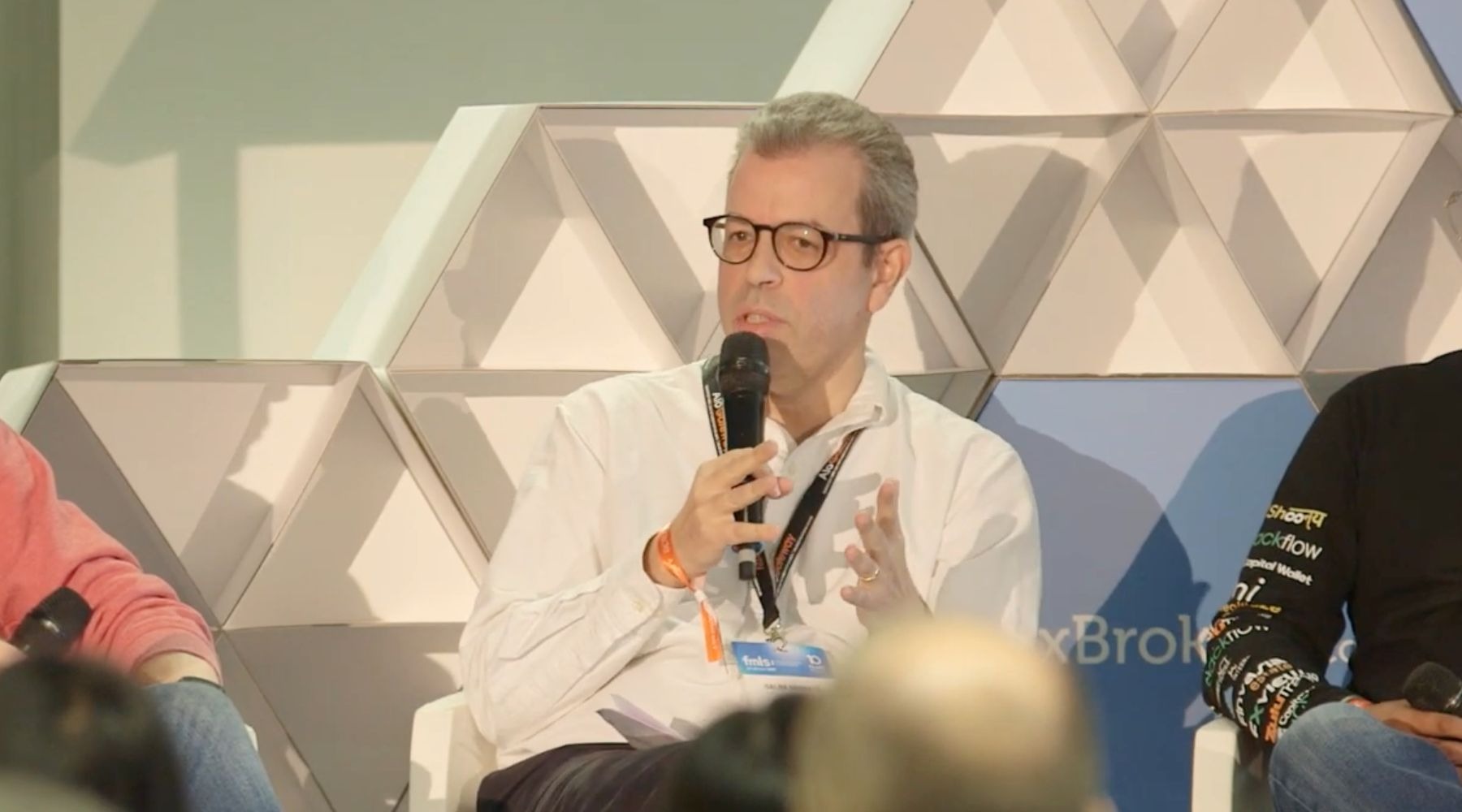
“It is important that anyone entering the space doesn’t do so blind; the types of order flow that a company can experience are vastly different to a brokerage, so having an idea of what to expect is key,” said Siju Daniel, CCO of ATFX and their proprietary trading arm, ATFunded.
Still, only a few prop platforms give traders access to live markets. One such platform is Axi Select, the prop arm of CFDs broker Axi. Greg Rubin, Head of Axi Select, even predicted that the “demo account prop firm model” would soon begin to fail.
“For traders, it’s extremely difficult to look past all the flashy marketing and truly understand which prop firms have strong foundations,” added Grün. “That’s why community-driven reviews are important—they offer insights from real users.”
FinanceMagnates.com reached out to Funded Unicord to know the details about its closure, but has not received any response as of press time.
The recent collapse of Funded Unicorn has exposed weaknesses in the prop trading firm’s risk management. The firm used the much-respected A-book model to place all the risks on the market, but it did not work.
“As you know, all of our funded traders were mirrored 1:1 with real company capital,” the company wrote in a note to its users. “This procedure was part of our transparent and fair model. But it was precisely this approach that ultimately brought us to our knees.”
A screenshot of Funded Unicorn's website
The popularity of prop trading firms has grown in recent years. But the industry also faces strong criticism, mainly because of its structure and risk handling.
Most prop firms, including the biggest ones, offer trading in a simulated setting. They do not allow their clients to access live markets. These firms mostly use the B-book model to manage risk; however, by doing so, they become the counterparty to their traders.
Anton Sokolov, Marketing Manager at Brokeree Solutions
“Based on my observations, the majority of prop firms are relying on internal order processing,” Brokeree’s Marketing Manager, Anton Sokolov, earlier told FinanceMagnates.com. “Although we are seeing a completely different model for brokerage-backed firms, B-book is still the favoured model by far.”
B-Booking Is Controversial, but Popular
Many CFD brokers still use the B-book model to manage risk, but the model is often criticised due to misuse. The now-collapsed binary options industry almost entirely operated on the B-book model.
However, B-booking is often a necessity for prop trading firms rather than a choice. It also reduces the cost of execution as no real market trades take place.
James Glyde, PipFarm, CEO
“The amount of data you can collect from a trader before they’re funded is not enough to make any decision,” said James Glyde, CEO at PipFirm. “The rules needed to allow a prop firm to run an A-book model would be highly unpopular with the average trader.”
Many prop firms have been very successful with these models, although none openly admit to using B-booking. FTMO, which agreed to buy OANDA, generated $213 million in revenue in 2023 with an EBITDA of about $100 million.
However, B-booking does not make a prop firm foolproof. According to estimates gathered by Finance Magnates Intelligence, between 80 and 100 proprietary trading firms may have disappeared from the market in 2024. Although many factors other than risk management have pushed those companies out of business.
Is A-Booking Possible in Prop?
Several industry leaders have argued that the A-book model should be the standard in the prop trading industry. However, the recent collapse of Funded Unicorn has challenged the belief that A-booking is always the better option.
Launched by trading educator Thomas Hartmann last year, Funded Unicorn called itself Germany’s first local prop firm. According to Similarweb, its website had over 17,300 visits last month, when it also went offline.
“It took everyone by surprise to see Funded Unicorn suddenly file for insolvency, as they were one of the most visible prop firms in Germany,” said Christian Grün, Founder of Proptraders.de, a prop trading review site. “While this will shake trust in prop trading, there are still many firms with solid business models and better risk controls out there, especially those backed by established brokers.”
For example, OANDA's prop platform uses a mixed business model. While it does not confirm its use of B-booking, it does state that it hedges part of prop traders' positions on live markets based on internal risk rules.
Under A-booking, trading platforms pass client orders to outside liquidity providers or the open market. In B-booking, platforms profit when clients lose, while A-booking forces them to rely on other income sources, like spreads or commissions. This makes A-booking safer for brokers looking to build a stable business.
Siju Daniel, CCO of ATFX and their proprietary trading arm ATFunded
However, the case is different for prop platforms. Unlike brokerage clients, prop traders do not use their own money. Instead, they pass a “challenge” to qualify for trading capital from the platform.
If prop firms were to A-book all trades, they would need large sums of money as margin. They could also face heavy losses if traders made big profits.
“It is important that anyone entering the space doesn’t do so blind; the types of order flow that a company can experience are vastly different to a brokerage, so having an idea of what to expect is key,” said Siju Daniel, CCO of ATFX and their proprietary trading arm, ATFunded.
Still, only a few prop platforms give traders access to live markets. One such platform is Axi Select, the prop arm of CFDs broker Axi. Greg Rubin, Head of Axi Select, even predicted that the “demo account prop firm model” would soon begin to fail.
“For traders, it’s extremely difficult to look past all the flashy marketing and truly understand which prop firms have strong foundations,” added Grün. “That’s why community-driven reviews are important—they offer insights from real users.”
FinanceMagnates.com reached out to Funded Unicord to know the details about its closure, but has not received any response as of press time.
Arnab Shome is an electronics engineer-turned-financial editor. He holds a Bachelor of Technology from the National Institute of Technology, Agartala. He entered the retail trading industry about a decade ago, covering the cryptocurrency market for Finance Magnates, and later expanded his coverage to include forex and CFDs as well.
His work at Finance Magnates includes C-level interviews, data-driven analysis, opinion pieces, and scoops of industry exclusives. He also contributes to Finance Magnates’ quarterly industry report.
Area of coverage:
1. CFD broker-related news
2. Industry-related Regulatory updates and developments
3. New retail trading trends
4. Prop trading industry updates
5. Executive interviews
Education:
Bachelor of Technology - National Institute of Technology, Agartala (India)
Webull Spent Big to Hit Record Revenue, and the Bill Is in the Fine Print
FP Markets Winner Spotlight 🏆 | Global Broker of the Year 2025 #Trading #Broker #Innovation #Shorts
FP Markets Winner Spotlight 🏆 | Global Broker of the Year 2025 #Trading #Broker #Innovation #Shorts
FP Markets takes the spotlight as Global Broker of the Year 2025 at the Finance Magnates Awards.
Martin Stoilov, Head of Client Experience, shares that trust, innovation, and people played a key role in the company’s success, supported by a strong foundation of integrity and client-centricity.
Following this milestone, FP Markets continues to focus on growth, technology investment, and its core values of transparency and excellence.
👉 Be part of FM Awards 2026: https://awards.financemagnates.com/#nominate
FP Markets takes the spotlight as Global Broker of the Year 2025 at the Finance Magnates Awards.
Martin Stoilov, Head of Client Experience, shares that trust, innovation, and people played a key role in the company’s success, supported by a strong foundation of integrity and client-centricity.
Following this milestone, FP Markets continues to focus on growth, technology investment, and its core values of transparency and excellence.
👉 Be part of FM Awards 2026: https://awards.financemagnates.com/#nominate
In this video, we review @HolaPrimeMarketsOfficial, a multi-asset forex and CFDs broker offering different account types, trading platforms, and flexible trading conditions.
We cover the broker’s overall offering, including account options, trading environment, platforms like MT4 and MT5, and additional services such as managed accounts and fast withdrawals.
Watch the full video to see if Hola Prime Markets fits your trading needs.
📣 Stay up to date with the latest in finance and trading. Follow Finance Magnates for industry news, insights, and global event coverage.
Connect with us:
🔗 LinkedIn: /financemagnates
👍 Facebook: /financemagnates
📸 Instagram: https://www.instagram.com/financemagnates
🐦 X: https://x.com/financemagnates
🎥 TikTok: https://www.tiktok.com/tag/financemagnates
▶️ YouTube: /@financemagnates_official
#HolaPrime #ForexBroker #CFDTrading #FinanceMagnates #Trading #Forex #BrokerReview
In this video, we review @HolaPrimeMarketsOfficial, a multi-asset forex and CFDs broker offering different account types, trading platforms, and flexible trading conditions.
We cover the broker’s overall offering, including account options, trading environment, platforms like MT4 and MT5, and additional services such as managed accounts and fast withdrawals.
Watch the full video to see if Hola Prime Markets fits your trading needs.
📣 Stay up to date with the latest in finance and trading. Follow Finance Magnates for industry news, insights, and global event coverage.
Connect with us:
🔗 LinkedIn: /financemagnates
👍 Facebook: /financemagnates
📸 Instagram: https://www.instagram.com/financemagnates
🐦 X: https://x.com/financemagnates
🎥 TikTok: https://www.tiktok.com/tag/financemagnates
▶️ YouTube: /@financemagnates_official
#HolaPrime #ForexBroker #CFDTrading #FinanceMagnates #Trading #Forex #BrokerReview
Hola Prime Review: What You Need to Know | Full Breakdown by Finance Magnates
Hola Prime Review: What You Need to Know | Full Breakdown by Finance Magnates
In this video, we review @HolaPrime_Global, a proprietary trading firm offering evaluation programs and performance-based payouts in simulated market environments.
We cover how the challenge model works, including account types, profit splits (up to 95%), trading rules, and what it takes to reach a funded account. You’ll also learn about available platforms like MT4, MT5, cTrader, and more, along with insights into payouts, support, and trading conditions.
Watch the full video to see if Hola Prime fits your trading style.
📣 Stay up to date with the latest in finance and trading. Follow Finance Magnates for industry news, insights, and global event coverage.
Connect with us:
🔗 LinkedIn: /financemagnates
👍 Facebook: /financemagnates
📸 Instagram: https://www.instagram.com/financemagnates
🐦 X: https://x.com/financemagnates
🎥 TikTok: https://www.tiktok.com/tag/financemagnates
▶️ YouTube: /@financemagnates_official
#HolaPrime #PropFirm #Trading #FinanceMagnates #Forex #FuturesTrading #TradingReview #PropFirmReview
In this video, we review @HolaPrime_Global, a proprietary trading firm offering evaluation programs and performance-based payouts in simulated market environments.
We cover how the challenge model works, including account types, profit splits (up to 95%), trading rules, and what it takes to reach a funded account. You’ll also learn about available platforms like MT4, MT5, cTrader, and more, along with insights into payouts, support, and trading conditions.
Watch the full video to see if Hola Prime fits your trading style.
📣 Stay up to date with the latest in finance and trading. Follow Finance Magnates for industry news, insights, and global event coverage.
Connect with us:
🔗 LinkedIn: /financemagnates
👍 Facebook: /financemagnates
📸 Instagram: https://www.instagram.com/financemagnates
🐦 X: https://x.com/financemagnates
🎥 TikTok: https://www.tiktok.com/tag/financemagnates
▶️ YouTube: /@financemagnates_official
#HolaPrime #PropFirm #Trading #FinanceMagnates #Forex #FuturesTrading #TradingReview #PropFirmReview
Axi Winner Spotlight 🏆 | Global Most Innovative Broker 2025 #Innovation #Trading #Fintech #Broker
Axi Winner Spotlight 🏆 | Global Most Innovative Broker 2025 #Innovation #Trading #Fintech #Broker
Axi takes the spotlight at the Finance Magnates Awards, winning Global Most Innovative Broker 2025.
Olivia Xenofontos and Ivanna Openko share how the team will feel: proud, motivated, and ready to keep delivering.
They also describe the night as well-organized, focused, and enjoyable for all.
👉 Be part of FM Awards 2026.
Axi takes the spotlight at the Finance Magnates Awards, winning Global Most Innovative Broker 2025.
Olivia Xenofontos and Ivanna Openko share how the team will feel: proud, motivated, and ready to keep delivering.
They also describe the night as well-organized, focused, and enjoyable for all.
👉 Be part of FM Awards 2026.
Recognition that matters.
Built on transparency.
Driven by the industry.
The Finance Magnates Awards 2026.
Nominations are now open.
🔗 https://awards.financemagnates.com/?utm_source=SM&utm_medium=social&utm_campaign=recognition-matters
Recognition that matters.
Built on transparency.
Driven by the industry.
The Finance Magnates Awards 2026.
Nominations are now open.
🔗 https://awards.financemagnates.com/?utm_source=SM&utm_medium=social&utm_campaign=recognition-matters