Fintokei now generates 75 percent of its business in Japan and the rest from a few central European countries.
The brand now aims at broader Europe, Australia, and Southeast Asia.
The Fintokei team at Invest Cuffs 2024 in Krakow
Fintokei, the prop trading brand backed by the Seychelles-registered entity of Purple Trading, is taking its services globally by focusing on new markets like Australia, Europe, and Southeast Asia, Finance Magnates has learned exclusively. The company also has plans to enter the Latin American markets in the future.
Expansion Begins with a Pilot
Although headquartered in the Czech Republic, the prop trading brand was launched and popularised in Japan. However, it debuted in selected central European markets like the Czech Republic, Poland, and Slovakia six months ago. Now, it is going to expand further.
However, it will steer away from the United States and India due to regulatory reasons. It also temporarily restricts traders from Vietnam, Pakistan, Bangladesh, and China.
Since its launch in 2021, Japan has been the primary market for the prop trading brand, generating 75 percent of its business. Interestingly, demand in the few European markets has increased, as they are already generating the remaining 25 percent of the business. The platform has “slightly less than 1,000” funded accounts.
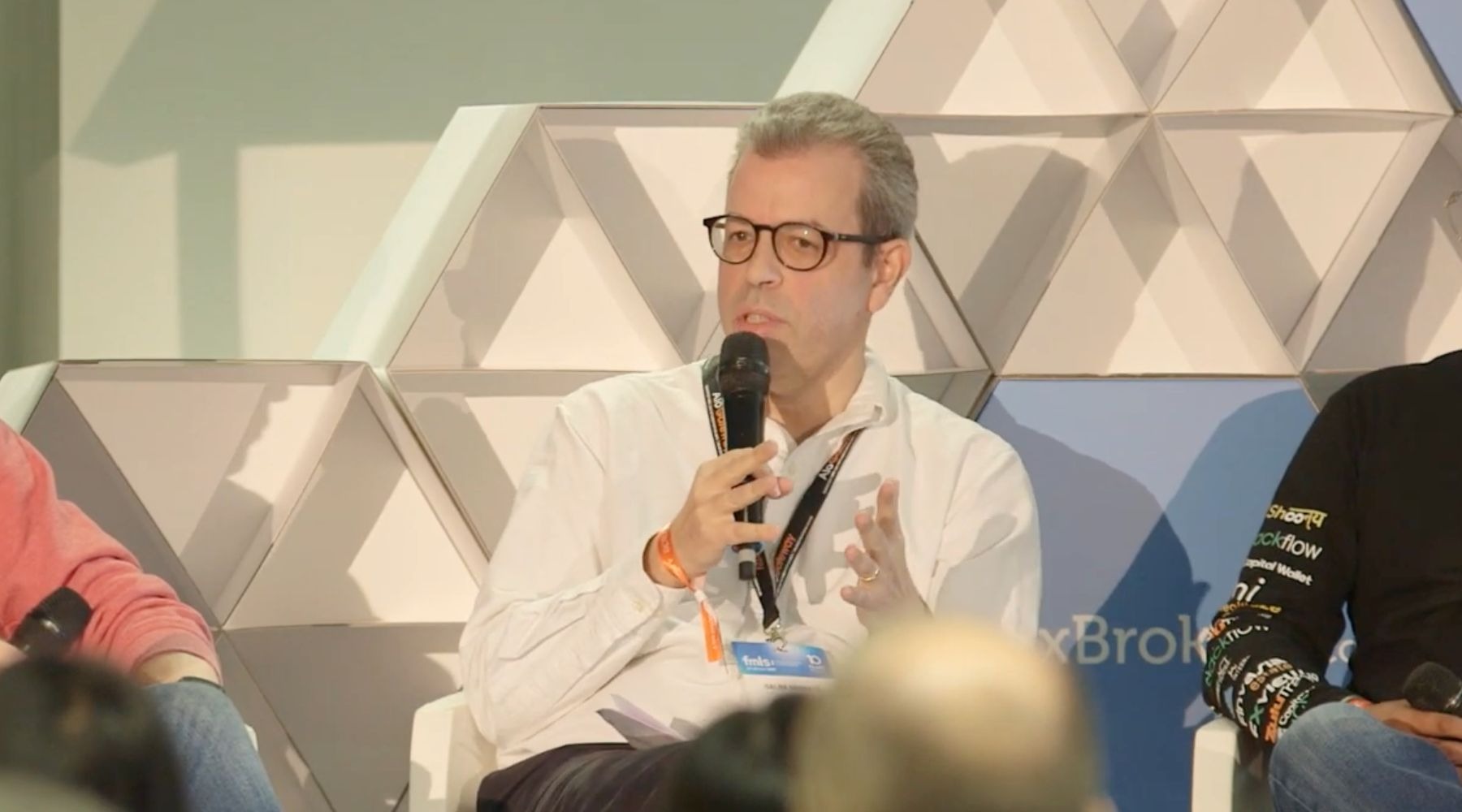
David Varga, co-founder of Fintokei and a board member of Purple Trading
When it comes to the success rate of passing the challenges, David Varga, co-founder of Fintokei and a board member of Purple Trading, pointed out that “it is pretty much around the industry standard.”
In 2024 so far, the pass rate from Phase 1 to Phase 2 of the challenges was about 15 to 20 percent, whereas from Phase 2 to the funded stage was about 15 to 25 percent. So overall, only 2 to 5 percent of the traders taking the challenge were getting funded.
Interestingly, “the European clients are being more successful compared to Japanese ones,” Varga revealed.
Furthermore, according to Fintokei, about 40 percent of the funded traders are actually getting payouts, and the average payout this year was €4,473.
A Crowded Market
With the expansion, Fintokei will face tough competition. There are hundreds of brands, big and small, in the market now, and even many FX and CFDs brokers are launching their own prop trading brands. Recently, Trade.com and Traders Trust were two brokerage brands to launch their prop trading platforms.
Commenting on how to stand out in the crowded market, Varga said that “being backed by Purple Group, and by a reputable broker with a long history, robust infrastructure, and experience from running businesses in regulated financial markets” will help.
He further pointed out that Fintokei has a “good ratio between price and the challenge conditions on the ProTrader evaluation program.”
Fintokei, the prop trading brand backed by the Seychelles-registered entity of Purple Trading, is taking its services globally by focusing on new markets like Australia, Europe, and Southeast Asia, Finance Magnates has learned exclusively. The company also has plans to enter the Latin American markets in the future.
Expansion Begins with a Pilot
Although headquartered in the Czech Republic, the prop trading brand was launched and popularised in Japan. However, it debuted in selected central European markets like the Czech Republic, Poland, and Slovakia six months ago. Now, it is going to expand further.
However, it will steer away from the United States and India due to regulatory reasons. It also temporarily restricts traders from Vietnam, Pakistan, Bangladesh, and China.
Since its launch in 2021, Japan has been the primary market for the prop trading brand, generating 75 percent of its business. Interestingly, demand in the few European markets has increased, as they are already generating the remaining 25 percent of the business. The platform has “slightly less than 1,000” funded accounts.
David Varga, co-founder of Fintokei and a board member of Purple Trading
When it comes to the success rate of passing the challenges, David Varga, co-founder of Fintokei and a board member of Purple Trading, pointed out that “it is pretty much around the industry standard.”
In 2024 so far, the pass rate from Phase 1 to Phase 2 of the challenges was about 15 to 20 percent, whereas from Phase 2 to the funded stage was about 15 to 25 percent. So overall, only 2 to 5 percent of the traders taking the challenge were getting funded.
Interestingly, “the European clients are being more successful compared to Japanese ones,” Varga revealed.
Furthermore, according to Fintokei, about 40 percent of the funded traders are actually getting payouts, and the average payout this year was €4,473.
A Crowded Market
With the expansion, Fintokei will face tough competition. There are hundreds of brands, big and small, in the market now, and even many FX and CFDs brokers are launching their own prop trading brands. Recently, Trade.com and Traders Trust were two brokerage brands to launch their prop trading platforms.
Commenting on how to stand out in the crowded market, Varga said that “being backed by Purple Group, and by a reputable broker with a long history, robust infrastructure, and experience from running businesses in regulated financial markets” will help.
He further pointed out that Fintokei has a “good ratio between price and the challenge conditions on the ProTrader evaluation program.”
Arnab Shome is an electronics engineer-turned-financial editor. He holds a Bachelor of Technology from the National Institute of Technology, Agartala. He entered the retail trading industry about a decade ago, covering the cryptocurrency market for Finance Magnates, and later expanded his coverage to include forex and CFDs as well.
His work at Finance Magnates includes C-level interviews, data-driven analysis, opinion pieces, and scoops of industry exclusives. He also contributes to Finance Magnates’ quarterly industry report.
Area of coverage:
1. CFD broker-related news
2. Industry-related Regulatory updates and developments
3. New retail trading trends
4. Prop trading industry updates
5. Executive interviews
Education:
Bachelor of Technology - National Institute of Technology, Agartala (India)
Webull Spent Big to Hit Record Revenue, and the Bill Is in the Fine Print
FP Markets Winner Spotlight 🏆 | Global Broker of the Year 2025 #Trading #Broker #Innovation #Shorts
FP Markets Winner Spotlight 🏆 | Global Broker of the Year 2025 #Trading #Broker #Innovation #Shorts
FP Markets takes the spotlight as Global Broker of the Year 2025 at the Finance Magnates Awards.
Martin Stoilov, Head of Client Experience, shares that trust, innovation, and people played a key role in the company’s success, supported by a strong foundation of integrity and client-centricity.
Following this milestone, FP Markets continues to focus on growth, technology investment, and its core values of transparency and excellence.
👉 Be part of FM Awards 2026: https://awards.financemagnates.com/#nominate
FP Markets takes the spotlight as Global Broker of the Year 2025 at the Finance Magnates Awards.
Martin Stoilov, Head of Client Experience, shares that trust, innovation, and people played a key role in the company’s success, supported by a strong foundation of integrity and client-centricity.
Following this milestone, FP Markets continues to focus on growth, technology investment, and its core values of transparency and excellence.
👉 Be part of FM Awards 2026: https://awards.financemagnates.com/#nominate
In this video, we review @HolaPrimeMarketsOfficial, a multi-asset forex and CFDs broker offering different account types, trading platforms, and flexible trading conditions.
We cover the broker’s overall offering, including account options, trading environment, platforms like MT4 and MT5, and additional services such as managed accounts and fast withdrawals.
Watch the full video to see if Hola Prime Markets fits your trading needs.
📣 Stay up to date with the latest in finance and trading. Follow Finance Magnates for industry news, insights, and global event coverage.
Connect with us:
🔗 LinkedIn: /financemagnates
👍 Facebook: /financemagnates
📸 Instagram: https://www.instagram.com/financemagnates
🐦 X: https://x.com/financemagnates
🎥 TikTok: https://www.tiktok.com/tag/financemagnates
▶️ YouTube: /@financemagnates_official
#HolaPrime #ForexBroker #CFDTrading #FinanceMagnates #Trading #Forex #BrokerReview
In this video, we review @HolaPrimeMarketsOfficial, a multi-asset forex and CFDs broker offering different account types, trading platforms, and flexible trading conditions.
We cover the broker’s overall offering, including account options, trading environment, platforms like MT4 and MT5, and additional services such as managed accounts and fast withdrawals.
Watch the full video to see if Hola Prime Markets fits your trading needs.
📣 Stay up to date with the latest in finance and trading. Follow Finance Magnates for industry news, insights, and global event coverage.
Connect with us:
🔗 LinkedIn: /financemagnates
👍 Facebook: /financemagnates
📸 Instagram: https://www.instagram.com/financemagnates
🐦 X: https://x.com/financemagnates
🎥 TikTok: https://www.tiktok.com/tag/financemagnates
▶️ YouTube: /@financemagnates_official
#HolaPrime #ForexBroker #CFDTrading #FinanceMagnates #Trading #Forex #BrokerReview
Hola Prime Review: What You Need to Know | Full Breakdown by Finance Magnates
Hola Prime Review: What You Need to Know | Full Breakdown by Finance Magnates
In this video, we review @HolaPrime_Global, a proprietary trading firm offering evaluation programs and performance-based payouts in simulated market environments.
We cover how the challenge model works, including account types, profit splits (up to 95%), trading rules, and what it takes to reach a funded account. You’ll also learn about available platforms like MT4, MT5, cTrader, and more, along with insights into payouts, support, and trading conditions.
Watch the full video to see if Hola Prime fits your trading style.
📣 Stay up to date with the latest in finance and trading. Follow Finance Magnates for industry news, insights, and global event coverage.
Connect with us:
🔗 LinkedIn: /financemagnates
👍 Facebook: /financemagnates
📸 Instagram: https://www.instagram.com/financemagnates
🐦 X: https://x.com/financemagnates
🎥 TikTok: https://www.tiktok.com/tag/financemagnates
▶️ YouTube: /@financemagnates_official
#HolaPrime #PropFirm #Trading #FinanceMagnates #Forex #FuturesTrading #TradingReview #PropFirmReview
In this video, we review @HolaPrime_Global, a proprietary trading firm offering evaluation programs and performance-based payouts in simulated market environments.
We cover how the challenge model works, including account types, profit splits (up to 95%), trading rules, and what it takes to reach a funded account. You’ll also learn about available platforms like MT4, MT5, cTrader, and more, along with insights into payouts, support, and trading conditions.
Watch the full video to see if Hola Prime fits your trading style.
📣 Stay up to date with the latest in finance and trading. Follow Finance Magnates for industry news, insights, and global event coverage.
Connect with us:
🔗 LinkedIn: /financemagnates
👍 Facebook: /financemagnates
📸 Instagram: https://www.instagram.com/financemagnates
🐦 X: https://x.com/financemagnates
🎥 TikTok: https://www.tiktok.com/tag/financemagnates
▶️ YouTube: /@financemagnates_official
#HolaPrime #PropFirm #Trading #FinanceMagnates #Forex #FuturesTrading #TradingReview #PropFirmReview
Axi Winner Spotlight 🏆 | Global Most Innovative Broker 2025 #Innovation #Trading #Fintech #Broker
Axi Winner Spotlight 🏆 | Global Most Innovative Broker 2025 #Innovation #Trading #Fintech #Broker
Axi takes the spotlight at the Finance Magnates Awards, winning Global Most Innovative Broker 2025.
Olivia Xenofontos and Ivanna Openko share how the team will feel: proud, motivated, and ready to keep delivering.
They also describe the night as well-organized, focused, and enjoyable for all.
👉 Be part of FM Awards 2026.
Axi takes the spotlight at the Finance Magnates Awards, winning Global Most Innovative Broker 2025.
Olivia Xenofontos and Ivanna Openko share how the team will feel: proud, motivated, and ready to keep delivering.
They also describe the night as well-organized, focused, and enjoyable for all.
👉 Be part of FM Awards 2026.
Recognition that matters.
Built on transparency.
Driven by the industry.
The Finance Magnates Awards 2026.
Nominations are now open.
🔗 https://awards.financemagnates.com/?utm_source=SM&utm_medium=social&utm_campaign=recognition-matters
Recognition that matters.
Built on transparency.
Driven by the industry.
The Finance Magnates Awards 2026.
Nominations are now open.
🔗 https://awards.financemagnates.com/?utm_source=SM&utm_medium=social&utm_campaign=recognition-matters