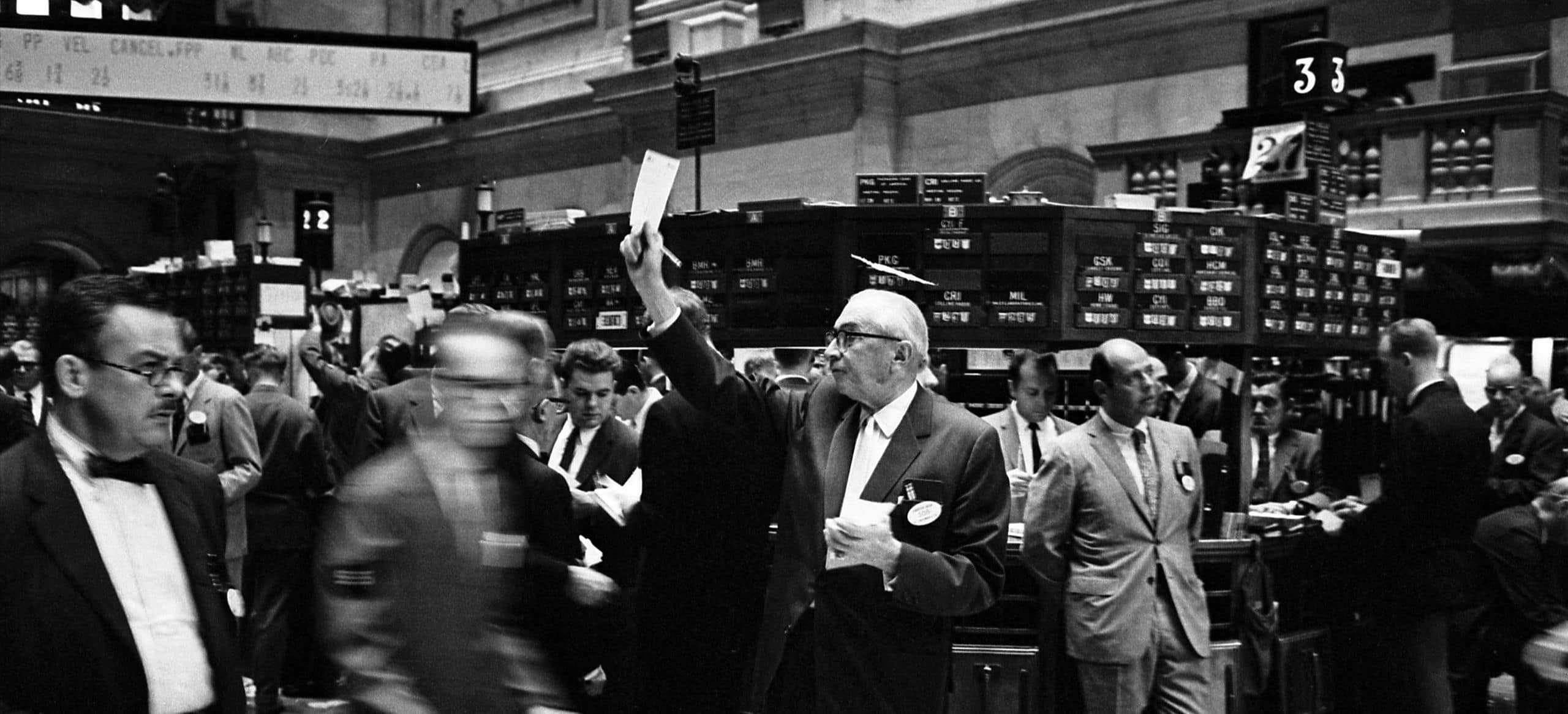
Would-be investors must carefully choose a broker appropriate for their specific needs.
pixabay
This article was written by Jack Henry, founder of ForexSQ.
In order to participate in trading in financial markets, you must first open a trading account with a stockbroker who is usually tied to a brokerage firm that specializes in trading stocks, bonds, commodities, foreign currencies, binary options, CFDs and other assets.
Jack Henry
Traditional or full service brokers
There are traditional brokers that include big names like Merrill Lynch, Morgan Stanley Dean Witter and others that offer a variety of financial services including retirement planning and tax advice and a wider selection of investment products from which to choose such as insurance and derivatives.
While hiring a traditional broker includes access to the company's valuable investment research data, they are compensated based on how much you trade, not the performance of your trading investments, which makes them rather expensive. Traditional brokers generally charge 1 to 2% of the account managed, which results in $1000 to $2000 in annual fees on an account valued at $100,000. When a traditional or full service broker engages in excessive unproductive buying and selling of assets in order to make more money for the broker, it is called 'churning', and it is illegal.
If you're the type of person who doesn't have the requisite knowledge and confidence to invest on your own, you might want to consider hiring a traditional broker who can offer personalized guidance about financial markets and advice about your particular financial future.
Discount brokers
A discount broker, on the other hand, relies on effective trading and stellar customer service in order to bring in more customers, which translates to more trades, and they are paid with salaries, not commissions. Charles Schwab and TD Waterhouse are examples of discount brokerage firms that are less expensive because they offer fewer products in which to invest and offer no personalized trading advice or financial planning.
As with everything else, the introduction of computers and the internet completely changed the way brokers conduct trading. Back in the day, traders had to be present on the trading floor, using the open outcry system of yelling to conduct trades and few brokerage firms offered electronic trading systems. Now they're all electronic and online which has completely blurred the line between traditional and discount brokerages.
The internet provides access to high-quality, up-to-date research data which helps people understand the markets and gives them greater control over their own trading accounts. This has resulted in reduced fees for traditional brokers offering a full range of financial services and made discount brokers more common.
How do stockbrokers make money trading stocks and foreign currency?
A stockbroker is a necessary component to trading assets in the financial markets throughout the world and the amount of money they make from you depends, basically, on what they do for you, as discussed above.
Some trading platforms have different compensation guidelines, however. Stock trading and exchanging foreign currencies will generally provide income to the stockbroker by charging commissions or spreads equal to about $10 per transaction, whereas you will probably be charged an arrangement fee for investing in Contracts for Difference (CFD)
How do brokers make money trading CFDs?
A CFD is a contract between an investor and a broker (for which the broker is paid an arrangement fee by the investor) whereby they agree to share the difference in the going price of shares of a broad range of assets between the opening and closing dates of the CFD contract.
CFDs are considered derivatives because you never actually acquire an ownership interest in the asset, but speculate as to the future rise or fall of prices for the asset over a period of time. The CFD agreement made between the investor and the broker determines how much money will be made by each, dependent on the number of shares comprising the CFD and the fluctuation in share prices.
Investing in CFDs is a money making strategy that is generally considered fairly safe and risk free. That's because when you are concerned about one particular company in your portfolio not doing well, you can take what's called a 'short position' on that company which allows you to profit from price increases but also allows for compensation when prices decrease.
Alternatively, if you believe a company's share value is going to rise, you can 'go long' on that company and, if the share price increases, your investment income increases as well. If the share price decreases, however, you could be obligated to pay a lot of money.
Make sure you understand the risks involved in CFD trading and that you engage the services of a trusted brokerage firm with a proven track record of success. Also make sure you read the contract in its entirety specifically looking for costs to you that may be hidden in the small print.
How do brokers make money trading binary options?
Brokers engaging in the trading of binary options normally get their pricing guidelines from their Liquidity providers. Liquidity providers are usually large banks and other financial institutions, the world's largest being Deutsche Bank of Germany.
When an investor wants to trade in binary options, he or she checks the price of that asset on the platform on which it is traded, as well as the expected dollar amount of the payout. The resultant binary option price is marked slightly higher than those posted in the Trading Platform to accommodate the broker's somewhat covert commission from the payout.
When investing in binary options, the broker wants as many as possible in order to increase commissions, of course.
Brokers also make money with binary options through the trading activities of their clients. Speaking of a brokers' customers, it is pretty safe to assume that about half will predict the rise of a share price and half will predict a reduction in price, which creates a win-win situation for the broker, so the more customers investing dollars in these speculations, the better for the broker.
Brokerage firms will also often offer incentives (bonuses) to their stockbrokers to sell certain under-performing stocks or other assets. Sometimes these investments are good for the investor and other times they are not, so beware of introductory special offers.
Is it worth it to pay a broker for work you could do yourself? It depends on what you want the broker to do for you, how much knowledge you have about it and the amount of time you can devote to your own continuing education. Regardless, investing your money in something you don't understand is never a good idea.
Whether you decide to trade on your own using a discount broker or entrust your money and your financial future to a money manager at a traditional brokerage firm, the most important thing to remember is that the reward structure of Wall Street is strongly aligned against investors and in favor of Wall Street, which is why some refer to it as Fraud Street.
This article was written by Jack Henry, founder of ForexSQ.
In order to participate in trading in financial markets, you must first open a trading account with a stockbroker who is usually tied to a brokerage firm that specializes in trading stocks, bonds, commodities, foreign currencies, binary options, CFDs and other assets.
Jack Henry
Traditional or full service brokers
There are traditional brokers that include big names like Merrill Lynch, Morgan Stanley Dean Witter and others that offer a variety of financial services including retirement planning and tax advice and a wider selection of investment products from which to choose such as insurance and derivatives.
While hiring a traditional broker includes access to the company's valuable investment research data, they are compensated based on how much you trade, not the performance of your trading investments, which makes them rather expensive. Traditional brokers generally charge 1 to 2% of the account managed, which results in $1000 to $2000 in annual fees on an account valued at $100,000. When a traditional or full service broker engages in excessive unproductive buying and selling of assets in order to make more money for the broker, it is called 'churning', and it is illegal.
If you're the type of person who doesn't have the requisite knowledge and confidence to invest on your own, you might want to consider hiring a traditional broker who can offer personalized guidance about financial markets and advice about your particular financial future.
Discount brokers
A discount broker, on the other hand, relies on effective trading and stellar customer service in order to bring in more customers, which translates to more trades, and they are paid with salaries, not commissions. Charles Schwab and TD Waterhouse are examples of discount brokerage firms that are less expensive because they offer fewer products in which to invest and offer no personalized trading advice or financial planning.
As with everything else, the introduction of computers and the internet completely changed the way brokers conduct trading. Back in the day, traders had to be present on the trading floor, using the open outcry system of yelling to conduct trades and few brokerage firms offered electronic trading systems. Now they're all electronic and online which has completely blurred the line between traditional and discount brokerages.
The internet provides access to high-quality, up-to-date research data which helps people understand the markets and gives them greater control over their own trading accounts. This has resulted in reduced fees for traditional brokers offering a full range of financial services and made discount brokers more common.
How do stockbrokers make money trading stocks and foreign currency?
A stockbroker is a necessary component to trading assets in the financial markets throughout the world and the amount of money they make from you depends, basically, on what they do for you, as discussed above.
Some trading platforms have different compensation guidelines, however. Stock trading and exchanging foreign currencies will generally provide income to the stockbroker by charging commissions or spreads equal to about $10 per transaction, whereas you will probably be charged an arrangement fee for investing in Contracts for Difference (CFD)
How do brokers make money trading CFDs?
A CFD is a contract between an investor and a broker (for which the broker is paid an arrangement fee by the investor) whereby they agree to share the difference in the going price of shares of a broad range of assets between the opening and closing dates of the CFD contract.
CFDs are considered derivatives because you never actually acquire an ownership interest in the asset, but speculate as to the future rise or fall of prices for the asset over a period of time. The CFD agreement made between the investor and the broker determines how much money will be made by each, dependent on the number of shares comprising the CFD and the fluctuation in share prices.
Investing in CFDs is a money making strategy that is generally considered fairly safe and risk free. That's because when you are concerned about one particular company in your portfolio not doing well, you can take what's called a 'short position' on that company which allows you to profit from price increases but also allows for compensation when prices decrease.
Alternatively, if you believe a company's share value is going to rise, you can 'go long' on that company and, if the share price increases, your investment income increases as well. If the share price decreases, however, you could be obligated to pay a lot of money.
Make sure you understand the risks involved in CFD trading and that you engage the services of a trusted brokerage firm with a proven track record of success. Also make sure you read the contract in its entirety specifically looking for costs to you that may be hidden in the small print.
How do brokers make money trading binary options?
Brokers engaging in the trading of binary options normally get their pricing guidelines from their Liquidity providers. Liquidity providers are usually large banks and other financial institutions, the world's largest being Deutsche Bank of Germany.
When an investor wants to trade in binary options, he or she checks the price of that asset on the platform on which it is traded, as well as the expected dollar amount of the payout. The resultant binary option price is marked slightly higher than those posted in the Trading Platform to accommodate the broker's somewhat covert commission from the payout.
When investing in binary options, the broker wants as many as possible in order to increase commissions, of course.
Brokers also make money with binary options through the trading activities of their clients. Speaking of a brokers' customers, it is pretty safe to assume that about half will predict the rise of a share price and half will predict a reduction in price, which creates a win-win situation for the broker, so the more customers investing dollars in these speculations, the better for the broker.
Brokerage firms will also often offer incentives (bonuses) to their stockbrokers to sell certain under-performing stocks or other assets. Sometimes these investments are good for the investor and other times they are not, so beware of introductory special offers.
Is it worth it to pay a broker for work you could do yourself? It depends on what you want the broker to do for you, how much knowledge you have about it and the amount of time you can devote to your own continuing education. Regardless, investing your money in something you don't understand is never a good idea.
Whether you decide to trade on your own using a discount broker or entrust your money and your financial future to a money manager at a traditional brokerage firm, the most important thing to remember is that the reward structure of Wall Street is strongly aligned against investors and in favor of Wall Street, which is why some refer to it as Fraud Street.
Italy’s Consob Tightens Net on AI-Fueled Scams With Fresh Website Bans
FP Markets Winner Spotlight 🏆 | Global Broker of the Year 2025 #Trading #Broker #Innovation #Shorts
FP Markets Winner Spotlight 🏆 | Global Broker of the Year 2025 #Trading #Broker #Innovation #Shorts
FP Markets takes the spotlight as Global Broker of the Year 2025 at the Finance Magnates Awards.
Martin Stoilov, Head of Client Experience, shares that trust, innovation, and people played a key role in the company’s success, supported by a strong foundation of integrity and client-centricity.
Following this milestone, FP Markets continues to focus on growth, technology investment, and its core values of transparency and excellence.
👉 Be part of FM Awards 2026: https://awards.financemagnates.com/#nominate
FP Markets takes the spotlight as Global Broker of the Year 2025 at the Finance Magnates Awards.
Martin Stoilov, Head of Client Experience, shares that trust, innovation, and people played a key role in the company’s success, supported by a strong foundation of integrity and client-centricity.
Following this milestone, FP Markets continues to focus on growth, technology investment, and its core values of transparency and excellence.
👉 Be part of FM Awards 2026: https://awards.financemagnates.com/#nominate
In this video, we review @HolaPrimeMarketsOfficial, a multi-asset forex and CFDs broker offering different account types, trading platforms, and flexible trading conditions.
We cover the broker’s overall offering, including account options, trading environment, platforms like MT4 and MT5, and additional services such as managed accounts and fast withdrawals.
Watch the full video to see if Hola Prime Markets fits your trading needs.
📣 Stay up to date with the latest in finance and trading. Follow Finance Magnates for industry news, insights, and global event coverage.
Connect with us:
🔗 LinkedIn: /financemagnates
👍 Facebook: /financemagnates
📸 Instagram: https://www.instagram.com/financemagnates
🐦 X: https://x.com/financemagnates
🎥 TikTok: https://www.tiktok.com/tag/financemagnates
▶️ YouTube: /@financemagnates_official
#HolaPrime #ForexBroker #CFDTrading #FinanceMagnates #Trading #Forex #BrokerReview
In this video, we review @HolaPrimeMarketsOfficial, a multi-asset forex and CFDs broker offering different account types, trading platforms, and flexible trading conditions.
We cover the broker’s overall offering, including account options, trading environment, platforms like MT4 and MT5, and additional services such as managed accounts and fast withdrawals.
Watch the full video to see if Hola Prime Markets fits your trading needs.
📣 Stay up to date with the latest in finance and trading. Follow Finance Magnates for industry news, insights, and global event coverage.
Connect with us:
🔗 LinkedIn: /financemagnates
👍 Facebook: /financemagnates
📸 Instagram: https://www.instagram.com/financemagnates
🐦 X: https://x.com/financemagnates
🎥 TikTok: https://www.tiktok.com/tag/financemagnates
▶️ YouTube: /@financemagnates_official
#HolaPrime #ForexBroker #CFDTrading #FinanceMagnates #Trading #Forex #BrokerReview
Hola Prime Review: What You Need to Know | Full Breakdown by Finance Magnates
Hola Prime Review: What You Need to Know | Full Breakdown by Finance Magnates
In this video, we review @HolaPrime_Global, a proprietary trading firm offering evaluation programs and performance-based payouts in simulated market environments.
We cover how the challenge model works, including account types, profit splits (up to 95%), trading rules, and what it takes to reach a funded account. You’ll also learn about available platforms like MT4, MT5, cTrader, and more, along with insights into payouts, support, and trading conditions.
Watch the full video to see if Hola Prime fits your trading style.
📣 Stay up to date with the latest in finance and trading. Follow Finance Magnates for industry news, insights, and global event coverage.
Connect with us:
🔗 LinkedIn: /financemagnates
👍 Facebook: /financemagnates
📸 Instagram: https://www.instagram.com/financemagnates
🐦 X: https://x.com/financemagnates
🎥 TikTok: https://www.tiktok.com/tag/financemagnates
▶️ YouTube: /@financemagnates_official
#HolaPrime #PropFirm #Trading #FinanceMagnates #Forex #FuturesTrading #TradingReview #PropFirmReview
In this video, we review @HolaPrime_Global, a proprietary trading firm offering evaluation programs and performance-based payouts in simulated market environments.
We cover how the challenge model works, including account types, profit splits (up to 95%), trading rules, and what it takes to reach a funded account. You’ll also learn about available platforms like MT4, MT5, cTrader, and more, along with insights into payouts, support, and trading conditions.
Watch the full video to see if Hola Prime fits your trading style.
📣 Stay up to date with the latest in finance and trading. Follow Finance Magnates for industry news, insights, and global event coverage.
Connect with us:
🔗 LinkedIn: /financemagnates
👍 Facebook: /financemagnates
📸 Instagram: https://www.instagram.com/financemagnates
🐦 X: https://x.com/financemagnates
🎥 TikTok: https://www.tiktok.com/tag/financemagnates
▶️ YouTube: /@financemagnates_official
#HolaPrime #PropFirm #Trading #FinanceMagnates #Forex #FuturesTrading #TradingReview #PropFirmReview
Axi Winner Spotlight 🏆 | Global Most Innovative Broker 2025 #Innovation #Trading #Fintech #Broker
Axi Winner Spotlight 🏆 | Global Most Innovative Broker 2025 #Innovation #Trading #Fintech #Broker
Axi takes the spotlight at the Finance Magnates Awards, winning Global Most Innovative Broker 2025.
Olivia Xenofontos and Ivanna Openko share how the team will feel: proud, motivated, and ready to keep delivering.
They also describe the night as well-organized, focused, and enjoyable for all.
👉 Be part of FM Awards 2026.
Axi takes the spotlight at the Finance Magnates Awards, winning Global Most Innovative Broker 2025.
Olivia Xenofontos and Ivanna Openko share how the team will feel: proud, motivated, and ready to keep delivering.
They also describe the night as well-organized, focused, and enjoyable for all.
👉 Be part of FM Awards 2026.
Recognition that matters.
Built on transparency.
Driven by the industry.
The Finance Magnates Awards 2026.
Nominations are now open.
🔗 https://awards.financemagnates.com/?utm_source=SM&utm_medium=social&utm_campaign=recognition-matters
Recognition that matters.
Built on transparency.
Driven by the industry.
The Finance Magnates Awards 2026.
Nominations are now open.
🔗 https://awards.financemagnates.com/?utm_source=SM&utm_medium=social&utm_campaign=recognition-matters