How to Domesticate International Financial Markets
Thursday,15/12/2016|16:42GMTby
Ana Grasic
Domesticated markets enable traders to utilize a respective national currency as opposed to a foreign alternative.
Bloomberg
International financial markets currently presently suffer from the fact that they rely on an international, and for most countries, foreign currency, such as the EUR or the USD. However, a more stratified international market does provide equal trading values and stock prices for everyone on the planet.
Recent research across a panel of multiple countries and regions worldwide have shown that traders seek out domestic financial markets more often than their foreign counterparts, a trend only aided by a friendly currency policy. Today’s markets are more advanced and focused on 'homegrown' products, and bringing their stocks to traders result in a much larger crowd looking to buy those stocks.
In the following sections, we’ll take a look at how the market works and what brings the most attention to brokers and investors alike.
So How Does Domesticating Work?
As mentioned before, domesticating any international financial market takes focused and planned actions that result in a satisfied clientele, which uniformly includes all traders on the market in a broader sense. The trick to making international markets more domestic is converting their values to a currency more familiar to the respective country of interest, which “masks” any potential losses during everyday currency conversions. IT companies attract a lot of attention these days, given one of their primary focuses relies on innovation, a must have for the market.
In addition to domestic appeal, IT companies and their respective product suites generate the biggest value for traders. Thus, if an individual is looking to invest in something, an emphasis on innovative products is also a fruitful avenue of pursuit. Artificial intelligence (AI) is going through a massive expansion, and with multiple variants of robotic machines making an appearance, it’s only a matter of time before these become a mainstream phenomenon.
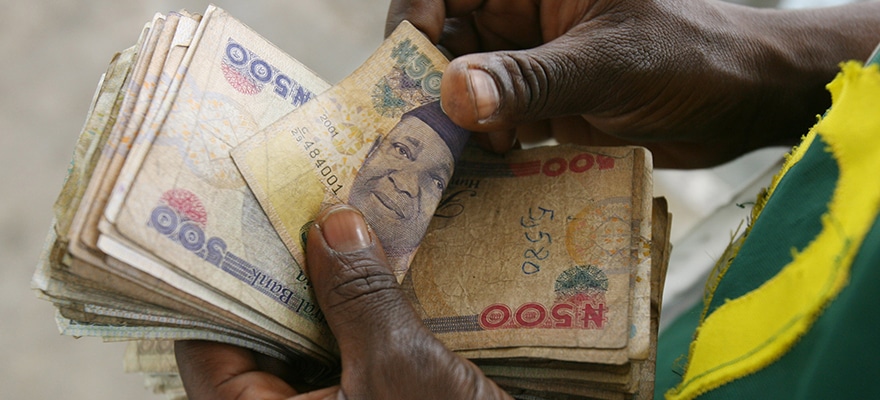
The ability to domesticate any financial market is a demanding and thorough process that allows trading via a currency each given country uses - for example Nigeria using the naira. The Nigerian market's interaction with international markets has historically yielded several negative consequences - suffering from a dearth of trust from clients takes a lot of time to reconcile for example.
Furthermore, since domestic markets include the supply and demand of all goods and services within a single country, it’s important to know that the language used for presenting each company to traders has to be native. In the case of Nigeria, given that English is one of Nigeria’s official languages, translating values of each foreign company to a language Nigerian people will understand is a relatively simple task.
The final important factor we must mention is the culture of each targeted nation. Domesticating an international market, no matter the niche, has to be compliant with the country’s main religion, culture, lifestyle, and anything similar. Online Trading platforms are exactly the thing that makes domestication a much easier process, but it is important to note that having trust in your chosen Trading Platform is a vital thing.
International financial markets currently presently suffer from the fact that they rely on an international, and for most countries, foreign currency, such as the EUR or the USD. However, a more stratified international market does provide equal trading values and stock prices for everyone on the planet.
Recent research across a panel of multiple countries and regions worldwide have shown that traders seek out domestic financial markets more often than their foreign counterparts, a trend only aided by a friendly currency policy. Today’s markets are more advanced and focused on 'homegrown' products, and bringing their stocks to traders result in a much larger crowd looking to buy those stocks.
In the following sections, we’ll take a look at how the market works and what brings the most attention to brokers and investors alike.
So How Does Domesticating Work?
As mentioned before, domesticating any international financial market takes focused and planned actions that result in a satisfied clientele, which uniformly includes all traders on the market in a broader sense. The trick to making international markets more domestic is converting their values to a currency more familiar to the respective country of interest, which “masks” any potential losses during everyday currency conversions. IT companies attract a lot of attention these days, given one of their primary focuses relies on innovation, a must have for the market.
In addition to domestic appeal, IT companies and their respective product suites generate the biggest value for traders. Thus, if an individual is looking to invest in something, an emphasis on innovative products is also a fruitful avenue of pursuit. Artificial intelligence (AI) is going through a massive expansion, and with multiple variants of robotic machines making an appearance, it’s only a matter of time before these become a mainstream phenomenon.
The ability to domesticate any financial market is a demanding and thorough process that allows trading via a currency each given country uses - for example Nigeria using the naira. The Nigerian market's interaction with international markets has historically yielded several negative consequences - suffering from a dearth of trust from clients takes a lot of time to reconcile for example.
Furthermore, since domestic markets include the supply and demand of all goods and services within a single country, it’s important to know that the language used for presenting each company to traders has to be native. In the case of Nigeria, given that English is one of Nigeria’s official languages, translating values of each foreign company to a language Nigerian people will understand is a relatively simple task.
The final important factor we must mention is the culture of each targeted nation. Domesticating an international market, no matter the niche, has to be compliant with the country’s main religion, culture, lifestyle, and anything similar. Online Trading platforms are exactly the thing that makes domestication a much easier process, but it is important to note that having trust in your chosen Trading Platform is a vital thing.
Italy’s Consob Tightens Net on AI-Fueled Scams With Fresh Website Bans
FP Markets Winner Spotlight 🏆 | Global Broker of the Year 2025 #Trading #Broker #Innovation #Shorts
FP Markets Winner Spotlight 🏆 | Global Broker of the Year 2025 #Trading #Broker #Innovation #Shorts
FP Markets takes the spotlight as Global Broker of the Year 2025 at the Finance Magnates Awards.
Martin Stoilov, Head of Client Experience, shares that trust, innovation, and people played a key role in the company’s success, supported by a strong foundation of integrity and client-centricity.
Following this milestone, FP Markets continues to focus on growth, technology investment, and its core values of transparency and excellence.
👉 Be part of FM Awards 2026: https://awards.financemagnates.com/#nominate
FP Markets takes the spotlight as Global Broker of the Year 2025 at the Finance Magnates Awards.
Martin Stoilov, Head of Client Experience, shares that trust, innovation, and people played a key role in the company’s success, supported by a strong foundation of integrity and client-centricity.
Following this milestone, FP Markets continues to focus on growth, technology investment, and its core values of transparency and excellence.
👉 Be part of FM Awards 2026: https://awards.financemagnates.com/#nominate
In this video, we review @HolaPrimeMarketsOfficial, a multi-asset forex and CFDs broker offering different account types, trading platforms, and flexible trading conditions.
We cover the broker’s overall offering, including account options, trading environment, platforms like MT4 and MT5, and additional services such as managed accounts and fast withdrawals.
Watch the full video to see if Hola Prime Markets fits your trading needs.
📣 Stay up to date with the latest in finance and trading. Follow Finance Magnates for industry news, insights, and global event coverage.
Connect with us:
🔗 LinkedIn: /financemagnates
👍 Facebook: /financemagnates
📸 Instagram: https://www.instagram.com/financemagnates
🐦 X: https://x.com/financemagnates
🎥 TikTok: https://www.tiktok.com/tag/financemagnates
▶️ YouTube: /@financemagnates_official
#HolaPrime #ForexBroker #CFDTrading #FinanceMagnates #Trading #Forex #BrokerReview
In this video, we review @HolaPrimeMarketsOfficial, a multi-asset forex and CFDs broker offering different account types, trading platforms, and flexible trading conditions.
We cover the broker’s overall offering, including account options, trading environment, platforms like MT4 and MT5, and additional services such as managed accounts and fast withdrawals.
Watch the full video to see if Hola Prime Markets fits your trading needs.
📣 Stay up to date with the latest in finance and trading. Follow Finance Magnates for industry news, insights, and global event coverage.
Connect with us:
🔗 LinkedIn: /financemagnates
👍 Facebook: /financemagnates
📸 Instagram: https://www.instagram.com/financemagnates
🐦 X: https://x.com/financemagnates
🎥 TikTok: https://www.tiktok.com/tag/financemagnates
▶️ YouTube: /@financemagnates_official
#HolaPrime #ForexBroker #CFDTrading #FinanceMagnates #Trading #Forex #BrokerReview
Hola Prime Review: What You Need to Know | Full Breakdown by Finance Magnates
Hola Prime Review: What You Need to Know | Full Breakdown by Finance Magnates
In this video, we review @HolaPrime_Global, a proprietary trading firm offering evaluation programs and performance-based payouts in simulated market environments.
We cover how the challenge model works, including account types, profit splits (up to 95%), trading rules, and what it takes to reach a funded account. You’ll also learn about available platforms like MT4, MT5, cTrader, and more, along with insights into payouts, support, and trading conditions.
Watch the full video to see if Hola Prime fits your trading style.
📣 Stay up to date with the latest in finance and trading. Follow Finance Magnates for industry news, insights, and global event coverage.
Connect with us:
🔗 LinkedIn: /financemagnates
👍 Facebook: /financemagnates
📸 Instagram: https://www.instagram.com/financemagnates
🐦 X: https://x.com/financemagnates
🎥 TikTok: https://www.tiktok.com/tag/financemagnates
▶️ YouTube: /@financemagnates_official
#HolaPrime #PropFirm #Trading #FinanceMagnates #Forex #FuturesTrading #TradingReview #PropFirmReview
In this video, we review @HolaPrime_Global, a proprietary trading firm offering evaluation programs and performance-based payouts in simulated market environments.
We cover how the challenge model works, including account types, profit splits (up to 95%), trading rules, and what it takes to reach a funded account. You’ll also learn about available platforms like MT4, MT5, cTrader, and more, along with insights into payouts, support, and trading conditions.
Watch the full video to see if Hola Prime fits your trading style.
📣 Stay up to date with the latest in finance and trading. Follow Finance Magnates for industry news, insights, and global event coverage.
Connect with us:
🔗 LinkedIn: /financemagnates
👍 Facebook: /financemagnates
📸 Instagram: https://www.instagram.com/financemagnates
🐦 X: https://x.com/financemagnates
🎥 TikTok: https://www.tiktok.com/tag/financemagnates
▶️ YouTube: /@financemagnates_official
#HolaPrime #PropFirm #Trading #FinanceMagnates #Forex #FuturesTrading #TradingReview #PropFirmReview
Axi Winner Spotlight 🏆 | Global Most Innovative Broker 2025 #Innovation #Trading #Fintech #Broker
Axi Winner Spotlight 🏆 | Global Most Innovative Broker 2025 #Innovation #Trading #Fintech #Broker
Axi takes the spotlight at the Finance Magnates Awards, winning Global Most Innovative Broker 2025.
Olivia Xenofontos and Ivanna Openko share how the team will feel: proud, motivated, and ready to keep delivering.
They also describe the night as well-organized, focused, and enjoyable for all.
👉 Be part of FM Awards 2026.
Axi takes the spotlight at the Finance Magnates Awards, winning Global Most Innovative Broker 2025.
Olivia Xenofontos and Ivanna Openko share how the team will feel: proud, motivated, and ready to keep delivering.
They also describe the night as well-organized, focused, and enjoyable for all.
👉 Be part of FM Awards 2026.
Recognition that matters.
Built on transparency.
Driven by the industry.
The Finance Magnates Awards 2026.
Nominations are now open.
🔗 https://awards.financemagnates.com/?utm_source=SM&utm_medium=social&utm_campaign=recognition-matters
Recognition that matters.
Built on transparency.
Driven by the industry.
The Finance Magnates Awards 2026.
Nominations are now open.
🔗 https://awards.financemagnates.com/?utm_source=SM&utm_medium=social&utm_campaign=recognition-matters