Tectonic Shift in Japan's Domestic Energy Policy Is Forging a New Global LNG Marketplace
Monday,27/10/2014|09:49GMTby
George Tchetvertakov
It is often the case that tough times lead to good opportunities. In Japan's case, a crushing earthquake and ensuing tsunami has crippled its nuclear power industry only to give hope to another - Liquid Natural Gas.
Bloomberg
Following the crippling Fukushima nuclear disaster in 2011, Japan has undergone a tectonic shift in its energy policy. The earthquake and ensuing tsunami that killed almost 16,000 people and cost between $30-$50 billion in infrastructural damage, forced the closing of all of Japan's nuclear power stations for extended periods.
Filling the energy ‘gap’ has been a difficult challenge and a heavy cost to Japan’s economy, says Mitch Fulscher, President and CEO of FIA Japan. According the Mr. Fulscher, Japan’s recently approved ‘National Energy Plan’ will result in “liberalizing the existing energy market and broaden the sources of imported fuel to rationalize and reduce the huge costs being incurred."
Mitch Fulscher, President and CEO of FIA Japan
Led by the country’s Ministry of Economy, Trade and Industry (METI), Japan is tackling its dependency on imported oil and gas. The 2011 disaster led Japan to commit to long-term oil and gas contracts, but given the desperate times the country secured terms that do not seem so favourable almost 4 years down the line.
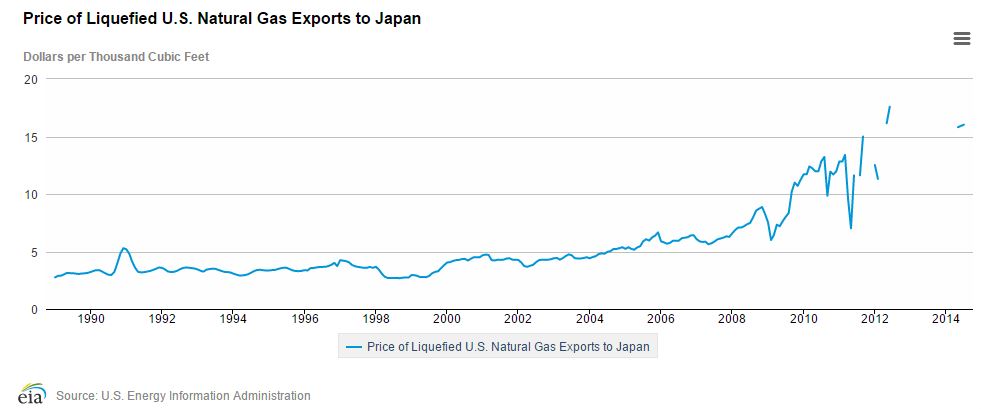
Part of Japan’s future energy policy is a clear focus on natural gas. In 2013, Japan became the world’s highest importer of Liquid Natural Gas (LNG). The total amount of LNG imports in 2013 alone was $69 billion. According to Mr. Fulscher, “Japan is now taking leadership to co-ordinate with India and discussing the formation of a ‘buyers association’ with Singapore,” as part of the attempt to reduce Japan’s high energy costs.
Click to enlarge
One of the major developments for the trading community is the looming creation of a fully-fledged LNG marketplace in Asia. METI already publishes government statistics on LNG spot trading transactions and the creation of a new OTC market organized by 'Tocom' and 'Ginga Energy', nicknamed the ‘Joe’ market, is expected soon. The long-term plan is to forge an “LNG price benchmark and to base price on supply and demand with transparency,” says Mr. Fulscher.
Tatsuya Terazawa, Director General of METI
Tatsuya Terazawa, Director General of METI says, “The establishment of an OTC market for LNG is considered the first step to build a comprehensive energy futures market." Adding, “We are at a stage where the movement has accelerated in various fields towards the establishment of an LNG futures market.”
The FIA postulates that Japanese policymakers could go even further and deregulate the entire Japanese energy market including electricity – for which a futures marketplace could also be created.
According to an industry report published in January 2014 by the Canadian Association of Petroleum Producers (CAPP), Asia is expected to generate the majority of future global demand for LNG. "China has recently emerged as a net importer of natural gas. With its almost insatiable demand for energy, it is expected to become a major importer of LNG." Regarding Japan, the CAPP report says, "Japan already accounts for over 35% of worldwide LNG consumption. Given the substantial damage to its nuclear power generating capacity in the March 2011 tsunami, LNG imports may grow to compensate."
As the LNG industry sees increasing investment and investor participation, traders in Asia could yet see additional sources of LNG products and Liquidity in the foreseeable future.
Following the crippling Fukushima nuclear disaster in 2011, Japan has undergone a tectonic shift in its energy policy. The earthquake and ensuing tsunami that killed almost 16,000 people and cost between $30-$50 billion in infrastructural damage, forced the closing of all of Japan's nuclear power stations for extended periods.
Filling the energy ‘gap’ has been a difficult challenge and a heavy cost to Japan’s economy, says Mitch Fulscher, President and CEO of FIA Japan. According the Mr. Fulscher, Japan’s recently approved ‘National Energy Plan’ will result in “liberalizing the existing energy market and broaden the sources of imported fuel to rationalize and reduce the huge costs being incurred."
Mitch Fulscher, President and CEO of FIA Japan
Led by the country’s Ministry of Economy, Trade and Industry (METI), Japan is tackling its dependency on imported oil and gas. The 2011 disaster led Japan to commit to long-term oil and gas contracts, but given the desperate times the country secured terms that do not seem so favourable almost 4 years down the line.
Part of Japan’s future energy policy is a clear focus on natural gas. In 2013, Japan became the world’s highest importer of Liquid Natural Gas (LNG). The total amount of LNG imports in 2013 alone was $69 billion. According to Mr. Fulscher, “Japan is now taking leadership to co-ordinate with India and discussing the formation of a ‘buyers association’ with Singapore,” as part of the attempt to reduce Japan’s high energy costs.
Click to enlarge
One of the major developments for the trading community is the looming creation of a fully-fledged LNG marketplace in Asia. METI already publishes government statistics on LNG spot trading transactions and the creation of a new OTC market organized by 'Tocom' and 'Ginga Energy', nicknamed the ‘Joe’ market, is expected soon. The long-term plan is to forge an “LNG price benchmark and to base price on supply and demand with transparency,” says Mr. Fulscher.
Tatsuya Terazawa, Director General of METI
Tatsuya Terazawa, Director General of METI says, “The establishment of an OTC market for LNG is considered the first step to build a comprehensive energy futures market." Adding, “We are at a stage where the movement has accelerated in various fields towards the establishment of an LNG futures market.”
The FIA postulates that Japanese policymakers could go even further and deregulate the entire Japanese energy market including electricity – for which a futures marketplace could also be created.
According to an industry report published in January 2014 by the Canadian Association of Petroleum Producers (CAPP), Asia is expected to generate the majority of future global demand for LNG. "China has recently emerged as a net importer of natural gas. With its almost insatiable demand for energy, it is expected to become a major importer of LNG." Regarding Japan, the CAPP report says, "Japan already accounts for over 35% of worldwide LNG consumption. Given the substantial damage to its nuclear power generating capacity in the March 2011 tsunami, LNG imports may grow to compensate."
As the LNG industry sees increasing investment and investor participation, traders in Asia could yet see additional sources of LNG products and Liquidity in the foreseeable future.
Weekly Focus: Binance Joins Prediction Markets; Is Bad Tech Driving Traders Over the Edge?
FP Markets Winner Spotlight 🏆 | Global Broker of the Year 2025 #Trading #Broker #Innovation #Shorts
FP Markets Winner Spotlight 🏆 | Global Broker of the Year 2025 #Trading #Broker #Innovation #Shorts
FP Markets takes the spotlight as Global Broker of the Year 2025 at the Finance Magnates Awards.
Martin Stoilov, Head of Client Experience, shares that trust, innovation, and people played a key role in the company’s success, supported by a strong foundation of integrity and client-centricity.
Following this milestone, FP Markets continues to focus on growth, technology investment, and its core values of transparency and excellence.
👉 Be part of FM Awards 2026: https://awards.financemagnates.com/#nominate
FP Markets takes the spotlight as Global Broker of the Year 2025 at the Finance Magnates Awards.
Martin Stoilov, Head of Client Experience, shares that trust, innovation, and people played a key role in the company’s success, supported by a strong foundation of integrity and client-centricity.
Following this milestone, FP Markets continues to focus on growth, technology investment, and its core values of transparency and excellence.
👉 Be part of FM Awards 2026: https://awards.financemagnates.com/#nominate
In this video, we review @HolaPrimeMarketsOfficial, a multi-asset forex and CFDs broker offering different account types, trading platforms, and flexible trading conditions.
We cover the broker’s overall offering, including account options, trading environment, platforms like MT4 and MT5, and additional services such as managed accounts and fast withdrawals.
Watch the full video to see if Hola Prime Markets fits your trading needs.
📣 Stay up to date with the latest in finance and trading. Follow Finance Magnates for industry news, insights, and global event coverage.
Connect with us:
🔗 LinkedIn: /financemagnates
👍 Facebook: /financemagnates
📸 Instagram: https://www.instagram.com/financemagnates
🐦 X: https://x.com/financemagnates
🎥 TikTok: https://www.tiktok.com/tag/financemagnates
▶️ YouTube: /@financemagnates_official
#HolaPrime #ForexBroker #CFDTrading #FinanceMagnates #Trading #Forex #BrokerReview
In this video, we review @HolaPrimeMarketsOfficial, a multi-asset forex and CFDs broker offering different account types, trading platforms, and flexible trading conditions.
We cover the broker’s overall offering, including account options, trading environment, platforms like MT4 and MT5, and additional services such as managed accounts and fast withdrawals.
Watch the full video to see if Hola Prime Markets fits your trading needs.
📣 Stay up to date with the latest in finance and trading. Follow Finance Magnates for industry news, insights, and global event coverage.
Connect with us:
🔗 LinkedIn: /financemagnates
👍 Facebook: /financemagnates
📸 Instagram: https://www.instagram.com/financemagnates
🐦 X: https://x.com/financemagnates
🎥 TikTok: https://www.tiktok.com/tag/financemagnates
▶️ YouTube: /@financemagnates_official
#HolaPrime #ForexBroker #CFDTrading #FinanceMagnates #Trading #Forex #BrokerReview
Hola Prime Review: What You Need to Know | Full Breakdown by Finance Magnates
Hola Prime Review: What You Need to Know | Full Breakdown by Finance Magnates
In this video, we review @HolaPrime_Global, a proprietary trading firm offering evaluation programs and performance-based payouts in simulated market environments.
We cover how the challenge model works, including account types, profit splits (up to 95%), trading rules, and what it takes to reach a funded account. You’ll also learn about available platforms like MT4, MT5, cTrader, and more, along with insights into payouts, support, and trading conditions.
Watch the full video to see if Hola Prime fits your trading style.
📣 Stay up to date with the latest in finance and trading. Follow Finance Magnates for industry news, insights, and global event coverage.
Connect with us:
🔗 LinkedIn: /financemagnates
👍 Facebook: /financemagnates
📸 Instagram: https://www.instagram.com/financemagnates
🐦 X: https://x.com/financemagnates
🎥 TikTok: https://www.tiktok.com/tag/financemagnates
▶️ YouTube: /@financemagnates_official
#HolaPrime #PropFirm #Trading #FinanceMagnates #Forex #FuturesTrading #TradingReview #PropFirmReview
In this video, we review @HolaPrime_Global, a proprietary trading firm offering evaluation programs and performance-based payouts in simulated market environments.
We cover how the challenge model works, including account types, profit splits (up to 95%), trading rules, and what it takes to reach a funded account. You’ll also learn about available platforms like MT4, MT5, cTrader, and more, along with insights into payouts, support, and trading conditions.
Watch the full video to see if Hola Prime fits your trading style.
📣 Stay up to date with the latest in finance and trading. Follow Finance Magnates for industry news, insights, and global event coverage.
Connect with us:
🔗 LinkedIn: /financemagnates
👍 Facebook: /financemagnates
📸 Instagram: https://www.instagram.com/financemagnates
🐦 X: https://x.com/financemagnates
🎥 TikTok: https://www.tiktok.com/tag/financemagnates
▶️ YouTube: /@financemagnates_official
#HolaPrime #PropFirm #Trading #FinanceMagnates #Forex #FuturesTrading #TradingReview #PropFirmReview
Axi Winner Spotlight 🏆 | Global Most Innovative Broker 2025 #Innovation #Trading #Fintech #Broker
Axi Winner Spotlight 🏆 | Global Most Innovative Broker 2025 #Innovation #Trading #Fintech #Broker
Axi takes the spotlight at the Finance Magnates Awards, winning Global Most Innovative Broker 2025.
Olivia Xenofontos and Ivanna Openko share how the team will feel: proud, motivated, and ready to keep delivering.
They also describe the night as well-organized, focused, and enjoyable for all.
👉 Be part of FM Awards 2026.
Axi takes the spotlight at the Finance Magnates Awards, winning Global Most Innovative Broker 2025.
Olivia Xenofontos and Ivanna Openko share how the team will feel: proud, motivated, and ready to keep delivering.
They also describe the night as well-organized, focused, and enjoyable for all.
👉 Be part of FM Awards 2026.
Recognition that matters.
Built on transparency.
Driven by the industry.
The Finance Magnates Awards 2026.
Nominations are now open.
🔗 https://awards.financemagnates.com/?utm_source=SM&utm_medium=social&utm_campaign=recognition-matters
Recognition that matters.
Built on transparency.
Driven by the industry.
The Finance Magnates Awards 2026.
Nominations are now open.
🔗 https://awards.financemagnates.com/?utm_source=SM&utm_medium=social&utm_campaign=recognition-matters