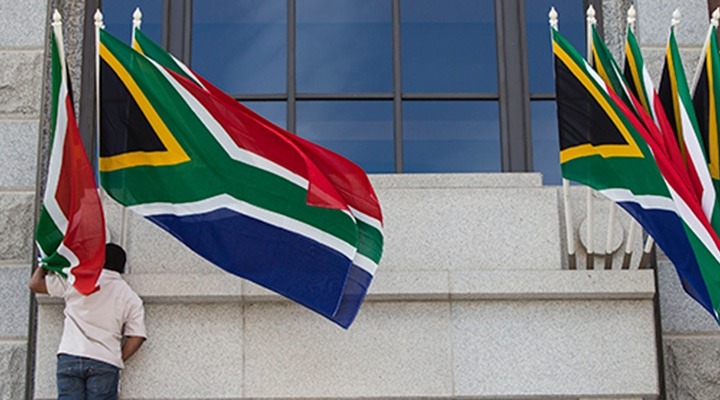
South Africa is Africa’s largest player in the online forex scene.
Experts say the FCSA is moving at a slow pace.
Bloomberg
South Africa is Africa’s largest player in the online forex scene. The country boasts of around 190,000 daily FX traders and over 1000 financial entities.
Additionally, the South African Rand is the most traded currency in Africa. Globally, it is the 18th most traded currency.
According to SA Shares, which details stocks listed on the
Johannesburg Stock Exchange, an average of around $25 billion USD is traded
every day in the South African FX market.
Moreover, BusinessTech puts South Africa’s total forex trading volumes including Contracts for Difference (CFDs) and Spot Trading at about $2.21 billion per day with a total daily foreign exchange volume of $20.37 billion for all FX instruments in 2019.
Estimated Number of Forex Traders in Africa
South Africa’s leading forex position in Africa has been attributed to the strong regulatory framework provided by the Financial Sector Conduct Authority (FSCA).
Online forex trading is legal in the country when done with a
licensed broker.
The FSCA’s Compliance War
The FSCA, formed in 2018, is the successor to the country’s Financial Service Board of 2004 which regulated the country’s forex industry until the former’s emergence.
Although the FCSA’s framework is not yet as strong as those of foreign regulators, it is the oldest and most respected regulator on the continent. In addition, it regulates some of the foreign brokers in Africa.
In late May, the FSCA fined Brite Advisors, a financial service provider (FSP) administrative penalties of R12.5 million alongside a former director of the group, Nigel James Green, for flouting 'various financial sector laws'.
Earlier in April, the financial watchdog imposed an administrative penalty of R10 million on Smart Billion Investments’ Chief Executive Officer, Melusi Christian Ntumba, after the company invested just a 'miniscule amount' of clients' trading funds on CFDs.
Also, the body sanctioned a director of the firm, Renault Otto
Kay, with an administrative penalty of R500,000.
FSCA said the balance of the clients’ funds was expended on
withdrawal requests as well as personal and business expenses.
As well as that, Ntumba and Kay were debarred for a period of 5 and 10 years respectively.
These two recent cases are some of FSCA’s regulatory oversight activities in South Africa.
However, as a supervisory body watching over Africa’s largest forex
industry, is the FSCA doing enough to stop illegal trading?
Is the FSCA Doing Enough?
In August 2018, the FCSA instituted a new licensing regime that made it mandatory for new and existing over-the-counter derivatives providers (ODPs) to obtain an ODP license before they can offer derivative products to South Africans.
According to Fanews.co, this new regime mainly affects CFD and forex brokers, banks and other non-banking financial institutions that offer OTC derivatives to their customers.
However, while the licensing procedures have been progressing, it has been “moving quite slowly,” Heinrich Le Roux, the Managing Director (MD) of TradeFX, a forex broker review website in South Africa, told Finance Magnates.
“Some ODP applications have been in the approval process for years. IG Markets were the first to be approved and went through the wringer to get approved,” Le Roux noted.
Heinrich Le Roux, the Managing Director, TradeFX
“There are also reports of different requirements for different businesses which makes the process quite confusing for existing and potential applicants,” he added.
Le Roux noted that while the watchdog was doing its best within its current resources to weed out unlicensed operators, the “wheels of justice turn slowly.”
“Reports of investigations taking years from when first being brought to their attention is not uncommon,” he pointed out.
On his part, Daniel Chan, the Chief Technical Officer (CTO) of Marketplace Fairness, noted that there have been numerous cases of illegal trading in South Africa in recent years that the FSCA has not been able to stop.
The CTO said the watchdog was not doing enough to protect consumers and ensure that they are not being ripped off by financial services companies.
Like Le Roux, Chan pointed out that “the FSCA has been slow to act in some cases.”
“For example, the FSCA did not act until after the collapse of Steinhoff, even though there were warning signs well before the collapse,” he said.
Daniel Chan, the CTO of Marketplace Fairness
“This raises questions about the FSCA's ability to respond quickly
to potential problems in the financial services industry,” the CTO added.
Speaking further with Finance Magnates, Le Roux bemoaned the vulnerability of South Africans to the many foreign forex brokers operating in the country.
Additionally, he decried an increase in the “so-called forex gurus” who cheat
innocent people out of their money.
“South Africa is still plagued by a large number of overseas brokers who market to South African clients, and there is little or no recourse should South African customers be treated poorly,” he said.
He pointed out that this was not “something that the FSCA can control in the modern era.”
Doubling Down
Le Roux believes that while the introduction of the ODP license “is a strong step in the right direction,” the FCSA needs to act a lot quicker in investigating complaints made about any operator.
To do this, they need to have greater resources at their disposal,
he pointed out.
The TradeFX boss, who also decried the lack of sufficient engagement with industry actors in shaping legislation, called for more engagement with stakeholders.
“Greater engagement would facilitate better regulation and a better working relationship with participants to root out poor operators and protect the South African clients,” he explained.
“Ultimately, this is the mandate that the FSCA is tasked with."
South Africa is Africa’s largest player in the online forex scene. The country boasts of around 190,000 daily FX traders and over 1000 financial entities.
Additionally, the South African Rand is the most traded currency in Africa. Globally, it is the 18th most traded currency.
According to SA Shares, which details stocks listed on the
Johannesburg Stock Exchange, an average of around $25 billion USD is traded
every day in the South African FX market.
Moreover, BusinessTech puts South Africa’s total forex trading volumes including Contracts for Difference (CFDs) and Spot Trading at about $2.21 billion per day with a total daily foreign exchange volume of $20.37 billion for all FX instruments in 2019.
Estimated Number of Forex Traders in Africa
South Africa’s leading forex position in Africa has been attributed to the strong regulatory framework provided by the Financial Sector Conduct Authority (FSCA).
Online forex trading is legal in the country when done with a
licensed broker.
The FSCA’s Compliance War
The FSCA, formed in 2018, is the successor to the country’s Financial Service Board of 2004 which regulated the country’s forex industry until the former’s emergence.
Although the FCSA’s framework is not yet as strong as those of foreign regulators, it is the oldest and most respected regulator on the continent. In addition, it regulates some of the foreign brokers in Africa.
In late May, the FSCA fined Brite Advisors, a financial service provider (FSP) administrative penalties of R12.5 million alongside a former director of the group, Nigel James Green, for flouting 'various financial sector laws'.
Earlier in April, the financial watchdog imposed an administrative penalty of R10 million on Smart Billion Investments’ Chief Executive Officer, Melusi Christian Ntumba, after the company invested just a 'miniscule amount' of clients' trading funds on CFDs.
Also, the body sanctioned a director of the firm, Renault Otto
Kay, with an administrative penalty of R500,000.
FSCA said the balance of the clients’ funds was expended on
withdrawal requests as well as personal and business expenses.
As well as that, Ntumba and Kay were debarred for a period of 5 and 10 years respectively.
These two recent cases are some of FSCA’s regulatory oversight activities in South Africa.
However, as a supervisory body watching over Africa’s largest forex
industry, is the FSCA doing enough to stop illegal trading?
Is the FSCA Doing Enough?
In August 2018, the FCSA instituted a new licensing regime that made it mandatory for new and existing over-the-counter derivatives providers (ODPs) to obtain an ODP license before they can offer derivative products to South Africans.
According to Fanews.co, this new regime mainly affects CFD and forex brokers, banks and other non-banking financial institutions that offer OTC derivatives to their customers.
However, while the licensing procedures have been progressing, it has been “moving quite slowly,” Heinrich Le Roux, the Managing Director (MD) of TradeFX, a forex broker review website in South Africa, told Finance Magnates.
“Some ODP applications have been in the approval process for years. IG Markets were the first to be approved and went through the wringer to get approved,” Le Roux noted.
Heinrich Le Roux, the Managing Director, TradeFX
“There are also reports of different requirements for different businesses which makes the process quite confusing for existing and potential applicants,” he added.
Le Roux noted that while the watchdog was doing its best within its current resources to weed out unlicensed operators, the “wheels of justice turn slowly.”
“Reports of investigations taking years from when first being brought to their attention is not uncommon,” he pointed out.
On his part, Daniel Chan, the Chief Technical Officer (CTO) of Marketplace Fairness, noted that there have been numerous cases of illegal trading in South Africa in recent years that the FSCA has not been able to stop.
The CTO said the watchdog was not doing enough to protect consumers and ensure that they are not being ripped off by financial services companies.
Like Le Roux, Chan pointed out that “the FSCA has been slow to act in some cases.”
“For example, the FSCA did not act until after the collapse of Steinhoff, even though there were warning signs well before the collapse,” he said.
Daniel Chan, the CTO of Marketplace Fairness
“This raises questions about the FSCA's ability to respond quickly
to potential problems in the financial services industry,” the CTO added.
Speaking further with Finance Magnates, Le Roux bemoaned the vulnerability of South Africans to the many foreign forex brokers operating in the country.
Additionally, he decried an increase in the “so-called forex gurus” who cheat
innocent people out of their money.
“South Africa is still plagued by a large number of overseas brokers who market to South African clients, and there is little or no recourse should South African customers be treated poorly,” he said.
He pointed out that this was not “something that the FSCA can control in the modern era.”
Doubling Down
Le Roux believes that while the introduction of the ODP license “is a strong step in the right direction,” the FCSA needs to act a lot quicker in investigating complaints made about any operator.
To do this, they need to have greater resources at their disposal,
he pointed out.
The TradeFX boss, who also decried the lack of sufficient engagement with industry actors in shaping legislation, called for more engagement with stakeholders.
“Greater engagement would facilitate better regulation and a better working relationship with participants to root out poor operators and protect the South African clients,” he explained.
“Ultimately, this is the mandate that the FSCA is tasked with."
Solomon Oladipupo is a journalist and editor from Nigeria that covers the tech, FX, fintech and cryptocurrency industries. He is a former assistant editor at AgroNigeria Magazine where he covered the agribusiness industry. Solomon holds a first-class degree in Journalism & Mass Communication from the University of Lagos where he graduated top of his class.
Italy’s Consob Tightens Net on AI-Fueled Scams With Fresh Website Bans
FP Markets Winner Spotlight 🏆 | Global Broker of the Year 2025 #Trading #Broker #Innovation #Shorts
FP Markets Winner Spotlight 🏆 | Global Broker of the Year 2025 #Trading #Broker #Innovation #Shorts
FP Markets takes the spotlight as Global Broker of the Year 2025 at the Finance Magnates Awards.
Martin Stoilov, Head of Client Experience, shares that trust, innovation, and people played a key role in the company’s success, supported by a strong foundation of integrity and client-centricity.
Following this milestone, FP Markets continues to focus on growth, technology investment, and its core values of transparency and excellence.
👉 Be part of FM Awards 2026: https://awards.financemagnates.com/#nominate
FP Markets takes the spotlight as Global Broker of the Year 2025 at the Finance Magnates Awards.
Martin Stoilov, Head of Client Experience, shares that trust, innovation, and people played a key role in the company’s success, supported by a strong foundation of integrity and client-centricity.
Following this milestone, FP Markets continues to focus on growth, technology investment, and its core values of transparency and excellence.
👉 Be part of FM Awards 2026: https://awards.financemagnates.com/#nominate
In this video, we review @HolaPrimeMarketsOfficial, a multi-asset forex and CFDs broker offering different account types, trading platforms, and flexible trading conditions.
We cover the broker’s overall offering, including account options, trading environment, platforms like MT4 and MT5, and additional services such as managed accounts and fast withdrawals.
Watch the full video to see if Hola Prime Markets fits your trading needs.
📣 Stay up to date with the latest in finance and trading. Follow Finance Magnates for industry news, insights, and global event coverage.
Connect with us:
🔗 LinkedIn: /financemagnates
👍 Facebook: /financemagnates
📸 Instagram: https://www.instagram.com/financemagnates
🐦 X: https://x.com/financemagnates
🎥 TikTok: https://www.tiktok.com/tag/financemagnates
▶️ YouTube: /@financemagnates_official
#HolaPrime #ForexBroker #CFDTrading #FinanceMagnates #Trading #Forex #BrokerReview
In this video, we review @HolaPrimeMarketsOfficial, a multi-asset forex and CFDs broker offering different account types, trading platforms, and flexible trading conditions.
We cover the broker’s overall offering, including account options, trading environment, platforms like MT4 and MT5, and additional services such as managed accounts and fast withdrawals.
Watch the full video to see if Hola Prime Markets fits your trading needs.
📣 Stay up to date with the latest in finance and trading. Follow Finance Magnates for industry news, insights, and global event coverage.
Connect with us:
🔗 LinkedIn: /financemagnates
👍 Facebook: /financemagnates
📸 Instagram: https://www.instagram.com/financemagnates
🐦 X: https://x.com/financemagnates
🎥 TikTok: https://www.tiktok.com/tag/financemagnates
▶️ YouTube: /@financemagnates_official
#HolaPrime #ForexBroker #CFDTrading #FinanceMagnates #Trading #Forex #BrokerReview
Hola Prime Review: What You Need to Know | Full Breakdown by Finance Magnates
Hola Prime Review: What You Need to Know | Full Breakdown by Finance Magnates
In this video, we review @HolaPrime_Global, a proprietary trading firm offering evaluation programs and performance-based payouts in simulated market environments.
We cover how the challenge model works, including account types, profit splits (up to 95%), trading rules, and what it takes to reach a funded account. You’ll also learn about available platforms like MT4, MT5, cTrader, and more, along with insights into payouts, support, and trading conditions.
Watch the full video to see if Hola Prime fits your trading style.
📣 Stay up to date with the latest in finance and trading. Follow Finance Magnates for industry news, insights, and global event coverage.
Connect with us:
🔗 LinkedIn: /financemagnates
👍 Facebook: /financemagnates
📸 Instagram: https://www.instagram.com/financemagnates
🐦 X: https://x.com/financemagnates
🎥 TikTok: https://www.tiktok.com/tag/financemagnates
▶️ YouTube: /@financemagnates_official
#HolaPrime #PropFirm #Trading #FinanceMagnates #Forex #FuturesTrading #TradingReview #PropFirmReview
In this video, we review @HolaPrime_Global, a proprietary trading firm offering evaluation programs and performance-based payouts in simulated market environments.
We cover how the challenge model works, including account types, profit splits (up to 95%), trading rules, and what it takes to reach a funded account. You’ll also learn about available platforms like MT4, MT5, cTrader, and more, along with insights into payouts, support, and trading conditions.
Watch the full video to see if Hola Prime fits your trading style.
📣 Stay up to date with the latest in finance and trading. Follow Finance Magnates for industry news, insights, and global event coverage.
Connect with us:
🔗 LinkedIn: /financemagnates
👍 Facebook: /financemagnates
📸 Instagram: https://www.instagram.com/financemagnates
🐦 X: https://x.com/financemagnates
🎥 TikTok: https://www.tiktok.com/tag/financemagnates
▶️ YouTube: /@financemagnates_official
#HolaPrime #PropFirm #Trading #FinanceMagnates #Forex #FuturesTrading #TradingReview #PropFirmReview
Axi Winner Spotlight 🏆 | Global Most Innovative Broker 2025 #Innovation #Trading #Fintech #Broker
Axi Winner Spotlight 🏆 | Global Most Innovative Broker 2025 #Innovation #Trading #Fintech #Broker
Axi takes the spotlight at the Finance Magnates Awards, winning Global Most Innovative Broker 2025.
Olivia Xenofontos and Ivanna Openko share how the team will feel: proud, motivated, and ready to keep delivering.
They also describe the night as well-organized, focused, and enjoyable for all.
👉 Be part of FM Awards 2026.
Axi takes the spotlight at the Finance Magnates Awards, winning Global Most Innovative Broker 2025.
Olivia Xenofontos and Ivanna Openko share how the team will feel: proud, motivated, and ready to keep delivering.
They also describe the night as well-organized, focused, and enjoyable for all.
👉 Be part of FM Awards 2026.
Recognition that matters.
Built on transparency.
Driven by the industry.
The Finance Magnates Awards 2026.
Nominations are now open.
🔗 https://awards.financemagnates.com/?utm_source=SM&utm_medium=social&utm_campaign=recognition-matters
Recognition that matters.
Built on transparency.
Driven by the industry.
The Finance Magnates Awards 2026.
Nominations are now open.
🔗 https://awards.financemagnates.com/?utm_source=SM&utm_medium=social&utm_campaign=recognition-matters