Gold & Silver Derivatives Rally Amid US Dollar Slow-Down - Fed Interest Rates
Saturday,21/03/2015|18:35GMTby
Adil Siddiqui
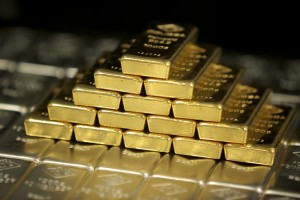
Gold traders could re-enter the markets as the precious metal recovered 2.8% in a busy week of trading fuelled by the UK budget and FOMC. Silver joined its counterpart and climbed 9%.
(Photo: Bloomberg)
Gold prices rose on the back of a weak US dollar as fundamentals favored safety instruments, in the short-term the price of gold futures increased as the trading week came to an end on Friday, March, 20. The yellow metal listed on Comex settled at $1,184 an ounce thus showing a sharp rise of 2.8% during a busy week of trading which saw further uncertainty in the US economy as Fed Chairperson, Janet Yellen, extended the period of possible interest rate hikes.
Gold was joined by silver futures which also benefited from the news that the dollar could weaken on record low interest rates. The price of silver quoted on the Exchange rose 4.8% on the day closing at $16.883, thus signifying the highest increase since December 2013, weekly prices spiked 9%, the highest since August 2013. The latest shuffle brings commodity traders back in the equation as gold continues to play cat-and-mouse with the dollar.
Gold has been flirting around the $1,150 mark after stumbling below the key $1,210 psychological level. The precious metal has been playing either side of the spectrum post-2008, after hitting an all-time high of $1,920 it suffered severe declines with a record single day drop in April 2013 not seen in 30 years. Silver has also been on the radar for traders, the metals contract hitting an all-time high of $49.31 in 2011.
Both contracts have depreciated since the Fed tapering which saw a comeback of US financial instruments. The US benchmark index, the Dow 30 crossed the 18,000 mark for the first time last year after the US economy showed signs that it was paving its way out of recession and reported strong GDP figures. GDP growth was 2.8% in 2012 and 1.9% in 2013.
Gold prices are highly correlated with the performance of the US economy and tend to move in the opposite direction of the greenback. This is because gold is priced in US dollars which can become costly for international investors if the dollar strengthens.
Gold Goes Electronic
In other news related to the precious metal, the century-old gold fixing has finally embraced electronic markets. From the 20th of March, the newly appointed LBMA Gold Administration will determine the daily benchmark, a manual practice previously carried out by banks. The move come after several key figures such as Libor, FX and Gold Fix were under investigation as traders who had allegedly manipulated the markets. Investigations have uncovered several banks and traders to face penalties for their role in the debacle.
The precious metals spot contract is readily available on major retail and institutional platforms and volumes have grown sporadically across the globe as traders appreciate Volatility in the contract.
On the other hand, the gold futures metals contract listed in Hong Kong has been withdrawn after the Hong Kong Exchange decided to cease its offering last month.
Gold is expected to continue to weaken as the overall outlook for global markets is optimistic, on growth. Credit Suisse analysts have been quoted as saying that the yellow metal could fall below the key $1,000 mark.
Amanpreet Kaur, a commodity trader commented: “The commodity bubble is bursting as we speak, there's no need for investors to explore the likes of gold and oil as prices will continue to trickle down to all-time lows.”
The latest fiasco to hit the energy markets has been Gartman's analysts predicting a price as low as $15 for oil.
(Photo: Bloomberg)
Gold prices rose on the back of a weak US dollar as fundamentals favored safety instruments, in the short-term the price of gold futures increased as the trading week came to an end on Friday, March, 20. The yellow metal listed on Comex settled at $1,184 an ounce thus showing a sharp rise of 2.8% during a busy week of trading which saw further uncertainty in the US economy as Fed Chairperson, Janet Yellen, extended the period of possible interest rate hikes.
Gold was joined by silver futures which also benefited from the news that the dollar could weaken on record low interest rates. The price of silver quoted on the Exchange rose 4.8% on the day closing at $16.883, thus signifying the highest increase since December 2013, weekly prices spiked 9%, the highest since August 2013. The latest shuffle brings commodity traders back in the equation as gold continues to play cat-and-mouse with the dollar.
Gold has been flirting around the $1,150 mark after stumbling below the key $1,210 psychological level. The precious metal has been playing either side of the spectrum post-2008, after hitting an all-time high of $1,920 it suffered severe declines with a record single day drop in April 2013 not seen in 30 years. Silver has also been on the radar for traders, the metals contract hitting an all-time high of $49.31 in 2011.
Both contracts have depreciated since the Fed tapering which saw a comeback of US financial instruments. The US benchmark index, the Dow 30 crossed the 18,000 mark for the first time last year after the US economy showed signs that it was paving its way out of recession and reported strong GDP figures. GDP growth was 2.8% in 2012 and 1.9% in 2013.
Gold prices are highly correlated with the performance of the US economy and tend to move in the opposite direction of the greenback. This is because gold is priced in US dollars which can become costly for international investors if the dollar strengthens.
Gold Goes Electronic
In other news related to the precious metal, the century-old gold fixing has finally embraced electronic markets. From the 20th of March, the newly appointed LBMA Gold Administration will determine the daily benchmark, a manual practice previously carried out by banks. The move come after several key figures such as Libor, FX and Gold Fix were under investigation as traders who had allegedly manipulated the markets. Investigations have uncovered several banks and traders to face penalties for their role in the debacle.
The precious metals spot contract is readily available on major retail and institutional platforms and volumes have grown sporadically across the globe as traders appreciate Volatility in the contract.
On the other hand, the gold futures metals contract listed in Hong Kong has been withdrawn after the Hong Kong Exchange decided to cease its offering last month.
Gold is expected to continue to weaken as the overall outlook for global markets is optimistic, on growth. Credit Suisse analysts have been quoted as saying that the yellow metal could fall below the key $1,000 mark.
Amanpreet Kaur, a commodity trader commented: “The commodity bubble is bursting as we speak, there's no need for investors to explore the likes of gold and oil as prices will continue to trickle down to all-time lows.”
The latest fiasco to hit the energy markets has been Gartman's analysts predicting a price as low as $15 for oil.
SumUp Merchants Can Now Invest Idle Cash in Money Market Funds
CMC Markets’ Artur Delijergijevs on Metals Demand, Volatility, & Stable Execution
CMC Markets’ Artur Delijergijevs on Metals Demand, Volatility, & Stable Execution
In this exclusive Executive Interview, Finance Magnates speaks with Artur Delijergijevs, Head of Systematic Market Making at CMC Markets, about the current state of metals demand and market volatility.
Delijergijevs offers a desk-level view on:
- Metals Demand: Why metals are seeing the strongest demand from both retail and institutional clients right now.
- The Safe-Haven Debate: Questioning whether gold still fits the classic safe-haven definition given large daily price movements.
- Volatile Market Prep: How a market-making desk prepares its systems and pricing for stressed market conditions and high-impact economic events.
- Hybrid Execution: Why the best execution model combines electronic speed with human relationship support, especially during volatility.
- AI in Workflow: Where CMC Markets is integrating machine learning for risk management and pricing, and the limitations of AI during stressed markets.
- Dubai's Role: The strategic importance of Dubai’s location for covering global trading sessions across Asia, Europe, and the US.
Watch to understand how CMC Markets maintains stable pricing and reliable execution quality in high-volatility environments.
#CMCmarkets #forex #metals #gold #trading #volatility #MarketMaking #iFXDubai #FinanceMagnates #Finance #Fintech #Execution #AlgorithmicTrading #RiskManagement
In this exclusive Executive Interview, Finance Magnates speaks with Artur Delijergijevs, Head of Systematic Market Making at CMC Markets, about the current state of metals demand and market volatility.
Delijergijevs offers a desk-level view on:
- Metals Demand: Why metals are seeing the strongest demand from both retail and institutional clients right now.
- The Safe-Haven Debate: Questioning whether gold still fits the classic safe-haven definition given large daily price movements.
- Volatile Market Prep: How a market-making desk prepares its systems and pricing for stressed market conditions and high-impact economic events.
- Hybrid Execution: Why the best execution model combines electronic speed with human relationship support, especially during volatility.
- AI in Workflow: Where CMC Markets is integrating machine learning for risk management and pricing, and the limitations of AI during stressed markets.
- Dubai's Role: The strategic importance of Dubai’s location for covering global trading sessions across Asia, Europe, and the US.
Watch to understand how CMC Markets maintains stable pricing and reliable execution quality in high-volatility environments.
#CMCmarkets #forex #metals #gold #trading #volatility #MarketMaking #iFXDubai #FinanceMagnates #Finance #Fintech #Execution #AlgorithmicTrading #RiskManagement
Finance Magnates Awards 2026 – Nominations Now Open
Finance Magnates Awards 2026 – Nominations Now Open
The Finance Magnates Awards 2026 nominations are now open. 🏆
From fintech innovators to leading brokers, this is where the finance industry celebrates its biggest achievements.
Winners will be announced at the Cyprus Gala Dinner on November 6, 2026.
Nominate your brand now.
https://awards.financemagnates.com/?utm_source=linkedin&utm_medium=video&utm_campaign=nominations-open
#FMAwards #FinanceMagnates #FintechAwards #Fintech #FinanceIndustry
The Finance Magnates Awards 2026 nominations are now open. 🏆
From fintech innovators to leading brokers, this is where the finance industry celebrates its biggest achievements.
Winners will be announced at the Cyprus Gala Dinner on November 6, 2026.
Nominate your brand now.
https://awards.financemagnates.com/?utm_source=linkedin&utm_medium=video&utm_campaign=nominations-open
#FMAwards #FinanceMagnates #FintechAwards #Fintech #FinanceIndustry
Finance Magnates Awards 2026 | Nominations Now Open 🏆#Fintech #FMAwards #TradingIndustry
Finance Magnates Awards 2026 | Nominations Now Open 🏆#Fintech #FMAwards #TradingIndustry
Lights on. Cameras ready. 🎬
Finance Magnates Awards 2026 nominations are now open. 🏆
#FMAwards #FinanceMagnates #FintechAwards #Fintech
Lights on. Cameras ready. 🎬
Finance Magnates Awards 2026 nominations are now open. 🏆
#FMAwards #FinanceMagnates #FintechAwards #Fintech
Exness sees trust as the key theme for growth in MENA Trading Growth for 2026
Exness sees trust as the key theme for growth in MENA Trading Growth for 2026
Mohammad Amer, Regional Commercial Director at Exness, sits down to discuss the booming MENA financial trading market. Find out why Dubai is key to the company's growth strategy, how a mobile-first generation is changing expectations, and why trust will be the defining theme for traders in 2026.
In this interview, you'll learn:
* Why Dubai and the MENA region are critical growth markets for fintech and online trading.
* How Exness is addressing the demands of mobile-first, younger traders through engineering, platform stability, and transparent conditions.
* The essential role local talent plays in providing a culturally relevant and compliant user experience.
* Mohammad Amer's outlook on the future of the online trading industry and why stronger controls and systems are necessary.
* Why "trust" isn't just a brand value, but has commercial value—and why he predicts 2026 will be the "Year of Trust."
Key Takeaways:
➡️ The MENA region is rapidly shaping global financial markets.
➡️ New traders expect stability, precise execution, and transparency.
➡️ Local expertise is key to regulatory compliance and user experience.
➡️ Future success belongs to firms capable of meeting rising standards across regulation and platform consistency.
Read the full article at: https://www.financemagnates.com/thought-leadership/exness-sees-trust-as-the-key-theme-for-growth-in-mena-trading-growth-for-2026/
#Exness #MENA #Trading #FinTech #Dubai #OnlineTrading #FinanceMagnates #MohammadAmer #Trust #MobileTrading
Mohammad Amer, Regional Commercial Director at Exness, sits down to discuss the booming MENA financial trading market. Find out why Dubai is key to the company's growth strategy, how a mobile-first generation is changing expectations, and why trust will be the defining theme for traders in 2026.
In this interview, you'll learn:
* Why Dubai and the MENA region are critical growth markets for fintech and online trading.
* How Exness is addressing the demands of mobile-first, younger traders through engineering, platform stability, and transparent conditions.
* The essential role local talent plays in providing a culturally relevant and compliant user experience.
* Mohammad Amer's outlook on the future of the online trading industry and why stronger controls and systems are necessary.
* Why "trust" isn't just a brand value, but has commercial value—and why he predicts 2026 will be the "Year of Trust."
Key Takeaways:
➡️ The MENA region is rapidly shaping global financial markets.
➡️ New traders expect stability, precise execution, and transparency.
➡️ Local expertise is key to regulatory compliance and user experience.
➡️ Future success belongs to firms capable of meeting rising standards across regulation and platform consistency.
Read the full article at: https://www.financemagnates.com/thought-leadership/exness-sees-trust-as-the-key-theme-for-growth-in-mena-trading-growth-for-2026/
#Exness #MENA #Trading #FinTech #Dubai #OnlineTrading #FinanceMagnates #MohammadAmer #Trust #MobileTrading
Paytiko CEO Razi Salih on Why Payment Orchestration is a MUST-HAVE for Brokers in 2026
Paytiko CEO Razi Salih on Why Payment Orchestration is a MUST-HAVE for Brokers in 2026
At iFX Expo Dubai, Finance Magnates spoke with Razi Salih, CEO at Paytiko, about the evolution of the payments ecosystem and why payment orchestration has shifted from an option to a necessity for brokers, prop firms, and exchanges.
Mr. Salih explains how global expansion, the need for deep localisation, and the sheer number of new payment methods, from instant banking to stablecoins, are driving this critical infrastructure shift.
#PaymentOrchestration #Fintech #Brokerage #TradingPayments #RaziSalih #Paytiko #iFXExpoDubai #Stablecoins #AIinFintech
At iFX Expo Dubai, Finance Magnates spoke with Razi Salih, CEO at Paytiko, about the evolution of the payments ecosystem and why payment orchestration has shifted from an option to a necessity for brokers, prop firms, and exchanges.
Mr. Salih explains how global expansion, the need for deep localisation, and the sheer number of new payment methods, from instant banking to stablecoins, are driving this critical infrastructure shift.
#PaymentOrchestration #Fintech #Brokerage #TradingPayments #RaziSalih #Paytiko #iFXExpoDubai #Stablecoins #AIinFintech