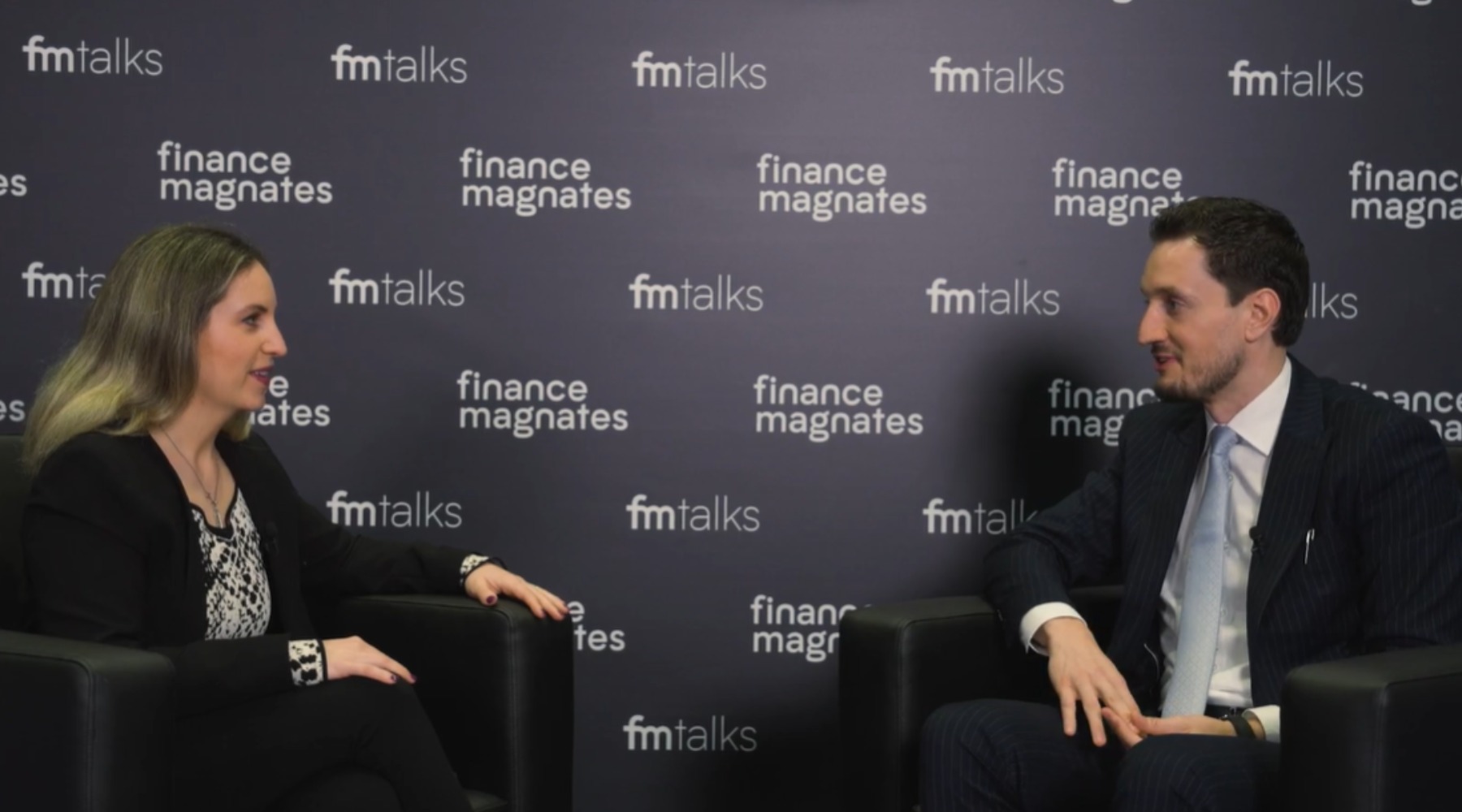
"Traditional prop firms often don’t even have B2C marketing—they’re not active online. But we do everything online," said Jakub Roz, CEO at For Traders.
"We need to offer a super smooth user experience—because our customers are usually young people, from all over the world."
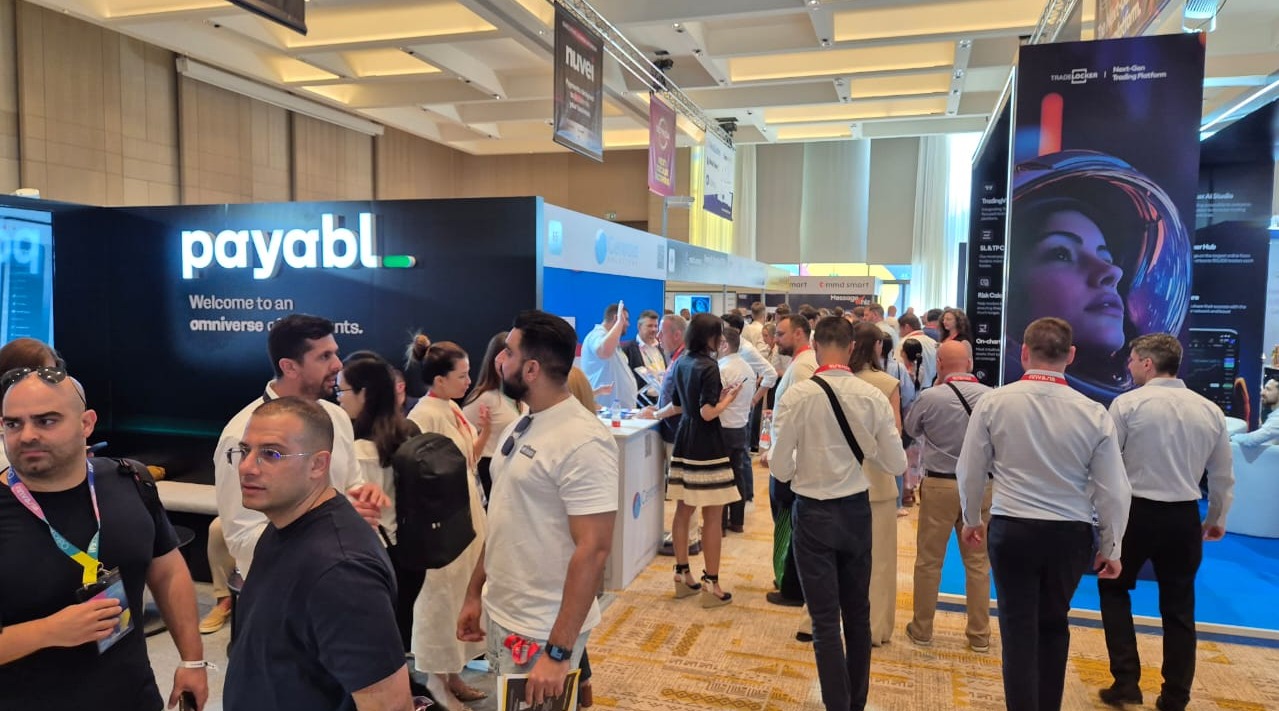
Attendees at iFX EXPO International 2025
The last day of iFX EXPO International 2025 was packed with panel discussions and interviews, covering a range of topics from online trading and liquidity to payments and prop trading.
iFX officially kicked off on Tuesday evening with the iconic Welcome Party, followed by a full day of activities on the expo floor yesterday (Wednesday). As always, the venue was buzzing with attendees from across the industry.
Liquid, but Not Easy – Access, Aggregation & Alpha in 2025
Markets in 2025 demand more from liquidity. With thin spreads, venues more dispersed than ever, and clients expecting precision and speed, liquidity has become less about access and more about insight. Whether in FX, crypto, or synthetic assets, the challenge lies in identifying trustworthy flow, knowing which data to act on, and executing instantly across fragmented ecosystems.
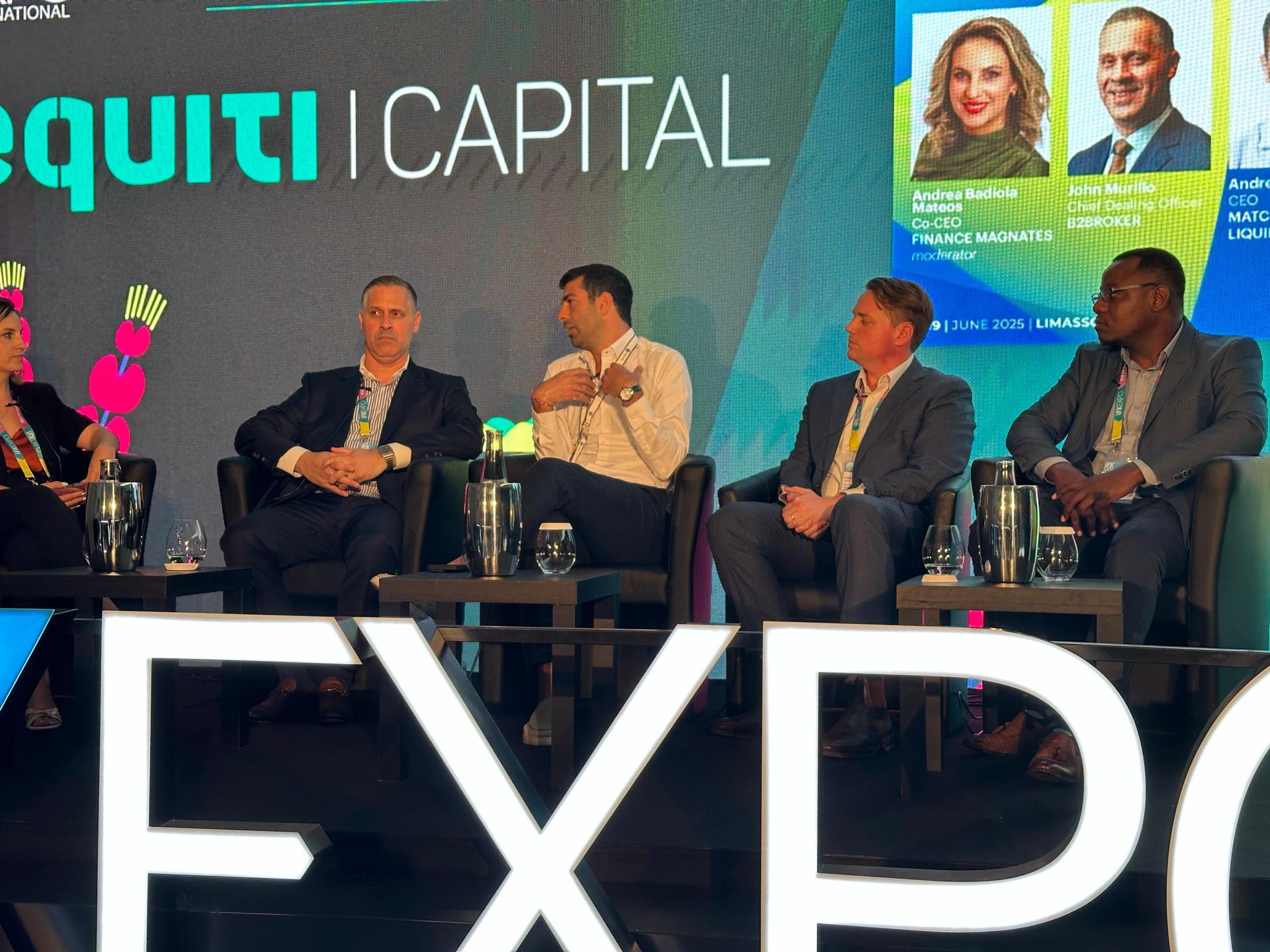
This was the subject of discussion at Speaker Hall at the IFX
EXPO. Hosted by Finance Magnates Group’s CCO Andrea Badiola Mateos, the panel
discussion also included John Murillo, the Chief Dealing Officer at B2BROKER, Andreas
Kapsos CEO Match-Prime Liquidity, Liam Smith COO at 26 Degrees Global Markets,
and Reginald Sherekete, the Chief Commercial Officer at Doo Clearing Global.
"Traditional Prop Firms Often Don’t Even Have B2C Marketing"
"We’re not actually prop firms in the traditional sense," said Jakub Roz, CEO at For Traders. "We’re doing something similar to trading, but it’s a little different. It’s a new way of operating. It’s something fresh in the market, and we’re all modern companies with a completely different approach."
"Traditional prop firms often don’t even have B2C marketing—they’re not active online. But we do everything online.
We need to offer a super smooth user experience, because our customers are usually young people, from all over the world.
They’re used to trading and investing through mobile apps. They’re used to the modern digital world.
So I think we all need to be prepared for that—and we have to do things differently from the traditional prop firm model.
It’s a different setup, a different model... but yes, I completely agree."
Modern proprietary trading firms—often referred to as retail prop firms—are disrupting the traditional prop trading model by offering funded trading accounts to individuals through online evaluations. Unlike legacy firms, which typically require traders to work on-site and trade company capital, modern prop firms like FTMO, MyFundedFX, and others operate entirely online, appealing to a digitally native, global audience.
"A Framework Is Essential, but It Can't be One-Size-Fits-All"
"This is a dynamic environment that changes month to month, jurisdiction to jurisdiction," said Yoli Chisholm, SVP of Marketing at Deriv, addressing the changing regulations around the affiliates. "We just had a case in the UAE where the regulatory body said influencers will need to be registered. That’s something we’ve had to adapt to.
But yes, the onus is on brokers. As long as we’re aware of what the rules are, we need to make those rules transparent—whether through content, or through direct outreach that our account managers have with partners."
"It’s also about automating the experience and giving visibility into why we need certain information: why we're verifying identities, confirming addresses, and so on... A framework is essential. But it can't be one-size-fits-all across all geographies."
"For us, the responsibility falls on technology—to help brokers live in these regulatory variances—and on proper sales enablement tools for our account managers in the field," she added. "It would be great to have a universal standard eventually. Maybe we’ll get there. But right now, we need to be nimble, we need to adapt, and we need to embrace compliance."
Global regulators are cracking down on how brokers engage third-party promoters, influencers, and affiliate networks—pushing for greater transparency and shared accountability. In 2023 alone, several regulators, including the CySEC, FCA, ASIC, and UAE’s VARA, issued or reinforced guidelines restricting affiliate-led promotions. For instance, VARA now requires influencer registration, while CySEC has warned brokers against misleading marketing via affiliates.
At the same time, many affiliates are small businesses or solo operators, ill-equipped to monitor changing rules across regions. This has led to growing calls for brokers to provide structured partnership frameworks—including verified content, approved messaging, and automated onboarding—to mitigate regulatory risk on both sides.
Chisholm was the part of a panel discussing the topic "Partners, Not Middlemen – The New Role of Affiliates & IBs." She was joined by Pere Monguió, co-CEO at FXStreet; Yiota Hadjilouka, Chief Operating Officer at Spotware; and Paolo McGibney, Head Sales EMEA at AdRoll.
"Visa Is Not Just about Cards"
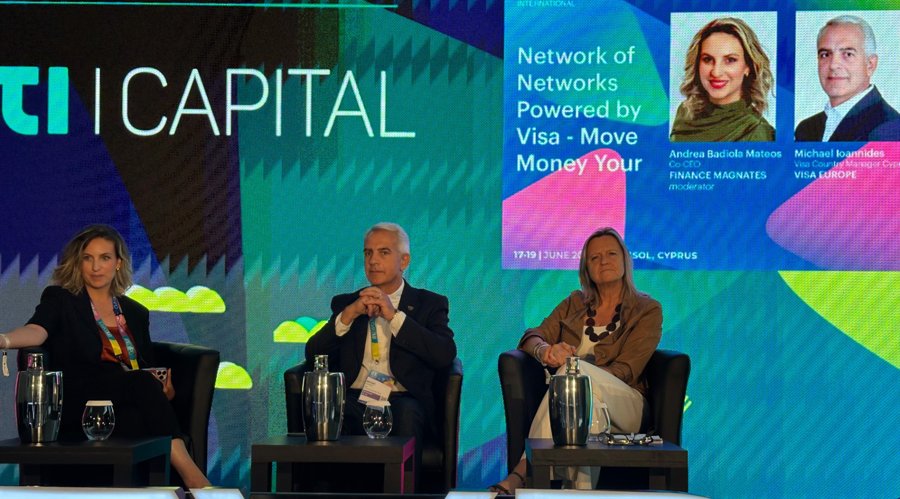
"Visa not just about cards," said Michael Ioannides Visa Country Manager Cyprus at Visa Europe. "I’d say that Visa today offers a comprehensive vision and solutions for anyone who wants to pay or get paid.
It’s the network that provides the infrastructure, the services, and the peace of mind—not just for members, but also for non-members."
"Visa offers payout management solutions in real time, which is a key feature we’ll likely discuss further.
So, practically, Visa is no longer just about card payments. It supports the full global flow of digital payouts, safety, infrastructure, and broader ecosystem enablement."
The iFX panel on " Network of Networks Powered by Visa - Move Money Your Way"
While Visa remains widely known for card transactions, over $3.5 trillion of Visa’s total payment volume in 2023 came from non-card-based digital flows, including direct account transfers, wallet payouts, and B2B cross-border payments. According to Visa’s own data, Visa Direct processed more than 7.5 billion transactions in 2023 alone, enabling payouts to over 11.5 billion endpoints across 185 countries and 160+ currencies.
This transformation aligns with the global demand for faster, more transparent cross-border payment rails. A 2024 McKinsey report estimates that the real-time payments market will grow at a CAGR of 33%, reaching over $50 billion in value by 2028, driven largely by merchant and platform payouts.
"Automation Will Benefit Very Highly from AI"
"Automation, from the onboarding perspective, will benefit very highly from machine learning—because then it’s able to project things that may be missed from the beginning," said Anthony Migui Njagi, Head of Strategic Alliance & Growth at Virtual Pay, on addressing a question on the future of AI in automated onboarding.
"And once you include and inculcate the capabilities of the technologies you’ve built around your exact onboarding process, then it becomes a benefit.
Another benefit is that it allows us to sleep more—because we are covered from a global perspective."
As regulatory scrutiny intensifies, Payment Service Providers (PSPs) are under pressure to balance innovation with compliance. Global regulatory fines against financial institutions for non-compliance reached over $6 billion in 2023, with a growing share tied to weak Know Your Customer (KYC) and Anti-Money Laundering (AML) practices.
In this climate, automated onboarding and AI-driven KYC processes have emerged as essential tools. According to a 2024 Juniper Research report, AI-based onboarding solutions could reduce onboarding time by 60% and cut fraud losses by over $10 billion globally by 2028. Meanwhile, the adoption of RegTech solutions by PSPs is expected to grow at a CAGR of 19.8% over the next four years.
Njagi was a part of the panel discussing on "Can Payments Keep Up with Regulation?" He was joined by Abiola Giwa, Sales & Partnerships Lead, Forex Business Korapay; Tim Ferland, CEO at LetKnow Pay; and Maggie Gemmill, Business Development- Wealth and FX at Visa Direct.
Highlights from iFX
Finance Magnates interviews are ongoing. Would you like to speak with us as well?
Jason Keogh, Sales Director of Digital Assets at Fusion Capital, talking to Finance Magnates
The floors are packed with attendees. From C-level executives to traders, the event brings everyone together under one roof.
Halls at iFX EXPO International are crowed with attendees
Massive Giveaway at iFX
Would you like a free, one-year subscription to the Finance Magnates Quarterly Intelligence Report? Now’s your chance.
All you need to do is:
Scan the QR code
Complete the short challenge
If you answer all the questions correctly, you’ll be entered into a draw to win 1 of 10 Annual QIR subscriptions
Finance Magnates giveaway
Are you at iFX EXPO International? Visit the Finance Magnates team at booth number 155.
The last day of iFX EXPO International 2025 was packed with panel discussions and interviews, covering a range of topics from online trading and liquidity to payments and prop trading.
iFX officially kicked off on Tuesday evening with the iconic Welcome Party, followed by a full day of activities on the expo floor yesterday (Wednesday). As always, the venue was buzzing with attendees from across the industry.
Liquid, but Not Easy – Access, Aggregation & Alpha in 2025
Markets in 2025 demand more from liquidity. With thin spreads, venues more dispersed than ever, and clients expecting precision and speed, liquidity has become less about access and more about insight. Whether in FX, crypto, or synthetic assets, the challenge lies in identifying trustworthy flow, knowing which data to act on, and executing instantly across fragmented ecosystems.
This was the subject of discussion at Speaker Hall at the IFX
EXPO. Hosted by Finance Magnates Group’s CCO Andrea Badiola Mateos, the panel
discussion also included John Murillo, the Chief Dealing Officer at B2BROKER, Andreas
Kapsos CEO Match-Prime Liquidity, Liam Smith COO at 26 Degrees Global Markets,
and Reginald Sherekete, the Chief Commercial Officer at Doo Clearing Global.
"Traditional Prop Firms Often Don’t Even Have B2C Marketing"
"We’re not actually prop firms in the traditional sense," said Jakub Roz, CEO at For Traders. "We’re doing something similar to trading, but it’s a little different. It’s a new way of operating. It’s something fresh in the market, and we’re all modern companies with a completely different approach."
"Traditional prop firms often don’t even have B2C marketing—they’re not active online. But we do everything online.
We need to offer a super smooth user experience, because our customers are usually young people, from all over the world.
They’re used to trading and investing through mobile apps. They’re used to the modern digital world.
So I think we all need to be prepared for that—and we have to do things differently from the traditional prop firm model.
It’s a different setup, a different model... but yes, I completely agree."
Modern proprietary trading firms—often referred to as retail prop firms—are disrupting the traditional prop trading model by offering funded trading accounts to individuals through online evaluations. Unlike legacy firms, which typically require traders to work on-site and trade company capital, modern prop firms like FTMO, MyFundedFX, and others operate entirely online, appealing to a digitally native, global audience.
"A Framework Is Essential, but It Can't be One-Size-Fits-All"
"This is a dynamic environment that changes month to month, jurisdiction to jurisdiction," said Yoli Chisholm, SVP of Marketing at Deriv, addressing the changing regulations around the affiliates. "We just had a case in the UAE where the regulatory body said influencers will need to be registered. That’s something we’ve had to adapt to.
But yes, the onus is on brokers. As long as we’re aware of what the rules are, we need to make those rules transparent—whether through content, or through direct outreach that our account managers have with partners."
"It’s also about automating the experience and giving visibility into why we need certain information: why we're verifying identities, confirming addresses, and so on... A framework is essential. But it can't be one-size-fits-all across all geographies."
"For us, the responsibility falls on technology—to help brokers live in these regulatory variances—and on proper sales enablement tools for our account managers in the field," she added. "It would be great to have a universal standard eventually. Maybe we’ll get there. But right now, we need to be nimble, we need to adapt, and we need to embrace compliance."
Global regulators are cracking down on how brokers engage third-party promoters, influencers, and affiliate networks—pushing for greater transparency and shared accountability. In 2023 alone, several regulators, including the CySEC, FCA, ASIC, and UAE’s VARA, issued or reinforced guidelines restricting affiliate-led promotions. For instance, VARA now requires influencer registration, while CySEC has warned brokers against misleading marketing via affiliates.
At the same time, many affiliates are small businesses or solo operators, ill-equipped to monitor changing rules across regions. This has led to growing calls for brokers to provide structured partnership frameworks—including verified content, approved messaging, and automated onboarding—to mitigate regulatory risk on both sides.
Chisholm was the part of a panel discussing the topic "Partners, Not Middlemen – The New Role of Affiliates & IBs." She was joined by Pere Monguió, co-CEO at FXStreet; Yiota Hadjilouka, Chief Operating Officer at Spotware; and Paolo McGibney, Head Sales EMEA at AdRoll.
"Visa Is Not Just about Cards"
"Visa not just about cards," said Michael Ioannides Visa Country Manager Cyprus at Visa Europe. "I’d say that Visa today offers a comprehensive vision and solutions for anyone who wants to pay or get paid.
It’s the network that provides the infrastructure, the services, and the peace of mind—not just for members, but also for non-members."
"Visa offers payout management solutions in real time, which is a key feature we’ll likely discuss further.
So, practically, Visa is no longer just about card payments. It supports the full global flow of digital payouts, safety, infrastructure, and broader ecosystem enablement."
The iFX panel on " Network of Networks Powered by Visa - Move Money Your Way"
While Visa remains widely known for card transactions, over $3.5 trillion of Visa’s total payment volume in 2023 came from non-card-based digital flows, including direct account transfers, wallet payouts, and B2B cross-border payments. According to Visa’s own data, Visa Direct processed more than 7.5 billion transactions in 2023 alone, enabling payouts to over 11.5 billion endpoints across 185 countries and 160+ currencies.
This transformation aligns with the global demand for faster, more transparent cross-border payment rails. A 2024 McKinsey report estimates that the real-time payments market will grow at a CAGR of 33%, reaching over $50 billion in value by 2028, driven largely by merchant and platform payouts.
"Automation Will Benefit Very Highly from AI"
"Automation, from the onboarding perspective, will benefit very highly from machine learning—because then it’s able to project things that may be missed from the beginning," said Anthony Migui Njagi, Head of Strategic Alliance & Growth at Virtual Pay, on addressing a question on the future of AI in automated onboarding.
"And once you include and inculcate the capabilities of the technologies you’ve built around your exact onboarding process, then it becomes a benefit.
Another benefit is that it allows us to sleep more—because we are covered from a global perspective."
As regulatory scrutiny intensifies, Payment Service Providers (PSPs) are under pressure to balance innovation with compliance. Global regulatory fines against financial institutions for non-compliance reached over $6 billion in 2023, with a growing share tied to weak Know Your Customer (KYC) and Anti-Money Laundering (AML) practices.
In this climate, automated onboarding and AI-driven KYC processes have emerged as essential tools. According to a 2024 Juniper Research report, AI-based onboarding solutions could reduce onboarding time by 60% and cut fraud losses by over $10 billion globally by 2028. Meanwhile, the adoption of RegTech solutions by PSPs is expected to grow at a CAGR of 19.8% over the next four years.
Njagi was a part of the panel discussing on "Can Payments Keep Up with Regulation?" He was joined by Abiola Giwa, Sales & Partnerships Lead, Forex Business Korapay; Tim Ferland, CEO at LetKnow Pay; and Maggie Gemmill, Business Development- Wealth and FX at Visa Direct.
Highlights from iFX
Finance Magnates interviews are ongoing. Would you like to speak with us as well?
Jason Keogh, Sales Director of Digital Assets at Fusion Capital, talking to Finance Magnates
The floors are packed with attendees. From C-level executives to traders, the event brings everyone together under one roof.
Halls at iFX EXPO International are crowed with attendees
Massive Giveaway at iFX
Would you like a free, one-year subscription to the Finance Magnates Quarterly Intelligence Report? Now’s your chance.
All you need to do is:
Scan the QR code
Complete the short challenge
If you answer all the questions correctly, you’ll be entered into a draw to win 1 of 10 Annual QIR subscriptions
Finance Magnates giveaway
Are you at iFX EXPO International? Visit the Finance Magnates team at booth number 155.
FMLS:25 Kicks Off With Networking Blitz at The Folly in London
FP Markets Winner Spotlight 🏆 | Global Broker of the Year 2025 #Trading #Broker #Innovation #Shorts
FP Markets Winner Spotlight 🏆 | Global Broker of the Year 2025 #Trading #Broker #Innovation #Shorts
FP Markets takes the spotlight as Global Broker of the Year 2025 at the Finance Magnates Awards.
Martin Stoilov, Head of Client Experience, shares that trust, innovation, and people played a key role in the company’s success, supported by a strong foundation of integrity and client-centricity.
Following this milestone, FP Markets continues to focus on growth, technology investment, and its core values of transparency and excellence.
👉 Be part of FM Awards 2026: https://awards.financemagnates.com/#nominate
FP Markets takes the spotlight as Global Broker of the Year 2025 at the Finance Magnates Awards.
Martin Stoilov, Head of Client Experience, shares that trust, innovation, and people played a key role in the company’s success, supported by a strong foundation of integrity and client-centricity.
Following this milestone, FP Markets continues to focus on growth, technology investment, and its core values of transparency and excellence.
👉 Be part of FM Awards 2026: https://awards.financemagnates.com/#nominate
In this video, we review @HolaPrimeMarketsOfficial, a multi-asset forex and CFDs broker offering different account types, trading platforms, and flexible trading conditions.
We cover the broker’s overall offering, including account options, trading environment, platforms like MT4 and MT5, and additional services such as managed accounts and fast withdrawals.
Watch the full video to see if Hola Prime Markets fits your trading needs.
📣 Stay up to date with the latest in finance and trading. Follow Finance Magnates for industry news, insights, and global event coverage.
Connect with us:
🔗 LinkedIn: /financemagnates
👍 Facebook: /financemagnates
📸 Instagram: https://www.instagram.com/financemagnates
🐦 X: https://x.com/financemagnates
🎥 TikTok: https://www.tiktok.com/tag/financemagnates
▶️ YouTube: /@financemagnates_official
#HolaPrime #ForexBroker #CFDTrading #FinanceMagnates #Trading #Forex #BrokerReview
In this video, we review @HolaPrimeMarketsOfficial, a multi-asset forex and CFDs broker offering different account types, trading platforms, and flexible trading conditions.
We cover the broker’s overall offering, including account options, trading environment, platforms like MT4 and MT5, and additional services such as managed accounts and fast withdrawals.
Watch the full video to see if Hola Prime Markets fits your trading needs.
📣 Stay up to date with the latest in finance and trading. Follow Finance Magnates for industry news, insights, and global event coverage.
Connect with us:
🔗 LinkedIn: /financemagnates
👍 Facebook: /financemagnates
📸 Instagram: https://www.instagram.com/financemagnates
🐦 X: https://x.com/financemagnates
🎥 TikTok: https://www.tiktok.com/tag/financemagnates
▶️ YouTube: /@financemagnates_official
#HolaPrime #ForexBroker #CFDTrading #FinanceMagnates #Trading #Forex #BrokerReview
Hola Prime Review: What You Need to Know | Full Breakdown by Finance Magnates
Hola Prime Review: What You Need to Know | Full Breakdown by Finance Magnates
In this video, we review @HolaPrime_Global, a proprietary trading firm offering evaluation programs and performance-based payouts in simulated market environments.
We cover how the challenge model works, including account types, profit splits (up to 95%), trading rules, and what it takes to reach a funded account. You’ll also learn about available platforms like MT4, MT5, cTrader, and more, along with insights into payouts, support, and trading conditions.
Watch the full video to see if Hola Prime fits your trading style.
📣 Stay up to date with the latest in finance and trading. Follow Finance Magnates for industry news, insights, and global event coverage.
Connect with us:
🔗 LinkedIn: /financemagnates
👍 Facebook: /financemagnates
📸 Instagram: https://www.instagram.com/financemagnates
🐦 X: https://x.com/financemagnates
🎥 TikTok: https://www.tiktok.com/tag/financemagnates
▶️ YouTube: /@financemagnates_official
#HolaPrime #PropFirm #Trading #FinanceMagnates #Forex #FuturesTrading #TradingReview #PropFirmReview
In this video, we review @HolaPrime_Global, a proprietary trading firm offering evaluation programs and performance-based payouts in simulated market environments.
We cover how the challenge model works, including account types, profit splits (up to 95%), trading rules, and what it takes to reach a funded account. You’ll also learn about available platforms like MT4, MT5, cTrader, and more, along with insights into payouts, support, and trading conditions.
Watch the full video to see if Hola Prime fits your trading style.
📣 Stay up to date with the latest in finance and trading. Follow Finance Magnates for industry news, insights, and global event coverage.
Connect with us:
🔗 LinkedIn: /financemagnates
👍 Facebook: /financemagnates
📸 Instagram: https://www.instagram.com/financemagnates
🐦 X: https://x.com/financemagnates
🎥 TikTok: https://www.tiktok.com/tag/financemagnates
▶️ YouTube: /@financemagnates_official
#HolaPrime #PropFirm #Trading #FinanceMagnates #Forex #FuturesTrading #TradingReview #PropFirmReview
Axi Winner Spotlight 🏆 | Global Most Innovative Broker 2025 #Innovation #Trading #Fintech #Broker
Axi Winner Spotlight 🏆 | Global Most Innovative Broker 2025 #Innovation #Trading #Fintech #Broker
Axi takes the spotlight at the Finance Magnates Awards, winning Global Most Innovative Broker 2025.
Olivia Xenofontos and Ivanna Openko share how the team will feel: proud, motivated, and ready to keep delivering.
They also describe the night as well-organized, focused, and enjoyable for all.
👉 Be part of FM Awards 2026.
Axi takes the spotlight at the Finance Magnates Awards, winning Global Most Innovative Broker 2025.
Olivia Xenofontos and Ivanna Openko share how the team will feel: proud, motivated, and ready to keep delivering.
They also describe the night as well-organized, focused, and enjoyable for all.
👉 Be part of FM Awards 2026.
Recognition that matters.
Built on transparency.
Driven by the industry.
The Finance Magnates Awards 2026.
Nominations are now open.
🔗 https://awards.financemagnates.com/?utm_source=SM&utm_medium=social&utm_campaign=recognition-matters
Recognition that matters.
Built on transparency.
Driven by the industry.
The Finance Magnates Awards 2026.
Nominations are now open.
🔗 https://awards.financemagnates.com/?utm_source=SM&utm_medium=social&utm_campaign=recognition-matters