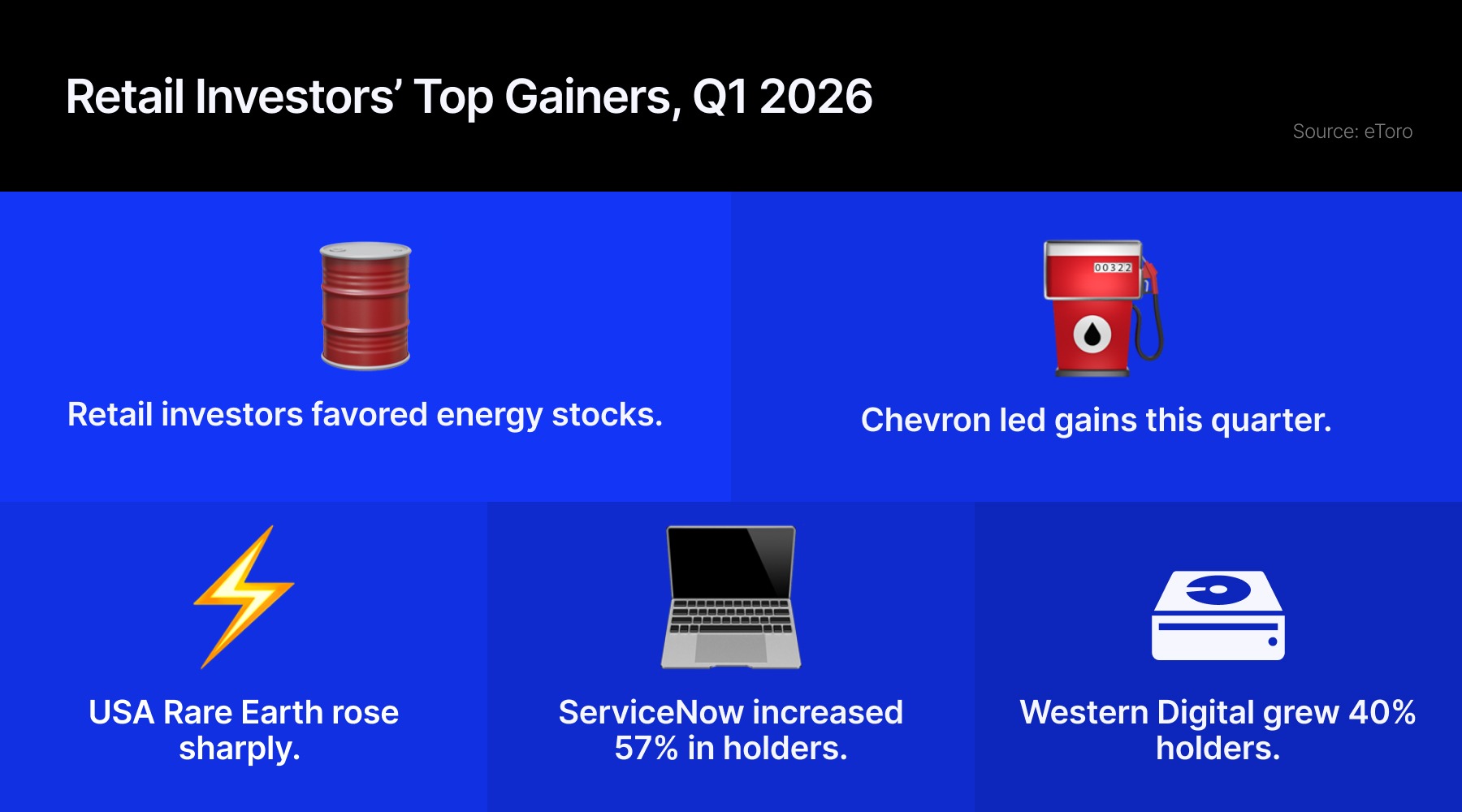
Investors trim Magnificent 7 exposure for diversification, with Tesla facing the sharpest pullback.
83 percent believe US dollar will remain global reserve currency for decade.
Retail investors are regaining confidence in the US market
after two quarters of decline, according to the latest quarterly Retail
Investor Beat survey from trading platform eToro.
The survey, which covered 10,000 retail investors across 13
countries, found that 38 percent now view the US as the region with the
strongest long-term return potential. This marks a 12 percent increase from the
previous quarter, reversing consecutive declines of 9 percent in the first
quarter and 17 percent in the second.
Portfolio allocations reflect the same trend, with 43
percent of investors now holding exposure to the US market, an 8 percent rise
from the prior quarter and the highest level since the survey began in early
2023.
Caution Toward the Magnificent 7
Lale Akoner, eToro’s Global Market Strategist, Source: LinkedIn
“Now, as confidence in the resilience of the US economy
improves, we’re seeing a reversal of that trend,” commented eToro’s Global Market Strategist Lale Akoner.
“Portfolios are once again
tilting back toward the US, reflecting recognition that, despite global
diversification, the American market remains the cornerstone of global
investing,” Akoner added.
At the same time, retail investors are showing more caution
toward the so-called Magnificent 7 technology stocks, which include Amazon,
Apple, Microsoft, Meta, Tesla, Nvidia, and Alphabet.
Thirteen percent expect
these stocks to significantly outperform the market in 2025, while 33 percent
expect slight outperformance.
The number of investors planning to reduce exposure has
grown modestly across all seven companies compared with a year earlier. Tesla
saw the largest change, with a 6 percentage point increase in the share of
investors not invested or not planning to invest.
US Dollar Holds Reserve Currency Status
Retail investors also remain attentive to the outlook for
the US dollar. Half of respondents reported they had adjusted or were planning
to adjust their portfolios for possible long-term weakness.
However, 83 percent believe the dollar will retain its
position as the global reserve currency over the next 10 years. Only 7 percent
expect it to lose that status, with bitcoin, the Chinese yuan, the euro, gold,
and central bank digital currencies cited as possible alternatives.
“Retail investors are effectively balancing diversification
with a clear acknowledgment that long-term growth opportunities are still
heavily anchored in the US,” Akoner noted.
Recession Fears Ease, Domestic Risks Rise
The survey further indicated easing fears of a global
recession. Twenty-three percent listed the global economy as the top risk to
their portfolios, down from 26 percent in the previous quarter.
Inflation remained the second most cited concern at 19
percent. Meanwhile, the share of investors viewing their domestic economy as
the biggest threat rose to 14 percent from 11 percent, with US investors
showing the highest level of concern at 28 percent.
Retail investors are regaining confidence in the US market
after two quarters of decline, according to the latest quarterly Retail
Investor Beat survey from trading platform eToro.
The survey, which covered 10,000 retail investors across 13
countries, found that 38 percent now view the US as the region with the
strongest long-term return potential. This marks a 12 percent increase from the
previous quarter, reversing consecutive declines of 9 percent in the first
quarter and 17 percent in the second.
Portfolio allocations reflect the same trend, with 43
percent of investors now holding exposure to the US market, an 8 percent rise
from the prior quarter and the highest level since the survey began in early
2023.
Caution Toward the Magnificent 7
Lale Akoner, eToro’s Global Market Strategist, Source: LinkedIn
“Now, as confidence in the resilience of the US economy
improves, we’re seeing a reversal of that trend,” commented eToro’s Global Market Strategist Lale Akoner.
“Portfolios are once again
tilting back toward the US, reflecting recognition that, despite global
diversification, the American market remains the cornerstone of global
investing,” Akoner added.
At the same time, retail investors are showing more caution
toward the so-called Magnificent 7 technology stocks, which include Amazon,
Apple, Microsoft, Meta, Tesla, Nvidia, and Alphabet.
Thirteen percent expect
these stocks to significantly outperform the market in 2025, while 33 percent
expect slight outperformance.
The number of investors planning to reduce exposure has
grown modestly across all seven companies compared with a year earlier. Tesla
saw the largest change, with a 6 percentage point increase in the share of
investors not invested or not planning to invest.
US Dollar Holds Reserve Currency Status
Retail investors also remain attentive to the outlook for
the US dollar. Half of respondents reported they had adjusted or were planning
to adjust their portfolios for possible long-term weakness.
However, 83 percent believe the dollar will retain its
position as the global reserve currency over the next 10 years. Only 7 percent
expect it to lose that status, with bitcoin, the Chinese yuan, the euro, gold,
and central bank digital currencies cited as possible alternatives.
“Retail investors are effectively balancing diversification
with a clear acknowledgment that long-term growth opportunities are still
heavily anchored in the US,” Akoner noted.
Recession Fears Ease, Domestic Risks Rise
The survey further indicated easing fears of a global
recession. Twenty-three percent listed the global economy as the top risk to
their portfolios, down from 26 percent in the previous quarter.
Inflation remained the second most cited concern at 19
percent. Meanwhile, the share of investors viewing their domestic economy as
the biggest threat rose to 14 percent from 11 percent, with US investors
showing the highest level of concern at 28 percent.
Tareq is a financial writer with 15 years of experience covering global markets. His work spans technical analysis, forex broker reviews, and market sentiment, with a focus on topics relevant to retail traders. He joined Finance Magnates in 2023.
At Finance Magnates, he serves as News Editor, covering retail forex and CFD brokers, cryptocurrency exchanges, fintech firms, and regulatory developments shaping the trading industry. He holds an Honours degree in Information Technology from Anfell College, London.
Education:
Honours degree Information Technology, Anfell College, London
Gibraltar Licenses First Prediction Market Operator in Bid to Attract Sector Growth
FP Markets Winner Spotlight 🏆 | Global Broker of the Year 2025 #Trading #Broker #Innovation #Shorts
FP Markets Winner Spotlight 🏆 | Global Broker of the Year 2025 #Trading #Broker #Innovation #Shorts
FP Markets takes the spotlight as Global Broker of the Year 2025 at the Finance Magnates Awards.
Martin Stoilov, Head of Client Experience, shares that trust, innovation, and people played a key role in the company’s success, supported by a strong foundation of integrity and client-centricity.
Following this milestone, FP Markets continues to focus on growth, technology investment, and its core values of transparency and excellence.
👉 Be part of FM Awards 2026: https://awards.financemagnates.com/#nominate
FP Markets takes the spotlight as Global Broker of the Year 2025 at the Finance Magnates Awards.
Martin Stoilov, Head of Client Experience, shares that trust, innovation, and people played a key role in the company’s success, supported by a strong foundation of integrity and client-centricity.
Following this milestone, FP Markets continues to focus on growth, technology investment, and its core values of transparency and excellence.
👉 Be part of FM Awards 2026: https://awards.financemagnates.com/#nominate
In this video, we review @HolaPrimeMarketsOfficial, a multi-asset forex and CFDs broker offering different account types, trading platforms, and flexible trading conditions.
We cover the broker’s overall offering, including account options, trading environment, platforms like MT4 and MT5, and additional services such as managed accounts and fast withdrawals.
Watch the full video to see if Hola Prime Markets fits your trading needs.
📣 Stay up to date with the latest in finance and trading. Follow Finance Magnates for industry news, insights, and global event coverage.
Connect with us:
🔗 LinkedIn: /financemagnates
👍 Facebook: /financemagnates
📸 Instagram: https://www.instagram.com/financemagnates
🐦 X: https://x.com/financemagnates
🎥 TikTok: https://www.tiktok.com/tag/financemagnates
▶️ YouTube: /@financemagnates_official
#HolaPrime #ForexBroker #CFDTrading #FinanceMagnates #Trading #Forex #BrokerReview
In this video, we review @HolaPrimeMarketsOfficial, a multi-asset forex and CFDs broker offering different account types, trading platforms, and flexible trading conditions.
We cover the broker’s overall offering, including account options, trading environment, platforms like MT4 and MT5, and additional services such as managed accounts and fast withdrawals.
Watch the full video to see if Hola Prime Markets fits your trading needs.
📣 Stay up to date with the latest in finance and trading. Follow Finance Magnates for industry news, insights, and global event coverage.
Connect with us:
🔗 LinkedIn: /financemagnates
👍 Facebook: /financemagnates
📸 Instagram: https://www.instagram.com/financemagnates
🐦 X: https://x.com/financemagnates
🎥 TikTok: https://www.tiktok.com/tag/financemagnates
▶️ YouTube: /@financemagnates_official
#HolaPrime #ForexBroker #CFDTrading #FinanceMagnates #Trading #Forex #BrokerReview
Hola Prime Review: What You Need to Know | Full Breakdown by Finance Magnates
Hola Prime Review: What You Need to Know | Full Breakdown by Finance Magnates
In this video, we review @HolaPrime_Global, a proprietary trading firm offering evaluation programs and performance-based payouts in simulated market environments.
We cover how the challenge model works, including account types, profit splits (up to 95%), trading rules, and what it takes to reach a funded account. You’ll also learn about available platforms like MT4, MT5, cTrader, and more, along with insights into payouts, support, and trading conditions.
Watch the full video to see if Hola Prime fits your trading style.
📣 Stay up to date with the latest in finance and trading. Follow Finance Magnates for industry news, insights, and global event coverage.
Connect with us:
🔗 LinkedIn: /financemagnates
👍 Facebook: /financemagnates
📸 Instagram: https://www.instagram.com/financemagnates
🐦 X: https://x.com/financemagnates
🎥 TikTok: https://www.tiktok.com/tag/financemagnates
▶️ YouTube: /@financemagnates_official
#HolaPrime #PropFirm #Trading #FinanceMagnates #Forex #FuturesTrading #TradingReview #PropFirmReview
In this video, we review @HolaPrime_Global, a proprietary trading firm offering evaluation programs and performance-based payouts in simulated market environments.
We cover how the challenge model works, including account types, profit splits (up to 95%), trading rules, and what it takes to reach a funded account. You’ll also learn about available platforms like MT4, MT5, cTrader, and more, along with insights into payouts, support, and trading conditions.
Watch the full video to see if Hola Prime fits your trading style.
📣 Stay up to date with the latest in finance and trading. Follow Finance Magnates for industry news, insights, and global event coverage.
Connect with us:
🔗 LinkedIn: /financemagnates
👍 Facebook: /financemagnates
📸 Instagram: https://www.instagram.com/financemagnates
🐦 X: https://x.com/financemagnates
🎥 TikTok: https://www.tiktok.com/tag/financemagnates
▶️ YouTube: /@financemagnates_official
#HolaPrime #PropFirm #Trading #FinanceMagnates #Forex #FuturesTrading #TradingReview #PropFirmReview
Axi Winner Spotlight 🏆 | Global Most Innovative Broker 2025 #Innovation #Trading #Fintech #Broker
Axi Winner Spotlight 🏆 | Global Most Innovative Broker 2025 #Innovation #Trading #Fintech #Broker
Axi takes the spotlight at the Finance Magnates Awards, winning Global Most Innovative Broker 2025.
Olivia Xenofontos and Ivanna Openko share how the team will feel: proud, motivated, and ready to keep delivering.
They also describe the night as well-organized, focused, and enjoyable for all.
👉 Be part of FM Awards 2026.
Axi takes the spotlight at the Finance Magnates Awards, winning Global Most Innovative Broker 2025.
Olivia Xenofontos and Ivanna Openko share how the team will feel: proud, motivated, and ready to keep delivering.
They also describe the night as well-organized, focused, and enjoyable for all.
👉 Be part of FM Awards 2026.
Recognition that matters.
Built on transparency.
Driven by the industry.
The Finance Magnates Awards 2026.
Nominations are now open.
🔗 https://awards.financemagnates.com/?utm_source=SM&utm_medium=social&utm_campaign=recognition-matters
Recognition that matters.
Built on transparency.
Driven by the industry.
The Finance Magnates Awards 2026.
Nominations are now open.
🔗 https://awards.financemagnates.com/?utm_source=SM&utm_medium=social&utm_campaign=recognition-matters