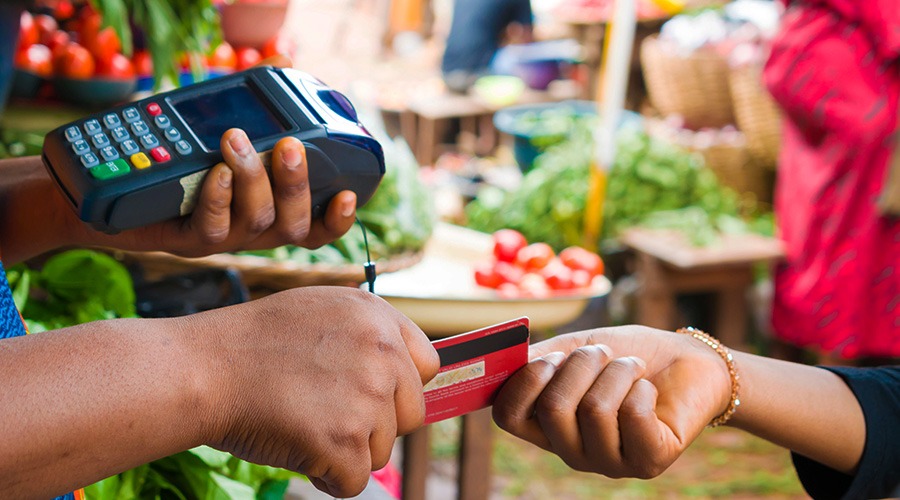
MTN Nigeria and Airtel Africa want to drive inclusion in Nigeria's payments industry.
Trust, adoption, and acceptance are some of the challenges on their way, experts say.
Analysis
In Nigeria, cash is king.
However, the digital payments industry is on the rise, and two of
Africa’s telco (telecommunication) giants, MTN Nigeria, and Airtel Africa are now positioning themselves as key players.
MTN Nigeria is the Nigerian division of the MTN Group, a South
African multinational company and Africa’s largest mobile telecommunications
operator.
On the other hand, Airtel Africa provides telecommunications and
mobile money services to 14 countries across the continent. The company is
majority-owned by Indian communications firm, Bharti Airtel.
In late May, the two telco operators announced the commencement of
operations by their payments subsidiaries after getting their licenses from the Central Bank of Nigeria (CBN) to
run a payment service bank (PSB) in the country.
While MTN Nigeria is diversifying into the payments industry in
the country with MoMo Payment Service Bank (MoMo), Airtel Africa is starting
out with SmartCash Payment Service Bank Limited (‘SmartCash PSB’).
In separate statements announcing the start of their operations, both telco giants
noted that their goal was to drive financial inclusion in the country by
'banking the unbanked'.
This essentially means meeting retail banking needs and focusing on the rural populations that have largely remained uncovered by financial
and banking services in the country.
These goals are in line with the CBN’s Financial System Strategy 2020, which is targeted at bringing unbanked consumers
under the purview of the banking system as well as promoting electronic payments
in the country.
Separately, both telco operations have obtained super-agent
licenses which enables them to create agent networks to facilitate financial
services provisions.
In what comes as a relatively new territory for the telco firms, how
far can they go in disrupting the Nigerian payment industry to drive Nigeria’s
financial inclusion dreams?
The Payments Industry in Nigeria
In Nigeria, the use of digital channels for payments has been on the
rise.
According to the Nigeria Inter Bank Settlement System (NIBSS),
online payments from Point of Sale terminals, instant payments, and mobile
channels accounted for payment transactions worth N286.45 trillion in 2021.
In fact, the latest data from the NIBSS shows that cashless
transactions rose 44% year-on-year to hit N117.33tn in the first 4 months
of 2022.
According to Enhancing Financial Innovation & Access (EFInA),
a financial sector deepening (FSD) organization that promotes inclusive finance
in Nigeria, 36% of Nigerian adults, or 38 million adults were financially excluded in Nigeria as of the end of 2020.
Moreover, the organization said that Nigeria fell short of its 2012
National Financial Inclusion Strategy targets for 2020. One of which was to make payments accessible to 70% of Nigerian adults by 2020.
The goal, in this regard, was to ensure that at least 70% of excluded Nigerian adults have a transaction account with a regulated financial institution and/or have made an electronic payment through a regulated financial institution.
Nigeria only reached 45% with a shortfall of 25%, the EFInA Access to Financial Services in Nigeria 2020 Survey shows.
Dataphyte, a Nigerian media and research data analytics
organization, citing CBN put the total figure of unbanked money in Nigeria between January and November 2021 at N26.17
trillion.
In addition, they are expected to have no less than 25% financial service
touch points (locally called kiosks) in these rural areas.
Penetration of rural areas with banking and payment services remain a challenge in Nigeria
In a country already seeing the rise of innovative and competitive challenger and
digital-only banks, how far can these telecom giants go in their diversification
game plan?
Can they truly disrupt the payments industry, embracing more of
the unbanked population to help Nigeria actualize her financial inclusion
dreams?
Experts who spoke to Finance Magnates believe that the telcos are
up to the task, albeit some challenges will stand in their way.
Trevor Goott, Director, Africa & India at Unlimint
“Both of these mobile money operators have been ready to disrupt
the Nigerian payments [industry] for a while now. The key question to ask is
whether or not their mobile customers are ready to move away from the
traditional payment methods in Nigeria and move towards new emerging methods
offered by the telcos,” Trevor Goott, the Director of Africa & India at Unlimint,
a global payments service provider, told Finance Magnates.
On his part, OberonCopeland, the Founder of Very Informed,
explained that both operators “already have a large customer base and extensive
infrastructure in place.”
Additonally, they are “beginning to offer innovative payment solutions
that meet the needs of modern consumers,” he added.
“For example, Airtel's recent partnership with WorldRemit allows
customers to send money abroad using their mobile phones. This is a significant
departure from the traditional way of sending money, which is often slow and
cumbersome,” Copeland further commented.
For the telcos, it is a “long game” ahead, Goot said, adding that changing people’s behaviour takes time.
The Challenges
Moreover, the experts noted that a number of challenges stand in the
way for the telco firms.
“The first challenge is to get customer and merchant adoption
where the merchant accepts a particular payment method and the customer
chooses, trusts, and is happy to pay with that particular payment method,” Goot
explained.
To address these issues, Goot noted that the telco companies require significant
investment in their “go-to-market” strategies.
“To do this, there needs to be a concerted and focused marketing
and education campaign in the marketplace, to educate the merchants and
customers,” he said.
However, Daniel Chan, the Chief Technical Officer of Marketplace Fairness,
believes that competition from entrenched players, lack of trust
among consumers, and dearth of awareness about their services are major
barriers the telco firms must surmount.
Speaking further to Finance Magnates, Goot explained that telco operators must differentiate
themselves and provide customer-focused solutions that work, that their
customers want to use and that are easy to use.
The Unlimit executive explained: “There are 200m + people in the country, and the
advantage that a telco has is its virtual reach.
“Every customer in the country, at any location in the country
(with mobile network coverage) who has a mobile phone in their hand, has in
effect a mobile bank in their hand.”
“The telco operators can use this fact to redefine the industry,
by reaching the unbanked, by facilitating a move to a cashless payments system
in accordance with CBN policy, and by allowing this to all take place with comfort and convenience as determined by their customers.”
In Nigeria, cash is king.
However, the digital payments industry is on the rise, and two of
Africa’s telco (telecommunication) giants, MTN Nigeria, and Airtel Africa are now positioning themselves as key players.
MTN Nigeria is the Nigerian division of the MTN Group, a South
African multinational company and Africa’s largest mobile telecommunications
operator.
On the other hand, Airtel Africa provides telecommunications and
mobile money services to 14 countries across the continent. The company is
majority-owned by Indian communications firm, Bharti Airtel.
In late May, the two telco operators announced the commencement of
operations by their payments subsidiaries after getting their licenses from the Central Bank of Nigeria (CBN) to
run a payment service bank (PSB) in the country.
While MTN Nigeria is diversifying into the payments industry in
the country with MoMo Payment Service Bank (MoMo), Airtel Africa is starting
out with SmartCash Payment Service Bank Limited (‘SmartCash PSB’).
In separate statements announcing the start of their operations, both telco giants
noted that their goal was to drive financial inclusion in the country by
'banking the unbanked'.
This essentially means meeting retail banking needs and focusing on the rural populations that have largely remained uncovered by financial
and banking services in the country.
These goals are in line with the CBN’s Financial System Strategy 2020, which is targeted at bringing unbanked consumers
under the purview of the banking system as well as promoting electronic payments
in the country.
Separately, both telco operations have obtained super-agent
licenses which enables them to create agent networks to facilitate financial
services provisions.
In what comes as a relatively new territory for the telco firms, how
far can they go in disrupting the Nigerian payment industry to drive Nigeria’s
financial inclusion dreams?
The Payments Industry in Nigeria
In Nigeria, the use of digital channels for payments has been on the
rise.
According to the Nigeria Inter Bank Settlement System (NIBSS),
online payments from Point of Sale terminals, instant payments, and mobile
channels accounted for payment transactions worth N286.45 trillion in 2021.
In fact, the latest data from the NIBSS shows that cashless
transactions rose 44% year-on-year to hit N117.33tn in the first 4 months
of 2022.
According to Enhancing Financial Innovation & Access (EFInA),
a financial sector deepening (FSD) organization that promotes inclusive finance
in Nigeria, 36% of Nigerian adults, or 38 million adults were financially excluded in Nigeria as of the end of 2020.
Moreover, the organization said that Nigeria fell short of its 2012
National Financial Inclusion Strategy targets for 2020. One of which was to make payments accessible to 70% of Nigerian adults by 2020.
The goal, in this regard, was to ensure that at least 70% of excluded Nigerian adults have a transaction account with a regulated financial institution and/or have made an electronic payment through a regulated financial institution.
Nigeria only reached 45% with a shortfall of 25%, the EFInA Access to Financial Services in Nigeria 2020 Survey shows.
Dataphyte, a Nigerian media and research data analytics
organization, citing CBN put the total figure of unbanked money in Nigeria between January and November 2021 at N26.17
trillion.
In addition, they are expected to have no less than 25% financial service
touch points (locally called kiosks) in these rural areas.
Penetration of rural areas with banking and payment services remain a challenge in Nigeria
In a country already seeing the rise of innovative and competitive challenger and
digital-only banks, how far can these telecom giants go in their diversification
game plan?
Can they truly disrupt the payments industry, embracing more of
the unbanked population to help Nigeria actualize her financial inclusion
dreams?
Experts who spoke to Finance Magnates believe that the telcos are
up to the task, albeit some challenges will stand in their way.
Trevor Goott, Director, Africa & India at Unlimint
“Both of these mobile money operators have been ready to disrupt
the Nigerian payments [industry] for a while now. The key question to ask is
whether or not their mobile customers are ready to move away from the
traditional payment methods in Nigeria and move towards new emerging methods
offered by the telcos,” Trevor Goott, the Director of Africa & India at Unlimint,
a global payments service provider, told Finance Magnates.
On his part, OberonCopeland, the Founder of Very Informed,
explained that both operators “already have a large customer base and extensive
infrastructure in place.”
Additonally, they are “beginning to offer innovative payment solutions
that meet the needs of modern consumers,” he added.
“For example, Airtel's recent partnership with WorldRemit allows
customers to send money abroad using their mobile phones. This is a significant
departure from the traditional way of sending money, which is often slow and
cumbersome,” Copeland further commented.
For the telcos, it is a “long game” ahead, Goot said, adding that changing people’s behaviour takes time.
The Challenges
Moreover, the experts noted that a number of challenges stand in the
way for the telco firms.
“The first challenge is to get customer and merchant adoption
where the merchant accepts a particular payment method and the customer
chooses, trusts, and is happy to pay with that particular payment method,” Goot
explained.
To address these issues, Goot noted that the telco companies require significant
investment in their “go-to-market” strategies.
“To do this, there needs to be a concerted and focused marketing
and education campaign in the marketplace, to educate the merchants and
customers,” he said.
However, Daniel Chan, the Chief Technical Officer of Marketplace Fairness,
believes that competition from entrenched players, lack of trust
among consumers, and dearth of awareness about their services are major
barriers the telco firms must surmount.
Speaking further to Finance Magnates, Goot explained that telco operators must differentiate
themselves and provide customer-focused solutions that work, that their
customers want to use and that are easy to use.
The Unlimit executive explained: “There are 200m + people in the country, and the
advantage that a telco has is its virtual reach.
“Every customer in the country, at any location in the country
(with mobile network coverage) who has a mobile phone in their hand, has in
effect a mobile bank in their hand.”
“The telco operators can use this fact to redefine the industry,
by reaching the unbanked, by facilitating a move to a cashless payments system
in accordance with CBN policy, and by allowing this to all take place with comfort and convenience as determined by their customers.”
Solomon Oladipupo is a journalist and editor from Nigeria that covers the tech, FX, fintech and cryptocurrency industries. He is a former assistant editor at AgroNigeria Magazine where he covered the agribusiness industry. Solomon holds a first-class degree in Journalism & Mass Communication from the University of Lagos where he graduated top of his class.
Retail Investors Shift to Energy, Rare Earths, and AI Amid Tensions, eToro Finds
FP Markets Winner Spotlight 🏆 | Global Broker of the Year 2025 #Trading #Broker #Innovation #Shorts
FP Markets Winner Spotlight 🏆 | Global Broker of the Year 2025 #Trading #Broker #Innovation #Shorts
FP Markets takes the spotlight as Global Broker of the Year 2025 at the Finance Magnates Awards.
Martin Stoilov, Head of Client Experience, shares that trust, innovation, and people played a key role in the company’s success, supported by a strong foundation of integrity and client-centricity.
Following this milestone, FP Markets continues to focus on growth, technology investment, and its core values of transparency and excellence.
👉 Be part of FM Awards 2026: https://awards.financemagnates.com/#nominate
FP Markets takes the spotlight as Global Broker of the Year 2025 at the Finance Magnates Awards.
Martin Stoilov, Head of Client Experience, shares that trust, innovation, and people played a key role in the company’s success, supported by a strong foundation of integrity and client-centricity.
Following this milestone, FP Markets continues to focus on growth, technology investment, and its core values of transparency and excellence.
👉 Be part of FM Awards 2026: https://awards.financemagnates.com/#nominate
In this video, we review @HolaPrimeMarketsOfficial, a multi-asset forex and CFDs broker offering different account types, trading platforms, and flexible trading conditions.
We cover the broker’s overall offering, including account options, trading environment, platforms like MT4 and MT5, and additional services such as managed accounts and fast withdrawals.
Watch the full video to see if Hola Prime Markets fits your trading needs.
📣 Stay up to date with the latest in finance and trading. Follow Finance Magnates for industry news, insights, and global event coverage.
Connect with us:
🔗 LinkedIn: /financemagnates
👍 Facebook: /financemagnates
📸 Instagram: https://www.instagram.com/financemagnates
🐦 X: https://x.com/financemagnates
🎥 TikTok: https://www.tiktok.com/tag/financemagnates
▶️ YouTube: /@financemagnates_official
#HolaPrime #ForexBroker #CFDTrading #FinanceMagnates #Trading #Forex #BrokerReview
In this video, we review @HolaPrimeMarketsOfficial, a multi-asset forex and CFDs broker offering different account types, trading platforms, and flexible trading conditions.
We cover the broker’s overall offering, including account options, trading environment, platforms like MT4 and MT5, and additional services such as managed accounts and fast withdrawals.
Watch the full video to see if Hola Prime Markets fits your trading needs.
📣 Stay up to date with the latest in finance and trading. Follow Finance Magnates for industry news, insights, and global event coverage.
Connect with us:
🔗 LinkedIn: /financemagnates
👍 Facebook: /financemagnates
📸 Instagram: https://www.instagram.com/financemagnates
🐦 X: https://x.com/financemagnates
🎥 TikTok: https://www.tiktok.com/tag/financemagnates
▶️ YouTube: /@financemagnates_official
#HolaPrime #ForexBroker #CFDTrading #FinanceMagnates #Trading #Forex #BrokerReview
Hola Prime Review: What You Need to Know | Full Breakdown by Finance Magnates
Hola Prime Review: What You Need to Know | Full Breakdown by Finance Magnates
In this video, we review @HolaPrime_Global, a proprietary trading firm offering evaluation programs and performance-based payouts in simulated market environments.
We cover how the challenge model works, including account types, profit splits (up to 95%), trading rules, and what it takes to reach a funded account. You’ll also learn about available platforms like MT4, MT5, cTrader, and more, along with insights into payouts, support, and trading conditions.
Watch the full video to see if Hola Prime fits your trading style.
📣 Stay up to date with the latest in finance and trading. Follow Finance Magnates for industry news, insights, and global event coverage.
Connect with us:
🔗 LinkedIn: /financemagnates
👍 Facebook: /financemagnates
📸 Instagram: https://www.instagram.com/financemagnates
🐦 X: https://x.com/financemagnates
🎥 TikTok: https://www.tiktok.com/tag/financemagnates
▶️ YouTube: /@financemagnates_official
#HolaPrime #PropFirm #Trading #FinanceMagnates #Forex #FuturesTrading #TradingReview #PropFirmReview
In this video, we review @HolaPrime_Global, a proprietary trading firm offering evaluation programs and performance-based payouts in simulated market environments.
We cover how the challenge model works, including account types, profit splits (up to 95%), trading rules, and what it takes to reach a funded account. You’ll also learn about available platforms like MT4, MT5, cTrader, and more, along with insights into payouts, support, and trading conditions.
Watch the full video to see if Hola Prime fits your trading style.
📣 Stay up to date with the latest in finance and trading. Follow Finance Magnates for industry news, insights, and global event coverage.
Connect with us:
🔗 LinkedIn: /financemagnates
👍 Facebook: /financemagnates
📸 Instagram: https://www.instagram.com/financemagnates
🐦 X: https://x.com/financemagnates
🎥 TikTok: https://www.tiktok.com/tag/financemagnates
▶️ YouTube: /@financemagnates_official
#HolaPrime #PropFirm #Trading #FinanceMagnates #Forex #FuturesTrading #TradingReview #PropFirmReview
Axi Winner Spotlight 🏆 | Global Most Innovative Broker 2025 #Innovation #Trading #Fintech #Broker
Axi Winner Spotlight 🏆 | Global Most Innovative Broker 2025 #Innovation #Trading #Fintech #Broker
Axi takes the spotlight at the Finance Magnates Awards, winning Global Most Innovative Broker 2025.
Olivia Xenofontos and Ivanna Openko share how the team will feel: proud, motivated, and ready to keep delivering.
They also describe the night as well-organized, focused, and enjoyable for all.
👉 Be part of FM Awards 2026.
Axi takes the spotlight at the Finance Magnates Awards, winning Global Most Innovative Broker 2025.
Olivia Xenofontos and Ivanna Openko share how the team will feel: proud, motivated, and ready to keep delivering.
They also describe the night as well-organized, focused, and enjoyable for all.
👉 Be part of FM Awards 2026.
Recognition that matters.
Built on transparency.
Driven by the industry.
The Finance Magnates Awards 2026.
Nominations are now open.
🔗 https://awards.financemagnates.com/?utm_source=SM&utm_medium=social&utm_campaign=recognition-matters
Recognition that matters.
Built on transparency.
Driven by the industry.
The Finance Magnates Awards 2026.
Nominations are now open.
🔗 https://awards.financemagnates.com/?utm_source=SM&utm_medium=social&utm_campaign=recognition-matters