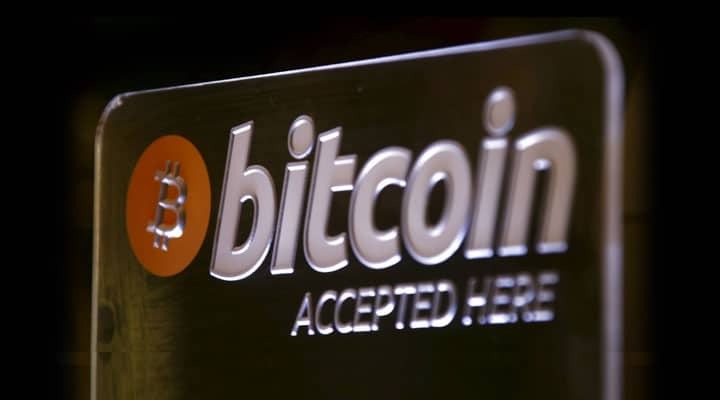
Bitcoin has lost 70 percent of its value from its peak.
Companies like Tesla and AMC are still accepting crypto payments.
Finance Magnates
The Bitcoin whitepaper touted the cryptocurrency as a payment method 12 years ago. A report by Checkout.com revealed that 23 percent of all online businesses aim to accept crypto as a payment method by 2024. Many prominent brands like Tesla and others have started to accept crypto (Bitcoin and also some altcoins) as a form of payment.
Global Crypto Transaction Value, Courtesy: Insider Intelligence
According to some estimations, there are around 300 million crypto users globally and more than 1,800 businesses are accepting cryptocurrencies. This high adoption of crypto makes the futures projections of digital currency payment transactions bullish.
However, its volatile nature and long resistance from financial institutions have kept it out of the mainstream payments industry. Though Bitcoin’s technology was a barrier to its usage in payments, the lightning network eased the troubles on this front.
“Cryptocurrency has not revolutionized the payments industry as of now, but it has had a significant impact on how people can make payments without a bank account,” said Lyle David Solomon, the Principal Attorney at Oak View Law Group.
Additionally, the volatile nature of Bitcoin and other cryptocurrencies have kept them away from being a payment mode. While Bitcoin rallied last year, it has lost 70 percent of its value from its peak this year.
This extreme volatility has even affected the laws in some Bitcoin-friendly jurisdictions. El Salvador, a country that provided Bitcoin with the status of legal tender, mandated all businesses to accept the crypto as a form of payment, but the government is also providing merchants the option to instantly convert their Bitcoin into fiat.
However, crypto proponents remain bullish on the advantages of Bitcoin over fiat currencies.
“Crypto has completely changed the payments industry for the better by enabling consumers to take full custody over their funds to transact more freely,” the CEO of Divvy.bet, Carlos Liang, said.
“With blockchain technology becoming more and more mainstream, people are realizing that there is a better option out there. Despite the current bear market, the benefits that come with leveraging Web3 and crypto technologies are glaringly apparent: faster transaction speeds, lower fees and more direct access to funds.”
However, the area where cryptocurrencies have immense potential to disrupt is cross-border payments. People can easily transfer cryptos from one wallet to another, across borders, without going through the costly and time-consuming banking process. Companies like Ripple are even working with banks and financial institutions to make decentralized technology a norm in banking cross-border payments.
A Marketing Gimmick?
To date, many established companies have started to accept Bitcoin and a few other cryptocurrencies as payments. Tesla, which is run by the billionaire and Dogecoin-proponent, Elon Musk, is accepting the meme token as payment for its merchandise.
Microsoft, Paypal, Overstock, Whole Foods, Starbucks, Rakuten, Twitch, AMC Theatres and AT&T are only some of the major mainstream brands that have started to accept crypto as payment.
Naoshad Pochkhanawala, Estate & Financial Planner and Chartered Life Underwriter at Amiko Benefits
“It doesn’t matter how many brands have decided to accept Bitcoin or other cryptocurrencies – the question is how many carry it as a significant asset on their books,” Naoshad Pochkhanawala, an Estate & Financial Planner and Chartered Life Underwriter at Amiko Benefits, pointed out.
“If a company accepts cryptocurrency in but immediately switches it to a regular currency post purchase, that company is basically just accepting a new type of payment but not really participating or showing faith in the future of cryptocurrencies.”
This is true for most of the companies accepting crypto as payment. In addition, it raises the question, are they accepting cryptocurrencies only as a marketing effort?
Lyle David Solomon, Principal Attorney at Oak View Law Group
“In today’s highly competitive digital world, businesses need to be adaptive to stay relevant in the eyes of the public. In such an environment using crypto payments as a method of appealing to crypto enthusiasts is undoubtedly a marketing ploy. It helps businesses in getting media coverage and wide social media engagement,” Solomon added.
However, many of those companies are bullish on crypto and making long-term bets. Tesla continued to accept Dogecoin despite a massive decline in its value. AMC started accepting crypto after the November 2021 market crash and Twitch allows creators to accept donations in certain cryptocurrencies.
“This clearly shows that some businesses are serious about sticking around with crypto payments regardless of the market conditions,” Solomon said.
Altcoins for Payments
While Bitcoin is the most accepted crypto form of payment, altcoins are also making strides. Some of the altcoins have a technological advantage: Ripple, Stellar and Algorand offer much faster and cheaper solutions to settle payments.
“With further innovation and focused development, altcoins will have multiple advantages over Bitcoin as a payment solution moving forward,” Solomon said.
However, altcoins have a smaller community backing them when compared to Bitcoin. These individual coins came into the market much later and each (the legitimate ones) is trying to solve some particular problem, limiting the target community.
The popularity and loyal community around Dogecoin and Shiba Inu, two of the meme tokens, have prompted many companies to accept them as payment modes. This clearly shows that most of the companies mostly try to gain the attention of a community while accepting cryptocurrencies for payment.
What Is the Future?
Bitcoin and other cryptocurrencies are more suitable as assets rather than payment modes. However, many companies continue to accept them as forms of payment mostly to gain some recognition within the growing crypto community.
However, the future of cryptocurrencies as alternative payment will heavily depend on the regulations of this industry. Many countries like Thailand have imposed a ban on crypto payments, while El Salvador has made Bitcoin legal tender. Now, it is to be seen how the United States, Europe and other developed nations approach crypto payments.
The Bitcoin whitepaper touted the cryptocurrency as a payment method 12 years ago. A report by Checkout.com revealed that 23 percent of all online businesses aim to accept crypto as a payment method by 2024. Many prominent brands like Tesla and others have started to accept crypto (Bitcoin and also some altcoins) as a form of payment.
Global Crypto Transaction Value, Courtesy: Insider Intelligence
According to some estimations, there are around 300 million crypto users globally and more than 1,800 businesses are accepting cryptocurrencies. This high adoption of crypto makes the futures projections of digital currency payment transactions bullish.
However, its volatile nature and long resistance from financial institutions have kept it out of the mainstream payments industry. Though Bitcoin’s technology was a barrier to its usage in payments, the lightning network eased the troubles on this front.
“Cryptocurrency has not revolutionized the payments industry as of now, but it has had a significant impact on how people can make payments without a bank account,” said Lyle David Solomon, the Principal Attorney at Oak View Law Group.
Additionally, the volatile nature of Bitcoin and other cryptocurrencies have kept them away from being a payment mode. While Bitcoin rallied last year, it has lost 70 percent of its value from its peak this year.
This extreme volatility has even affected the laws in some Bitcoin-friendly jurisdictions. El Salvador, a country that provided Bitcoin with the status of legal tender, mandated all businesses to accept the crypto as a form of payment, but the government is also providing merchants the option to instantly convert their Bitcoin into fiat.
However, crypto proponents remain bullish on the advantages of Bitcoin over fiat currencies.
“Crypto has completely changed the payments industry for the better by enabling consumers to take full custody over their funds to transact more freely,” the CEO of Divvy.bet, Carlos Liang, said.
“With blockchain technology becoming more and more mainstream, people are realizing that there is a better option out there. Despite the current bear market, the benefits that come with leveraging Web3 and crypto technologies are glaringly apparent: faster transaction speeds, lower fees and more direct access to funds.”
However, the area where cryptocurrencies have immense potential to disrupt is cross-border payments. People can easily transfer cryptos from one wallet to another, across borders, without going through the costly and time-consuming banking process. Companies like Ripple are even working with banks and financial institutions to make decentralized technology a norm in banking cross-border payments.
A Marketing Gimmick?
To date, many established companies have started to accept Bitcoin and a few other cryptocurrencies as payments. Tesla, which is run by the billionaire and Dogecoin-proponent, Elon Musk, is accepting the meme token as payment for its merchandise.
Microsoft, Paypal, Overstock, Whole Foods, Starbucks, Rakuten, Twitch, AMC Theatres and AT&T are only some of the major mainstream brands that have started to accept crypto as payment.
Naoshad Pochkhanawala, Estate & Financial Planner and Chartered Life Underwriter at Amiko Benefits
“It doesn’t matter how many brands have decided to accept Bitcoin or other cryptocurrencies – the question is how many carry it as a significant asset on their books,” Naoshad Pochkhanawala, an Estate & Financial Planner and Chartered Life Underwriter at Amiko Benefits, pointed out.
“If a company accepts cryptocurrency in but immediately switches it to a regular currency post purchase, that company is basically just accepting a new type of payment but not really participating or showing faith in the future of cryptocurrencies.”
This is true for most of the companies accepting crypto as payment. In addition, it raises the question, are they accepting cryptocurrencies only as a marketing effort?
Lyle David Solomon, Principal Attorney at Oak View Law Group
“In today’s highly competitive digital world, businesses need to be adaptive to stay relevant in the eyes of the public. In such an environment using crypto payments as a method of appealing to crypto enthusiasts is undoubtedly a marketing ploy. It helps businesses in getting media coverage and wide social media engagement,” Solomon added.
However, many of those companies are bullish on crypto and making long-term bets. Tesla continued to accept Dogecoin despite a massive decline in its value. AMC started accepting crypto after the November 2021 market crash and Twitch allows creators to accept donations in certain cryptocurrencies.
“This clearly shows that some businesses are serious about sticking around with crypto payments regardless of the market conditions,” Solomon said.
Altcoins for Payments
While Bitcoin is the most accepted crypto form of payment, altcoins are also making strides. Some of the altcoins have a technological advantage: Ripple, Stellar and Algorand offer much faster and cheaper solutions to settle payments.
“With further innovation and focused development, altcoins will have multiple advantages over Bitcoin as a payment solution moving forward,” Solomon said.
However, altcoins have a smaller community backing them when compared to Bitcoin. These individual coins came into the market much later and each (the legitimate ones) is trying to solve some particular problem, limiting the target community.
The popularity and loyal community around Dogecoin and Shiba Inu, two of the meme tokens, have prompted many companies to accept them as payment modes. This clearly shows that most of the companies mostly try to gain the attention of a community while accepting cryptocurrencies for payment.
What Is the Future?
Bitcoin and other cryptocurrencies are more suitable as assets rather than payment modes. However, many companies continue to accept them as forms of payment mostly to gain some recognition within the growing crypto community.
However, the future of cryptocurrencies as alternative payment will heavily depend on the regulations of this industry. Many countries like Thailand have imposed a ban on crypto payments, while El Salvador has made Bitcoin legal tender. Now, it is to be seen how the United States, Europe and other developed nations approach crypto payments.
Arnab Shome is an electronics engineer-turned-financial editor. He holds a Bachelor of Technology from the National Institute of Technology, Agartala. He entered the retail trading industry about a decade ago, covering the cryptocurrency market for Finance Magnates, and later expanded his coverage to include forex and CFDs as well.
His work at Finance Magnates includes C-level interviews, data-driven analysis, opinion pieces, and scoops of industry exclusives. He also contributes to Finance Magnates’ quarterly industry report.
Area of coverage:
1. CFD broker-related news
2. Industry-related Regulatory updates and developments
3. New retail trading trends
4. Prop trading industry updates
5. Executive interviews
Education:
Bachelor of Technology - National Institute of Technology, Agartala (India)
Retail Investors Shift to Energy, Rare Earths, and AI Amid Tensions, eToro Finds
FP Markets Winner Spotlight 🏆 | Global Broker of the Year 2025 #Trading #Broker #Innovation #Shorts
FP Markets Winner Spotlight 🏆 | Global Broker of the Year 2025 #Trading #Broker #Innovation #Shorts
FP Markets takes the spotlight as Global Broker of the Year 2025 at the Finance Magnates Awards.
Martin Stoilov, Head of Client Experience, shares that trust, innovation, and people played a key role in the company’s success, supported by a strong foundation of integrity and client-centricity.
Following this milestone, FP Markets continues to focus on growth, technology investment, and its core values of transparency and excellence.
👉 Be part of FM Awards 2026: https://awards.financemagnates.com/#nominate
FP Markets takes the spotlight as Global Broker of the Year 2025 at the Finance Magnates Awards.
Martin Stoilov, Head of Client Experience, shares that trust, innovation, and people played a key role in the company’s success, supported by a strong foundation of integrity and client-centricity.
Following this milestone, FP Markets continues to focus on growth, technology investment, and its core values of transparency and excellence.
👉 Be part of FM Awards 2026: https://awards.financemagnates.com/#nominate
In this video, we review @HolaPrimeMarketsOfficial, a multi-asset forex and CFDs broker offering different account types, trading platforms, and flexible trading conditions.
We cover the broker’s overall offering, including account options, trading environment, platforms like MT4 and MT5, and additional services such as managed accounts and fast withdrawals.
Watch the full video to see if Hola Prime Markets fits your trading needs.
📣 Stay up to date with the latest in finance and trading. Follow Finance Magnates for industry news, insights, and global event coverage.
Connect with us:
🔗 LinkedIn: /financemagnates
👍 Facebook: /financemagnates
📸 Instagram: https://www.instagram.com/financemagnates
🐦 X: https://x.com/financemagnates
🎥 TikTok: https://www.tiktok.com/tag/financemagnates
▶️ YouTube: /@financemagnates_official
#HolaPrime #ForexBroker #CFDTrading #FinanceMagnates #Trading #Forex #BrokerReview
In this video, we review @HolaPrimeMarketsOfficial, a multi-asset forex and CFDs broker offering different account types, trading platforms, and flexible trading conditions.
We cover the broker’s overall offering, including account options, trading environment, platforms like MT4 and MT5, and additional services such as managed accounts and fast withdrawals.
Watch the full video to see if Hola Prime Markets fits your trading needs.
📣 Stay up to date with the latest in finance and trading. Follow Finance Magnates for industry news, insights, and global event coverage.
Connect with us:
🔗 LinkedIn: /financemagnates
👍 Facebook: /financemagnates
📸 Instagram: https://www.instagram.com/financemagnates
🐦 X: https://x.com/financemagnates
🎥 TikTok: https://www.tiktok.com/tag/financemagnates
▶️ YouTube: /@financemagnates_official
#HolaPrime #ForexBroker #CFDTrading #FinanceMagnates #Trading #Forex #BrokerReview
Hola Prime Review: What You Need to Know | Full Breakdown by Finance Magnates
Hola Prime Review: What You Need to Know | Full Breakdown by Finance Magnates
In this video, we review @HolaPrime_Global, a proprietary trading firm offering evaluation programs and performance-based payouts in simulated market environments.
We cover how the challenge model works, including account types, profit splits (up to 95%), trading rules, and what it takes to reach a funded account. You’ll also learn about available platforms like MT4, MT5, cTrader, and more, along with insights into payouts, support, and trading conditions.
Watch the full video to see if Hola Prime fits your trading style.
📣 Stay up to date with the latest in finance and trading. Follow Finance Magnates for industry news, insights, and global event coverage.
Connect with us:
🔗 LinkedIn: /financemagnates
👍 Facebook: /financemagnates
📸 Instagram: https://www.instagram.com/financemagnates
🐦 X: https://x.com/financemagnates
🎥 TikTok: https://www.tiktok.com/tag/financemagnates
▶️ YouTube: /@financemagnates_official
#HolaPrime #PropFirm #Trading #FinanceMagnates #Forex #FuturesTrading #TradingReview #PropFirmReview
In this video, we review @HolaPrime_Global, a proprietary trading firm offering evaluation programs and performance-based payouts in simulated market environments.
We cover how the challenge model works, including account types, profit splits (up to 95%), trading rules, and what it takes to reach a funded account. You’ll also learn about available platforms like MT4, MT5, cTrader, and more, along with insights into payouts, support, and trading conditions.
Watch the full video to see if Hola Prime fits your trading style.
📣 Stay up to date with the latest in finance and trading. Follow Finance Magnates for industry news, insights, and global event coverage.
Connect with us:
🔗 LinkedIn: /financemagnates
👍 Facebook: /financemagnates
📸 Instagram: https://www.instagram.com/financemagnates
🐦 X: https://x.com/financemagnates
🎥 TikTok: https://www.tiktok.com/tag/financemagnates
▶️ YouTube: /@financemagnates_official
#HolaPrime #PropFirm #Trading #FinanceMagnates #Forex #FuturesTrading #TradingReview #PropFirmReview
Axi Winner Spotlight 🏆 | Global Most Innovative Broker 2025 #Innovation #Trading #Fintech #Broker
Axi Winner Spotlight 🏆 | Global Most Innovative Broker 2025 #Innovation #Trading #Fintech #Broker
Axi takes the spotlight at the Finance Magnates Awards, winning Global Most Innovative Broker 2025.
Olivia Xenofontos and Ivanna Openko share how the team will feel: proud, motivated, and ready to keep delivering.
They also describe the night as well-organized, focused, and enjoyable for all.
👉 Be part of FM Awards 2026.
Axi takes the spotlight at the Finance Magnates Awards, winning Global Most Innovative Broker 2025.
Olivia Xenofontos and Ivanna Openko share how the team will feel: proud, motivated, and ready to keep delivering.
They also describe the night as well-organized, focused, and enjoyable for all.
👉 Be part of FM Awards 2026.
Recognition that matters.
Built on transparency.
Driven by the industry.
The Finance Magnates Awards 2026.
Nominations are now open.
🔗 https://awards.financemagnates.com/?utm_source=SM&utm_medium=social&utm_campaign=recognition-matters
Recognition that matters.
Built on transparency.
Driven by the industry.
The Finance Magnates Awards 2026.
Nominations are now open.
🔗 https://awards.financemagnates.com/?utm_source=SM&utm_medium=social&utm_campaign=recognition-matters