“Fintech Startups Need to be Flexible and Adjust their Products”
Monday,20/06/2016|11:18GMTby
Dan Magen
Head of corporate strategy at the First International Bank of Israel elaborates on the fintech-banking crossroad.
Finance Magnates
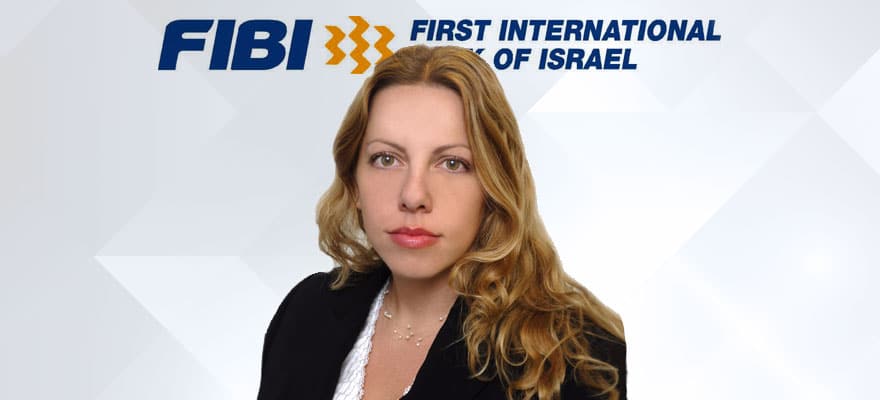
Shirli Shoham Klein, the head of corporate strategy department and in charge of Fintech initiative of the First International Bank of Israel (FIBI), has been collaborating with fintech startups before fintech became a buzzword. Finance Magnates sat with her to get some perspective on what a young company has to do to become a leader in the 'startup nation'.
In what fields has the First International Bank of Israel implemented or been using fintech solutions?
FIBI has been collaborating with startup companies for many years, before 'fintech' became a buzz word.
We were the first bank to implement Personetics' personal finance management tools. "Fibi – your personal virtual banker", our main PFM tool, both on our app and website, is based on its technology. The tool uses an analytical engine to help customers manage their accounts by providing analysis, suggestions and tips.
Recently, we established a dedicated unit for locating interesting startups to collaborate with, and we are mainly focused on client facing solutions in the fields of trading, wealth management, and client engagement through user experience.
Shirli Shoam Klein
What are the hottest trends in the fintech-banking relationship?
We believe the trading and wealth management services are about to change dramatically in the following years and we are excited to be a part of this trend. Many banks declared recently they are in the process of developing robo-advisory services. We think our clients want both the advanced technology and the trust of communicating with a specialist advisor, especially in volatile markets like now. Our mission is to provide both, and we are currently working on it.
We also believe social interactions will become a vital part of the way our clients make their investment decisions. Social trading platforms are already available but changes in Regulation are required in order for banks to take part in this trend.
How can a young fintech firm best attract bank executives’ attention?
Sometimes we get very good product ideas that can work as an individual platform but simply cannot work under banks regulation. We expect companies that reach out to us in order to work in a B2B model to learn this regulatory environment thoroughly. Our limitations as a bank, for example data security, might be limitations, but also what keeps us safe and stable and make our customers trust us.
In order for young fintechs to 'win' our customers, they need to be flexible, adjust their products to our needs, even if it is not what they had in mind when they first started.
What are the main difficulties and advantages of working with startup-like firms, and for an institutional bank?
Banks are usually complex organizations, and quick changes are a challenge. This is why we are looking for collaborations with startups to help us bring in new technology and shorten time-to-market.
Even so, integrating an external product or technology with the bank's core systems, sometimes many different systems for each product, takes time and effort – both for the bank and the startup. On top, don't forget the process of choosing the right product between many different solutions in the market, legal process, procurement, etc.
As a smaller bank, we have the advantage of making fast decisions and working in a more efficient process. Bringing all the relevant people in the bank for the first meeting with the startup is crucial according to our methodology. Some of the startups we work with told us it took them months of emails and meetings just to get to that point with other banks, especially foreign banks.
What are your recommendations on running a business for young fintech companies?
We recommend young fintech companies to work with a design partner bank in order to build and adjust their product to real needs. There is nothing like a beta site with real bank systems and real bank data, to help startups adjust and improve their products. A good design partner will provide quality feedback and get the startup ready for global banks quick enough before they become irrelevant.
On Thursday June 23th Fintech Aviv will host a meetup at the Abraham Hostel in Tel Aviv. This meetup will be focused on fintech implementations within banks, and the attendees will have the chance to mingle with the country’s leading fintech CEOs, investors and entrepreneurs. Launched by Daniel Abrahams (currencytransfer.com), Nir Netzer and Tal Sharon (Equitech), FinTech Aviv has grown to become the biggest fintech community in Israel, boasting over 2,000 fintechers.
Shirli Shoham Klein, the head of corporate strategy department and in charge of Fintech initiative of the First International Bank of Israel (FIBI), has been collaborating with fintech startups before fintech became a buzzword. Finance Magnates sat with her to get some perspective on what a young company has to do to become a leader in the 'startup nation'.
In what fields has the First International Bank of Israel implemented or been using fintech solutions?
FIBI has been collaborating with startup companies for many years, before 'fintech' became a buzz word.
We were the first bank to implement Personetics' personal finance management tools. "Fibi – your personal virtual banker", our main PFM tool, both on our app and website, is based on its technology. The tool uses an analytical engine to help customers manage their accounts by providing analysis, suggestions and tips.
Recently, we established a dedicated unit for locating interesting startups to collaborate with, and we are mainly focused on client facing solutions in the fields of trading, wealth management, and client engagement through user experience.
Shirli Shoam Klein
What are the hottest trends in the fintech-banking relationship?
We believe the trading and wealth management services are about to change dramatically in the following years and we are excited to be a part of this trend. Many banks declared recently they are in the process of developing robo-advisory services. We think our clients want both the advanced technology and the trust of communicating with a specialist advisor, especially in volatile markets like now. Our mission is to provide both, and we are currently working on it.
We also believe social interactions will become a vital part of the way our clients make their investment decisions. Social trading platforms are already available but changes in Regulation are required in order for banks to take part in this trend.
How can a young fintech firm best attract bank executives’ attention?
Sometimes we get very good product ideas that can work as an individual platform but simply cannot work under banks regulation. We expect companies that reach out to us in order to work in a B2B model to learn this regulatory environment thoroughly. Our limitations as a bank, for example data security, might be limitations, but also what keeps us safe and stable and make our customers trust us.
In order for young fintechs to 'win' our customers, they need to be flexible, adjust their products to our needs, even if it is not what they had in mind when they first started.
What are the main difficulties and advantages of working with startup-like firms, and for an institutional bank?
Banks are usually complex organizations, and quick changes are a challenge. This is why we are looking for collaborations with startups to help us bring in new technology and shorten time-to-market.
Even so, integrating an external product or technology with the bank's core systems, sometimes many different systems for each product, takes time and effort – both for the bank and the startup. On top, don't forget the process of choosing the right product between many different solutions in the market, legal process, procurement, etc.
As a smaller bank, we have the advantage of making fast decisions and working in a more efficient process. Bringing all the relevant people in the bank for the first meeting with the startup is crucial according to our methodology. Some of the startups we work with told us it took them months of emails and meetings just to get to that point with other banks, especially foreign banks.
What are your recommendations on running a business for young fintech companies?
We recommend young fintech companies to work with a design partner bank in order to build and adjust their product to real needs. There is nothing like a beta site with real bank systems and real bank data, to help startups adjust and improve their products. A good design partner will provide quality feedback and get the startup ready for global banks quick enough before they become irrelevant.
On Thursday June 23th Fintech Aviv will host a meetup at the Abraham Hostel in Tel Aviv. This meetup will be focused on fintech implementations within banks, and the attendees will have the chance to mingle with the country’s leading fintech CEOs, investors and entrepreneurs. Launched by Daniel Abrahams (currencytransfer.com), Nir Netzer and Tal Sharon (Equitech), FinTech Aviv has grown to become the biggest fintech community in Israel, boasting over 2,000 fintechers.
Polymarket Replaces Bridged USDC Aiming for a U.S. Relaunch
FP Markets Winner Spotlight 🏆 | Global Broker of the Year 2025 #Trading #Broker #Innovation #Shorts
FP Markets Winner Spotlight 🏆 | Global Broker of the Year 2025 #Trading #Broker #Innovation #Shorts
FP Markets takes the spotlight as Global Broker of the Year 2025 at the Finance Magnates Awards.
Martin Stoilov, Head of Client Experience, shares that trust, innovation, and people played a key role in the company’s success, supported by a strong foundation of integrity and client-centricity.
Following this milestone, FP Markets continues to focus on growth, technology investment, and its core values of transparency and excellence.
👉 Be part of FM Awards 2026: https://awards.financemagnates.com/#nominate
FP Markets takes the spotlight as Global Broker of the Year 2025 at the Finance Magnates Awards.
Martin Stoilov, Head of Client Experience, shares that trust, innovation, and people played a key role in the company’s success, supported by a strong foundation of integrity and client-centricity.
Following this milestone, FP Markets continues to focus on growth, technology investment, and its core values of transparency and excellence.
👉 Be part of FM Awards 2026: https://awards.financemagnates.com/#nominate
In this video, we review @HolaPrimeMarketsOfficial, a multi-asset forex and CFDs broker offering different account types, trading platforms, and flexible trading conditions.
We cover the broker’s overall offering, including account options, trading environment, platforms like MT4 and MT5, and additional services such as managed accounts and fast withdrawals.
Watch the full video to see if Hola Prime Markets fits your trading needs.
📣 Stay up to date with the latest in finance and trading. Follow Finance Magnates for industry news, insights, and global event coverage.
Connect with us:
🔗 LinkedIn: /financemagnates
👍 Facebook: /financemagnates
📸 Instagram: https://www.instagram.com/financemagnates
🐦 X: https://x.com/financemagnates
🎥 TikTok: https://www.tiktok.com/tag/financemagnates
▶️ YouTube: /@financemagnates_official
#HolaPrime #ForexBroker #CFDTrading #FinanceMagnates #Trading #Forex #BrokerReview
In this video, we review @HolaPrimeMarketsOfficial, a multi-asset forex and CFDs broker offering different account types, trading platforms, and flexible trading conditions.
We cover the broker’s overall offering, including account options, trading environment, platforms like MT4 and MT5, and additional services such as managed accounts and fast withdrawals.
Watch the full video to see if Hola Prime Markets fits your trading needs.
📣 Stay up to date with the latest in finance and trading. Follow Finance Magnates for industry news, insights, and global event coverage.
Connect with us:
🔗 LinkedIn: /financemagnates
👍 Facebook: /financemagnates
📸 Instagram: https://www.instagram.com/financemagnates
🐦 X: https://x.com/financemagnates
🎥 TikTok: https://www.tiktok.com/tag/financemagnates
▶️ YouTube: /@financemagnates_official
#HolaPrime #ForexBroker #CFDTrading #FinanceMagnates #Trading #Forex #BrokerReview
Hola Prime Review: What You Need to Know | Full Breakdown by Finance Magnates
Hola Prime Review: What You Need to Know | Full Breakdown by Finance Magnates
In this video, we review @HolaPrime_Global, a proprietary trading firm offering evaluation programs and performance-based payouts in simulated market environments.
We cover how the challenge model works, including account types, profit splits (up to 95%), trading rules, and what it takes to reach a funded account. You’ll also learn about available platforms like MT4, MT5, cTrader, and more, along with insights into payouts, support, and trading conditions.
Watch the full video to see if Hola Prime fits your trading style.
📣 Stay up to date with the latest in finance and trading. Follow Finance Magnates for industry news, insights, and global event coverage.
Connect with us:
🔗 LinkedIn: /financemagnates
👍 Facebook: /financemagnates
📸 Instagram: https://www.instagram.com/financemagnates
🐦 X: https://x.com/financemagnates
🎥 TikTok: https://www.tiktok.com/tag/financemagnates
▶️ YouTube: /@financemagnates_official
#HolaPrime #PropFirm #Trading #FinanceMagnates #Forex #FuturesTrading #TradingReview #PropFirmReview
In this video, we review @HolaPrime_Global, a proprietary trading firm offering evaluation programs and performance-based payouts in simulated market environments.
We cover how the challenge model works, including account types, profit splits (up to 95%), trading rules, and what it takes to reach a funded account. You’ll also learn about available platforms like MT4, MT5, cTrader, and more, along with insights into payouts, support, and trading conditions.
Watch the full video to see if Hola Prime fits your trading style.
📣 Stay up to date with the latest in finance and trading. Follow Finance Magnates for industry news, insights, and global event coverage.
Connect with us:
🔗 LinkedIn: /financemagnates
👍 Facebook: /financemagnates
📸 Instagram: https://www.instagram.com/financemagnates
🐦 X: https://x.com/financemagnates
🎥 TikTok: https://www.tiktok.com/tag/financemagnates
▶️ YouTube: /@financemagnates_official
#HolaPrime #PropFirm #Trading #FinanceMagnates #Forex #FuturesTrading #TradingReview #PropFirmReview
Axi Winner Spotlight 🏆 | Global Most Innovative Broker 2025 #Innovation #Trading #Fintech #Broker
Axi Winner Spotlight 🏆 | Global Most Innovative Broker 2025 #Innovation #Trading #Fintech #Broker
Axi takes the spotlight at the Finance Magnates Awards, winning Global Most Innovative Broker 2025.
Olivia Xenofontos and Ivanna Openko share how the team will feel: proud, motivated, and ready to keep delivering.
They also describe the night as well-organized, focused, and enjoyable for all.
👉 Be part of FM Awards 2026.
Axi takes the spotlight at the Finance Magnates Awards, winning Global Most Innovative Broker 2025.
Olivia Xenofontos and Ivanna Openko share how the team will feel: proud, motivated, and ready to keep delivering.
They also describe the night as well-organized, focused, and enjoyable for all.
👉 Be part of FM Awards 2026.
Recognition that matters.
Built on transparency.
Driven by the industry.
The Finance Magnates Awards 2026.
Nominations are now open.
🔗 https://awards.financemagnates.com/?utm_source=SM&utm_medium=social&utm_campaign=recognition-matters
Recognition that matters.
Built on transparency.
Driven by the industry.
The Finance Magnates Awards 2026.
Nominations are now open.
🔗 https://awards.financemagnates.com/?utm_source=SM&utm_medium=social&utm_campaign=recognition-matters