The broker's expected P/E ratio lands between Robinhood and Europe-listed rivals.
CEO Yoni Assia could earn up to $27.5 million from the public listing.
Why is eToro share price going down today? Let's check current eToro stock quote
After months of speculation, eToro has finally kicked off its public listing roadshow. The Israeli trading platform is targeting a valuation between $3.7 billion and $4 billion in its upcoming initial public offering (IPO). While that’s far below the $10.4 billion valuation it hoped for in its failed 2022 SPAC deal, it’s still above the $3.5 billion figure from its most recent funding round.
But is eToro’s current valuation high or low? And which listed brokers offer the fairest comparison?
In 2024, the broker reported a net profit of $192 million. Based on the expected valuation, its price-to-earnings (P/E) ratio would range from 19.2 to 20.8.
That puts it in close range with US-based Robinhood, which trades at a P/E ratio above 27.5. On paper, this makes eToro’s offer seem more affordable. However, Robinhood currently has a market cap of $42.4 billion—ten times more than what eToro is targeting.
Both brokers also have a strong crypto connection. At eToro, 38 per cent of trading income came from cryptocurrencies. Robinhood also leaned heavily on crypto in recent quarters. But the American broker is now planning to reduce its reliance on digital assets as trading volumes fluctuate.
eToro's income statement in its IPO prospectus
How It Stacks Up Against European Brokers
eToro now positions itself as a multi-asset platform and a fintech. But for years, its main focus was contracts for differences (CFDs). When compared to CFDs-heavy European peers, eToro’s valuation starts to look expensive.
IG Group, listed in London, has a market cap of £3.8 billion ($5.6 billion) and trades at a P/E ratio of 11.22. Plus500, another London-listed Israeli broker, is valued at £2.3 billion ($3.06 billion) with a P/E ratio of 12.2. CMC Markets trails behind with a £712 million ($950 million) market cap and a P/E ratio of 8.39.
Even Poland-listed XTB, which offers more than just CFDs, trades at a P/E of 13.26 and is worth PLN 9.9 billion ($2.6 billion).
Despite this, eToro seems to see itself as more of a US-style trading platform, similar to Robinhood, than a European one. But the numbers tell a different story: 70 per cent of eToro’s 3.58 million funded accounts are from Europe and the UK. The Americas account for just 10 per cent. In comparison, Robinhood has 25.8 million funded users, mostly based in the United States.
Only half of the IPO shares will be newly issued. The rest will come from existing shareholders. This means eToro will raise around $230 million to $250 million in fresh capital. After deducting costs and commissions, the net amount will be about $217.7 million—or up to $285.6 million if underwriters fully exercise their stock options.
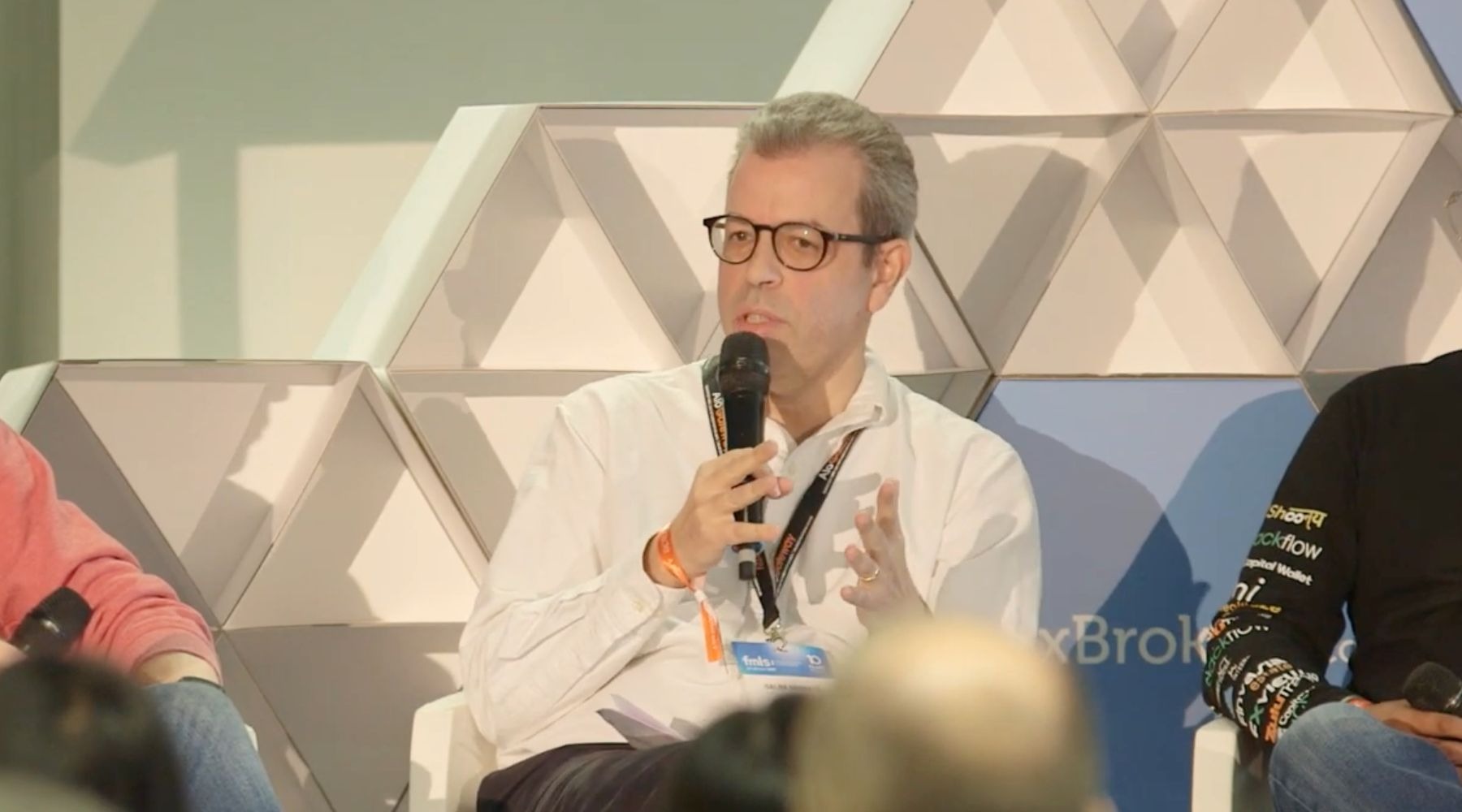
Yoni Asia, the CEO of eToro
“The principal purposes of this offering are to increase our capitalisation and financial flexibility and to create a public market,” eToro stated. “We intend to use the net proceeds from this offering for general corporate purposes, including working capital, operating expenses and capital expenditures.”
Interestingly, the broker also plans to use some of the IPO proceeds to “make acquisitions or investments”.
As for existing shareholders, eToro CEO Yoni Assia stands to make up to about $27.5 million by selling part of his stake in the public offering, while his brother, Ronen Assia, intends to make up to $12.75 million.
Other large shareholders—including Spark Capital, BRM Group (the Barkat family office), Andalusian, and CM Equities—are also expected to cash out tens of millions of dollars each.
After months of speculation, eToro has finally kicked off its public listing roadshow. The Israeli trading platform is targeting a valuation between $3.7 billion and $4 billion in its upcoming initial public offering (IPO). While that’s far below the $10.4 billion valuation it hoped for in its failed 2022 SPAC deal, it’s still above the $3.5 billion figure from its most recent funding round.
But is eToro’s current valuation high or low? And which listed brokers offer the fairest comparison?
In 2024, the broker reported a net profit of $192 million. Based on the expected valuation, its price-to-earnings (P/E) ratio would range from 19.2 to 20.8.
That puts it in close range with US-based Robinhood, which trades at a P/E ratio above 27.5. On paper, this makes eToro’s offer seem more affordable. However, Robinhood currently has a market cap of $42.4 billion—ten times more than what eToro is targeting.
Both brokers also have a strong crypto connection. At eToro, 38 per cent of trading income came from cryptocurrencies. Robinhood also leaned heavily on crypto in recent quarters. But the American broker is now planning to reduce its reliance on digital assets as trading volumes fluctuate.
eToro's income statement in its IPO prospectus
How It Stacks Up Against European Brokers
eToro now positions itself as a multi-asset platform and a fintech. But for years, its main focus was contracts for differences (CFDs). When compared to CFDs-heavy European peers, eToro’s valuation starts to look expensive.
IG Group, listed in London, has a market cap of £3.8 billion ($5.6 billion) and trades at a P/E ratio of 11.22. Plus500, another London-listed Israeli broker, is valued at £2.3 billion ($3.06 billion) with a P/E ratio of 12.2. CMC Markets trails behind with a £712 million ($950 million) market cap and a P/E ratio of 8.39.
Even Poland-listed XTB, which offers more than just CFDs, trades at a P/E of 13.26 and is worth PLN 9.9 billion ($2.6 billion).
Despite this, eToro seems to see itself as more of a US-style trading platform, similar to Robinhood, than a European one. But the numbers tell a different story: 70 per cent of eToro’s 3.58 million funded accounts are from Europe and the UK. The Americas account for just 10 per cent. In comparison, Robinhood has 25.8 million funded users, mostly based in the United States.
Only half of the IPO shares will be newly issued. The rest will come from existing shareholders. This means eToro will raise around $230 million to $250 million in fresh capital. After deducting costs and commissions, the net amount will be about $217.7 million—or up to $285.6 million if underwriters fully exercise their stock options.
Yoni Asia, the CEO of eToro
“The principal purposes of this offering are to increase our capitalisation and financial flexibility and to create a public market,” eToro stated. “We intend to use the net proceeds from this offering for general corporate purposes, including working capital, operating expenses and capital expenditures.”
Interestingly, the broker also plans to use some of the IPO proceeds to “make acquisitions or investments”.
As for existing shareholders, eToro CEO Yoni Assia stands to make up to about $27.5 million by selling part of his stake in the public offering, while his brother, Ronen Assia, intends to make up to $12.75 million.
Other large shareholders—including Spark Capital, BRM Group (the Barkat family office), Andalusian, and CM Equities—are also expected to cash out tens of millions of dollars each.
Arnab Shome is an electronics engineer-turned-financial editor. He holds a Bachelor of Technology from the National Institute of Technology, Agartala. He entered the retail trading industry about a decade ago, covering the cryptocurrency market for Finance Magnates, and later expanded his coverage to include forex and CFDs as well.
His work at Finance Magnates includes C-level interviews, data-driven analysis, opinion pieces, and scoops of industry exclusives. He also contributes to Finance Magnates’ quarterly industry report.
Area of coverage:
1. CFD broker-related news
2. Industry-related Regulatory updates and developments
3. New retail trading trends
4. Prop trading industry updates
5. Executive interviews
Education:
Bachelor of Technology - National Institute of Technology, Agartala (India)
Polymarket Replaces Bridged USDC Aiming for a U.S. Relaunch
FP Markets Winner Spotlight 🏆 | Global Broker of the Year 2025 #Trading #Broker #Innovation #Shorts
FP Markets Winner Spotlight 🏆 | Global Broker of the Year 2025 #Trading #Broker #Innovation #Shorts
FP Markets takes the spotlight as Global Broker of the Year 2025 at the Finance Magnates Awards.
Martin Stoilov, Head of Client Experience, shares that trust, innovation, and people played a key role in the company’s success, supported by a strong foundation of integrity and client-centricity.
Following this milestone, FP Markets continues to focus on growth, technology investment, and its core values of transparency and excellence.
👉 Be part of FM Awards 2026: https://awards.financemagnates.com/#nominate
FP Markets takes the spotlight as Global Broker of the Year 2025 at the Finance Magnates Awards.
Martin Stoilov, Head of Client Experience, shares that trust, innovation, and people played a key role in the company’s success, supported by a strong foundation of integrity and client-centricity.
Following this milestone, FP Markets continues to focus on growth, technology investment, and its core values of transparency and excellence.
👉 Be part of FM Awards 2026: https://awards.financemagnates.com/#nominate
In this video, we review @HolaPrimeMarketsOfficial, a multi-asset forex and CFDs broker offering different account types, trading platforms, and flexible trading conditions.
We cover the broker’s overall offering, including account options, trading environment, platforms like MT4 and MT5, and additional services such as managed accounts and fast withdrawals.
Watch the full video to see if Hola Prime Markets fits your trading needs.
📣 Stay up to date with the latest in finance and trading. Follow Finance Magnates for industry news, insights, and global event coverage.
Connect with us:
🔗 LinkedIn: /financemagnates
👍 Facebook: /financemagnates
📸 Instagram: https://www.instagram.com/financemagnates
🐦 X: https://x.com/financemagnates
🎥 TikTok: https://www.tiktok.com/tag/financemagnates
▶️ YouTube: /@financemagnates_official
#HolaPrime #ForexBroker #CFDTrading #FinanceMagnates #Trading #Forex #BrokerReview
In this video, we review @HolaPrimeMarketsOfficial, a multi-asset forex and CFDs broker offering different account types, trading platforms, and flexible trading conditions.
We cover the broker’s overall offering, including account options, trading environment, platforms like MT4 and MT5, and additional services such as managed accounts and fast withdrawals.
Watch the full video to see if Hola Prime Markets fits your trading needs.
📣 Stay up to date with the latest in finance and trading. Follow Finance Magnates for industry news, insights, and global event coverage.
Connect with us:
🔗 LinkedIn: /financemagnates
👍 Facebook: /financemagnates
📸 Instagram: https://www.instagram.com/financemagnates
🐦 X: https://x.com/financemagnates
🎥 TikTok: https://www.tiktok.com/tag/financemagnates
▶️ YouTube: /@financemagnates_official
#HolaPrime #ForexBroker #CFDTrading #FinanceMagnates #Trading #Forex #BrokerReview
Hola Prime Review: What You Need to Know | Full Breakdown by Finance Magnates
Hola Prime Review: What You Need to Know | Full Breakdown by Finance Magnates
In this video, we review @HolaPrime_Global, a proprietary trading firm offering evaluation programs and performance-based payouts in simulated market environments.
We cover how the challenge model works, including account types, profit splits (up to 95%), trading rules, and what it takes to reach a funded account. You’ll also learn about available platforms like MT4, MT5, cTrader, and more, along with insights into payouts, support, and trading conditions.
Watch the full video to see if Hola Prime fits your trading style.
📣 Stay up to date with the latest in finance and trading. Follow Finance Magnates for industry news, insights, and global event coverage.
Connect with us:
🔗 LinkedIn: /financemagnates
👍 Facebook: /financemagnates
📸 Instagram: https://www.instagram.com/financemagnates
🐦 X: https://x.com/financemagnates
🎥 TikTok: https://www.tiktok.com/tag/financemagnates
▶️ YouTube: /@financemagnates_official
#HolaPrime #PropFirm #Trading #FinanceMagnates #Forex #FuturesTrading #TradingReview #PropFirmReview
In this video, we review @HolaPrime_Global, a proprietary trading firm offering evaluation programs and performance-based payouts in simulated market environments.
We cover how the challenge model works, including account types, profit splits (up to 95%), trading rules, and what it takes to reach a funded account. You’ll also learn about available platforms like MT4, MT5, cTrader, and more, along with insights into payouts, support, and trading conditions.
Watch the full video to see if Hola Prime fits your trading style.
📣 Stay up to date with the latest in finance and trading. Follow Finance Magnates for industry news, insights, and global event coverage.
Connect with us:
🔗 LinkedIn: /financemagnates
👍 Facebook: /financemagnates
📸 Instagram: https://www.instagram.com/financemagnates
🐦 X: https://x.com/financemagnates
🎥 TikTok: https://www.tiktok.com/tag/financemagnates
▶️ YouTube: /@financemagnates_official
#HolaPrime #PropFirm #Trading #FinanceMagnates #Forex #FuturesTrading #TradingReview #PropFirmReview
Axi Winner Spotlight 🏆 | Global Most Innovative Broker 2025 #Innovation #Trading #Fintech #Broker
Axi Winner Spotlight 🏆 | Global Most Innovative Broker 2025 #Innovation #Trading #Fintech #Broker
Axi takes the spotlight at the Finance Magnates Awards, winning Global Most Innovative Broker 2025.
Olivia Xenofontos and Ivanna Openko share how the team will feel: proud, motivated, and ready to keep delivering.
They also describe the night as well-organized, focused, and enjoyable for all.
👉 Be part of FM Awards 2026.
Axi takes the spotlight at the Finance Magnates Awards, winning Global Most Innovative Broker 2025.
Olivia Xenofontos and Ivanna Openko share how the team will feel: proud, motivated, and ready to keep delivering.
They also describe the night as well-organized, focused, and enjoyable for all.
👉 Be part of FM Awards 2026.
Recognition that matters.
Built on transparency.
Driven by the industry.
The Finance Magnates Awards 2026.
Nominations are now open.
🔗 https://awards.financemagnates.com/?utm_source=SM&utm_medium=social&utm_campaign=recognition-matters
Recognition that matters.
Built on transparency.
Driven by the industry.
The Finance Magnates Awards 2026.
Nominations are now open.
🔗 https://awards.financemagnates.com/?utm_source=SM&utm_medium=social&utm_campaign=recognition-matters