Investment crowdfunding can be a highly effective method of sourcing seed money to launch a start-up.
FM
This article was written by Adinah Brown from Leverate.
A darling of 21st century financial trends, most of us have heard of crowdfunding, where projects and charities get funded by lots of people who think that an idea has great potential. However, what fewer people know about is investment crowdfunding, where a company sources funds by getting a large pool of backers to invest relatively small amounts of money into a shared project, company or business venture.
For an entrepreneur, investment crowdfunding can be a highly effective method of sourcing seed money to launch a start-up or project, particularly when more traditional means of raising funds, such bank loans and venture capital, are not available, too restrictive or too costly.
From the perspective of investors, it enables them to access potentially high returns from an investment, but without the enormous capital that is otherwise required.
This structure of investment crowdfunding has entailed that investment opportunities that were previously only available to the super wealthy, are now available to the masses. This democratizing of finance means that many individual investments require an initial outlay of anywhere between $100 to $50,000, which is a far cry from the millions of dollars that is necessary in a traditional investment structure.
In this article we list the most common forms of investment crowdfunding that have taken root and look set to rise.
Crowd Equity
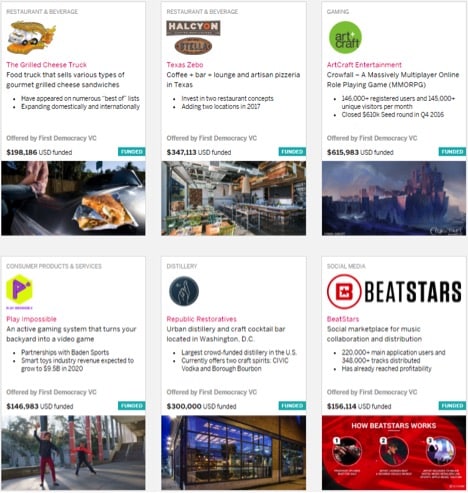
Equity crowdfunding provides an investor with a stake in a company that they have decided to financial support. Often the companies are innovative start-ups with fresh ideas that they are looking to get off the ground.
This crowdfunding option gives you ownership of a portion of the company and in terms of risk, you go along for the ride, whether that be skyrocketing success or a plummeting failure.
To help mitigate the risk of crowd equity there are a few things to be aware of:
Is the platform investor-led or entrepreneur-led? In entrepreneur led platforms, it’s the people seeking funding that set the investment terms, including the share price and the amount of equity that is to be sold off. In investor led platforms, a lead investor will negotiate the terms contributing to better terms for all other subsequent investors.
Does it have pre-emption rights? To protect your purchase from being diluted out, shares need to be sold with pre-emption rights so that their value does not decrease from subsequent funding rounds. Remember the movie ‘The Social Network’ where Facebook diluted the shareholding of Eduardo Saverin, one of its early founders, from 30% to just 0.5%? Yeah, you don’t want that to happen to you.
Crowd equity can start for as little as $10 for a very early stage start-up, however for more established companies, shares are sold for a few thousand dollars. Depending on the structure, the start-up may choose to set the minimum amount that they are willing to accept.
Crowd Real Estate
Moving in to the crowdfunding neighborhood is real estate. In 2016 crowd real estate funding grew beyond $3.5 billion, and by 2025 it is anticipated to be valued at more than $300 billion, as online real estate firms are expected to maximize on this development.
The beneficiaries of this innovative model are both sellers and buyers. For sellers, crowd real estate dramatically reduces the cost of selling a property whilst casting a much wider net of potential buyers. For buyers, crowd real estate provides investment opportunities that were previously only available to those with mega funds.
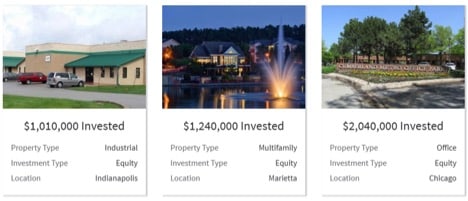
With a number of different platforms available online, individual investors choose a property from amongst a variety of different projects listed on a website, some of which may ask for as little as $5,000 and then go up to a maximum of $100,000.
Depending on the platform, there is usually management on the ground that organizers all the conveyancing, legal fees and any upgrades or renovations that are needed. Investors are provided with data to help inform their decision, such as the estimated return on investment, the investment duration and sometimes the details of other parties also involved in the investment. As soon as the investment is secured, the investor can start accruing interest.
The industry offers no shortage of variety, and investors are able to choose between single family homes, a building of condominiums and even multi-purpose manufacturing warehouses.
Crowd Bonds
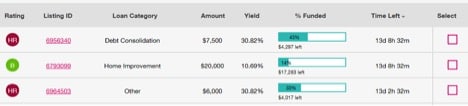
More similar to crowd equity, but in this case it is a bond that is issued by a company, or start-up and sold to investors by a crowdfunding company. The investor becomes a creditor and receives regular re-Payments, until the loan is paid back in full. As companies tend to be small and unlisted, the bond is secured against the company’s assets.
Depending on the relevant jurisdiction, the crowd-funder needs to be authorized by a financial Regulation authority to facilitate these deals. The crowd funder tends to also be responsible for some level of due diligence on the company issuing the bonds.
With all that said, the investor still carries the risk and needs to be aware at the outset, of the extent of risk being taken on. This means being aware of the interest rate, the length of the loan, the credit rating of the borrowing company and the nature of the company.
For their loan, investors tend to receive an interest rate that is higher than other debt instruments to counter the credit risk associated with the borrower. Also, to help mitigate risk, investors can spread their capital incrementally over multiple loans from different companies.
The range of crowd bonds has become quite extensive and varied, with bonds issued by care homes, solar farms, hydroelectric power station and pubs. The returns of the bonds are usually at a fixed rate of anywhere between 4 to 7 per cent and at a range of maturities, from 5 to 19 years.
This article was written by Adinah Brown from Leverate.
A darling of 21st century financial trends, most of us have heard of crowdfunding, where projects and charities get funded by lots of people who think that an idea has great potential. However, what fewer people know about is investment crowdfunding, where a company sources funds by getting a large pool of backers to invest relatively small amounts of money into a shared project, company or business venture.
For an entrepreneur, investment crowdfunding can be a highly effective method of sourcing seed money to launch a start-up or project, particularly when more traditional means of raising funds, such bank loans and venture capital, are not available, too restrictive or too costly.
From the perspective of investors, it enables them to access potentially high returns from an investment, but without the enormous capital that is otherwise required.
This structure of investment crowdfunding has entailed that investment opportunities that were previously only available to the super wealthy, are now available to the masses. This democratizing of finance means that many individual investments require an initial outlay of anywhere between $100 to $50,000, which is a far cry from the millions of dollars that is necessary in a traditional investment structure.
In this article we list the most common forms of investment crowdfunding that have taken root and look set to rise.
Crowd Equity
Equity crowdfunding provides an investor with a stake in a company that they have decided to financial support. Often the companies are innovative start-ups with fresh ideas that they are looking to get off the ground.
This crowdfunding option gives you ownership of a portion of the company and in terms of risk, you go along for the ride, whether that be skyrocketing success or a plummeting failure.
To help mitigate the risk of crowd equity there are a few things to be aware of:
Is the platform investor-led or entrepreneur-led? In entrepreneur led platforms, it’s the people seeking funding that set the investment terms, including the share price and the amount of equity that is to be sold off. In investor led platforms, a lead investor will negotiate the terms contributing to better terms for all other subsequent investors.
Does it have pre-emption rights? To protect your purchase from being diluted out, shares need to be sold with pre-emption rights so that their value does not decrease from subsequent funding rounds. Remember the movie ‘The Social Network’ where Facebook diluted the shareholding of Eduardo Saverin, one of its early founders, from 30% to just 0.5%? Yeah, you don’t want that to happen to you.
Crowd equity can start for as little as $10 for a very early stage start-up, however for more established companies, shares are sold for a few thousand dollars. Depending on the structure, the start-up may choose to set the minimum amount that they are willing to accept.
Crowd Real Estate
Moving in to the crowdfunding neighborhood is real estate. In 2016 crowd real estate funding grew beyond $3.5 billion, and by 2025 it is anticipated to be valued at more than $300 billion, as online real estate firms are expected to maximize on this development.
The beneficiaries of this innovative model are both sellers and buyers. For sellers, crowd real estate dramatically reduces the cost of selling a property whilst casting a much wider net of potential buyers. For buyers, crowd real estate provides investment opportunities that were previously only available to those with mega funds.
With a number of different platforms available online, individual investors choose a property from amongst a variety of different projects listed on a website, some of which may ask for as little as $5,000 and then go up to a maximum of $100,000.
Depending on the platform, there is usually management on the ground that organizers all the conveyancing, legal fees and any upgrades or renovations that are needed. Investors are provided with data to help inform their decision, such as the estimated return on investment, the investment duration and sometimes the details of other parties also involved in the investment. As soon as the investment is secured, the investor can start accruing interest.
The industry offers no shortage of variety, and investors are able to choose between single family homes, a building of condominiums and even multi-purpose manufacturing warehouses.
Crowd Bonds
More similar to crowd equity, but in this case it is a bond that is issued by a company, or start-up and sold to investors by a crowdfunding company. The investor becomes a creditor and receives regular re-Payments, until the loan is paid back in full. As companies tend to be small and unlisted, the bond is secured against the company’s assets.
Depending on the relevant jurisdiction, the crowd-funder needs to be authorized by a financial Regulation authority to facilitate these deals. The crowd funder tends to also be responsible for some level of due diligence on the company issuing the bonds.
With all that said, the investor still carries the risk and needs to be aware at the outset, of the extent of risk being taken on. This means being aware of the interest rate, the length of the loan, the credit rating of the borrowing company and the nature of the company.
For their loan, investors tend to receive an interest rate that is higher than other debt instruments to counter the credit risk associated with the borrower. Also, to help mitigate risk, investors can spread their capital incrementally over multiple loans from different companies.
The range of crowd bonds has become quite extensive and varied, with bonds issued by care homes, solar farms, hydroelectric power station and pubs. The returns of the bonds are usually at a fixed rate of anywhere between 4 to 7 per cent and at a range of maturities, from 5 to 19 years.
Retail Investors Shift to Energy, Rare Earths, and AI Amid Tensions, eToro Finds
FP Markets Winner Spotlight 🏆 | Global Broker of the Year 2025 #Trading #Broker #Innovation #Shorts
FP Markets Winner Spotlight 🏆 | Global Broker of the Year 2025 #Trading #Broker #Innovation #Shorts
FP Markets takes the spotlight as Global Broker of the Year 2025 at the Finance Magnates Awards.
Martin Stoilov, Head of Client Experience, shares that trust, innovation, and people played a key role in the company’s success, supported by a strong foundation of integrity and client-centricity.
Following this milestone, FP Markets continues to focus on growth, technology investment, and its core values of transparency and excellence.
👉 Be part of FM Awards 2026: https://awards.financemagnates.com/#nominate
FP Markets takes the spotlight as Global Broker of the Year 2025 at the Finance Magnates Awards.
Martin Stoilov, Head of Client Experience, shares that trust, innovation, and people played a key role in the company’s success, supported by a strong foundation of integrity and client-centricity.
Following this milestone, FP Markets continues to focus on growth, technology investment, and its core values of transparency and excellence.
👉 Be part of FM Awards 2026: https://awards.financemagnates.com/#nominate
In this video, we review @HolaPrimeMarketsOfficial, a multi-asset forex and CFDs broker offering different account types, trading platforms, and flexible trading conditions.
We cover the broker’s overall offering, including account options, trading environment, platforms like MT4 and MT5, and additional services such as managed accounts and fast withdrawals.
Watch the full video to see if Hola Prime Markets fits your trading needs.
📣 Stay up to date with the latest in finance and trading. Follow Finance Magnates for industry news, insights, and global event coverage.
Connect with us:
🔗 LinkedIn: /financemagnates
👍 Facebook: /financemagnates
📸 Instagram: https://www.instagram.com/financemagnates
🐦 X: https://x.com/financemagnates
🎥 TikTok: https://www.tiktok.com/tag/financemagnates
▶️ YouTube: /@financemagnates_official
#HolaPrime #ForexBroker #CFDTrading #FinanceMagnates #Trading #Forex #BrokerReview
In this video, we review @HolaPrimeMarketsOfficial, a multi-asset forex and CFDs broker offering different account types, trading platforms, and flexible trading conditions.
We cover the broker’s overall offering, including account options, trading environment, platforms like MT4 and MT5, and additional services such as managed accounts and fast withdrawals.
Watch the full video to see if Hola Prime Markets fits your trading needs.
📣 Stay up to date with the latest in finance and trading. Follow Finance Magnates for industry news, insights, and global event coverage.
Connect with us:
🔗 LinkedIn: /financemagnates
👍 Facebook: /financemagnates
📸 Instagram: https://www.instagram.com/financemagnates
🐦 X: https://x.com/financemagnates
🎥 TikTok: https://www.tiktok.com/tag/financemagnates
▶️ YouTube: /@financemagnates_official
#HolaPrime #ForexBroker #CFDTrading #FinanceMagnates #Trading #Forex #BrokerReview
Hola Prime Review: What You Need to Know | Full Breakdown by Finance Magnates
Hola Prime Review: What You Need to Know | Full Breakdown by Finance Magnates
In this video, we review @HolaPrime_Global, a proprietary trading firm offering evaluation programs and performance-based payouts in simulated market environments.
We cover how the challenge model works, including account types, profit splits (up to 95%), trading rules, and what it takes to reach a funded account. You’ll also learn about available platforms like MT4, MT5, cTrader, and more, along with insights into payouts, support, and trading conditions.
Watch the full video to see if Hola Prime fits your trading style.
📣 Stay up to date with the latest in finance and trading. Follow Finance Magnates for industry news, insights, and global event coverage.
Connect with us:
🔗 LinkedIn: /financemagnates
👍 Facebook: /financemagnates
📸 Instagram: https://www.instagram.com/financemagnates
🐦 X: https://x.com/financemagnates
🎥 TikTok: https://www.tiktok.com/tag/financemagnates
▶️ YouTube: /@financemagnates_official
#HolaPrime #PropFirm #Trading #FinanceMagnates #Forex #FuturesTrading #TradingReview #PropFirmReview
In this video, we review @HolaPrime_Global, a proprietary trading firm offering evaluation programs and performance-based payouts in simulated market environments.
We cover how the challenge model works, including account types, profit splits (up to 95%), trading rules, and what it takes to reach a funded account. You’ll also learn about available platforms like MT4, MT5, cTrader, and more, along with insights into payouts, support, and trading conditions.
Watch the full video to see if Hola Prime fits your trading style.
📣 Stay up to date with the latest in finance and trading. Follow Finance Magnates for industry news, insights, and global event coverage.
Connect with us:
🔗 LinkedIn: /financemagnates
👍 Facebook: /financemagnates
📸 Instagram: https://www.instagram.com/financemagnates
🐦 X: https://x.com/financemagnates
🎥 TikTok: https://www.tiktok.com/tag/financemagnates
▶️ YouTube: /@financemagnates_official
#HolaPrime #PropFirm #Trading #FinanceMagnates #Forex #FuturesTrading #TradingReview #PropFirmReview
Axi Winner Spotlight 🏆 | Global Most Innovative Broker 2025 #Innovation #Trading #Fintech #Broker
Axi Winner Spotlight 🏆 | Global Most Innovative Broker 2025 #Innovation #Trading #Fintech #Broker
Axi takes the spotlight at the Finance Magnates Awards, winning Global Most Innovative Broker 2025.
Olivia Xenofontos and Ivanna Openko share how the team will feel: proud, motivated, and ready to keep delivering.
They also describe the night as well-organized, focused, and enjoyable for all.
👉 Be part of FM Awards 2026.
Axi takes the spotlight at the Finance Magnates Awards, winning Global Most Innovative Broker 2025.
Olivia Xenofontos and Ivanna Openko share how the team will feel: proud, motivated, and ready to keep delivering.
They also describe the night as well-organized, focused, and enjoyable for all.
👉 Be part of FM Awards 2026.
Recognition that matters.
Built on transparency.
Driven by the industry.
The Finance Magnates Awards 2026.
Nominations are now open.
🔗 https://awards.financemagnates.com/?utm_source=SM&utm_medium=social&utm_campaign=recognition-matters
Recognition that matters.
Built on transparency.
Driven by the industry.
The Finance Magnates Awards 2026.
Nominations are now open.
🔗 https://awards.financemagnates.com/?utm_source=SM&utm_medium=social&utm_campaign=recognition-matters