80 percent of Binance reviews on Trustpilot have 1 star, while another 6 percent have only 2 stars.
Most of the top crypto exchanges are rated either “Poor” or “Bad” on Trustpilot.
A screenshot of Binance's official page on Trustpilot
Trustpilot, a platform where real users provide reviews, has disabled the “TrustScore” of crypto exchange Binance, alleging the detection of “a number of fake reviews for this company.” The review platform has already removed the fake reviews.
Fake Reviews of Binance on Trustpilot
“If additional suspicious reviews are discovered on this profile, we'll remove those too. If you believe a review is fake, you can flag it,” a banner on the verified page of Binance on Trustpilot stated.
“We take the integrity of our platform very seriously and wanted to let you know this company hasn’t been playing by the rules,” warned Trustpilot. “When we uncover misuse, we take action and alert our community.”
When it comes to reviews of any digital platform, especially those in financial services, Trustpilot is considered reliable. Although satisfied users write positive reviews of providers there, it has also attracted stressed traders and investors who post their grievances. Any negative reviews on Trustpilot can heavily impact the reputation of platforms, as many prominently advertise their Trustpilot score to enhance their brand value.
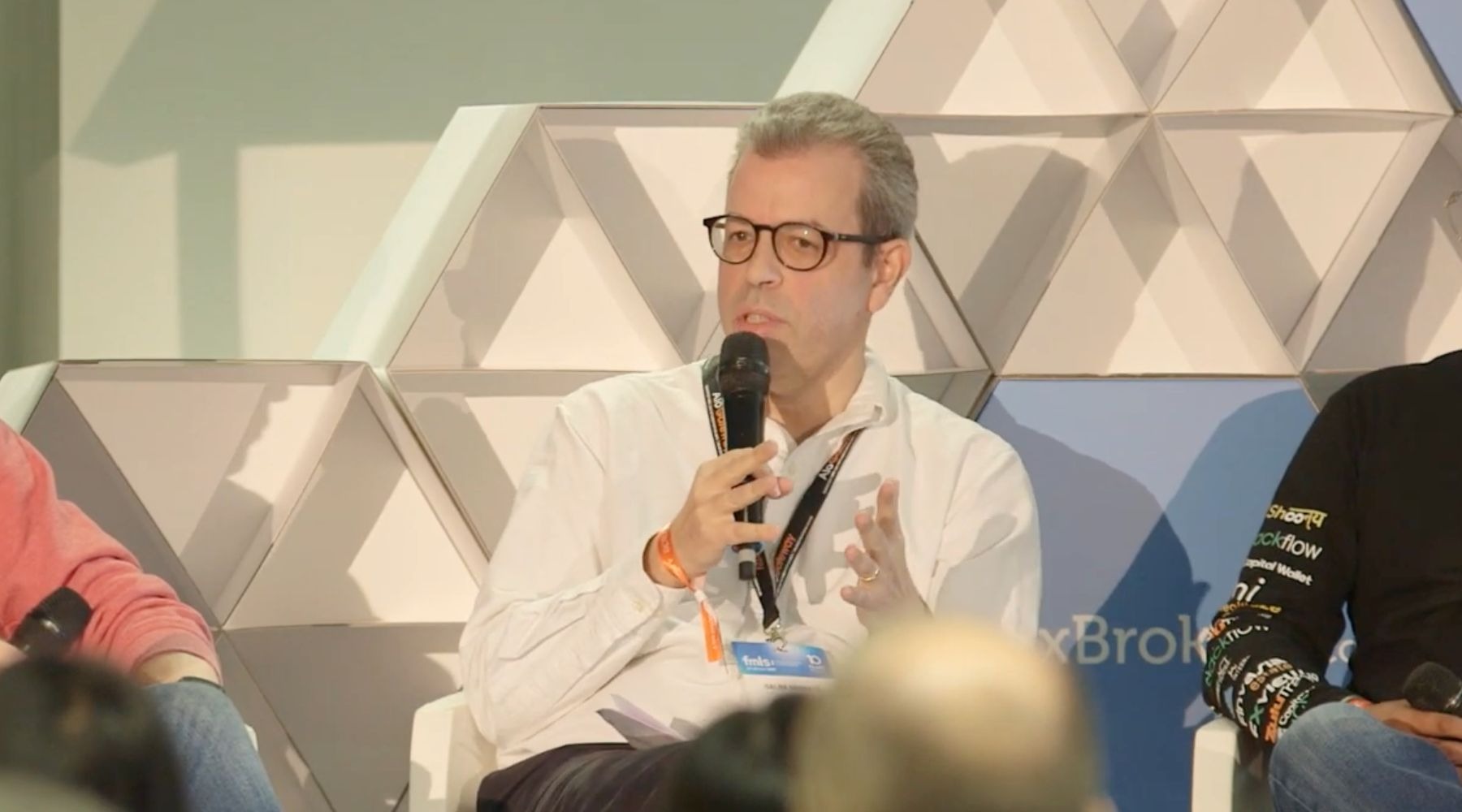
Richard Teng, CEO of Binance
However, many have figured out how to post fake reviews on Trustpilot. Many freelancers on some online platforms even advertise their services to post fake Trustpilot reviews. Recently, the US Federal Trade Commission even officially banned fake reviews of platforms.
“We Have Zero Tolerance for Fake Reviews”
Trustpilot's action against Binance was due to a breach of its guidelines, which state: “Don't write or ask people to write fake reviews. We have zero tolerance for fake reviews and will remove them.”
Although Trustpilot is not showing Binance's “TrustScore,” users can still post reviews of the crypto exchange. Interestingly, out of 4,526 reviews on Binance, 80 percent have 1 star, and 6 percent have 2 stars. Trustpilot counts “1 and 2-star reviews as negative.”
The review website also highlighted that Binance replied to 91 percent of the negative reviews.
Interestingly, the TrustScores of most prominent crypto exchanges vary between “Bad” and “Poor.” Coinbase, one of the most reputed exchanges, has a TrustScore of 2.4, which is “Poor,” similar to OKX, which has a TrustScore of 1.8. Bybit, with a TrustScore of 1.5, is rated as “Bad.”
A screenshot of Coinbase's official Trustpilot page
According to an archived version of Binance's Trustpilot page, the crypto exchange had a TrustScore of 2 in May last year, which was deemed “Bad.”
Finance Magnates approached Binance, but has not received any response as of press time.
In June, Trustpilot “temporarily suspended” the profile of Funding Pips, a prop trading platform, after “an increase in reviews related to recent media attention.” However, the prop firm's page has since been restored, and it currently has a TrustScore of 4.4, which is deemed “Excellent,” based on 13,610 reviews.
Trustpilot, a platform where real users provide reviews, has disabled the “TrustScore” of crypto exchange Binance, alleging the detection of “a number of fake reviews for this company.” The review platform has already removed the fake reviews.
Fake Reviews of Binance on Trustpilot
“If additional suspicious reviews are discovered on this profile, we'll remove those too. If you believe a review is fake, you can flag it,” a banner on the verified page of Binance on Trustpilot stated.
“We take the integrity of our platform very seriously and wanted to let you know this company hasn’t been playing by the rules,” warned Trustpilot. “When we uncover misuse, we take action and alert our community.”
When it comes to reviews of any digital platform, especially those in financial services, Trustpilot is considered reliable. Although satisfied users write positive reviews of providers there, it has also attracted stressed traders and investors who post their grievances. Any negative reviews on Trustpilot can heavily impact the reputation of platforms, as many prominently advertise their Trustpilot score to enhance their brand value.
Richard Teng, CEO of Binance
However, many have figured out how to post fake reviews on Trustpilot. Many freelancers on some online platforms even advertise their services to post fake Trustpilot reviews. Recently, the US Federal Trade Commission even officially banned fake reviews of platforms.
“We Have Zero Tolerance for Fake Reviews”
Trustpilot's action against Binance was due to a breach of its guidelines, which state: “Don't write or ask people to write fake reviews. We have zero tolerance for fake reviews and will remove them.”
Although Trustpilot is not showing Binance's “TrustScore,” users can still post reviews of the crypto exchange. Interestingly, out of 4,526 reviews on Binance, 80 percent have 1 star, and 6 percent have 2 stars. Trustpilot counts “1 and 2-star reviews as negative.”
The review website also highlighted that Binance replied to 91 percent of the negative reviews.
Interestingly, the TrustScores of most prominent crypto exchanges vary between “Bad” and “Poor.” Coinbase, one of the most reputed exchanges, has a TrustScore of 2.4, which is “Poor,” similar to OKX, which has a TrustScore of 1.8. Bybit, with a TrustScore of 1.5, is rated as “Bad.”
A screenshot of Coinbase's official Trustpilot page
According to an archived version of Binance's Trustpilot page, the crypto exchange had a TrustScore of 2 in May last year, which was deemed “Bad.”
Finance Magnates approached Binance, but has not received any response as of press time.
In June, Trustpilot “temporarily suspended” the profile of Funding Pips, a prop trading platform, after “an increase in reviews related to recent media attention.” However, the prop firm's page has since been restored, and it currently has a TrustScore of 4.4, which is deemed “Excellent,” based on 13,610 reviews.
Arnab Shome is an electronics engineer-turned-financial editor. He holds a Bachelor of Technology from the National Institute of Technology, Agartala. He entered the retail trading industry about a decade ago, covering the cryptocurrency market for Finance Magnates, and later expanded his coverage to include forex and CFDs as well.
His work at Finance Magnates includes C-level interviews, data-driven analysis, opinion pieces, and scoops of industry exclusives. He also contributes to Finance Magnates’ quarterly industry report.
Area of coverage:
1. CFD broker-related news
2. Industry-related Regulatory updates and developments
3. New retail trading trends
4. Prop trading industry updates
5. Executive interviews
Education:
Bachelor of Technology - National Institute of Technology, Agartala (India)
Kraken Steps Up Speed Race with New Equinix Colocation Service for Crypto Traders
FP Markets Winner Spotlight 🏆 | Global Broker of the Year 2025 #Trading #Broker #Innovation #Shorts
FP Markets Winner Spotlight 🏆 | Global Broker of the Year 2025 #Trading #Broker #Innovation #Shorts
FP Markets takes the spotlight as Global Broker of the Year 2025 at the Finance Magnates Awards.
Martin Stoilov, Head of Client Experience, shares that trust, innovation, and people played a key role in the company’s success, supported by a strong foundation of integrity and client-centricity.
Following this milestone, FP Markets continues to focus on growth, technology investment, and its core values of transparency and excellence.
👉 Be part of FM Awards 2026: https://awards.financemagnates.com/#nominate
FP Markets takes the spotlight as Global Broker of the Year 2025 at the Finance Magnates Awards.
Martin Stoilov, Head of Client Experience, shares that trust, innovation, and people played a key role in the company’s success, supported by a strong foundation of integrity and client-centricity.
Following this milestone, FP Markets continues to focus on growth, technology investment, and its core values of transparency and excellence.
👉 Be part of FM Awards 2026: https://awards.financemagnates.com/#nominate
In this video, we review @HolaPrimeMarketsOfficial, a multi-asset forex and CFDs broker offering different account types, trading platforms, and flexible trading conditions.
We cover the broker’s overall offering, including account options, trading environment, platforms like MT4 and MT5, and additional services such as managed accounts and fast withdrawals.
Watch the full video to see if Hola Prime Markets fits your trading needs.
📣 Stay up to date with the latest in finance and trading. Follow Finance Magnates for industry news, insights, and global event coverage.
Connect with us:
🔗 LinkedIn: /financemagnates
👍 Facebook: /financemagnates
📸 Instagram: https://www.instagram.com/financemagnates
🐦 X: https://x.com/financemagnates
🎥 TikTok: https://www.tiktok.com/tag/financemagnates
▶️ YouTube: /@financemagnates_official
#HolaPrime #ForexBroker #CFDTrading #FinanceMagnates #Trading #Forex #BrokerReview
In this video, we review @HolaPrimeMarketsOfficial, a multi-asset forex and CFDs broker offering different account types, trading platforms, and flexible trading conditions.
We cover the broker’s overall offering, including account options, trading environment, platforms like MT4 and MT5, and additional services such as managed accounts and fast withdrawals.
Watch the full video to see if Hola Prime Markets fits your trading needs.
📣 Stay up to date with the latest in finance and trading. Follow Finance Magnates for industry news, insights, and global event coverage.
Connect with us:
🔗 LinkedIn: /financemagnates
👍 Facebook: /financemagnates
📸 Instagram: https://www.instagram.com/financemagnates
🐦 X: https://x.com/financemagnates
🎥 TikTok: https://www.tiktok.com/tag/financemagnates
▶️ YouTube: /@financemagnates_official
#HolaPrime #ForexBroker #CFDTrading #FinanceMagnates #Trading #Forex #BrokerReview
Hola Prime Review: What You Need to Know | Full Breakdown by Finance Magnates
Hola Prime Review: What You Need to Know | Full Breakdown by Finance Magnates
In this video, we review @HolaPrime_Global, a proprietary trading firm offering evaluation programs and performance-based payouts in simulated market environments.
We cover how the challenge model works, including account types, profit splits (up to 95%), trading rules, and what it takes to reach a funded account. You’ll also learn about available platforms like MT4, MT5, cTrader, and more, along with insights into payouts, support, and trading conditions.
Watch the full video to see if Hola Prime fits your trading style.
📣 Stay up to date with the latest in finance and trading. Follow Finance Magnates for industry news, insights, and global event coverage.
Connect with us:
🔗 LinkedIn: /financemagnates
👍 Facebook: /financemagnates
📸 Instagram: https://www.instagram.com/financemagnates
🐦 X: https://x.com/financemagnates
🎥 TikTok: https://www.tiktok.com/tag/financemagnates
▶️ YouTube: /@financemagnates_official
#HolaPrime #PropFirm #Trading #FinanceMagnates #Forex #FuturesTrading #TradingReview #PropFirmReview
In this video, we review @HolaPrime_Global, a proprietary trading firm offering evaluation programs and performance-based payouts in simulated market environments.
We cover how the challenge model works, including account types, profit splits (up to 95%), trading rules, and what it takes to reach a funded account. You’ll also learn about available platforms like MT4, MT5, cTrader, and more, along with insights into payouts, support, and trading conditions.
Watch the full video to see if Hola Prime fits your trading style.
📣 Stay up to date with the latest in finance and trading. Follow Finance Magnates for industry news, insights, and global event coverage.
Connect with us:
🔗 LinkedIn: /financemagnates
👍 Facebook: /financemagnates
📸 Instagram: https://www.instagram.com/financemagnates
🐦 X: https://x.com/financemagnates
🎥 TikTok: https://www.tiktok.com/tag/financemagnates
▶️ YouTube: /@financemagnates_official
#HolaPrime #PropFirm #Trading #FinanceMagnates #Forex #FuturesTrading #TradingReview #PropFirmReview
Axi Winner Spotlight 🏆 | Global Most Innovative Broker 2025 #Innovation #Trading #Fintech #Broker
Axi Winner Spotlight 🏆 | Global Most Innovative Broker 2025 #Innovation #Trading #Fintech #Broker
Axi takes the spotlight at the Finance Magnates Awards, winning Global Most Innovative Broker 2025.
Olivia Xenofontos and Ivanna Openko share how the team will feel: proud, motivated, and ready to keep delivering.
They also describe the night as well-organized, focused, and enjoyable for all.
👉 Be part of FM Awards 2026.
Axi takes the spotlight at the Finance Magnates Awards, winning Global Most Innovative Broker 2025.
Olivia Xenofontos and Ivanna Openko share how the team will feel: proud, motivated, and ready to keep delivering.
They also describe the night as well-organized, focused, and enjoyable for all.
👉 Be part of FM Awards 2026.
Recognition that matters.
Built on transparency.
Driven by the industry.
The Finance Magnates Awards 2026.
Nominations are now open.
🔗 https://awards.financemagnates.com/?utm_source=SM&utm_medium=social&utm_campaign=recognition-matters
Recognition that matters.
Built on transparency.
Driven by the industry.
The Finance Magnates Awards 2026.
Nominations are now open.
🔗 https://awards.financemagnates.com/?utm_source=SM&utm_medium=social&utm_campaign=recognition-matters