Financial and Business News

Hong Kong Decides on Rules for Crypto ETFs

Monday, 31/10/2022 | 07:20 GMT by Arnab Shome
  • The SFC will consider approving virtual asset ETFs.
  • Initially, it will only allow Bitcoin and Ether futures trading on Chicago Mercantile Exchange.
Crypto block trade

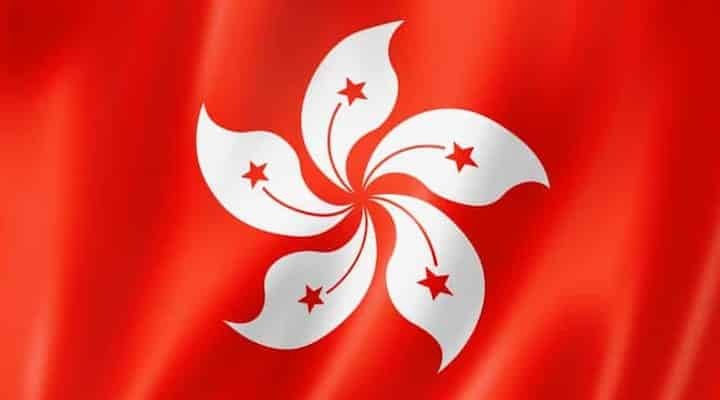
One of the Four Asian Tigers, Hong Kong, is now set to allow crypto investments to retail and institutional investors, and it has unveiled plans for regulations.

The Securities and Futures Commission (SFC) confirmed its intentions to launch a consultation paper with proposed guidelines and regulatory rules for cryptocurrencies or, as officially called, virtual assets (VA).

The regulator is further considering allowing retail access to virtual assets through exchange-traded funds. Despite the industry push, such ETFs are yet to receive approval in the United States. However, several European countries have allowed them.

“We recognize the increasing acceptance of VA as a vehicle for investment allocation by global investors, be they institutional or individual,” Hong Kong’s Financial Services and the Treasury Bureau said in a statement.

“Having these products launched in Hong Kong will provide the connectivity between VA players and traditional financial institutions, offering investors with well-designed products, hence promoting the overall growth of the sector in our market.”

All-in for ETFs

A separate circular by the SFC detailed that only management companies with a “good track record of regulatory compliance” that can demonstrate “at least three years’ proven track record in managing ETFs” will be allowed to issue VA ETFs in the jurisdictions.

The management companies must also follow active investment strategies for flexibility in portfolio composition, rolling strategy and handling any market disruption events. Moreover, the net derivative exposure of the futures ETFs should not exceed 100 percent of the fund’s total net asset value.

Further, virtual asset futures traded on conventional regulated exchanges will only be allowed. Initially, the regulator would only allow Bitcoin futures and Ether futures traded on Chicago Mercantile Exchange.

Defying the Neighbours Strategies

Hong Kong operates autonomously, but it is still a part of China. While the autonomous jurisdiction is bullish on cryptocurrencies, mainland China still imposes a blanket ban on all crypto investments.

Hong Kong’s strategies also go opposite the plans of other influential Asian jurisdictions. Singapore’s central bank and financial market regulator recently announced rules to impose restrictions on retail cryptocurrency trading and the issuance of stablecoins.

One of the Four Asian Tigers, Hong Kong, is now set to allow crypto investments to retail and institutional investors, and it has unveiled plans for regulations.

The Securities and Futures Commission (SFC) confirmed its intentions to launch a consultation paper with proposed guidelines and regulatory rules for cryptocurrencies or, as officially called, virtual assets (VA).

The regulator is further considering allowing retail access to virtual assets through exchange-traded funds. Despite the industry push, such ETFs are yet to receive approval in the United States. However, several European countries have allowed them.

“We recognize the increasing acceptance of VA as a vehicle for investment allocation by global investors, be they institutional or individual,” Hong Kong’s Financial Services and the Treasury Bureau said in a statement.

“Having these products launched in Hong Kong will provide the connectivity between VA players and traditional financial institutions, offering investors with well-designed products, hence promoting the overall growth of the sector in our market.”

All-in for ETFs

A separate circular by the SFC detailed that only management companies with a “good track record of regulatory compliance” that can demonstrate “at least three years’ proven track record in managing ETFs” will be allowed to issue VA ETFs in the jurisdictions.

The management companies must also follow active investment strategies for flexibility in portfolio composition, rolling strategy and handling any market disruption events. Moreover, the net derivative exposure of the futures ETFs should not exceed 100 percent of the fund’s total net asset value.

Further, virtual asset futures traded on conventional regulated exchanges will only be allowed. Initially, the regulator would only allow Bitcoin futures and Ether futures traded on Chicago Mercantile Exchange.

Defying the Neighbours Strategies

Hong Kong operates autonomously, but it is still a part of China. While the autonomous jurisdiction is bullish on cryptocurrencies, mainland China still imposes a blanket ban on all crypto investments.

Hong Kong’s strategies also go opposite the plans of other influential Asian jurisdictions. Singapore’s central bank and financial market regulator recently announced rules to impose restrictions on retail cryptocurrency trading and the issuance of stablecoins.

About the Author: Arnab Shome
Arnab Shome
  • 7315 Articles
  • 133 Followers
Arnab Shome is an electronics engineer-turned-financial editor. He holds a Bachelor of Technology from the National Institute of Technology, Agartala. He entered the retail trading industry about a decade ago, covering the cryptocurrency market for Finance Magnates, and later expanded his coverage to include forex and CFDs as well. His work at Finance Magnates includes C-level interviews, data-driven analysis, opinion pieces, and scoops of industry exclusives. He also contributes to Finance Magnates’ quarterly industry report. Area of coverage: 1. CFD broker-related news 2. Industry-related Regulatory updates and developments 3. New retail trading trends 4. Prop trading industry updates 5. Executive interviews Education: Bachelor of Technology - National Institute of Technology, Agartala (India)

More from the Author

CryptoCurrency