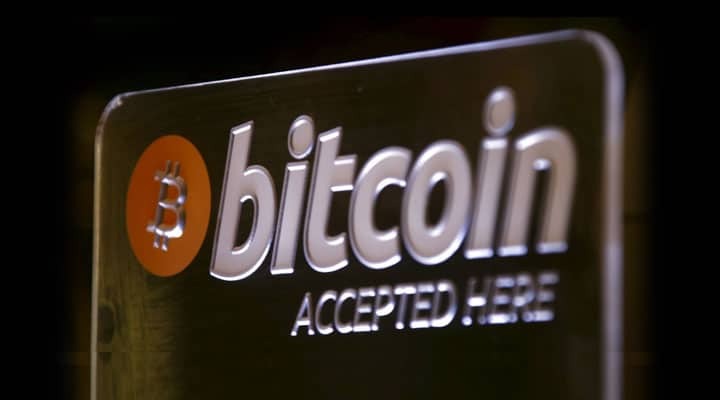
Bitcoin's cumulative annual transfer volume in 2021 exceeded that of Visa.
The daily average transaction value came in at $136,555.
“[A] peer-to-peer version of electronic cash would allow online payments to be sent directly from one party to another without going through a financial institution,” that's how the pseudonymous Satoshi Nakamoto described Bitcoin.
So, basically, the idea behind Bitcoin is to use it as an alternative mode of payment. Many even call it ‘internet money’.
But, did Bitcoin succeed to become a viable payment option after over a decade of its inception? Or can it even be used for payments?
Well, maybe in the early days when Bitcoin was introduced it was perfect for making small payments. But, as the network grew larger and larger, limitations of Bitcoin surfaced. Transaction fees skyrocketed, and users even had to wait for hours for transaction confirmation.
These limitations made Bitcoin almost impossible for retail payments. But, that does not mean that the network is a dud. In fact, Cathie Wood-led Ark Investment Management recently said in a report that Bitcoin’s cumulative annual transfer volume in 2021 surged 463 percent to reach $13.1 trillion, which is more than Visa’s number for the period.
Bitcoin annual transfer volume measured against Visa's. Courtesy: Ark
Additionally, Bitcoin’s daily transfer volume increased five-fold last year to $35.9 billion, while its average transaction value jumped six times to $136,555. That average transaction value concludes almost everything, pointing out that Bitcoin is still not ready for small retail transactions.
What is stopping Bitcoin from retail adoption?
Well, the technology is an absolute limitation for Bitcoin’s adoption for payments. The BTC network processes roughly ten transactions per second; Visa and Mastercard are in the order of multiple 1,000s of transactions per second each.
But, developers are working on this limitation and have already introduced Lightning Network to make smaller BTC payments faster and cheaper.
Regulation Is the Key
One of the primary reasons for the timid BTC support for payments is the lack of regulations. The payments industry is highly regulated, and the companies do not want to upset regulators by supporting Bitcoin, which only has the currency status in one country, El Salvador.
“Although mass adoption of crypto and blockchain isn’t quite here yet, I believe increased regulation could push it to the edge as a widely accepted form of payment. More regulation leads to more guidance, which will provide reassurance for institutional and mass use,” said Rodrigo Vicuna, the Chief Financial Officer at Prime Trust.
Despite the regulatory uncertainty, many major companies have already been accepting Bitcoin as payment for years. Elon Musk-led Tesla’s decision to accept BTC for its electric cars was probably the most important milestone for Bitcoin payments adoption to date.
But, these US companies are accepting the cryptocurrency within a regulatory grey area, as Bitcoin is neither legal tender in the country nor it is banned.
Bitcoin Is Volatile
Also, the volatility of Bitcoin is another roadblock for using it for payments. No one wants to spend something if its value is expected to rise in a short term or accept something if it is about to crash.
“The news cycle portrays crypto as a volatile investment,” Vicuna added. “Although Bitcoin’s performance reflects the ebb and flow of stocks, some still consider it the Wild West in terms of the nature of the market.”
“Regulatory clarity can rein some of that in with guardrails – leading to greater stability and support. At the end of the day, a regulatory framework for crypto is critical and will help the industry evolve into a lower risk asset class with clear paths toward consumer adoption, including confidence with crypto payments.”
Indeed, when El Salvador provided Bitcoin with the status of legal tender, all businesses in the country are bound to accept the cryptocurrency as payment. To protect their risk exposure the government decided to provide them with the option to convert BTC to USD immediately while the transaction is made.
But, many experts in the crypto industry deny the role of volatility in Bitcoin payment adoption.
“The volatility of cryptocurrencies doesn’t actually matter much in terms of making payments. Software exists that instantly converts one cryptocurrency into a more stable form of currency like fiat (USD, CAD, GBP, AUD). Additionally, people can just use stablecoins as a means of payment, avoiding the volatility that is inherent within coins like Bitcoin and Ethereum,” Keegan Francis, an Investor at The Floatation Centre, said.
But again, who is going to spend Bitcoin if its value is expected to rise in a month or even a day?
Also, for anything to be accepted as payment, consumer trust is an important factor. Fiats have the backing of governments, but when it comes to Bitcoin the entire infrastructure is private. All of its credibility depends on the decentralized structure, but the rampant hacks on crypto platforms only fuel the distrust of such innovative digital currency among both consumers and merchants.
“The future of crypto payments is likely to be multifaceted in the short term. That is, it will take some time for a dominant payment method to arise,” Francis added.
So, Is It a Marketing Gimmick?
Despite many limitations, more and more organizations are starting to accept Bitcoin as payment. Even though a very small percentage of the population uses it, the option is still there. Why? Is it only to market Bitcoin so that its value can increase?
“No, I don’t believe it’s another marketing tool,” added Vicuna. “We’ve seen the digital asset industry mature significantly over the past year. From exchange-traded funds to celebrity endorsements, crypto has moved from a niche market of early adopters to more mainstream awareness. It will continue to evolve, but it’s here for the long-term.”
“As we move further into 2022, we foresee an uptick in crypto platforms and apps that provide a better user experience, tighter security, and regulation that will provide safety and comfort around the assets for day-to-day transactions. The sector will continue to see mainstream coverage, attention from retail clients and institutional investors, and a stronger movement toward mass adoption. Lastly, expect to see new use cases emerge internationally – not just the U.S.”
“[A] peer-to-peer version of electronic cash would allow online payments to be sent directly from one party to another without going through a financial institution,” that's how the pseudonymous Satoshi Nakamoto described Bitcoin.
So, basically, the idea behind Bitcoin is to use it as an alternative mode of payment. Many even call it ‘internet money’.
But, did Bitcoin succeed to become a viable payment option after over a decade of its inception? Or can it even be used for payments?
Well, maybe in the early days when Bitcoin was introduced it was perfect for making small payments. But, as the network grew larger and larger, limitations of Bitcoin surfaced. Transaction fees skyrocketed, and users even had to wait for hours for transaction confirmation.
These limitations made Bitcoin almost impossible for retail payments. But, that does not mean that the network is a dud. In fact, Cathie Wood-led Ark Investment Management recently said in a report that Bitcoin’s cumulative annual transfer volume in 2021 surged 463 percent to reach $13.1 trillion, which is more than Visa’s number for the period.
Bitcoin annual transfer volume measured against Visa's. Courtesy: Ark
Additionally, Bitcoin’s daily transfer volume increased five-fold last year to $35.9 billion, while its average transaction value jumped six times to $136,555. That average transaction value concludes almost everything, pointing out that Bitcoin is still not ready for small retail transactions.
What is stopping Bitcoin from retail adoption?
Well, the technology is an absolute limitation for Bitcoin’s adoption for payments. The BTC network processes roughly ten transactions per second; Visa and Mastercard are in the order of multiple 1,000s of transactions per second each.
But, developers are working on this limitation and have already introduced Lightning Network to make smaller BTC payments faster and cheaper.
Regulation Is the Key
One of the primary reasons for the timid BTC support for payments is the lack of regulations. The payments industry is highly regulated, and the companies do not want to upset regulators by supporting Bitcoin, which only has the currency status in one country, El Salvador.
“Although mass adoption of crypto and blockchain isn’t quite here yet, I believe increased regulation could push it to the edge as a widely accepted form of payment. More regulation leads to more guidance, which will provide reassurance for institutional and mass use,” said Rodrigo Vicuna, the Chief Financial Officer at Prime Trust.
Despite the regulatory uncertainty, many major companies have already been accepting Bitcoin as payment for years. Elon Musk-led Tesla’s decision to accept BTC for its electric cars was probably the most important milestone for Bitcoin payments adoption to date.
But, these US companies are accepting the cryptocurrency within a regulatory grey area, as Bitcoin is neither legal tender in the country nor it is banned.
Bitcoin Is Volatile
Also, the volatility of Bitcoin is another roadblock for using it for payments. No one wants to spend something if its value is expected to rise in a short term or accept something if it is about to crash.
“The news cycle portrays crypto as a volatile investment,” Vicuna added. “Although Bitcoin’s performance reflects the ebb and flow of stocks, some still consider it the Wild West in terms of the nature of the market.”
“Regulatory clarity can rein some of that in with guardrails – leading to greater stability and support. At the end of the day, a regulatory framework for crypto is critical and will help the industry evolve into a lower risk asset class with clear paths toward consumer adoption, including confidence with crypto payments.”
Indeed, when El Salvador provided Bitcoin with the status of legal tender, all businesses in the country are bound to accept the cryptocurrency as payment. To protect their risk exposure the government decided to provide them with the option to convert BTC to USD immediately while the transaction is made.
But, many experts in the crypto industry deny the role of volatility in Bitcoin payment adoption.
“The volatility of cryptocurrencies doesn’t actually matter much in terms of making payments. Software exists that instantly converts one cryptocurrency into a more stable form of currency like fiat (USD, CAD, GBP, AUD). Additionally, people can just use stablecoins as a means of payment, avoiding the volatility that is inherent within coins like Bitcoin and Ethereum,” Keegan Francis, an Investor at The Floatation Centre, said.
But again, who is going to spend Bitcoin if its value is expected to rise in a month or even a day?
Also, for anything to be accepted as payment, consumer trust is an important factor. Fiats have the backing of governments, but when it comes to Bitcoin the entire infrastructure is private. All of its credibility depends on the decentralized structure, but the rampant hacks on crypto platforms only fuel the distrust of such innovative digital currency among both consumers and merchants.
“The future of crypto payments is likely to be multifaceted in the short term. That is, it will take some time for a dominant payment method to arise,” Francis added.
So, Is It a Marketing Gimmick?
Despite many limitations, more and more organizations are starting to accept Bitcoin as payment. Even though a very small percentage of the population uses it, the option is still there. Why? Is it only to market Bitcoin so that its value can increase?
“No, I don’t believe it’s another marketing tool,” added Vicuna. “We’ve seen the digital asset industry mature significantly over the past year. From exchange-traded funds to celebrity endorsements, crypto has moved from a niche market of early adopters to more mainstream awareness. It will continue to evolve, but it’s here for the long-term.”
“As we move further into 2022, we foresee an uptick in crypto platforms and apps that provide a better user experience, tighter security, and regulation that will provide safety and comfort around the assets for day-to-day transactions. The sector will continue to see mainstream coverage, attention from retail clients and institutional investors, and a stronger movement toward mass adoption. Lastly, expect to see new use cases emerge internationally – not just the U.S.”
Arnab Shome is an electronics engineer-turned-financial editor. He holds a Bachelor of Technology from the National Institute of Technology, Agartala. He entered the retail trading industry about a decade ago, covering the cryptocurrency market for Finance Magnates, and later expanded his coverage to include forex and CFDs as well.
His work at Finance Magnates includes C-level interviews, data-driven analysis, opinion pieces, and scoops of industry exclusives. He also contributes to Finance Magnates’ quarterly industry report.
Area of coverage:
1. CFD broker-related news
2. Industry-related Regulatory updates and developments
3. New retail trading trends
4. Prop trading industry updates
5. Executive interviews
Education:
Bachelor of Technology - National Institute of Technology, Agartala (India)
Kraken Steps Up Speed Race with New Equinix Colocation Service for Crypto Traders
FP Markets Winner Spotlight 🏆 | Global Broker of the Year 2025 #Trading #Broker #Innovation #Shorts
FP Markets Winner Spotlight 🏆 | Global Broker of the Year 2025 #Trading #Broker #Innovation #Shorts
FP Markets takes the spotlight as Global Broker of the Year 2025 at the Finance Magnates Awards.
Martin Stoilov, Head of Client Experience, shares that trust, innovation, and people played a key role in the company’s success, supported by a strong foundation of integrity and client-centricity.
Following this milestone, FP Markets continues to focus on growth, technology investment, and its core values of transparency and excellence.
👉 Be part of FM Awards 2026: https://awards.financemagnates.com/#nominate
FP Markets takes the spotlight as Global Broker of the Year 2025 at the Finance Magnates Awards.
Martin Stoilov, Head of Client Experience, shares that trust, innovation, and people played a key role in the company’s success, supported by a strong foundation of integrity and client-centricity.
Following this milestone, FP Markets continues to focus on growth, technology investment, and its core values of transparency and excellence.
👉 Be part of FM Awards 2026: https://awards.financemagnates.com/#nominate
In this video, we review @HolaPrimeMarketsOfficial, a multi-asset forex and CFDs broker offering different account types, trading platforms, and flexible trading conditions.
We cover the broker’s overall offering, including account options, trading environment, platforms like MT4 and MT5, and additional services such as managed accounts and fast withdrawals.
Watch the full video to see if Hola Prime Markets fits your trading needs.
📣 Stay up to date with the latest in finance and trading. Follow Finance Magnates for industry news, insights, and global event coverage.
Connect with us:
🔗 LinkedIn: /financemagnates
👍 Facebook: /financemagnates
📸 Instagram: https://www.instagram.com/financemagnates
🐦 X: https://x.com/financemagnates
🎥 TikTok: https://www.tiktok.com/tag/financemagnates
▶️ YouTube: /@financemagnates_official
#HolaPrime #ForexBroker #CFDTrading #FinanceMagnates #Trading #Forex #BrokerReview
In this video, we review @HolaPrimeMarketsOfficial, a multi-asset forex and CFDs broker offering different account types, trading platforms, and flexible trading conditions.
We cover the broker’s overall offering, including account options, trading environment, platforms like MT4 and MT5, and additional services such as managed accounts and fast withdrawals.
Watch the full video to see if Hola Prime Markets fits your trading needs.
📣 Stay up to date with the latest in finance and trading. Follow Finance Magnates for industry news, insights, and global event coverage.
Connect with us:
🔗 LinkedIn: /financemagnates
👍 Facebook: /financemagnates
📸 Instagram: https://www.instagram.com/financemagnates
🐦 X: https://x.com/financemagnates
🎥 TikTok: https://www.tiktok.com/tag/financemagnates
▶️ YouTube: /@financemagnates_official
#HolaPrime #ForexBroker #CFDTrading #FinanceMagnates #Trading #Forex #BrokerReview
Hola Prime Review: What You Need to Know | Full Breakdown by Finance Magnates
Hola Prime Review: What You Need to Know | Full Breakdown by Finance Magnates
In this video, we review @HolaPrime_Global, a proprietary trading firm offering evaluation programs and performance-based payouts in simulated market environments.
We cover how the challenge model works, including account types, profit splits (up to 95%), trading rules, and what it takes to reach a funded account. You’ll also learn about available platforms like MT4, MT5, cTrader, and more, along with insights into payouts, support, and trading conditions.
Watch the full video to see if Hola Prime fits your trading style.
📣 Stay up to date with the latest in finance and trading. Follow Finance Magnates for industry news, insights, and global event coverage.
Connect with us:
🔗 LinkedIn: /financemagnates
👍 Facebook: /financemagnates
📸 Instagram: https://www.instagram.com/financemagnates
🐦 X: https://x.com/financemagnates
🎥 TikTok: https://www.tiktok.com/tag/financemagnates
▶️ YouTube: /@financemagnates_official
#HolaPrime #PropFirm #Trading #FinanceMagnates #Forex #FuturesTrading #TradingReview #PropFirmReview
In this video, we review @HolaPrime_Global, a proprietary trading firm offering evaluation programs and performance-based payouts in simulated market environments.
We cover how the challenge model works, including account types, profit splits (up to 95%), trading rules, and what it takes to reach a funded account. You’ll also learn about available platforms like MT4, MT5, cTrader, and more, along with insights into payouts, support, and trading conditions.
Watch the full video to see if Hola Prime fits your trading style.
📣 Stay up to date with the latest in finance and trading. Follow Finance Magnates for industry news, insights, and global event coverage.
Connect with us:
🔗 LinkedIn: /financemagnates
👍 Facebook: /financemagnates
📸 Instagram: https://www.instagram.com/financemagnates
🐦 X: https://x.com/financemagnates
🎥 TikTok: https://www.tiktok.com/tag/financemagnates
▶️ YouTube: /@financemagnates_official
#HolaPrime #PropFirm #Trading #FinanceMagnates #Forex #FuturesTrading #TradingReview #PropFirmReview
Axi Winner Spotlight 🏆 | Global Most Innovative Broker 2025 #Innovation #Trading #Fintech #Broker
Axi Winner Spotlight 🏆 | Global Most Innovative Broker 2025 #Innovation #Trading #Fintech #Broker
Axi takes the spotlight at the Finance Magnates Awards, winning Global Most Innovative Broker 2025.
Olivia Xenofontos and Ivanna Openko share how the team will feel: proud, motivated, and ready to keep delivering.
They also describe the night as well-organized, focused, and enjoyable for all.
👉 Be part of FM Awards 2026.
Axi takes the spotlight at the Finance Magnates Awards, winning Global Most Innovative Broker 2025.
Olivia Xenofontos and Ivanna Openko share how the team will feel: proud, motivated, and ready to keep delivering.
They also describe the night as well-organized, focused, and enjoyable for all.
👉 Be part of FM Awards 2026.
Recognition that matters.
Built on transparency.
Driven by the industry.
The Finance Magnates Awards 2026.
Nominations are now open.
🔗 https://awards.financemagnates.com/?utm_source=SM&utm_medium=social&utm_campaign=recognition-matters
Recognition that matters.
Built on transparency.
Driven by the industry.
The Finance Magnates Awards 2026.
Nominations are now open.
🔗 https://awards.financemagnates.com/?utm_source=SM&utm_medium=social&utm_campaign=recognition-matters