Bitcoin mining consumes about 0.6% to 2.3% of annual American electricity consumption.
Bitcoin mining executives unanimously denied that Bitcoin mining is environmentally destructive.
Chronos Energy's CEO James McCarthy in front of a mining operation.
The U.S. Energy Information Administration (EIA) estimates Bitcoin mining uses about 170 TWh of electricity per year, or about 0.6% to 2.3% of annual American electricity consumption. The aggregate market cap of 14 publicly traded U.S. mining companies totals about $20 billion, according to an April report by JPMorgan Chase.
As the Bitcoin mining industry has grown, so too has its reputation. And that reputation is largely negative. Discussions with three different Bitcoin mining executives shed more light on their operations and the reality of Bitcoin mining.
Chronos Energy
Chronos Energy is an off-grid Bitcoin mining company that utilises stranded energy sources. In other words, they turn energy that would have otherwise been wasted into usable economic energy through Bitcoin mining.
Describing his company's operations, James McCarthy, CEO of Chronos Energy, said: "We go and find stranded energy, typically in the oil field. We work with oil and gas operators who have stranded gas assets – assets that can't get to the market.”
What’s interesting and unique about Chronos Energy’s business model is that they do not rely on the electrical grid. Instead, they bring Bitcoin mining directly to the source of stranded energy.
“We bring natural gas generation that we remanufacture in-house. And we deploy Bitcoin mining operations to consume that energy, reduce their carbon emissions, and mine Bitcoin," McCarthy added.
Such an operation has nothing but benefits for the environment. Instead of losing energy and creating unnecessary waste, oil and gas field operators can now reduce emissions by turning their lost energy assets into clean electricity.
But what about the impact on local communities?
“This is a massive benefit for local communities," McCarthy said. "In the oil field, it's not uncommon for local communities to be plagued by these flares. A big orange flame in the middle of the night is going to keep you awake. They can be pretty loud, depending on the size of these flares. But also, there's a smell – a methane smell from that uncombusted methane that's being released into the air, which can really disturb a community.”
If a Bitcoin miner like Chronos Energy is there to use that methane, then this problem disappears. The methane is converted into electricity rather than being released into the atmosphere.
It’s also worth noting that according to the U.S. Environmental Protection Agency (EPA), methane is more than 28 times as potent as carbon dioxide at trapping heat in the atmosphere.
Pantheon Mining
Pantheon Mining is a mining-as-a-service company that works with “the best-in-class tech, product, and investment partners.”
Describing Pantheon’s niche approach to Bitcoin mining, its CEO Lodewyck Berghuijs said: “We mostly work with high-net-worth individuals. We create small custom farms of, for instance, 1MW. Everything is privately owned, and we take good care of the secrecy of the locations, adding to the decentralization of the network. You could compare it to small doomsday vaults; there will always be nodes running if anything happens in the world.”
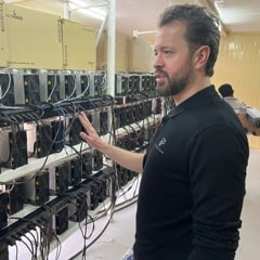
Pantheon Mining's CEO Lodewyck Berghuijs in front of a rack of Bitcoin mining machines.
This is an interesting counterpoint to the narrative that Bitcoin miners becoming too large could lead to a lack of decentralization for the Bitcoin network. If many smaller farms are operating in clandestine locations, then the size of mining companies becomes irrelevant. There will always be hashing power coming from smaller players that no one even knows about.
Why is it so important to support the Bitcoin network in this way? “Bitcoin mining is the foundation of a new decentralized store of value that is incorruptible and cannot be taken down by any government,” Berghuijs explained.
Many people agree, and it’s part of the reason we wanted to write this article and get an inside take from individuals involved in managing these machines.
When it comes to reporting on mining, most of what’s often parroted in mainstream media involves the alleged massive energy usage of Bitcoin miners. The assumption follows that using so much energy has to be bad because it just is. But is there more to the story?
Berghuijs brought up a good point about the need for energy being helpful in some instances, saying: “To get electricity to a more remote spot in Africa, for instance, you need a large buyer of energy. Otherwise, why would they build something that results in a loss? This is where Bitcoin miners can be of great use; you have a constant taker of electricity and an incentive to create high-quality infrastructure.”
Phoenix Group
Based in the United Arab Emirates, Phoenix Group “consists of 29 unique companies operating in five distinct verticals.” Rather than being a single company that operates a few Bitcoin mining farms, Phoenix Group’s portfolio of companies provides services including mining and hosting, cloud mining, and retail sales of cold wallets and mining equipment.
Phoenix Group's CEO Seyed Mohammad Alizadehfard (Bijan)
CEO of Phoenix Group, Seyed Mohammad Alizadehfard (Bijan), said: "Phoenix Group operates nine mining facilities across the US, Canada, CIS, and the UAE, leveraging advanced technology and innovative methods to maximize efficiency and minimize environmental impact. Our mining and hosting services, cloud mining options, and retail distribution of mining hardware and cold wallets further enhance our comprehensive offering in the cryptocurrency space.”
He also mentioned that the business involves “regulated crypto investment platforms like Exchange M2,” which the company’s website describes as “an Abu Dhabi-based regulated crypto investment platform developed by industry-leading experts.”
Returning to the mining vertical, when asked about mining’s impact on local communities, Bijan noted that the company’s “mining facilities create job opportunities and contribute to local economies. We also engage in community development initiatives, supporting educational and technological advancements to foster a positive and inclusive environment.”
“By optimizing our energy usage and incorporating renewable sources, we contribute to the stability and sustainability of the electrical grid,” Bijan said on the impact of mining on the electrical grid.
The Reality of Bitcoin Mining Revealed
When asked about the most prevalent misconception about Bitcoin mining, all three responses involved the narrative of Bitcoin being environmentally destructive. And all three executives mentioned the ways their operations, and mining operators in general, benefit the environment.
“People have it backward in terms of Bitcoin being a consumer of energy. It’s not a consumer of mass energy because it's an economic arbitrage," said McCarthy. "Miners aren't going to come in and start mining Bitcoin somewhere where it's not economical for them. There needs to be an incentive there. And usually, that incentive is excess energy. The fact of the matter is to have reliable energy, you have to have a reliable, good consumer of energy. No one's going to be producing energy for an unstable demand. You have to have stable demand for a stable supply. So that's why Bitcoin mining is actually a positive for the energy industry overall.”
Bijan said: “We are deeply committed to reducing our environmental footprint. Our operations incorporate energy-efficient technologies, and we actively seek renewable energy sources to power our mining facilities."
Berghuijs took a similar stance, saying: “Bitcoin is the most ESG-friendly investment in the world as of now. The energy we use is all 100% from sustainable sources: think hydro, nuclear, and solar.”
These three mining companies represent a diverse set of business models, and they operate in different geographical jurisdictions. All of them benefit local economies, communities, and ecosystems.
Let this article serve as an example to those who decry Bitcoin mining as anything but a net benefit to society.
The U.S. Energy Information Administration (EIA) estimates Bitcoin mining uses about 170 TWh of electricity per year, or about 0.6% to 2.3% of annual American electricity consumption. The aggregate market cap of 14 publicly traded U.S. mining companies totals about $20 billion, according to an April report by JPMorgan Chase.
As the Bitcoin mining industry has grown, so too has its reputation. And that reputation is largely negative. Discussions with three different Bitcoin mining executives shed more light on their operations and the reality of Bitcoin mining.
Chronos Energy
Chronos Energy is an off-grid Bitcoin mining company that utilises stranded energy sources. In other words, they turn energy that would have otherwise been wasted into usable economic energy through Bitcoin mining.
Describing his company's operations, James McCarthy, CEO of Chronos Energy, said: "We go and find stranded energy, typically in the oil field. We work with oil and gas operators who have stranded gas assets – assets that can't get to the market.”
What’s interesting and unique about Chronos Energy’s business model is that they do not rely on the electrical grid. Instead, they bring Bitcoin mining directly to the source of stranded energy.
“We bring natural gas generation that we remanufacture in-house. And we deploy Bitcoin mining operations to consume that energy, reduce their carbon emissions, and mine Bitcoin," McCarthy added.
Such an operation has nothing but benefits for the environment. Instead of losing energy and creating unnecessary waste, oil and gas field operators can now reduce emissions by turning their lost energy assets into clean electricity.
But what about the impact on local communities?
“This is a massive benefit for local communities," McCarthy said. "In the oil field, it's not uncommon for local communities to be plagued by these flares. A big orange flame in the middle of the night is going to keep you awake. They can be pretty loud, depending on the size of these flares. But also, there's a smell – a methane smell from that uncombusted methane that's being released into the air, which can really disturb a community.”
If a Bitcoin miner like Chronos Energy is there to use that methane, then this problem disappears. The methane is converted into electricity rather than being released into the atmosphere.
It’s also worth noting that according to the U.S. Environmental Protection Agency (EPA), methane is more than 28 times as potent as carbon dioxide at trapping heat in the atmosphere.
Pantheon Mining
Pantheon Mining is a mining-as-a-service company that works with “the best-in-class tech, product, and investment partners.”
Describing Pantheon’s niche approach to Bitcoin mining, its CEO Lodewyck Berghuijs said: “We mostly work with high-net-worth individuals. We create small custom farms of, for instance, 1MW. Everything is privately owned, and we take good care of the secrecy of the locations, adding to the decentralization of the network. You could compare it to small doomsday vaults; there will always be nodes running if anything happens in the world.”
Pantheon Mining's CEO Lodewyck Berghuijs in front of a rack of Bitcoin mining machines.
This is an interesting counterpoint to the narrative that Bitcoin miners becoming too large could lead to a lack of decentralization for the Bitcoin network. If many smaller farms are operating in clandestine locations, then the size of mining companies becomes irrelevant. There will always be hashing power coming from smaller players that no one even knows about.
Why is it so important to support the Bitcoin network in this way? “Bitcoin mining is the foundation of a new decentralized store of value that is incorruptible and cannot be taken down by any government,” Berghuijs explained.
Many people agree, and it’s part of the reason we wanted to write this article and get an inside take from individuals involved in managing these machines.
When it comes to reporting on mining, most of what’s often parroted in mainstream media involves the alleged massive energy usage of Bitcoin miners. The assumption follows that using so much energy has to be bad because it just is. But is there more to the story?
Berghuijs brought up a good point about the need for energy being helpful in some instances, saying: “To get electricity to a more remote spot in Africa, for instance, you need a large buyer of energy. Otherwise, why would they build something that results in a loss? This is where Bitcoin miners can be of great use; you have a constant taker of electricity and an incentive to create high-quality infrastructure.”
Phoenix Group
Based in the United Arab Emirates, Phoenix Group “consists of 29 unique companies operating in five distinct verticals.” Rather than being a single company that operates a few Bitcoin mining farms, Phoenix Group’s portfolio of companies provides services including mining and hosting, cloud mining, and retail sales of cold wallets and mining equipment.
Phoenix Group's CEO Seyed Mohammad Alizadehfard (Bijan)
CEO of Phoenix Group, Seyed Mohammad Alizadehfard (Bijan), said: "Phoenix Group operates nine mining facilities across the US, Canada, CIS, and the UAE, leveraging advanced technology and innovative methods to maximize efficiency and minimize environmental impact. Our mining and hosting services, cloud mining options, and retail distribution of mining hardware and cold wallets further enhance our comprehensive offering in the cryptocurrency space.”
He also mentioned that the business involves “regulated crypto investment platforms like Exchange M2,” which the company’s website describes as “an Abu Dhabi-based regulated crypto investment platform developed by industry-leading experts.”
Returning to the mining vertical, when asked about mining’s impact on local communities, Bijan noted that the company’s “mining facilities create job opportunities and contribute to local economies. We also engage in community development initiatives, supporting educational and technological advancements to foster a positive and inclusive environment.”
“By optimizing our energy usage and incorporating renewable sources, we contribute to the stability and sustainability of the electrical grid,” Bijan said on the impact of mining on the electrical grid.
The Reality of Bitcoin Mining Revealed
When asked about the most prevalent misconception about Bitcoin mining, all three responses involved the narrative of Bitcoin being environmentally destructive. And all three executives mentioned the ways their operations, and mining operators in general, benefit the environment.
“People have it backward in terms of Bitcoin being a consumer of energy. It’s not a consumer of mass energy because it's an economic arbitrage," said McCarthy. "Miners aren't going to come in and start mining Bitcoin somewhere where it's not economical for them. There needs to be an incentive there. And usually, that incentive is excess energy. The fact of the matter is to have reliable energy, you have to have a reliable, good consumer of energy. No one's going to be producing energy for an unstable demand. You have to have stable demand for a stable supply. So that's why Bitcoin mining is actually a positive for the energy industry overall.”
Bijan said: “We are deeply committed to reducing our environmental footprint. Our operations incorporate energy-efficient technologies, and we actively seek renewable energy sources to power our mining facilities."
Berghuijs took a similar stance, saying: “Bitcoin is the most ESG-friendly investment in the world as of now. The energy we use is all 100% from sustainable sources: think hydro, nuclear, and solar.”
These three mining companies represent a diverse set of business models, and they operate in different geographical jurisdictions. All of them benefit local economies, communities, and ecosystems.
Let this article serve as an example to those who decry Bitcoin mining as anything but a net benefit to society.
Brian Nibley is a freelance writer, author, and investor who has been covering the cryptocurrency space since 2017. His work has appeared in publications such as MSN Money, Blockworks, Business Insider, Cointelegraph, and The Balance.
Kraken Steps Up Speed Race with New Equinix Colocation Service for Crypto Traders
FP Markets Winner Spotlight 🏆 | Global Broker of the Year 2025 #Trading #Broker #Innovation #Shorts
FP Markets Winner Spotlight 🏆 | Global Broker of the Year 2025 #Trading #Broker #Innovation #Shorts
FP Markets takes the spotlight as Global Broker of the Year 2025 at the Finance Magnates Awards.
Martin Stoilov, Head of Client Experience, shares that trust, innovation, and people played a key role in the company’s success, supported by a strong foundation of integrity and client-centricity.
Following this milestone, FP Markets continues to focus on growth, technology investment, and its core values of transparency and excellence.
👉 Be part of FM Awards 2026: https://awards.financemagnates.com/#nominate
FP Markets takes the spotlight as Global Broker of the Year 2025 at the Finance Magnates Awards.
Martin Stoilov, Head of Client Experience, shares that trust, innovation, and people played a key role in the company’s success, supported by a strong foundation of integrity and client-centricity.
Following this milestone, FP Markets continues to focus on growth, technology investment, and its core values of transparency and excellence.
👉 Be part of FM Awards 2026: https://awards.financemagnates.com/#nominate
In this video, we review @HolaPrimeMarketsOfficial, a multi-asset forex and CFDs broker offering different account types, trading platforms, and flexible trading conditions.
We cover the broker’s overall offering, including account options, trading environment, platforms like MT4 and MT5, and additional services such as managed accounts and fast withdrawals.
Watch the full video to see if Hola Prime Markets fits your trading needs.
📣 Stay up to date with the latest in finance and trading. Follow Finance Magnates for industry news, insights, and global event coverage.
Connect with us:
🔗 LinkedIn: /financemagnates
👍 Facebook: /financemagnates
📸 Instagram: https://www.instagram.com/financemagnates
🐦 X: https://x.com/financemagnates
🎥 TikTok: https://www.tiktok.com/tag/financemagnates
▶️ YouTube: /@financemagnates_official
#HolaPrime #ForexBroker #CFDTrading #FinanceMagnates #Trading #Forex #BrokerReview
In this video, we review @HolaPrimeMarketsOfficial, a multi-asset forex and CFDs broker offering different account types, trading platforms, and flexible trading conditions.
We cover the broker’s overall offering, including account options, trading environment, platforms like MT4 and MT5, and additional services such as managed accounts and fast withdrawals.
Watch the full video to see if Hola Prime Markets fits your trading needs.
📣 Stay up to date with the latest in finance and trading. Follow Finance Magnates for industry news, insights, and global event coverage.
Connect with us:
🔗 LinkedIn: /financemagnates
👍 Facebook: /financemagnates
📸 Instagram: https://www.instagram.com/financemagnates
🐦 X: https://x.com/financemagnates
🎥 TikTok: https://www.tiktok.com/tag/financemagnates
▶️ YouTube: /@financemagnates_official
#HolaPrime #ForexBroker #CFDTrading #FinanceMagnates #Trading #Forex #BrokerReview
Hola Prime Review: What You Need to Know | Full Breakdown by Finance Magnates
Hola Prime Review: What You Need to Know | Full Breakdown by Finance Magnates
In this video, we review @HolaPrime_Global, a proprietary trading firm offering evaluation programs and performance-based payouts in simulated market environments.
We cover how the challenge model works, including account types, profit splits (up to 95%), trading rules, and what it takes to reach a funded account. You’ll also learn about available platforms like MT4, MT5, cTrader, and more, along with insights into payouts, support, and trading conditions.
Watch the full video to see if Hola Prime fits your trading style.
📣 Stay up to date with the latest in finance and trading. Follow Finance Magnates for industry news, insights, and global event coverage.
Connect with us:
🔗 LinkedIn: /financemagnates
👍 Facebook: /financemagnates
📸 Instagram: https://www.instagram.com/financemagnates
🐦 X: https://x.com/financemagnates
🎥 TikTok: https://www.tiktok.com/tag/financemagnates
▶️ YouTube: /@financemagnates_official
#HolaPrime #PropFirm #Trading #FinanceMagnates #Forex #FuturesTrading #TradingReview #PropFirmReview
In this video, we review @HolaPrime_Global, a proprietary trading firm offering evaluation programs and performance-based payouts in simulated market environments.
We cover how the challenge model works, including account types, profit splits (up to 95%), trading rules, and what it takes to reach a funded account. You’ll also learn about available platforms like MT4, MT5, cTrader, and more, along with insights into payouts, support, and trading conditions.
Watch the full video to see if Hola Prime fits your trading style.
📣 Stay up to date with the latest in finance and trading. Follow Finance Magnates for industry news, insights, and global event coverage.
Connect with us:
🔗 LinkedIn: /financemagnates
👍 Facebook: /financemagnates
📸 Instagram: https://www.instagram.com/financemagnates
🐦 X: https://x.com/financemagnates
🎥 TikTok: https://www.tiktok.com/tag/financemagnates
▶️ YouTube: /@financemagnates_official
#HolaPrime #PropFirm #Trading #FinanceMagnates #Forex #FuturesTrading #TradingReview #PropFirmReview
Axi Winner Spotlight 🏆 | Global Most Innovative Broker 2025 #Innovation #Trading #Fintech #Broker
Axi Winner Spotlight 🏆 | Global Most Innovative Broker 2025 #Innovation #Trading #Fintech #Broker
Axi takes the spotlight at the Finance Magnates Awards, winning Global Most Innovative Broker 2025.
Olivia Xenofontos and Ivanna Openko share how the team will feel: proud, motivated, and ready to keep delivering.
They also describe the night as well-organized, focused, and enjoyable for all.
👉 Be part of FM Awards 2026.
Axi takes the spotlight at the Finance Magnates Awards, winning Global Most Innovative Broker 2025.
Olivia Xenofontos and Ivanna Openko share how the team will feel: proud, motivated, and ready to keep delivering.
They also describe the night as well-organized, focused, and enjoyable for all.
👉 Be part of FM Awards 2026.
Recognition that matters.
Built on transparency.
Driven by the industry.
The Finance Magnates Awards 2026.
Nominations are now open.
🔗 https://awards.financemagnates.com/?utm_source=SM&utm_medium=social&utm_campaign=recognition-matters
Recognition that matters.
Built on transparency.
Driven by the industry.
The Finance Magnates Awards 2026.
Nominations are now open.
🔗 https://awards.financemagnates.com/?utm_source=SM&utm_medium=social&utm_campaign=recognition-matters