Bitcoin at $17K: How Kraken Avoided Saxo’s 2015 Repricing Trap

Monday, 23/11/2026 | 21:12 GMT by Tanya Chepkova
  • Kraken refused to cancel trades after a local flash crash sent its BTC/CAD pair plunging to C$24,250 (~$17,000).
  • The hands-off stance contrasts sharply with the 2015 Swiss franc shock, when principal dealer Saxo UK retroactively rewrote confirmed client fills.
Kraken (shutterstock)

Kraken let deeply discounted BTC/CAD trades stand, leaving buyers and sellers with the prices at which their orders matched. After the 2015 Swiss franc shock, Saxo Capital Markets UK made a different choice: it changed prices already confirmed to clients.

The disputes that followed show why the time of execution and the liquidity available then matter when a firm decides whether a fill should stand.IKraken Leaves Discounted BTC/CAD Fills Intact

On 21 November Bitcoin changed hands for as low as C$24,250 (around US$17,000) on the Kraken BTC/CAD market whilst the BTC/USD price was hovering at $57,700.
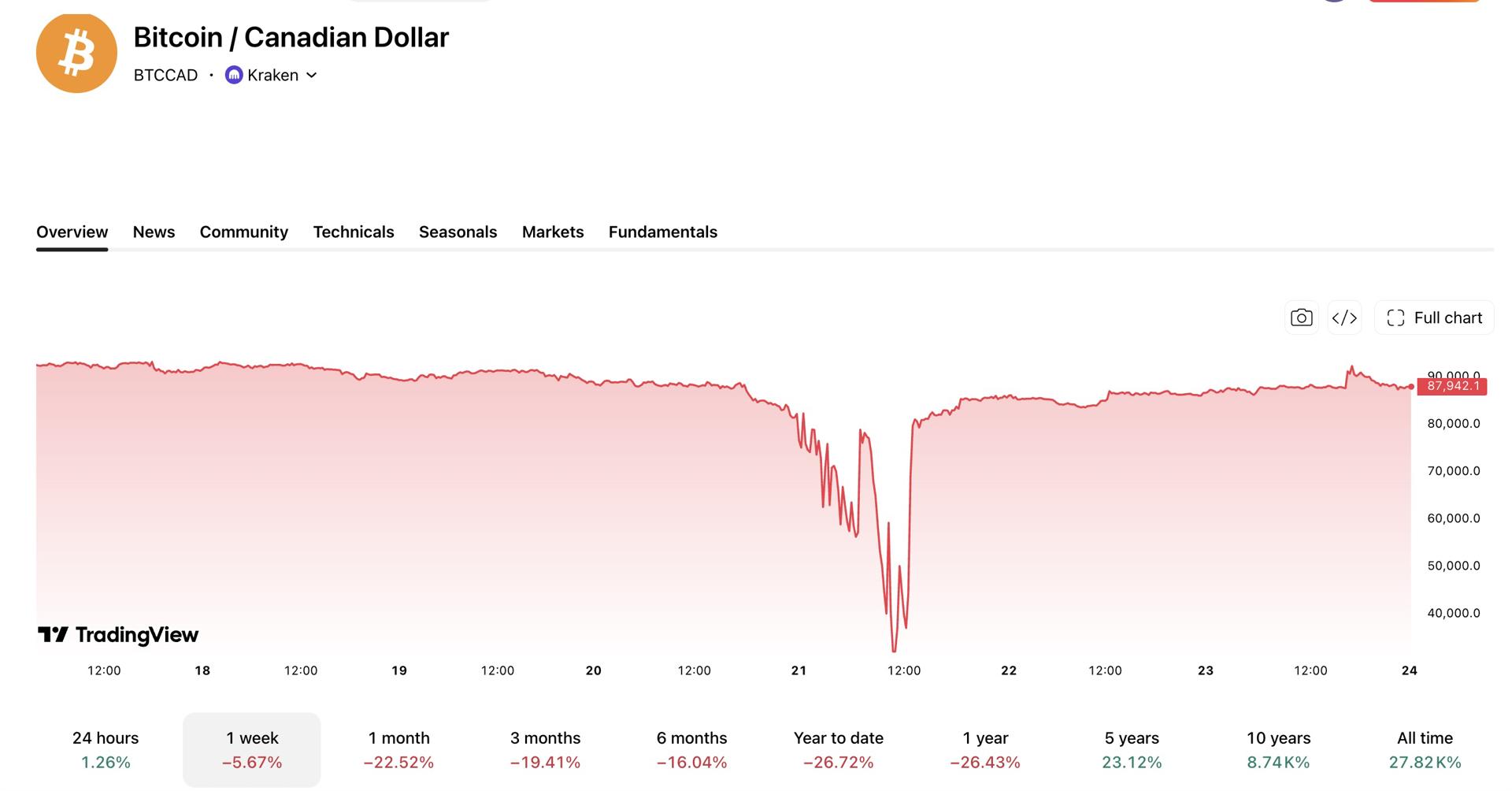
BTCCAD flash crash on Kraken. Source: TradingView

CoinDesk counted some 245 BTC traded over 15 minute intervals in which the average price of the CAD pair was below C$50,000. A separate look at Kraken's trade data revealed 122 trades involving 10.69 BTC below the equivalent of US$20,000 in the quarter hour around the low.

Kraken attributed the move to heavy selling in its CAD pairs, said it found no breach or compromised accounts, and confirmed that the trades would stand, meaning the buyers in those trades keep the Bitcoin they acquired; sellers keep the Canadian dollars they received.

Kraken's trading rules state that completed trades are final and binding, but allow for protection against wide spreads. According to the Canadian regulator, the company has policies to cancel, vary or correct trades, but Kraken has elected to leave the trades in place.

Saxo Changed Confirmed Prices and Regretted It

Saxo took the other course after the 2015 Swiss franc shock: it revised prices already confirmed to clients, who then challenged the decision.

Because Saxo had traded with those clients as principal, the UK Financial Ombudsman Service examined the broker’s terms alongside the prices and liquidity available when each position closed.

One client's EUR/CHF options were closed at 09:30 a.m., shortly after the Swiss National Bank’s announcement. Saxo subsequently changed the price and the client's account was left with a significant liability.

The UK Financial Ombudsman Service ordered Saxo to reverse the price adjustment. They found the price was within the market and there was sufficient liquidity at the time of the trade closing. They also found no basis in the client's terms for Saxo Bank to pass on any losses arising from its own hedging.

Another client's EUR/CHF CFD trades closed at 9.34 am the same day. But the market conditions had already changed significantly. In that complaint the ombudsman accepted Saxo's new price as being the correct one as it was based on the EBS trades at that time.

The same market shock had produced different results for trades which had been executed minutes apart.

Ultimately, the contrast between Saxo’s 2015 repricing and Kraken’s hands-off stance comes down to who bears the cost of an empty order book. Saxo learned the hard way that a broker cannot retroactively rewrite confirmed fills simply because its own hedging failed minutes later.

Kraken took the opposite path: even though its regulatory rulebook allows the exchange to keep or adjust trades executed across abnormally wide spreads, it chose to treat the C$24,250 flash crash as legitimate price discovery inside an isolated currency pair.

Until exchanges enforce automated circuit breakers linking regional fiat books to USD liquidity, traders dumping large market orders into regional pairs remain one thin bid away from an irreversible haircut.

Kraken let deeply discounted BTC/CAD trades stand, leaving buyers and sellers with the prices at which their orders matched. After the 2015 Swiss franc shock, Saxo Capital Markets UK made a different choice: it changed prices already confirmed to clients.

The disputes that followed show why the time of execution and the liquidity available then matter when a firm decides whether a fill should stand.IKraken Leaves Discounted BTC/CAD Fills Intact

On 21 November Bitcoin changed hands for as low as C$24,250 (around US$17,000) on the Kraken BTC/CAD market whilst the BTC/USD price was hovering at $57,700.

BTCCAD flash crash on Kraken. Source: TradingView

CoinDesk counted some 245 BTC traded over 15 minute intervals in which the average price of the CAD pair was below C$50,000. A separate look at Kraken's trade data revealed 122 trades involving 10.69 BTC below the equivalent of US$20,000 in the quarter hour around the low.

Kraken attributed the move to heavy selling in its CAD pairs, said it found no breach or compromised accounts, and confirmed that the trades would stand, meaning the buyers in those trades keep the Bitcoin they acquired; sellers keep the Canadian dollars they received.

Kraken's trading rules state that completed trades are final and binding, but allow for protection against wide spreads. According to the Canadian regulator, the company has policies to cancel, vary or correct trades, but Kraken has elected to leave the trades in place.

Saxo Changed Confirmed Prices and Regretted It

Saxo took the other course after the 2015 Swiss franc shock: it revised prices already confirmed to clients, who then challenged the decision.

Because Saxo had traded with those clients as principal, the UK Financial Ombudsman Service examined the broker’s terms alongside the prices and liquidity available when each position closed.

One client's EUR/CHF options were closed at 09:30 a.m., shortly after the Swiss National Bank’s announcement. Saxo subsequently changed the price and the client's account was left with a significant liability.

The UK Financial Ombudsman Service ordered Saxo to reverse the price adjustment. They found the price was within the market and there was sufficient liquidity at the time of the trade closing. They also found no basis in the client's terms for Saxo Bank to pass on any losses arising from its own hedging.

Another client's EUR/CHF CFD trades closed at 9.34 am the same day. But the market conditions had already changed significantly. In that complaint the ombudsman accepted Saxo's new price as being the correct one as it was based on the EBS trades at that time.

The same market shock had produced different results for trades which had been executed minutes apart.

Ultimately, the contrast between Saxo’s 2015 repricing and Kraken’s hands-off stance comes down to who bears the cost of an empty order book. Saxo learned the hard way that a broker cannot retroactively rewrite confirmed fills simply because its own hedging failed minutes later.

Kraken took the opposite path: even though its regulatory rulebook allows the exchange to keep or adjust trades executed across abnormally wide spreads, it chose to treat the C$24,250 flash crash as legitimate price discovery inside an isolated currency pair.

Until exchanges enforce automated circuit breakers linking regional fiat books to USD liquidity, traders dumping large market orders into regional pairs remain one thin bid away from an irreversible haircut.

About the Author: Tanya Chepkova
Tanya Chepkova
  • 627 Articles
  • 6 Followers
About the Author: Tanya Chepkova
Tanya Chepkova is a News Editor at Finance Magnates with more than 16 years of experience in financial journalism, covering forex, crypto, and digital asset markets. Her work spans daily industry reporting and data-driven, long-form explainers focused on market structure, trading models, and regulatory shifts. Before joining Finance Magnates, she led the editorial team of a cryptocurrency-focused media outlet for six years. Her reporting combines analytical depth with clear storytelling, with particular attention to how structural changes in trading, stablecoin infrastructure, and emerging products such as prediction markets reshape the broader financial ecosystem. She covers global developments and provides additional insight into CIS markets. Areas of Coverage: Crypto and digital asset markets Prediction markets Stablecoins and cross-border payments Industry analysis and long-form explainers
  • 627 Articles
  • 6 Followers

More from the Author

CryptoCurrency

!"#$%&'()*+,-./0123456789:;<=>?@ABCDEFGHIJKLMNOPQRSTUVWXYZ[\]^_`abcdefghijklmnopqrstuvwxyz{|} !"#$%&'()*+,-./0123456789:;<=>?@ABCDEFGHIJKLMNOPQRSTUVWXYZ[\]^_`abcdefghijklmnopqrstuvwxyz{|}