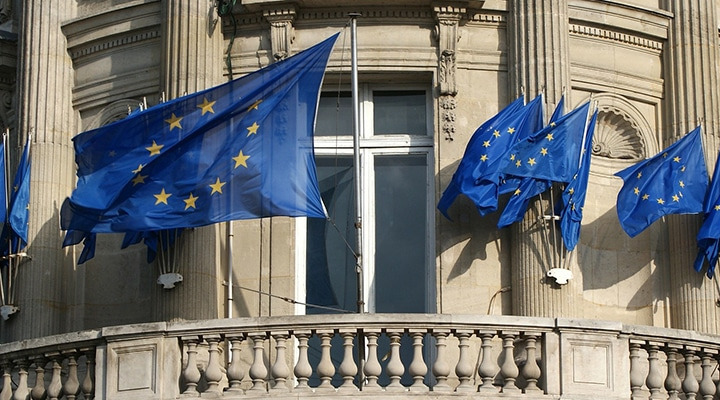
MiCA demands that crypto exchanges and wallet providers are licensed.
The Parliament endorsed a separate law to monitor the transfer of cryptocurrencies.
Bloomberg
European Union (EU) lawmakers
have voted in favour of the Markets in Crypto-Assets (MiCA) regulation, making
Europe the first major jurisdiction to introduce a comprehensive law to
regulate the emerging digital assets industry. On
Thursday, the European Parliament overwhelmingly supported the passage of the law, with 517 votes against 38 (and 18 abstentions).
Parliament Clears Path for MiCA in 2024
MiCA, which was first opened for
discussion in September 2020, seeks to protect European consumers, enshrine environmental sustainability and prevent
money laundering in the crypto industry. The regulation now awaits final
approval from the Council of the European Union.
The favorable vote to pass the
crypto rules comes after a debate on Wednesday during which lawmakers signaled
majority support for the law. MiCA, which is expected to go live sometime
in 2024, requires digital asset exchanges and crypto wallet providers to obtain
a license to operate within any country in the region. The regulation also
demands that stablecoin issuers hold sufficient reserves.
The Council of the European
Union and the European Parliament, the two legislative bodies of the EU, reached provisional agreements for the rules in June last year. In recent months,
the EU twice postponed the vote on the much-awaited crypto rules due
to technical delays in translating the regulation into the 24 languages of the
political bloc.
Speaking on the vote, Stefan Berger, the EU lawmaker who led negotiations on the rules, believes that the
regulation puts “the EU at the forefront of the token economy." The lawmaker noted that the
crypto industry in Europe now has "regulatory clarity that does not exist in
countries like the US.”
“Consumers will be protected
against deception and fraud, and the sector that was damaged by the FTX
collapse can regain trust,” Berger said, according to an EU statement.
MiCA Is “A World First”
Reacting to the favorable vote,
Mairead McGuiness, the EU Commissioner for Financial Services, Financial Stability and Capital Markets Union, described the
regulation as “a world first.” “The rules will start applying from next year.
We’re protecting consumers and safeguarding financial stability and market
integrity,” McGuiness wrote on Twitter.
Also reacting, the European
Securities and Markets Authority (ESMA), noted it is now tasked with developing the guidelines for
implementing MiCA ahead of its 2024 enforcement. The EU securities
regulator also warned that while the legislation is "a significant step towards robust protection for investors," crypto remains "a risky endeavor with limited
safeguards at this stage.”
EU Endorses Separate Law to Monitor
Transfer of Crypto
Meanwhile, on Thursday, lawmakers also voted resoundingly in favour of a separate law known as the Transfer of
Funds Regulation (TFR). The regulation requires digital asset operators to
identify their customers in order to prevent money laundering.
Earnest Urtasun, a Member of
Parliament, explained that the Transfer of Funds Regulation will “close a major
loophole” in Europe’s anti-money laundering framework. It will also implement
the "most ambitious travel rule legislation in the world so far.”
“The Recast of the TFR will
oblige crypto-asset service providers to detect and stop criminal crypto flows
and also ensure that all categories of crypto companies are subject to the full
set of anti-money laundering obligations,” Urtasun explained.
"MiCA Will Make Europe an Attractive Crypto Destination"
Alisa DiCaprio, Chief Economist at R3
Meanwhile, Alisa DiCaprio, the Chief
Economist at R3, an enterprise blockchain company, sees the move as Europe positioning
itself as a leader in digital finance innovation. DiCaprio
expects the development to motivate other top jurisdictions like the United Kingdom
and the United States to speed up their race towards crypto regulation.
“Regulatory and legal certainty
provide the core foundations for any emerging technology to be applied
successfully,” DiCaprio told Finance Magnates, further noting that the EU making the first move to lay the foundations "will undoubtedly make Europe an
attractive destination for more companies in the space to set up and invest
in.”
Michael Thirer, Legal, Governance and Regulatory Affairs Director at Muinmos
Also commenting, Michael Thirer, the Legal, Governance and Regulatory Affairs Director at Muinmos, described the EU's move as "a bold choice" that will pave the way for many other regulators across the world. The move will also stabilize "an industry that is everything but stable."
"It will be interesting to see how this affects crypto service providers; and how it will carry forward to the 'next big thing' – like the Metaverse, for example – and the willingness of regulators to regulate financial transactions committed purely in it," Thirer also told Finance Magnates.
Lars Holst, CEO and Founder, GCEX
"This is great news," said Founder and CEO of GCEX, Lars Holst. "We are 100% in favour of regulation and embrace it more than anything here at GCEX. MiCA creates a framework for all serious players and will protect the market. It will make it even clearer for clients who they can trust and who they should deal with."
European Union (EU) lawmakers
have voted in favour of the Markets in Crypto-Assets (MiCA) regulation, making
Europe the first major jurisdiction to introduce a comprehensive law to
regulate the emerging digital assets industry. On
Thursday, the European Parliament overwhelmingly supported the passage of the law, with 517 votes against 38 (and 18 abstentions).
Parliament Clears Path for MiCA in 2024
MiCA, which was first opened for
discussion in September 2020, seeks to protect European consumers, enshrine environmental sustainability and prevent
money laundering in the crypto industry. The regulation now awaits final
approval from the Council of the European Union.
The favorable vote to pass the
crypto rules comes after a debate on Wednesday during which lawmakers signaled
majority support for the law. MiCA, which is expected to go live sometime
in 2024, requires digital asset exchanges and crypto wallet providers to obtain
a license to operate within any country in the region. The regulation also
demands that stablecoin issuers hold sufficient reserves.
The Council of the European
Union and the European Parliament, the two legislative bodies of the EU, reached provisional agreements for the rules in June last year. In recent months,
the EU twice postponed the vote on the much-awaited crypto rules due
to technical delays in translating the regulation into the 24 languages of the
political bloc.
Speaking on the vote, Stefan Berger, the EU lawmaker who led negotiations on the rules, believes that the
regulation puts “the EU at the forefront of the token economy." The lawmaker noted that the
crypto industry in Europe now has "regulatory clarity that does not exist in
countries like the US.”
“Consumers will be protected
against deception and fraud, and the sector that was damaged by the FTX
collapse can regain trust,” Berger said, according to an EU statement.
MiCA Is “A World First”
Reacting to the favorable vote,
Mairead McGuiness, the EU Commissioner for Financial Services, Financial Stability and Capital Markets Union, described the
regulation as “a world first.” “The rules will start applying from next year.
We’re protecting consumers and safeguarding financial stability and market
integrity,” McGuiness wrote on Twitter.
Also reacting, the European
Securities and Markets Authority (ESMA), noted it is now tasked with developing the guidelines for
implementing MiCA ahead of its 2024 enforcement. The EU securities
regulator also warned that while the legislation is "a significant step towards robust protection for investors," crypto remains "a risky endeavor with limited
safeguards at this stage.”
EU Endorses Separate Law to Monitor
Transfer of Crypto
Meanwhile, on Thursday, lawmakers also voted resoundingly in favour of a separate law known as the Transfer of
Funds Regulation (TFR). The regulation requires digital asset operators to
identify their customers in order to prevent money laundering.
Earnest Urtasun, a Member of
Parliament, explained that the Transfer of Funds Regulation will “close a major
loophole” in Europe’s anti-money laundering framework. It will also implement
the "most ambitious travel rule legislation in the world so far.”
“The Recast of the TFR will
oblige crypto-asset service providers to detect and stop criminal crypto flows
and also ensure that all categories of crypto companies are subject to the full
set of anti-money laundering obligations,” Urtasun explained.
"MiCA Will Make Europe an Attractive Crypto Destination"
Alisa DiCaprio, Chief Economist at R3
Meanwhile, Alisa DiCaprio, the Chief
Economist at R3, an enterprise blockchain company, sees the move as Europe positioning
itself as a leader in digital finance innovation. DiCaprio
expects the development to motivate other top jurisdictions like the United Kingdom
and the United States to speed up their race towards crypto regulation.
“Regulatory and legal certainty
provide the core foundations for any emerging technology to be applied
successfully,” DiCaprio told Finance Magnates, further noting that the EU making the first move to lay the foundations "will undoubtedly make Europe an
attractive destination for more companies in the space to set up and invest
in.”
Michael Thirer, Legal, Governance and Regulatory Affairs Director at Muinmos
Also commenting, Michael Thirer, the Legal, Governance and Regulatory Affairs Director at Muinmos, described the EU's move as "a bold choice" that will pave the way for many other regulators across the world. The move will also stabilize "an industry that is everything but stable."
"It will be interesting to see how this affects crypto service providers; and how it will carry forward to the 'next big thing' – like the Metaverse, for example – and the willingness of regulators to regulate financial transactions committed purely in it," Thirer also told Finance Magnates.
Lars Holst, CEO and Founder, GCEX
"This is great news," said Founder and CEO of GCEX, Lars Holst. "We are 100% in favour of regulation and embrace it more than anything here at GCEX. MiCA creates a framework for all serious players and will protect the market. It will make it even clearer for clients who they can trust and who they should deal with."
Solomon Oladipupo is a journalist and editor from Nigeria that covers the tech, FX, fintech and cryptocurrency industries. He is a former assistant editor at AgroNigeria Magazine where he covered the agribusiness industry. Solomon holds a first-class degree in Journalism & Mass Communication from the University of Lagos where he graduated top of his class.
Kraken Steps Up Speed Race with New Equinix Colocation Service for Crypto Traders
FP Markets Winner Spotlight 🏆 | Global Broker of the Year 2025 #Trading #Broker #Innovation #Shorts
FP Markets Winner Spotlight 🏆 | Global Broker of the Year 2025 #Trading #Broker #Innovation #Shorts
FP Markets takes the spotlight as Global Broker of the Year 2025 at the Finance Magnates Awards.
Martin Stoilov, Head of Client Experience, shares that trust, innovation, and people played a key role in the company’s success, supported by a strong foundation of integrity and client-centricity.
Following this milestone, FP Markets continues to focus on growth, technology investment, and its core values of transparency and excellence.
👉 Be part of FM Awards 2026: https://awards.financemagnates.com/#nominate
FP Markets takes the spotlight as Global Broker of the Year 2025 at the Finance Magnates Awards.
Martin Stoilov, Head of Client Experience, shares that trust, innovation, and people played a key role in the company’s success, supported by a strong foundation of integrity and client-centricity.
Following this milestone, FP Markets continues to focus on growth, technology investment, and its core values of transparency and excellence.
👉 Be part of FM Awards 2026: https://awards.financemagnates.com/#nominate
In this video, we review @HolaPrimeMarketsOfficial, a multi-asset forex and CFDs broker offering different account types, trading platforms, and flexible trading conditions.
We cover the broker’s overall offering, including account options, trading environment, platforms like MT4 and MT5, and additional services such as managed accounts and fast withdrawals.
Watch the full video to see if Hola Prime Markets fits your trading needs.
📣 Stay up to date with the latest in finance and trading. Follow Finance Magnates for industry news, insights, and global event coverage.
Connect with us:
🔗 LinkedIn: /financemagnates
👍 Facebook: /financemagnates
📸 Instagram: https://www.instagram.com/financemagnates
🐦 X: https://x.com/financemagnates
🎥 TikTok: https://www.tiktok.com/tag/financemagnates
▶️ YouTube: /@financemagnates_official
#HolaPrime #ForexBroker #CFDTrading #FinanceMagnates #Trading #Forex #BrokerReview
In this video, we review @HolaPrimeMarketsOfficial, a multi-asset forex and CFDs broker offering different account types, trading platforms, and flexible trading conditions.
We cover the broker’s overall offering, including account options, trading environment, platforms like MT4 and MT5, and additional services such as managed accounts and fast withdrawals.
Watch the full video to see if Hola Prime Markets fits your trading needs.
📣 Stay up to date with the latest in finance and trading. Follow Finance Magnates for industry news, insights, and global event coverage.
Connect with us:
🔗 LinkedIn: /financemagnates
👍 Facebook: /financemagnates
📸 Instagram: https://www.instagram.com/financemagnates
🐦 X: https://x.com/financemagnates
🎥 TikTok: https://www.tiktok.com/tag/financemagnates
▶️ YouTube: /@financemagnates_official
#HolaPrime #ForexBroker #CFDTrading #FinanceMagnates #Trading #Forex #BrokerReview
Hola Prime Review: What You Need to Know | Full Breakdown by Finance Magnates
Hola Prime Review: What You Need to Know | Full Breakdown by Finance Magnates
In this video, we review @HolaPrime_Global, a proprietary trading firm offering evaluation programs and performance-based payouts in simulated market environments.
We cover how the challenge model works, including account types, profit splits (up to 95%), trading rules, and what it takes to reach a funded account. You’ll also learn about available platforms like MT4, MT5, cTrader, and more, along with insights into payouts, support, and trading conditions.
Watch the full video to see if Hola Prime fits your trading style.
📣 Stay up to date with the latest in finance and trading. Follow Finance Magnates for industry news, insights, and global event coverage.
Connect with us:
🔗 LinkedIn: /financemagnates
👍 Facebook: /financemagnates
📸 Instagram: https://www.instagram.com/financemagnates
🐦 X: https://x.com/financemagnates
🎥 TikTok: https://www.tiktok.com/tag/financemagnates
▶️ YouTube: /@financemagnates_official
#HolaPrime #PropFirm #Trading #FinanceMagnates #Forex #FuturesTrading #TradingReview #PropFirmReview
In this video, we review @HolaPrime_Global, a proprietary trading firm offering evaluation programs and performance-based payouts in simulated market environments.
We cover how the challenge model works, including account types, profit splits (up to 95%), trading rules, and what it takes to reach a funded account. You’ll also learn about available platforms like MT4, MT5, cTrader, and more, along with insights into payouts, support, and trading conditions.
Watch the full video to see if Hola Prime fits your trading style.
📣 Stay up to date with the latest in finance and trading. Follow Finance Magnates for industry news, insights, and global event coverage.
Connect with us:
🔗 LinkedIn: /financemagnates
👍 Facebook: /financemagnates
📸 Instagram: https://www.instagram.com/financemagnates
🐦 X: https://x.com/financemagnates
🎥 TikTok: https://www.tiktok.com/tag/financemagnates
▶️ YouTube: /@financemagnates_official
#HolaPrime #PropFirm #Trading #FinanceMagnates #Forex #FuturesTrading #TradingReview #PropFirmReview
Axi Winner Spotlight 🏆 | Global Most Innovative Broker 2025 #Innovation #Trading #Fintech #Broker
Axi Winner Spotlight 🏆 | Global Most Innovative Broker 2025 #Innovation #Trading #Fintech #Broker
Axi takes the spotlight at the Finance Magnates Awards, winning Global Most Innovative Broker 2025.
Olivia Xenofontos and Ivanna Openko share how the team will feel: proud, motivated, and ready to keep delivering.
They also describe the night as well-organized, focused, and enjoyable for all.
👉 Be part of FM Awards 2026.
Axi takes the spotlight at the Finance Magnates Awards, winning Global Most Innovative Broker 2025.
Olivia Xenofontos and Ivanna Openko share how the team will feel: proud, motivated, and ready to keep delivering.
They also describe the night as well-organized, focused, and enjoyable for all.
👉 Be part of FM Awards 2026.
Recognition that matters.
Built on transparency.
Driven by the industry.
The Finance Magnates Awards 2026.
Nominations are now open.
🔗 https://awards.financemagnates.com/?utm_source=SM&utm_medium=social&utm_campaign=recognition-matters
Recognition that matters.
Built on transparency.
Driven by the industry.
The Finance Magnates Awards 2026.
Nominations are now open.
🔗 https://awards.financemagnates.com/?utm_source=SM&utm_medium=social&utm_campaign=recognition-matters