The crypto exchange will be added to the index on 19 May, replacing Discover Financial Services.
The S&P 500 institutional funds will now have exposure to Coinbase shares.
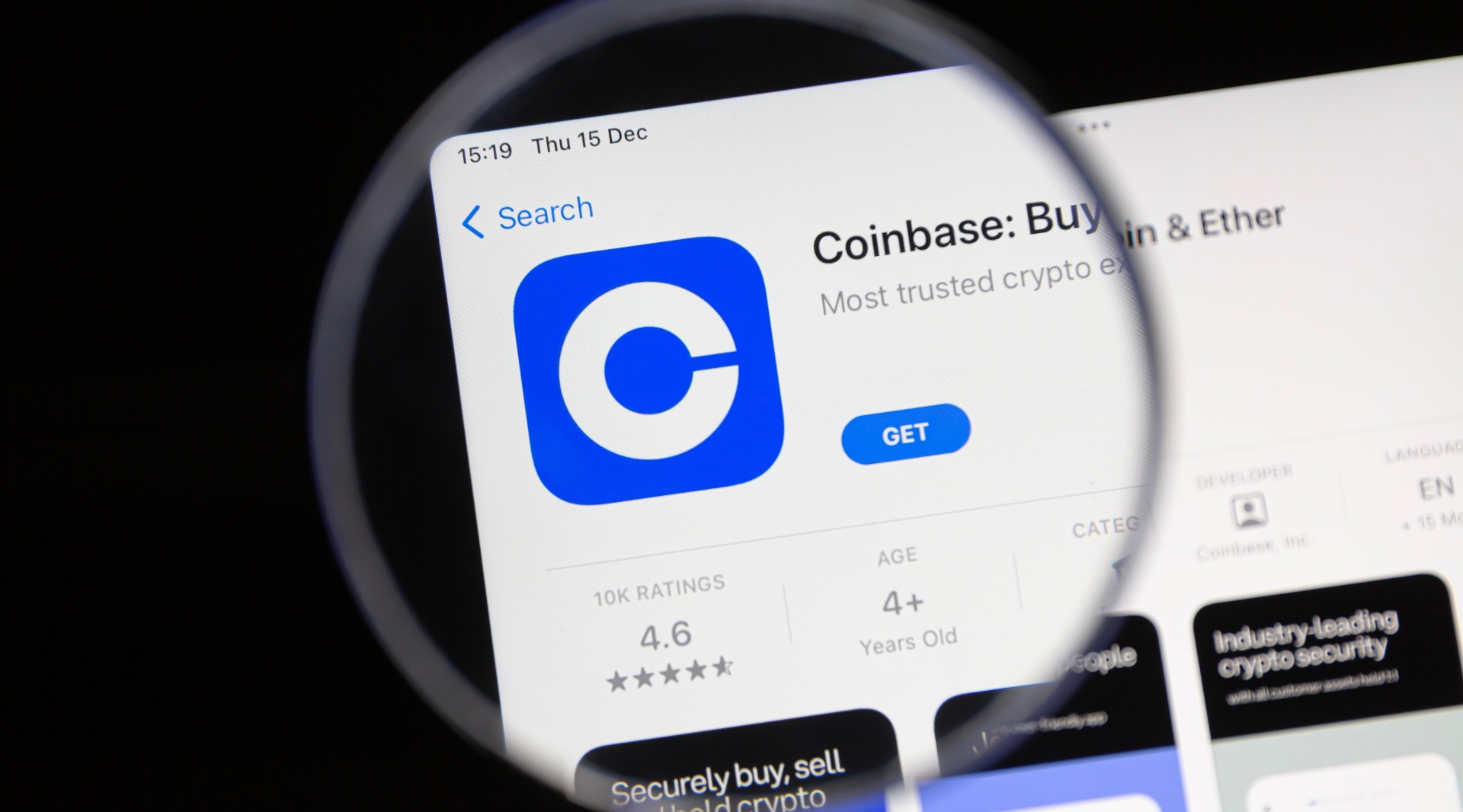
Coinbase (Nasdaq: COIN) is set to join the S&P 500 index on 19 May 2025. The index tracks the largest 500 publicly listed companies in the US across various sectors, including finance, tech, healthcare, and more. Coinbase will be listed under the financials sector.
The cryptocurrency exchange will replace Discover Financial Services, which is being acquired by Capital One. Once the acquisition closes, Discover is expected to be delisted from the public markets.
An Instant Double-Digit Rally
Following the announcement yesterday (Monday) after market close, Coinbase shares jumped by about 10 per cent. The rally added to the 4 per cent rise in COIN shares earlier in the day due to improving market sentiment as the trade war concerns eased.
The movement of COIN shares in last 1 month (source: Google Finance)
Although Coinbase shares are still down by around 27 per cent over the past six months, they have gained more than 17 per cent in the last month (excluding the latest after-market rise).
Benefits of Being an S&P 500 Company
As of 31 March, the S&P 500 represented a total market capitalisation of approximately $49.8 trillion. This benchmark index is market-cap-weighted, meaning companies with larger valuations—such as Microsoft, Apple, and Nvidia—have a greater impact on the index’s performance. In contrast, smaller constituents, particularly those ranked in the bottom 400 by size, carry significantly less weight. These firms, where Coinbase is likely to be positioned, typically account for just 0.01% to 0.2% of the index each.
Despite their limited individual influence, they collectively support the index’s overall diversification.
Being added to the S&P 500 brings several benefits for any company. The most immediate is an increase in demand for its shares. This happens because all index-tracking funds—such as ETFs and mutual funds—must buy the stock, usually leading to a rise in trading volume and sometimes in the share price.
Inclusion can also attract more institutional investors. Many funds are restricted to investing only in S&P 500 stocks, so joining the index can draw in longer-term capital and broader investor interest.
Coinbase (Nasdaq: COIN) is set to join the S&P 500 index on 19 May 2025. The index tracks the largest 500 publicly listed companies in the US across various sectors, including finance, tech, healthcare, and more. Coinbase will be listed under the financials sector.
The cryptocurrency exchange will replace Discover Financial Services, which is being acquired by Capital One. Once the acquisition closes, Discover is expected to be delisted from the public markets.
An Instant Double-Digit Rally
Following the announcement yesterday (Monday) after market close, Coinbase shares jumped by about 10 per cent. The rally added to the 4 per cent rise in COIN shares earlier in the day due to improving market sentiment as the trade war concerns eased.
The movement of COIN shares in last 1 month (source: Google Finance)
Although Coinbase shares are still down by around 27 per cent over the past six months, they have gained more than 17 per cent in the last month (excluding the latest after-market rise).
Benefits of Being an S&P 500 Company
As of 31 March, the S&P 500 represented a total market capitalisation of approximately $49.8 trillion. This benchmark index is market-cap-weighted, meaning companies with larger valuations—such as Microsoft, Apple, and Nvidia—have a greater impact on the index’s performance. In contrast, smaller constituents, particularly those ranked in the bottom 400 by size, carry significantly less weight. These firms, where Coinbase is likely to be positioned, typically account for just 0.01% to 0.2% of the index each.
Despite their limited individual influence, they collectively support the index’s overall diversification.
Being added to the S&P 500 brings several benefits for any company. The most immediate is an increase in demand for its shares. This happens because all index-tracking funds—such as ETFs and mutual funds—must buy the stock, usually leading to a rise in trading volume and sometimes in the share price.
Inclusion can also attract more institutional investors. Many funds are restricted to investing only in S&P 500 stocks, so joining the index can draw in longer-term capital and broader investor interest.
Arnab Shome is an electronics engineer-turned-financial editor. He holds a Bachelor of Technology from the National Institute of Technology, Agartala. He entered the retail trading industry about a decade ago, covering the cryptocurrency market for Finance Magnates, and later expanded his coverage to include forex and CFDs as well.
His work at Finance Magnates includes C-level interviews, data-driven analysis, opinion pieces, and scoops of industry exclusives. He also contributes to Finance Magnates’ quarterly industry report.
Area of coverage:
1. CFD broker-related news
2. Industry-related Regulatory updates and developments
3. New retail trading trends
4. Prop trading industry updates
5. Executive interviews
Education:
Bachelor of Technology - National Institute of Technology, Agartala (India)
Kraken Steps Up Speed Race with New Equinix Colocation Service for Crypto Traders
FP Markets Winner Spotlight 🏆 | Global Broker of the Year 2025 #Trading #Broker #Innovation #Shorts
FP Markets Winner Spotlight 🏆 | Global Broker of the Year 2025 #Trading #Broker #Innovation #Shorts
FP Markets takes the spotlight as Global Broker of the Year 2025 at the Finance Magnates Awards.
Martin Stoilov, Head of Client Experience, shares that trust, innovation, and people played a key role in the company’s success, supported by a strong foundation of integrity and client-centricity.
Following this milestone, FP Markets continues to focus on growth, technology investment, and its core values of transparency and excellence.
👉 Be part of FM Awards 2026: https://awards.financemagnates.com/#nominate
FP Markets takes the spotlight as Global Broker of the Year 2025 at the Finance Magnates Awards.
Martin Stoilov, Head of Client Experience, shares that trust, innovation, and people played a key role in the company’s success, supported by a strong foundation of integrity and client-centricity.
Following this milestone, FP Markets continues to focus on growth, technology investment, and its core values of transparency and excellence.
👉 Be part of FM Awards 2026: https://awards.financemagnates.com/#nominate
In this video, we review @HolaPrimeMarketsOfficial, a multi-asset forex and CFDs broker offering different account types, trading platforms, and flexible trading conditions.
We cover the broker’s overall offering, including account options, trading environment, platforms like MT4 and MT5, and additional services such as managed accounts and fast withdrawals.
Watch the full video to see if Hola Prime Markets fits your trading needs.
📣 Stay up to date with the latest in finance and trading. Follow Finance Magnates for industry news, insights, and global event coverage.
Connect with us:
🔗 LinkedIn: /financemagnates
👍 Facebook: /financemagnates
📸 Instagram: https://www.instagram.com/financemagnates
🐦 X: https://x.com/financemagnates
🎥 TikTok: https://www.tiktok.com/tag/financemagnates
▶️ YouTube: /@financemagnates_official
#HolaPrime #ForexBroker #CFDTrading #FinanceMagnates #Trading #Forex #BrokerReview
In this video, we review @HolaPrimeMarketsOfficial, a multi-asset forex and CFDs broker offering different account types, trading platforms, and flexible trading conditions.
We cover the broker’s overall offering, including account options, trading environment, platforms like MT4 and MT5, and additional services such as managed accounts and fast withdrawals.
Watch the full video to see if Hola Prime Markets fits your trading needs.
📣 Stay up to date with the latest in finance and trading. Follow Finance Magnates for industry news, insights, and global event coverage.
Connect with us:
🔗 LinkedIn: /financemagnates
👍 Facebook: /financemagnates
📸 Instagram: https://www.instagram.com/financemagnates
🐦 X: https://x.com/financemagnates
🎥 TikTok: https://www.tiktok.com/tag/financemagnates
▶️ YouTube: /@financemagnates_official
#HolaPrime #ForexBroker #CFDTrading #FinanceMagnates #Trading #Forex #BrokerReview
Hola Prime Review: What You Need to Know | Full Breakdown by Finance Magnates
Hola Prime Review: What You Need to Know | Full Breakdown by Finance Magnates
In this video, we review @HolaPrime_Global, a proprietary trading firm offering evaluation programs and performance-based payouts in simulated market environments.
We cover how the challenge model works, including account types, profit splits (up to 95%), trading rules, and what it takes to reach a funded account. You’ll also learn about available platforms like MT4, MT5, cTrader, and more, along with insights into payouts, support, and trading conditions.
Watch the full video to see if Hola Prime fits your trading style.
📣 Stay up to date with the latest in finance and trading. Follow Finance Magnates for industry news, insights, and global event coverage.
Connect with us:
🔗 LinkedIn: /financemagnates
👍 Facebook: /financemagnates
📸 Instagram: https://www.instagram.com/financemagnates
🐦 X: https://x.com/financemagnates
🎥 TikTok: https://www.tiktok.com/tag/financemagnates
▶️ YouTube: /@financemagnates_official
#HolaPrime #PropFirm #Trading #FinanceMagnates #Forex #FuturesTrading #TradingReview #PropFirmReview
In this video, we review @HolaPrime_Global, a proprietary trading firm offering evaluation programs and performance-based payouts in simulated market environments.
We cover how the challenge model works, including account types, profit splits (up to 95%), trading rules, and what it takes to reach a funded account. You’ll also learn about available platforms like MT4, MT5, cTrader, and more, along with insights into payouts, support, and trading conditions.
Watch the full video to see if Hola Prime fits your trading style.
📣 Stay up to date with the latest in finance and trading. Follow Finance Magnates for industry news, insights, and global event coverage.
Connect with us:
🔗 LinkedIn: /financemagnates
👍 Facebook: /financemagnates
📸 Instagram: https://www.instagram.com/financemagnates
🐦 X: https://x.com/financemagnates
🎥 TikTok: https://www.tiktok.com/tag/financemagnates
▶️ YouTube: /@financemagnates_official
#HolaPrime #PropFirm #Trading #FinanceMagnates #Forex #FuturesTrading #TradingReview #PropFirmReview
Axi Winner Spotlight 🏆 | Global Most Innovative Broker 2025 #Innovation #Trading #Fintech #Broker
Axi Winner Spotlight 🏆 | Global Most Innovative Broker 2025 #Innovation #Trading #Fintech #Broker
Axi takes the spotlight at the Finance Magnates Awards, winning Global Most Innovative Broker 2025.
Olivia Xenofontos and Ivanna Openko share how the team will feel: proud, motivated, and ready to keep delivering.
They also describe the night as well-organized, focused, and enjoyable for all.
👉 Be part of FM Awards 2026.
Axi takes the spotlight at the Finance Magnates Awards, winning Global Most Innovative Broker 2025.
Olivia Xenofontos and Ivanna Openko share how the team will feel: proud, motivated, and ready to keep delivering.
They also describe the night as well-organized, focused, and enjoyable for all.
👉 Be part of FM Awards 2026.
Recognition that matters.
Built on transparency.
Driven by the industry.
The Finance Magnates Awards 2026.
Nominations are now open.
🔗 https://awards.financemagnates.com/?utm_source=SM&utm_medium=social&utm_campaign=recognition-matters
Recognition that matters.
Built on transparency.
Driven by the industry.
The Finance Magnates Awards 2026.
Nominations are now open.
🔗 https://awards.financemagnates.com/?utm_source=SM&utm_medium=social&utm_campaign=recognition-matters