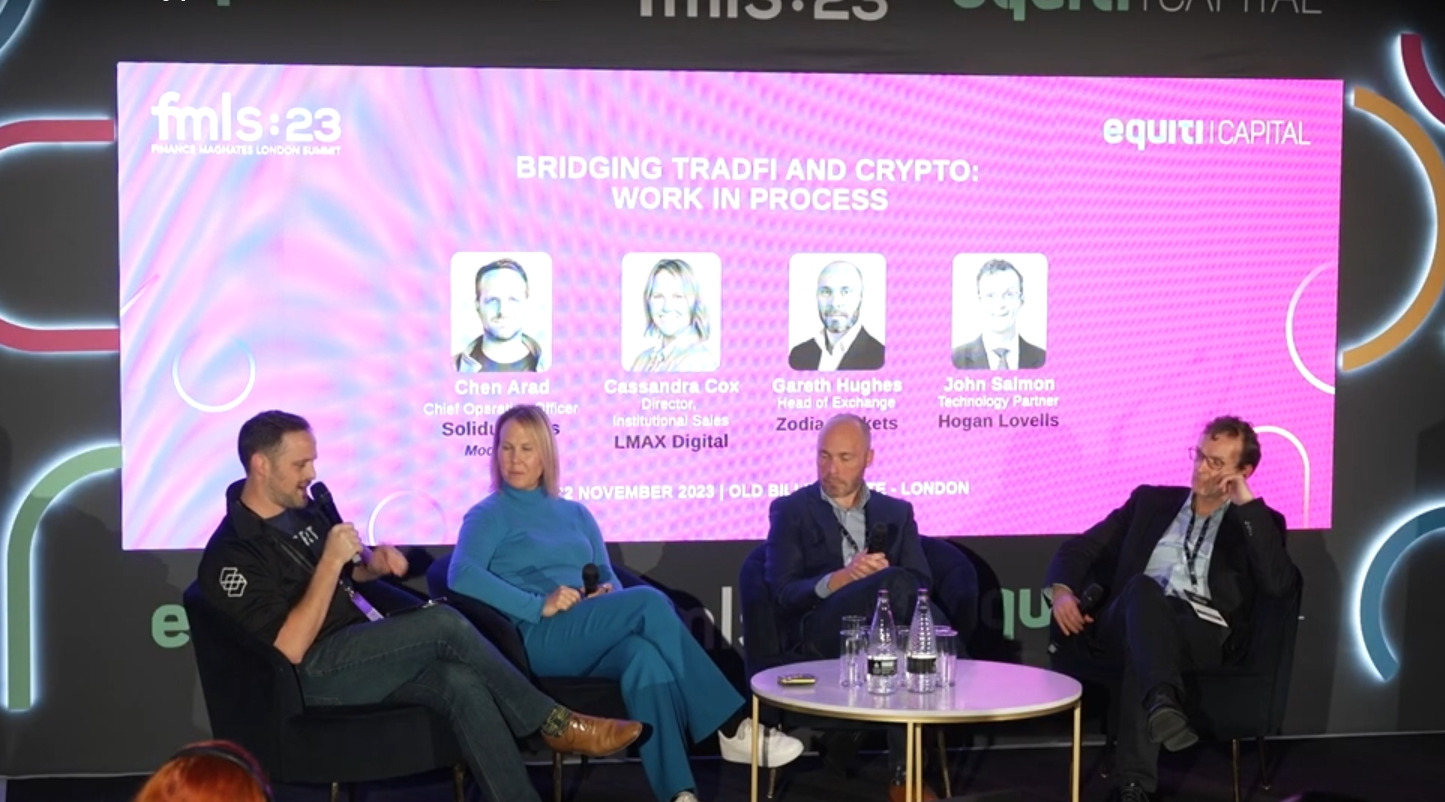
The FMLS:23 panelists of “Bridging TradFi and Crypto” expressed concern over US regulations and praised frameworks in Europe and Asia.
They delved into DeFi's impact on traditional finance and regulators.
FMLS 23: Bridging TradFi and Crypto, YouTube
At the Finance Magnates London Summit 2023, industry
leaders convened for a pivotal discussion on “Bridging TradFi and Crypto: Work
in Process”, shedding light on the complexities and opportunities inherent in
integrating these two distinct spheres. Moderated by Chen Arad, the COO at Solidus
Labs, the panel delved deep into the challenges, regulatory concerns, and
transformative potential of cryptocurrencies within traditional financial
frameworks.
The panel, comprising Cassandra Cox, the Director of
Institutional Sales at LMAX Digital; Gareth Hughes, the Head of Exchange at Zodia
Markets; and John Salmon, the Partner and Head of Digital Assets and Blockchain
Practice at Hogan Lovells International, provided nuanced insights drawing from
their extensive experience in both traditional and crypto financial spheres.
Navigating
the Convergence: Crypto Assets and Traditional Finance
Cox emphasized the similarities between crypto-assets and
traditional asset classes, stressing the importance of providing clients with
alpha-generating opportunities while navigating complexities in onboarding and
custody solutions.
Cox remarked: "Crypto, akin to traditional asset
classes, offers a return structure, providing alpha sources and trading
opportunities to clients. The initial conversation mirrors that of other asset
classes. While certain aspects of crypto may complicate onboarding and the
initial journey, the industry has diligently developed tools that can be
swiftly deployed."
Hughes highlighted the critical decisions surrounding
custody solutions and market
access, underscoring the importance of reputable service providers and
understanding the nuances of crypto trading venues.
John Salmon, Partner and Head of Digital Assets and Blockchain Practice at Hogan Lovells
"The way individuals perceive the crypto industry is
inevitably influenced by their background, not just geographically, but from a
market perspective. Those with a forex background often
liken it to a currency
pair, while those with equities experience see it differently.” Hughes commented.
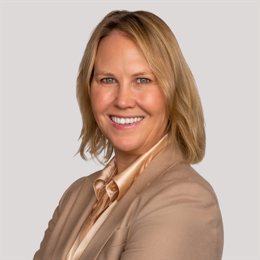
Cassandra Cox, Director of Institutional Sales at LMAX Digital
“Crypto
isn't entirely distinct; there are many similarities with the FX and equities
worlds, such as listed futures. Typically, people start by considering where to
custody their crypto, a question you should address personally, whether you
prefer owning your own wallets or hosting your infrastructure."
Salmon echoed their sentiments, emphasizing the dynamic
regulatory environment as a primary challenge for institutions considering
entry into the crypto space.
Salmon stated: "The constantly shifting regulatory
landscape and the variations across different jurisdictions pose challenges. At
large institutions, there's an appetite for digital assets broadly, although
there's also apprehension. They're concerned about compliance, regulations, and
legal implications."
The discussion then explored the realm of decentralized finance (DeFi)
and its implications for traditional financial institutions and regulators. Hughes
expressed the difficulty in navigating the DeFi space due to regulatory
concerns, emphasizing the importance of understanding and adhering to KYC/AML
regulations.
Gareth Hughes, Head of Exchange at Zodia Markets
Cox highlighted the potential of DeFi as part of the
technology solution for bringing tokenized assets into trading environments,
while Salmon underscored the challenges in defining DeFi accurately and the
importance of regulatory clarity.
Stablecoins
emerged as a pivotal growth area, particularly in facilitating cross-border
transfers of value. While acknowledging stablecoins' potential to revolutionize
global financial operations, panelists also highlighted credibility challenges
facing the cryptocurrency industry, citing instances of scandals involving
major players, like FTX
and Binance.
Regulatory clarity was deemed essential to enhance investor confidence and
mitigate risks associated with illicit activities and market manipulation.
Institutional
Adoption and Regulatory Clarity in Cryptocurrencies
The discussion underscored the critical role of
policymakers and regulators in establishing a conducive environment for
cryptocurrency development. Concerns were raised regarding the US's regulatory
approach, with skepticism expressed about the Chairman's (Gary Gensler) purported
anti-crypto sentiments and the fragmented regulatory landscape.
In contrast, European and Asian jurisdictions were praised
for clearer regulatory frameworks and proactive approaches to fostering
innovation while ensuring consumer protection.
Notably, the
approval process for spot Bitcoin exchange-traded funds (ETFs) in the US, was discussed, with panelists predicting increased institutional adoption of
cryptocurrencies in the coming year. They stressed the need for responsible
governance and compliance as the industry matures and gains wider acceptance.
While regulatory challenges persist, there is optimism for
progress and mainstream acceptance of cryptocurrencies. The panelists
emphasized the importance of clear regulatory guidance, collaborative efforts
between industry stakeholders and regulators, and the ongoing dialogue to navigate
the evolving landscape effectively.
Participate in Our Fraud Survey: Your Opinion Matters!
We
invite you to participate in our joint survey conducted by FXStreet and Finance
Magnates Group, which explores prevalent online financial fraud types,
platforms used for fraudulent activities, effectiveness of countermeasures, and
challenges faced by companies in tackling such fraud. Your valuable insights
will help inform future strategies and resource allocation in combating
financial fraud.
At the Finance Magnates London Summit 2023, industry
leaders convened for a pivotal discussion on “Bridging TradFi and Crypto: Work
in Process”, shedding light on the complexities and opportunities inherent in
integrating these two distinct spheres. Moderated by Chen Arad, the COO at Solidus
Labs, the panel delved deep into the challenges, regulatory concerns, and
transformative potential of cryptocurrencies within traditional financial
frameworks.
The panel, comprising Cassandra Cox, the Director of
Institutional Sales at LMAX Digital; Gareth Hughes, the Head of Exchange at Zodia
Markets; and John Salmon, the Partner and Head of Digital Assets and Blockchain
Practice at Hogan Lovells International, provided nuanced insights drawing from
their extensive experience in both traditional and crypto financial spheres.
Navigating
the Convergence: Crypto Assets and Traditional Finance
Cox emphasized the similarities between crypto-assets and
traditional asset classes, stressing the importance of providing clients with
alpha-generating opportunities while navigating complexities in onboarding and
custody solutions.
Cox remarked: "Crypto, akin to traditional asset
classes, offers a return structure, providing alpha sources and trading
opportunities to clients. The initial conversation mirrors that of other asset
classes. While certain aspects of crypto may complicate onboarding and the
initial journey, the industry has diligently developed tools that can be
swiftly deployed."
Hughes highlighted the critical decisions surrounding
custody solutions and market
access, underscoring the importance of reputable service providers and
understanding the nuances of crypto trading venues.
John Salmon, Partner and Head of Digital Assets and Blockchain Practice at Hogan Lovells
"The way individuals perceive the crypto industry is
inevitably influenced by their background, not just geographically, but from a
market perspective. Those with a forex background often
liken it to a currency
pair, while those with equities experience see it differently.” Hughes commented.
Cassandra Cox, Director of Institutional Sales at LMAX Digital
“Crypto
isn't entirely distinct; there are many similarities with the FX and equities
worlds, such as listed futures. Typically, people start by considering where to
custody their crypto, a question you should address personally, whether you
prefer owning your own wallets or hosting your infrastructure."
Salmon echoed their sentiments, emphasizing the dynamic
regulatory environment as a primary challenge for institutions considering
entry into the crypto space.
Salmon stated: "The constantly shifting regulatory
landscape and the variations across different jurisdictions pose challenges. At
large institutions, there's an appetite for digital assets broadly, although
there's also apprehension. They're concerned about compliance, regulations, and
legal implications."
The discussion then explored the realm of decentralized finance (DeFi)
and its implications for traditional financial institutions and regulators. Hughes
expressed the difficulty in navigating the DeFi space due to regulatory
concerns, emphasizing the importance of understanding and adhering to KYC/AML
regulations.
Gareth Hughes, Head of Exchange at Zodia Markets
Cox highlighted the potential of DeFi as part of the
technology solution for bringing tokenized assets into trading environments,
while Salmon underscored the challenges in defining DeFi accurately and the
importance of regulatory clarity.
Stablecoins
emerged as a pivotal growth area, particularly in facilitating cross-border
transfers of value. While acknowledging stablecoins' potential to revolutionize
global financial operations, panelists also highlighted credibility challenges
facing the cryptocurrency industry, citing instances of scandals involving
major players, like FTX
and Binance.
Regulatory clarity was deemed essential to enhance investor confidence and
mitigate risks associated with illicit activities and market manipulation.
Institutional
Adoption and Regulatory Clarity in Cryptocurrencies
The discussion underscored the critical role of
policymakers and regulators in establishing a conducive environment for
cryptocurrency development. Concerns were raised regarding the US's regulatory
approach, with skepticism expressed about the Chairman's (Gary Gensler) purported
anti-crypto sentiments and the fragmented regulatory landscape.
In contrast, European and Asian jurisdictions were praised
for clearer regulatory frameworks and proactive approaches to fostering
innovation while ensuring consumer protection.
Notably, the
approval process for spot Bitcoin exchange-traded funds (ETFs) in the US, was discussed, with panelists predicting increased institutional adoption of
cryptocurrencies in the coming year. They stressed the need for responsible
governance and compliance as the industry matures and gains wider acceptance.
While regulatory challenges persist, there is optimism for
progress and mainstream acceptance of cryptocurrencies. The panelists
emphasized the importance of clear regulatory guidance, collaborative efforts
between industry stakeholders and regulators, and the ongoing dialogue to navigate
the evolving landscape effectively.
Participate in Our Fraud Survey: Your Opinion Matters!
We
invite you to participate in our joint survey conducted by FXStreet and Finance
Magnates Group, which explores prevalent online financial fraud types,
platforms used for fraudulent activities, effectiveness of countermeasures, and
challenges faced by companies in tackling such fraud. Your valuable insights
will help inform future strategies and resource allocation in combating
financial fraud.
Tareq is a financial writer with 15 years of experience covering global markets. His work spans technical analysis, forex broker reviews, and market sentiment, with a focus on topics relevant to retail traders. He joined Finance Magnates in 2023.
At Finance Magnates, he serves as News Editor, covering retail forex and CFD brokers, cryptocurrency exchanges, fintech firms, and regulatory developments shaping the trading industry. He holds an Honours degree in Information Technology from Anfell College, London.
Education:
Honours degree Information Technology, Anfell College, London
WhiteBIT secures brokerage license in Georgia to launch regulated crypto derivatives
FP Markets Winner Spotlight 🏆 | Global Broker of the Year 2025 #Trading #Broker #Innovation #Shorts
FP Markets Winner Spotlight 🏆 | Global Broker of the Year 2025 #Trading #Broker #Innovation #Shorts
FP Markets takes the spotlight as Global Broker of the Year 2025 at the Finance Magnates Awards.
Martin Stoilov, Head of Client Experience, shares that trust, innovation, and people played a key role in the company’s success, supported by a strong foundation of integrity and client-centricity.
Following this milestone, FP Markets continues to focus on growth, technology investment, and its core values of transparency and excellence.
👉 Be part of FM Awards 2026: https://awards.financemagnates.com/#nominate
FP Markets takes the spotlight as Global Broker of the Year 2025 at the Finance Magnates Awards.
Martin Stoilov, Head of Client Experience, shares that trust, innovation, and people played a key role in the company’s success, supported by a strong foundation of integrity and client-centricity.
Following this milestone, FP Markets continues to focus on growth, technology investment, and its core values of transparency and excellence.
👉 Be part of FM Awards 2026: https://awards.financemagnates.com/#nominate
In this video, we review @HolaPrimeMarketsOfficial, a multi-asset forex and CFDs broker offering different account types, trading platforms, and flexible trading conditions.
We cover the broker’s overall offering, including account options, trading environment, platforms like MT4 and MT5, and additional services such as managed accounts and fast withdrawals.
Watch the full video to see if Hola Prime Markets fits your trading needs.
📣 Stay up to date with the latest in finance and trading. Follow Finance Magnates for industry news, insights, and global event coverage.
Connect with us:
🔗 LinkedIn: /financemagnates
👍 Facebook: /financemagnates
📸 Instagram: https://www.instagram.com/financemagnates
🐦 X: https://x.com/financemagnates
🎥 TikTok: https://www.tiktok.com/tag/financemagnates
▶️ YouTube: /@financemagnates_official
#HolaPrime #ForexBroker #CFDTrading #FinanceMagnates #Trading #Forex #BrokerReview
In this video, we review @HolaPrimeMarketsOfficial, a multi-asset forex and CFDs broker offering different account types, trading platforms, and flexible trading conditions.
We cover the broker’s overall offering, including account options, trading environment, platforms like MT4 and MT5, and additional services such as managed accounts and fast withdrawals.
Watch the full video to see if Hola Prime Markets fits your trading needs.
📣 Stay up to date with the latest in finance and trading. Follow Finance Magnates for industry news, insights, and global event coverage.
Connect with us:
🔗 LinkedIn: /financemagnates
👍 Facebook: /financemagnates
📸 Instagram: https://www.instagram.com/financemagnates
🐦 X: https://x.com/financemagnates
🎥 TikTok: https://www.tiktok.com/tag/financemagnates
▶️ YouTube: /@financemagnates_official
#HolaPrime #ForexBroker #CFDTrading #FinanceMagnates #Trading #Forex #BrokerReview
Hola Prime Review: What You Need to Know | Full Breakdown by Finance Magnates
Hola Prime Review: What You Need to Know | Full Breakdown by Finance Magnates
In this video, we review @HolaPrime_Global, a proprietary trading firm offering evaluation programs and performance-based payouts in simulated market environments.
We cover how the challenge model works, including account types, profit splits (up to 95%), trading rules, and what it takes to reach a funded account. You’ll also learn about available platforms like MT4, MT5, cTrader, and more, along with insights into payouts, support, and trading conditions.
Watch the full video to see if Hola Prime fits your trading style.
📣 Stay up to date with the latest in finance and trading. Follow Finance Magnates for industry news, insights, and global event coverage.
Connect with us:
🔗 LinkedIn: /financemagnates
👍 Facebook: /financemagnates
📸 Instagram: https://www.instagram.com/financemagnates
🐦 X: https://x.com/financemagnates
🎥 TikTok: https://www.tiktok.com/tag/financemagnates
▶️ YouTube: /@financemagnates_official
#HolaPrime #PropFirm #Trading #FinanceMagnates #Forex #FuturesTrading #TradingReview #PropFirmReview
In this video, we review @HolaPrime_Global, a proprietary trading firm offering evaluation programs and performance-based payouts in simulated market environments.
We cover how the challenge model works, including account types, profit splits (up to 95%), trading rules, and what it takes to reach a funded account. You’ll also learn about available platforms like MT4, MT5, cTrader, and more, along with insights into payouts, support, and trading conditions.
Watch the full video to see if Hola Prime fits your trading style.
📣 Stay up to date with the latest in finance and trading. Follow Finance Magnates for industry news, insights, and global event coverage.
Connect with us:
🔗 LinkedIn: /financemagnates
👍 Facebook: /financemagnates
📸 Instagram: https://www.instagram.com/financemagnates
🐦 X: https://x.com/financemagnates
🎥 TikTok: https://www.tiktok.com/tag/financemagnates
▶️ YouTube: /@financemagnates_official
#HolaPrime #PropFirm #Trading #FinanceMagnates #Forex #FuturesTrading #TradingReview #PropFirmReview
Axi Winner Spotlight 🏆 | Global Most Innovative Broker 2025 #Innovation #Trading #Fintech #Broker
Axi Winner Spotlight 🏆 | Global Most Innovative Broker 2025 #Innovation #Trading #Fintech #Broker
Axi takes the spotlight at the Finance Magnates Awards, winning Global Most Innovative Broker 2025.
Olivia Xenofontos and Ivanna Openko share how the team will feel: proud, motivated, and ready to keep delivering.
They also describe the night as well-organized, focused, and enjoyable for all.
👉 Be part of FM Awards 2026.
Axi takes the spotlight at the Finance Magnates Awards, winning Global Most Innovative Broker 2025.
Olivia Xenofontos and Ivanna Openko share how the team will feel: proud, motivated, and ready to keep delivering.
They also describe the night as well-organized, focused, and enjoyable for all.
👉 Be part of FM Awards 2026.
Recognition that matters.
Built on transparency.
Driven by the industry.
The Finance Magnates Awards 2026.
Nominations are now open.
🔗 https://awards.financemagnates.com/?utm_source=SM&utm_medium=social&utm_campaign=recognition-matters
Recognition that matters.
Built on transparency.
Driven by the industry.
The Finance Magnates Awards 2026.
Nominations are now open.
🔗 https://awards.financemagnates.com/?utm_source=SM&utm_medium=social&utm_campaign=recognition-matters